

Recommended for 4th graders! A collection of easy self-study ideas to try

For independent study in fourth grade, I recommend first finding what your child is interested in.
When they learn about what they like, they can keep going and enjoy it.
Here, we introduce simple daily study ideas that are helpful for independent learning.
When children and adults learn together, it sparks more curiosity and makes learning more enjoyable.
Learning opens up new worlds and helps build confidence.
Please use this as a reference to find areas of interest and enjoy independent study!
- Recommended for 3rd graders! A collection of easy self-study ideas you can try
- Recommended for 5th graders! A collection of easy self-study ideas you can enjoy while learning
- Recommended for 6th graders! A collection of easy self-study ideas you can enjoy while learning
- Self-study that teachers will praise! Recommended independent science study ideas for 4th graders
- [For 4th Graders] Fun Independent Research Ideas You Can Do With Everyday Materials
- Recommended for Elementary Students! A Collection of Fun Craft Ideas for 4th Graders
- Self-directed study that impresses your teacher! Recommended independent science study ideas for 6th graders
- Self-study that impresses your teacher! Recommended science self-study ideas for 5th graders
- Independent study that impresses your teacher! Science self-study ideas recommended for third graders
- Recommended for elementary school students! Science fair topics & craft ideas
- Third graders will be hooked! A collection of science project ideas using everyday materials
- Recommended for elementary school students' independent research! Experiment and observation ideas using everyday materials
- Recommended Independent Research Projects for 5th Graders [Elementary School Students]
Recommended for 4th Graders! A Collection of Easy Self-Study Ideas You Can Try (1–10)
Let’s make kohakutou (amber sugar)

How about choosing kohakutou—beautiful and cute to look at, and delicious to eat—as the theme for your independent research project? It takes time, but you can summarize the changes over that period as your research findings.
Kohakutou is easy to make: dissolve sugar and agar in water, transfer the mixture to a container, add color with food coloring or shaved ice syrup, then once it sets, cut it and let it dry.
Depending on how much it dries, the texture will range from bouncy and soft to crisp.
You can record which number of drying days you found the most delicious and summarize your results.

Try making a train with copper wire and a battery

Let’s try making a train that runs using magnetism by applying the properties of electromagnets.
Wind copper wire into a long coil and place a battery with magnets attached to it inside the coil.
Then the magnetic force generated in the coil and the magnets’ magnetic force repel each other, causing the battery to start running through the coil like a train.
By changing conditions—such as why the battery starts moving, when the moving battery will stop, and whether changing the way you wind the coil affects how the battery runs—and summarizing the results in a report, you can create an excellent independent research project.

Make an electromagnet and investigate its properties
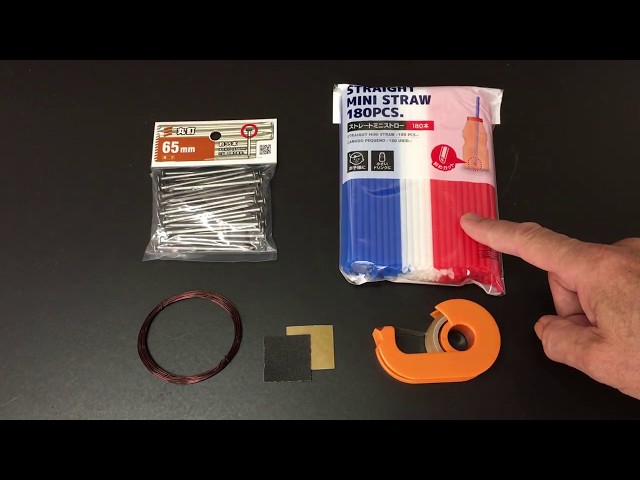
In 5th grade, you’ll likely learn about electromagnets at school.
For your summer break independent project, try making an electromagnet yourself and use it to investigate its properties.
An electromagnet works by making a coil with enameled wire and running an electric current through it to generate magnetic force.
It would be good to test various conditions—such as the number of turns in the coil, what you place as the core inside the coil, increasing the number of batteries or changing how they are connected—and compile a report on how the magnetic strength changes.
Recommended for 4th Graders! A Collection of Easy Self-Study Ideas You Can Try (11–20)
Bath bomb making

As a science project recommended for people who love stylish things, making bath bombs is a great choice.
You can make bath bombs with items from home improvement stores or 100-yen shops, so it’s quite easy.
However, simply making them isn’t enough for a middle school research project, so it’s recommended to test how they dissolve using various materials or explain in detail how bath bombs work.

plastic bottle rocket

Another classic for independent research projects is the plastic bottle rocket, which I highly recommend.
Not only is the building process fun, but launching it is thrilling, too.
By the way, there are craft kits for plastic bottle rockets available for purchase, so you can make one easily.
After you finish, try thinking creatively about how to make it fly farther.
One of the appeals of plastic bottle rockets is that you can experiment freely.
Try various methods, like using carbonated water instead of regular water.

Historical research of the area where you live

Some of you may be struggling to find a subject to research, even though you want to study something.
In that case, researching the history of the area where you live might be a good idea.
You might discover unexpected history behind the park you usually play in, or find that a building you never paid attention to is actually historically significant.
Searching online is convenient, but asking local residents or visiting the library can also be fun and give you a real sense of doing research.
As a variation, you could also look into the history of your school.
Research and summarize about typhoons

You learn about weather changes and typhoons in fifth-grade science, right? In that case, how about researching typhoons more deeply and putting together a report? Specifically, you could look into how typhoons form and where they come from, where they move to and what happens to them in the end.
There’s still a lot we don’t know about typhoons.
You could also investigate the strength of typhoons and the damage they cause, and use that information for disaster preparedness.
That would make your independent research even more meaningful.