

Self-study that impresses your teacher! Recommended science self-study ideas for 5th graders

Independent science study can be a fun adventure for kids! Here, we introduce recommended self-study science topics for fifth graders that are sure to impress teachers.
Exploring freely makes learning even more enjoyable.
Observe nature around you, try simple experiments, and experience the joy of discovering new things.
As your interest in nature and science grows, it’s also fun to share what you’ve learned with friends and family.
Please use this as a guide and dive into the exciting world of science with us!
- Recommended for 5th graders! A collection of easy self-study ideas you can enjoy while learning
- Self-directed study that impresses your teacher! Recommended independent science study ideas for 6th graders
- Independent study that impresses your teacher! Science self-study ideas recommended for third graders
- Self-study that teachers will praise! Recommended independent science study ideas for 4th graders
- [5th Grade Elementary School] Independent Research Themes & Crafts | A Collection of Ideas That Lead to Learning
- Recommended Independent Research Projects for 5th Graders [Elementary School Students]
- Recommended for elementary schoolers! A fun collection of craft ideas for 5th graders
- Recommended for 6th graders! A collection of easy self-study ideas you can enjoy while learning
- Recommended for 3rd graders! A collection of easy self-study ideas you can try
- Recommended for 4th graders! A collection of easy self-study ideas to try
- Recommended for elementary school students' independent research! Experiment and observation ideas using everyday materials
- [For 4th Graders] Fun Independent Research Ideas You Can Do With Everyday Materials
- For 6th Graders: Unique and Fun Ideas for Independent Research Projects
Self-directed study that will impress your teacher! Recommended independent science study ideas for 5th graders (41–50)
Experiment on the action of flowing water

In fifth grade, I think you also learn in class about the work of flowing water, such as erosion, transportation, and deposition.
Let’s actually observe these processes through an experiment.
For the method, build a slope out of collected soil, make a channel for water, and run water through it.
Try observing how erosion, transportation, and deposition actually appear, whether these processes change depending on the amount of water, and whether the way they appear differs between a straight channel and a curved one.
Test various conditions and summarize your findings in a report.

Self-study that earns praise from teachers! Recommended independent science study ideas for 5th graders (51–60)
Investigate the conditions required for seed germination

In fifth grade, students also learn about seed germination.
So let’s investigate, through experiments, the conditions necessary for seeds to germinate.
When examining which conditions are needed, you must conduct a controlled experiment: keep all other conditions the same and change only one condition for comparison.
Try various conditions to confirm what leads to germination.
You may have already learned about the conditions for germination in class; if so, this experiment would be a good way to review what you learned.
String art
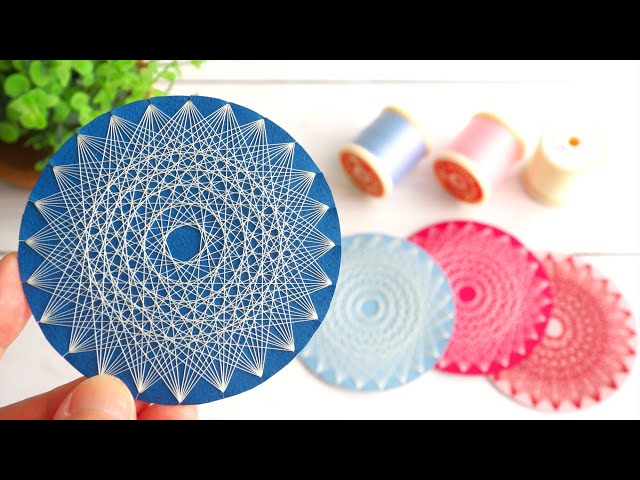
String art that spreads into beautiful petal-like patterns.
Traditionally, you need to hammer nails into a board to make it, but there’s an easy method you can try using paper by making small cuts.
After drawing evenly spaced lines on a circular piece of thick paper, align it with construction paper and cut them together.
If you write numbers on the cut sections, you can work without mixing up the order.
Hook the thread in sequence toward the cut opposite each number, and once you’ve gone all the way around, cut the thread.
From the second round, change the thread color and shift the starting position by one notch.
Repeat this process until the threading is complete, then attach construction paper to the back to finish.

Fossil excavation at home

Recommended for homebodies! Believe it or not, you can experience fossil excavation right at home! The video introduces two items: a “Fossil Museum” and a “Raw Stone Excavation” kit, both apparently available at 100-yen shops.
Each kit includes a stone containing a fossil or raw mineral, along with a stick and a brush for digging.
So once you buy it, you can start excavating right away! If you research and summarize what you excavate yourself, it can make a great independent study project!

Let’s explore the mysteries of color

This is a science project where you closely observe the colors you usually see.
If it’s just observation, even lower-grade elementary students can do it, and upper-grade students can add analysis, so it’s a recommended project for a wide range of grades.
By using the three primary colors of light and layering sheets to create a color photograph, and so on, it becomes an experiment that produces interesting phenomena.

Try making a train with copper wire and a battery

Let’s try making a train that runs using magnetism by applying the properties of electromagnets.
Wind copper wire into a long coil and place a battery with magnets attached to it inside the coil.
Then the magnetic force generated in the coil and the magnets’ magnetic force repel each other, causing the battery to start running through the coil like a train.
By changing conditions—such as why the battery starts moving, when the moving battery will stop, and whether changing the way you wind the coil affects how the battery runs—and summarizing the results in a report, you can create an excellent independent research project.
Make an electromagnet and investigate its properties
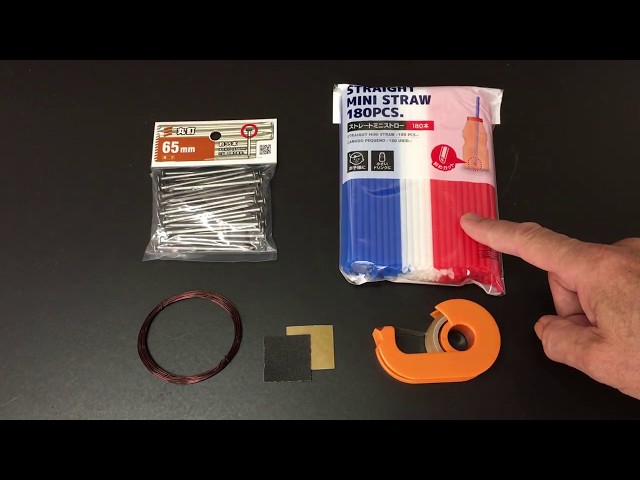
In 5th grade, you’ll likely learn about electromagnets at school.
For your summer break independent project, try making an electromagnet yourself and use it to investigate its properties.
An electromagnet works by making a coil with enameled wire and running an electric current through it to generate magnetic force.
It would be good to test various conditions—such as the number of turns in the coil, what you place as the core inside the coil, increasing the number of batteries or changing how they are connected—and compile a report on how the magnetic strength changes.