

Self-directed study that impresses your teacher! Recommended independent science study ideas for 6th graders
Independent science study can be a fun adventure for kids! Here, we introduce recommended independent science study themes for sixth graders that might even earn praise from teachers.
When you explore freely, learning becomes much more enjoyable.
Observe the nature around you, try simple experiments, and experience the joy of discovering all kinds of things.
As your interest in nature and science grows, it’s also fun to share what you’ve learned with friends and family.
Please use this as a reference and let’s jump together into the exciting world of science!
- Recommended for 6th graders! A collection of easy self-study ideas you can enjoy while learning
- Self-study that impresses your teacher! Recommended science self-study ideas for 5th graders
- Independent study that impresses your teacher! Science self-study ideas recommended for third graders
- For 6th Graders: Unique and Fun Ideas for Independent Research Projects
- Self-study that teachers will praise! Recommended independent science study ideas for 4th graders
- Recommended for elementary students! A collection of fun craft ideas to make for 6th graders
- Recommended for 5th graders! A collection of easy self-study ideas you can enjoy while learning
- Recommended for 3rd graders! A collection of easy self-study ideas you can try
- Recommended for elementary school students' independent research! Experiment and observation ideas using everyday materials
- Recommended for 4th graders! A collection of easy self-study ideas to try
- Recommended Independent Research Projects for 5th Graders [Elementary School Students]
- Recommended for elementary school students! Science fair topics & craft ideas
- [For 4th Graders] Fun Independent Research Ideas You Can Do With Everyday Materials
Self-study that earns your teacher’s praise! Recommended independent science study ideas for 6th graders (11–20)
Make an electromagnet and investigate its properties
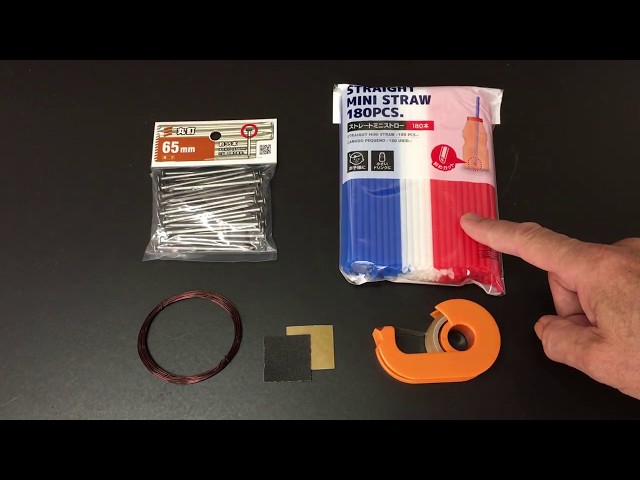
In 5th grade, you’ll likely learn about electromagnets at school.
For your summer break independent project, try making an electromagnet yourself and use it to investigate its properties.
An electromagnet works by making a coil with enameled wire and running an electric current through it to generate magnetic force.
It would be good to test various conditions—such as the number of turns in the coil, what you place as the core inside the coil, increasing the number of batteries or changing how they are connected—and compile a report on how the magnetic strength changes.

Let’s make kohakutou (amber sugar)

How about choosing kohakutou—beautiful and cute to look at, and delicious to eat—as the theme for your independent research project? It takes time, but you can summarize the changes over that period as your research findings.
Kohakutou is easy to make: dissolve sugar and agar in water, transfer the mixture to a container, add color with food coloring or shaved ice syrup, then once it sets, cut it and let it dry.
Depending on how much it dries, the texture will range from bouncy and soft to crisp.
You can record which number of drying days you found the most delicious and summarize your results.

air cannon

The method is simple! Make a hole in a cardboard box and firmly tape the four corners with duct tape so air doesn’t escape through the gaps.
Then just tap the side and air will shoot out of the hole.
Try setting up a target to hit, or fill the box with smoke before firing to make the airflow easier to see.

Considerations on friction in hovercrafts

A great recommendation for a craft-based science project is a handmade hovercraft.
A hovercraft is an amphibious vehicle that floats using air, and this project recreates it with a plastic bottle and a balloon.
It can hover on a desk or on water, which makes it really fun.
Its curious appearance means you can submit it as a finished piece as is, and it’s also recommended to analyze principles like friction and summarize your findings in writing.

Fizzy Ramune Experiment

Why not try making fizzy ramune tablets for your summer break science project and enjoy their colors and sounds when dropped into water? After thoroughly mixing ingredients like powdered sugar, cornstarch, and food-grade citric acid, add food coloring to make them visually fun.
Press the mixed dough with two spoons to shape it just right.
Let them dry for about half a day to finish the ramune.
When eaten, they fizz in your mouth, letting you experience the curious chemical reaction of carbonation.
It’s a safe project even for children, using the carbon dioxide produced by the reaction between lemon juice’s acid and baking soda.
You can boost originality by changing the colors and flavors.
It’s a great idea for learning chemistry with familiar materials.

Let’s learn about sugar crystallization while making canelés.

Let’s make an experimental piece using a canelé mold for sweets.
Put powdered gelatin into a container filled with water and heat it in the microwave.
After heating, add sugar, color it with edible food coloring, and heat it in the microwave again.
Pour it into the canelé mold, and once it sets, remove it from the mold.
Your beautiful, colorful sugar canelés are ready.
At first, they look jiggly, but after a week, the sugar crystallizes and they turn into sparkly, crystal-like pieces.
You can enjoy watching the sugar change over time.

Self-study that teachers will praise! Recommended independent science study ideas for 6th graders (21–30)
Experiment where ham melts with kiwi

Here’s a curious and fun science project using kiwifruit and ham.
Get your materials ready: kiwifruit, ham, paper, and felt-tip pens.
Place a sliced kiwifruit on top of a halved piece of ham.
By timing this setup, you can find out how many minutes it takes for the ham to start breaking down.
If you photograph the changes over time, your project will gain more depth.
You might discover something new by comparing heated kiwifruit with unheated kiwifruit.
Write down the purpose of the experiment and your results to complete your summer science project.
