


Independent science study can be a fun adventure for kids! Here, we introduce recommended independent science study themes for sixth graders that might even earn praise from teachers.
When you explore freely, learning becomes much more enjoyable.
Observe the nature around you, try simple experiments, and experience the joy of discovering all kinds of things.
As your interest in nature and science grows, it’s also fun to share what you’ve learned with friends and family.
Please use this as a reference and let’s jump together into the exciting world of science!
- Recommended for 6th graders! A collection of easy self-study ideas you can enjoy while learning
- Self-study that impresses your teacher! Recommended science self-study ideas for 5th graders
- Independent study that impresses your teacher! Science self-study ideas recommended for third graders
- For 6th Graders: Unique and Fun Ideas for Independent Research Projects
- Self-study that teachers will praise! Recommended independent science study ideas for 4th graders
- Recommended for elementary students! A collection of fun craft ideas to make for 6th graders
- Recommended for 5th graders! A collection of easy self-study ideas you can enjoy while learning
- Recommended for 3rd graders! A collection of easy self-study ideas you can try
- Recommended for elementary school students' independent research! Experiment and observation ideas using everyday materials
- Recommended for 4th graders! A collection of easy self-study ideas to try
- Recommended Independent Research Projects for 5th Graders [Elementary School Students]
- Recommended for elementary school students! Science fair topics & craft ideas
- [For 4th Graders] Fun Independent Research Ideas You Can Do With Everyday Materials
Self-directed learning that impresses your teacher! Recommended independent science study ideas for 6th graders (1–10)
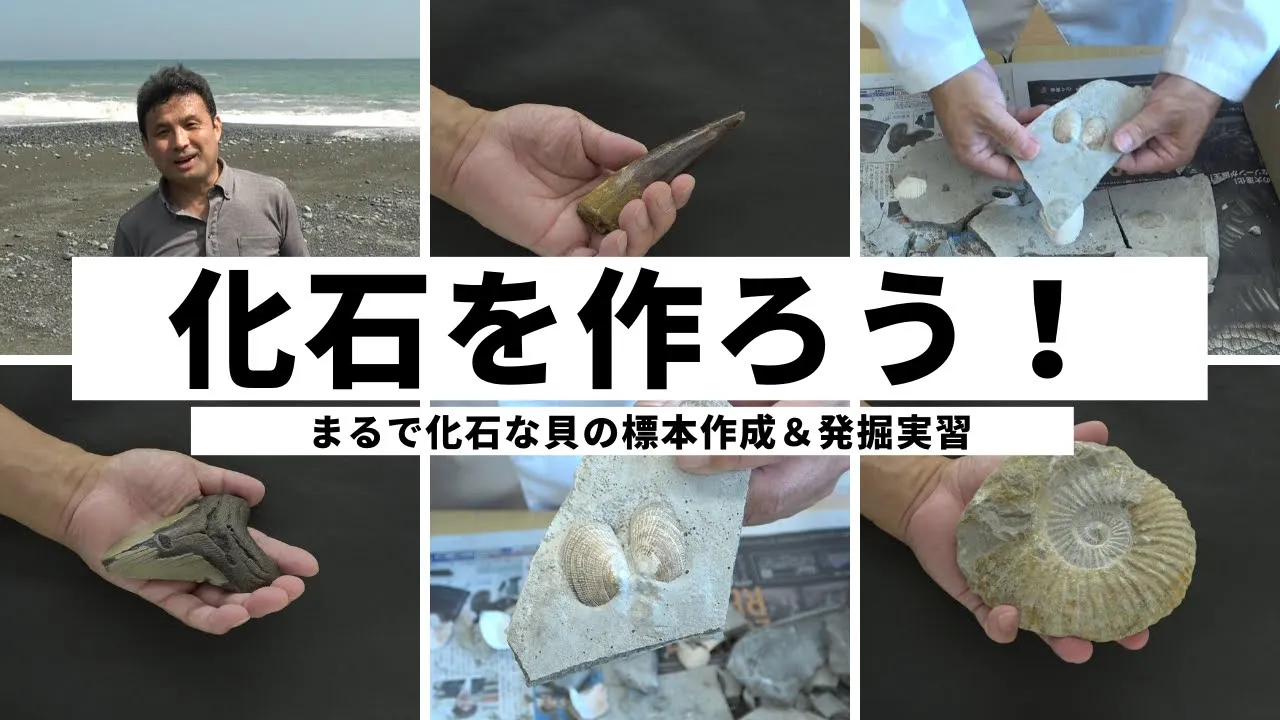
Fossil making

Get hands-on with shells! Here are some ideas for making your own “fossils.” We often hear that real fossilization can take over ten thousand years.
When dinosaur bones or ancient life fossils are discovered, they’re frequently featured in the news and media.
This time, let’s use shells to create specimens that look just like fossils! In the video, we clearly explain each step of the specimen-making process.
Take this opportunity to give it a try!
A study on easy ice cream you can make in one minute
@nonno.chan Summer vacation independent research, part two! Ice cream made in 1 minute using the power of chemistry. I’d be happy if you find it helpful!#Summer VacationIndependent Researchtranslation#HomemadeIceCream
♬ 3 minutes cooking style pop / cooking / sweets(957554) – ArcTracks
Have fun with it! Here’s an idea for a simple ice cream experiment you can make in just one minute.
Not many people have actually made ice cream themselves.
How about trying a fun and easy experiment where you can also enjoy delicious ice cream? All you need is milk, sugar, ice, salt, and resealable bags.
The steps are simple and easy to follow, so kids will likely jump right in! And since this is for learning, don’t forget to keep records of what you do!
Pop-up book

Let’s try making a pop-up book! Here are some ideas for pop-up picture books.
Are you familiar with pop-up books? Even if the term doesn’t ring a bell, many of you have likely encountered them when thinking back to picture books you read in childhood.
A pop-up book is a type of interactive picture book where three-dimensional illustrations or pages spring up when you turn the page.
This time, let’s make one of these unique pop-up books.
In the video, we carefully and clearly explain each step of the process!
Making a model of geological strata

Perfect for anyone interested in nature! Here are some ideas for making a geological layer (strata) model.
These ideas are recommended for people who enjoy detailed hands-on activities or are curious about natural principles.
Even if you’re not sure what strata are, try giving it a go with this video as a reference.
In the video, we clearly and carefully explain what strata are and the key points in the process of creating them.
Be sure to take this opportunity to give it a try!
How to make a basic robot

Build a robot with your own hands! Here are some ideas for making a basic robot.
These days, we often see robots active in various roles.
In fast-food restaurants, there are robots that carry food and drinks, and some households even keep robot pets.
This time, let’s try making a simple robot.
You’ll need items like a ruler, scissors, a pen, thick paper or cardboard, batteries, a battery holder, a switch, a motor, and wires.
Be sure to work together with a teacher or a guardian.
Why can we see the Moon?

Let’s clear up some questions! Here are some ideas about why we can see the Moon.
How about researching things you find interesting or mysterious in your daily life? It’s a great way to expand your world, deepen your learning, and resolve your questions.
This time, let’s learn about some questions related to the Moon.
After watching the video, it’s a good idea to summarize what you learned with text and illustrations in a notebook or on poster paper.
Give it a try!
Properties of aqueous solutions

Let’s summarize the key features! Here are some ideas about the properties of aqueous solutions.
How about preparing aqueous solutions that share common elements and challenging yourself to summarize each of their characteristics? In the video, aqueous solutions are explained for elementary school students.
The explanations are organized in a clear, step-by-step way, so it’s recommended for anyone who wants to deepen their understanding of aqueous solutions! Using five types of aqueous solutions should also help when memorizing their features.
Definitely give it a try!