

Recommended classical masterpieces for autumn


Introducing recommended classical masterpieces that evoke the feeling of autumn!
There are many works in classical music that take the four seasons as their theme.
This time, we’ve picked pieces ranging from those that explicitly focus on “autumn” to those that simply evoke an autumnal mood.
From darker tones to brighter ones, we’ve selected a variety of styles, so you’re sure to find a piece that matches your preferred atmosphere!
We’re also sharing episodes and fun little facts, so if you love classical music, be sure to read to the end!
- [Masterpiece Classics] A special showcase of gem-like masterpieces so beautiful they’ll move you to tears
- [Autumn Songs] Songs of autumn. Classic tracks and popular favorites you’ll want to listen to in the fall.
- A poignant classic masterpiece. Recommended classical music.
- [Violin] A curated selection of beloved classic masterpieces and popular pieces that continue to be cherished across eras
- Autumn for the Arts: Treasured Piano Pieces | Enjoy Classical Music by Listening and Playing
- Classical Masterpieces: Recommended Works You Should Hear at Least Once
- Cool classical masterpieces. Recommended classical music.
- Popular classical piano pieces. A collection of masterful performances by Japanese pianists.
- [Orchestra] Introducing famous and popular pieces
- Cello Masterpieces: A comprehensive introduction to exquisite classical works that let you savor its profound timbre
- Mendelssohn’s Masterpieces | Popular Classical Music
- Disney classics to enjoy in a classical arrangement: recommended popular songs
- Today's Classics: Recommended classical music and great performances to listen to today
Classic masterpieces recommended for autumn (51–60)
Symphonic Poem “Finlandia”Sibelius
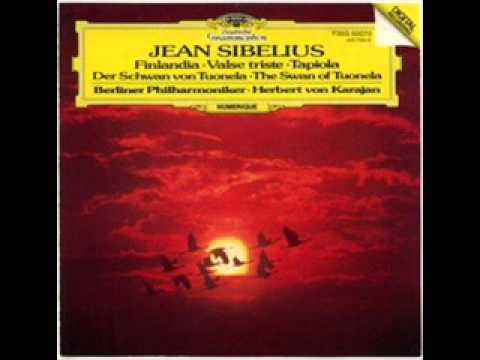
It is a symphonic poem composed in 1899 by Finnish composer Jean Sibelius.
It is perhaps one of the most famous pieces among his works.
At the time this piece was written, Finland was suffering under the oppression of Imperial Russia, and an independence movement was underway.
The imperial Russian government banned performances of the piece on the grounds that it stirred patriotic feelings toward Finland.
That shows just how effectively the piece expressed Finnish patriotism, doesn’t it?

The Seasons: I. AutumnThea Musgrave

As a piece that depicts an autumnal scene through music, I would like to introduce an orchestral work by the Scottish composer Thea Musgrave.
Composed in 1988, the piece was inspired by a painting.
Taking as its motif Piero di Cosimo’s Renaissance painting The Hunt, it is marked by fierce music that evokes wild hunting and the foreboding of a storm.
A hunting-horn motif recurs throughout, culminating in a development that seems to be swallowed by the storm.
Rather than the calm of autumn, the work foregrounds the harshness of nature and the fragility of human existence.
Employing weighty harmonies and shifts in tempo to emphasize the darker side of autumn, this piece seeks, with deep emotion and symbolism, to convey the essence of the season to its listeners.
Variations on “Twinkle, Twinkle, Little Star”Wolfgang Amadeus Mozart

Speaking of Twinkle, Twinkle, Little Star, I think it’s a song that just about everyone in Japan has sung at least once.
Originally, though, it was a popular late-18th-century French chanson that spread around the world as a children’s song, to which Japanese lyrics were later added for introduction.
The piece known as Mozart’s Variations on “Ah! vous dirai-je, maman,” commonly associated with Twinkle, Twinkle, Little Star, was actually composed before the Japanese lyrics of “Twinkle, Twinkle” existed, based on the chanson’s theme.
It begins with the presentation of the famous theme and consists of 12 variations; unless you’re familiar with classical music, you might not have listened to the entire work.
For those of you thinking, as the autumn art season arrives, of returning to the piano you learned long ago—why not start by trying just the theme’s phrase?

Suite from the ballet “The Firebird”Igor Stravinsky

The Russian composer Igor Stravinsky, who originally aspired to become a lawyer, had an unusual background and is celebrated as a “chameleon composer.” Not only did he write the famous trilogy of ballets, but he also shifted to a neoclassical style and, in his later years, continued composing traditional sacred music.
As a multifaceted, unorthodox composer, he exerted a profound influence on the musical history of the 20th century.
Stravinsky’s The Firebird is, as mentioned, a pivotal work that forms one corner of that ballet trilogy.
In fact, there’s an anecdote that Osamu Tezuka’s famous work Phoenix (Hi no Tori) was inspired after Tezuka saw this very ballet, The Firebird.
Reflecting on that story while savoring the arts in autumn—it’s an exquisitely luxurious way to spend one’s time, isn’t it?
Classic Masterpieces Recommended for Autumn (61–70)
The Blue and Beautiful DanubeJohann Strauss II
Here is a Viennese waltz composed by Johann Strauss II in 1867.
The Viennese waltz is a style of waltz that was popular in 19th-century Vienna, characterized by uneven lengths within the three beats, with the second beat played slightly early.
Along with “Tales from the Vienna Woods” and the “Emperor Waltz,” it is regarded as one of the three great waltzes by Johann Strauss II and is affectionately known in Austria as a second national anthem.
It was originally written as a choral work, but its lyrics have been rewritten several times to suit the times.
“The Seasons” – 12 Characteristic Pieces, Op. 37bis: October “Autumn Song”Pyotr Tchaikovsky

Pyotr Tchaikovsky, the great composer who has had a profound influence on modern artists.
Tchaikovsky created many masterpieces, but the one I especially recommend is The Seasons – 12 Characteristic Pieces, Op.
37bis: October, “Autumn Song.” This cycle portrays both the lives of ordinary people through the seasons and the seasons themselves.
In this particular piece, the dark melody—imbued with a poignant sense of longing, like autumn’s arrival and the falling of leaves—is especially captivating.
Be sure to check it out.

Symphony No. 4 in E-flat major “Romantic”Anton Bruckner

This work was written by the Austrian composer and organist Anton Bruckner, also known by its subtitle, “Romantic.” Bruckner is often regarded as a composer favored by connoisseurs, as many of his pieces are complex and lengthy.
Among his works, however, the Symphony No.
4 in E-flat major features relatively shorter performance time and approachable melodies, making it a good recommendation for those new to Bruckner.
It is also the piece that helped establish his reputation.
Of course, “short” is relative—its performance time is just under an hour—so settle in on a long autumn evening and give it a careful listen.