

Introduction! A collection of recommended masterpieces and standard numbers for jazz beginners

We often hear people say things like, “Jazz feels a bit intimidating…” or “I don’t know where to start.” But did you know there are countless masterpieces you’ve probably heard at least once? The standard numbers you hear in movies, cafés, and TV commercials are perfect for getting into jazz.
In this article, we’ll introduce the charm of jazz through approachable songs that anyone can enjoy.
By the end, you’ll surely be captivated by jazz!
- [Beginner] Start with this song! A collection of practice tunes for jazz beginners
- Ranking of Popular Jazz Songs
- Classic swing jazz tunes. Recommended popular songs.
- Great for karaoke too! Jazz classics you’ll want to sing at least once
- [Jazz Intro] Classic Jazz Tracks Recommended for First-Time Listeners
- [Saxophone] Recommended practice songs for saxophone beginners: Famous tunes you’ll want to try playing
- Today's Jazz: Tunes for today! A selection of timeless classics and contemporary jazz
- A roundup of famous jazz standards featured in the hugely popular jazz manga BLUE GIANT
- [2026] Jazz piano masterpieces: from standards to recent favorites
- [2026] Introducing recommended jazz medley videos!
- Jazz commercial songs. Popular commercial songs.
- [2026] Discover Today's Jazz! A Roundup of the Latest Spotlight and Popular Tracks
- [Autumn Jazz] Classic and Popular Jazz Songs to Enjoy in the Fall
Introduction! A collection of must-listen classics and jazz standards for beginners (31–40)
Sala SmileMike Mainieri

From the 1977 album Love Play.
Vibraphonist Mike Mainieri takes on the Hall & Oates classic.
David Sanborn’s saxophone is full of emotion, and Mainieri’s vibraphone has a lyrical, melodic tone that’s truly wonderful.
Sanborn is definitely one of those artists whose work as a sideman should not be overlooked.
You don’t know what love isSonny Rollins

Recorded in ’56 on Saxophone Colossus.
I get completely intoxicated by this rich, mellow tone.
You can also sense a manly spirit in Rollins’s playing.
Though this standard has countless great performances, I’d also recommend Eric Dolphy’s rendition.
In any case, it’s a beautiful, deeply expressive piece.
The Wine And RosesToots Thielemans

Recorded in 1974.
Toots Thielemans’s harmonica is lyrical and wonderful.
On this track, he commits to a light, sophisticated performance.
His collaboration with Bill Evans, Affinity, is also a masterpiece.
He conveyed the full potential of the harmonica as an instrument to us without leaving anything out.
Begin the BeguineArtie Shaw

Here is one of the songs composed by Cole Porter, who created jazz standards that have endured through the ages.
It was performed in the 1935 musical Jubilee.
Its stylish title suggests starting a Latin dance called the beguine, and the piece is notable for Porter’s characteristically extended, twist-filled musical ideas.
In Japan, it became a hit when sung by Koshiji Fubuki, a chanson singer and former top star in the Takarazuka Revue’s male-role troupe.

Someone to Watch Over MeBarbra Streisand

This is a song composed by George Gershwin and with lyrics by Ira Gershwin for the 1926 musical Oh, Kay! Although it’s now known as a ballad, it originally started out as a lively swing number.
Given its title, which suggests that a kind, watchful presence is looking over me, it was even used in a commercial for a certain home-security company.
So it’s likely a tune many people have heard, even if they’re not jazz enthusiasts.
Introduction! A roundup of recommended masterpieces and jazz standards for beginners (41–50)
I Never Knew (I Could Love Anybody Like I’m Loving You)Benny Goodman

Here is a piece performed by the Benny Goodman Orchestra, led by clarinetist Benny Goodman—renowned as a leading figure of swing jazz and known for “Sing, Sing, Sing.” It was originally a song with lyrics, and Judy Garland’s version is also famous, so you might enjoy comparing the two.
Que sera seraDoris Day
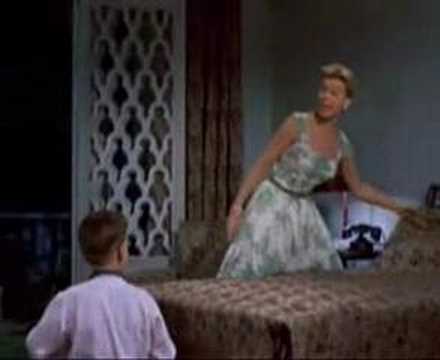
It’s the theme song from Alfred Hitchcock’s 1956 film “The Man Who Knew Too Much,” sung by the lead actress and singer Doris Day.
With lyrics that mean “whatever will be, will be,” the song also plays an important role within the film itself.
Despite its cute waltz (3/4 time) feel, the movie is a suspenseful, heart-pounding thriller.
In Japan, it was covered by artists such as Peggy Hayama and Izumi Yukimura.