

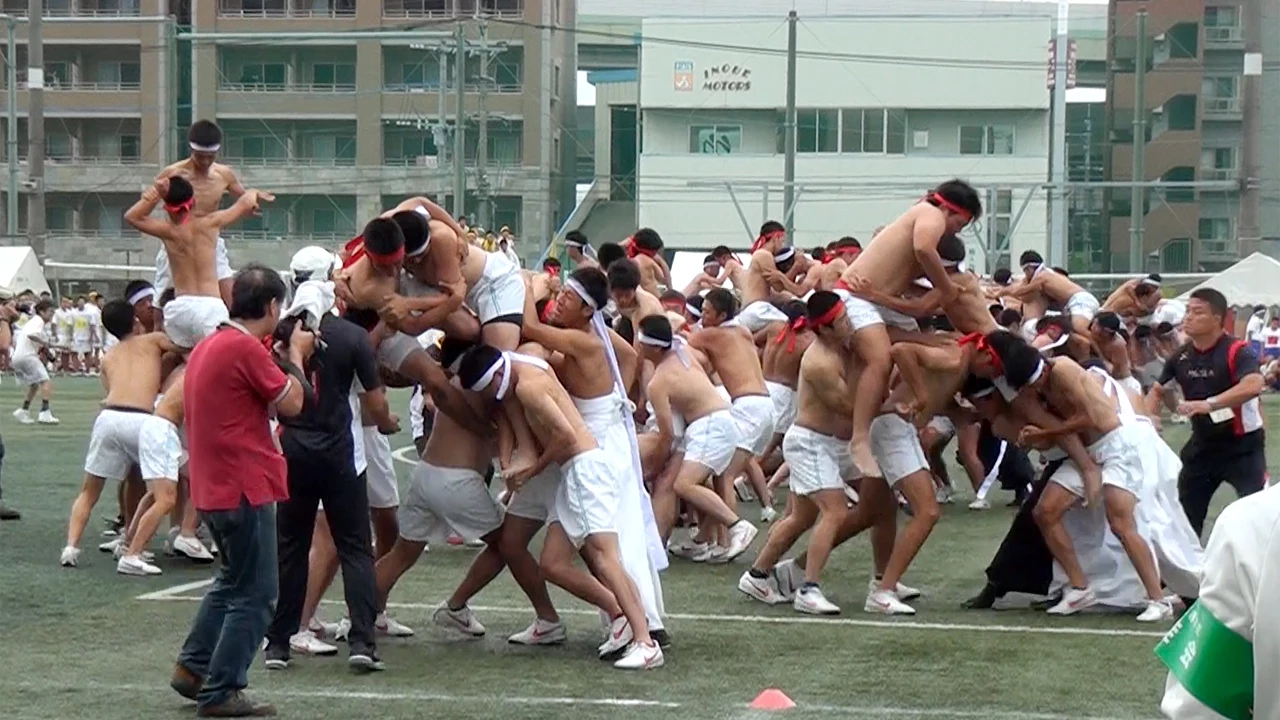
How to win at kibasen (mounted cavalry battles). A thorough guide to team assignments, horse formation, and tactics.


Kibasen, one of the classic events at school sports days, is a competition where three people form a human “horse” as the base and one rider mounts on top to battle.
You win by either snatching the headband or cap worn by the opposing rider, or by knocking the opposing rider off their horse.
It’s one of the most heated events at a sports day.
In this article, we’ll thoroughly introduce tips for kibasen, where the determination of “I absolutely don’t want to lose!!” clashes head-on.
We’ll explain in detail everything from staffing and how to form the horse, to tactics during matches and even training methods.
If you’re a competitor who’s set on winning at kibasen no matter what, be sure to use this as a reference!
What is a cavalry battle (1–10)
Samurai battles revived at a sports festival

Kibasen, as its name suggests, is a sport modeled after battles between mounted samurai.
Its appeal lies in the powerful, heated clashes, and it has long been a staple event at school sports festivals.
Three people form the base “horse,” with a fourth person riding on top as the “knight,” making a team of four that competes against others.
The common rules are that you win by either taking the headband or hat worn by the opposing knight, or by knocking the opposing knight off their horse.
Two match formats
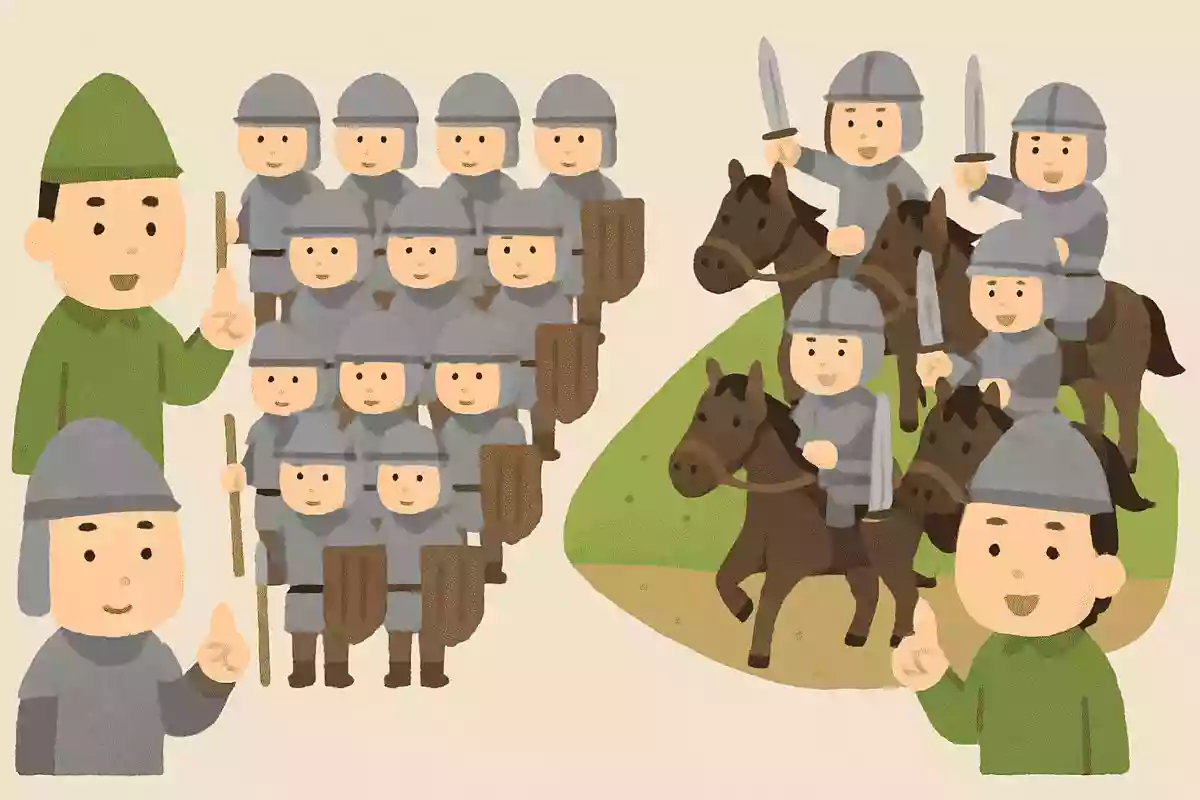
In addition to one-on-one matches, team battles involving multiple mounted players are also common in kiba-sen.
In team matches, there are well-known rules such as the team that defeats the most mounts within the time limit wins, and the rule where the team that takes down the opposing commander’s mount wins.
The strategies you should adopt differ by match format, and how skillfully you maneuver often determines the outcome.
We’ll explain tips for in-match positioning and tactics in detail in the latter half of this article!
Points to note
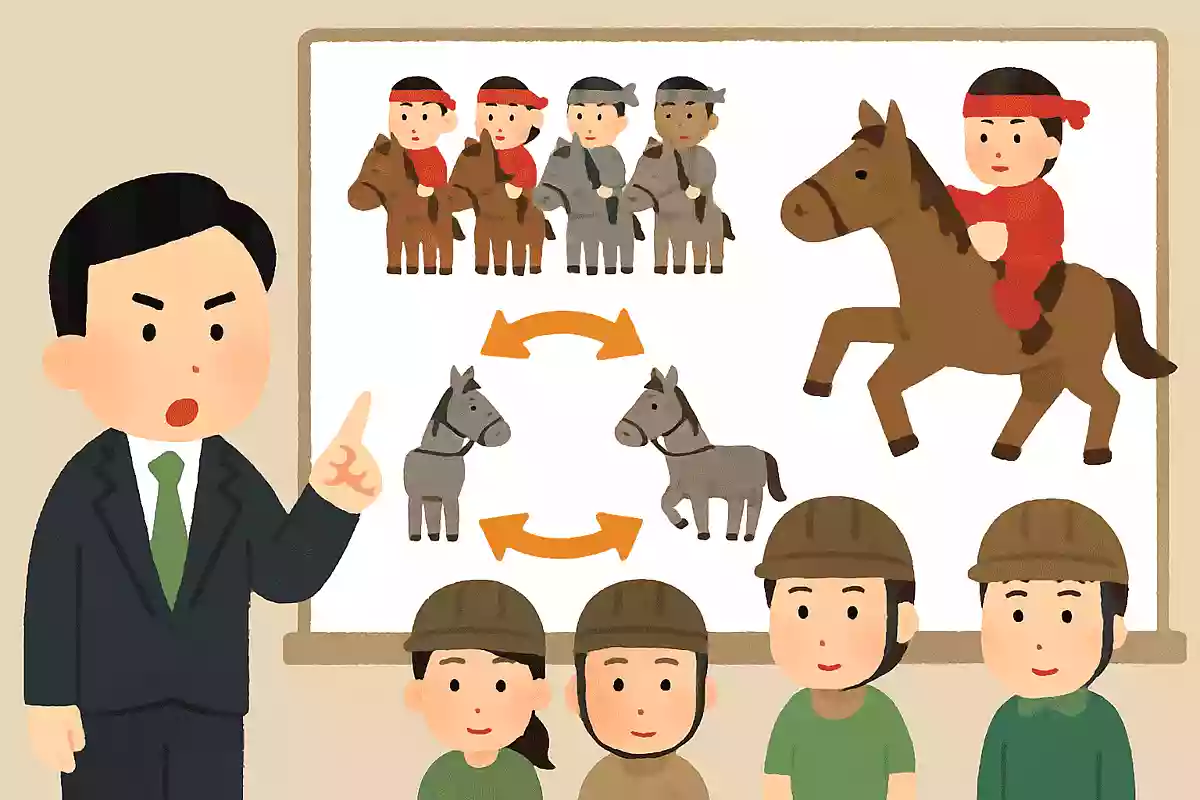
Because cavalry battles can often become very heated and intense, the fouls are clearly defined.
Typical prohibitions include “no attacks above the neck,” “no using feet to attack, such as stomping or kicking,” and “no grabbing hair,” all intended to prevent injuries.
Getting hurt would turn the long-awaited sports day into a sad memory, so let’s establish safety-conscious rules in advance and ensure everyone can enjoy the competition.
Tips for Forming Cavalry Units and Assigning Personnel (1–10)
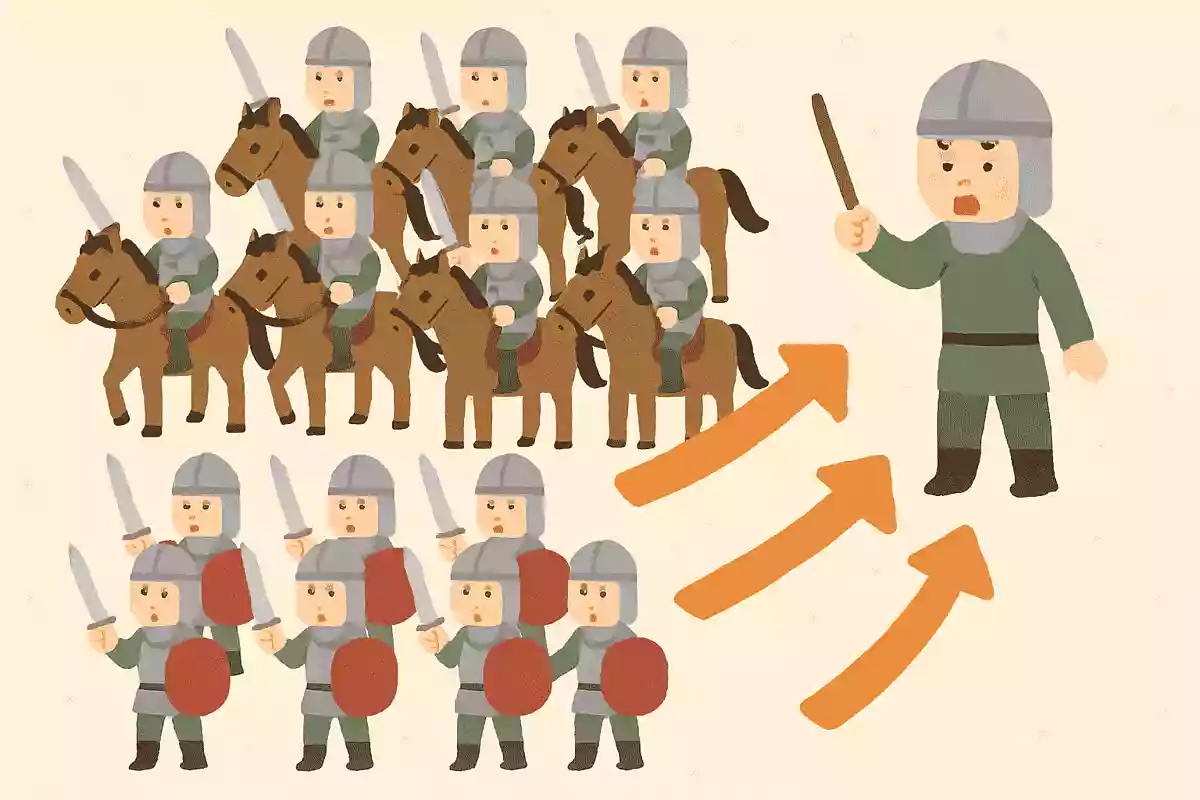
Before introducing tips on how to fight in a kibasen (mounted piggyback battle), let’s go over how to form the “horses” and how to assign team members.
Once you understand how to form them, you’ll be able to build horses that can better withstand impact; if you grasp the tips for personnel placement, you can create more stable horses or ones that are better suited for offense! By reading this section, you’ll know what kinds of members are best suited to be the horse or the rider.
Compare these traits with those of your team members and assemble a strong horse with the optimal personnel arrangement.
For horseback riding, choose someone tall or someone fast.
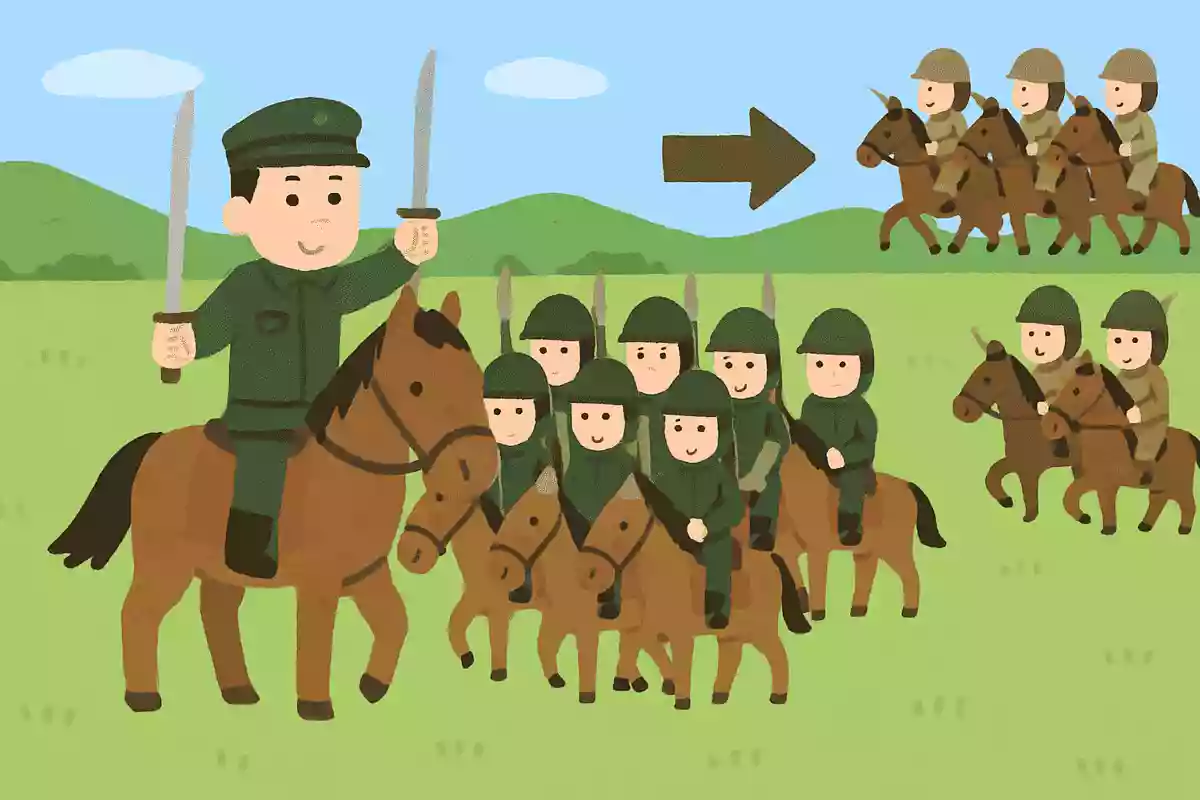
First, let me introduce what kind of members are best to place in a cavalry formation.
To get straight to the point, the people you want participating in building the cavalry are either tall or fast runners.
In cavalry battles, there’s a fundamental premise that attacking from above gives you an advantage, so gaining height with your formation leads to greater strength in one-on-one clashes.
Also, as I’ll explain in more detail later, one key tactic in team battles is having a fast cavalry unit throw the opponent into confusion while a tall cavalry unit snatches the opponent’s headband or cap.
To execute that strategy, you need a cavalry team made up of fast runners.
Put the strong at the head of the cavalry.
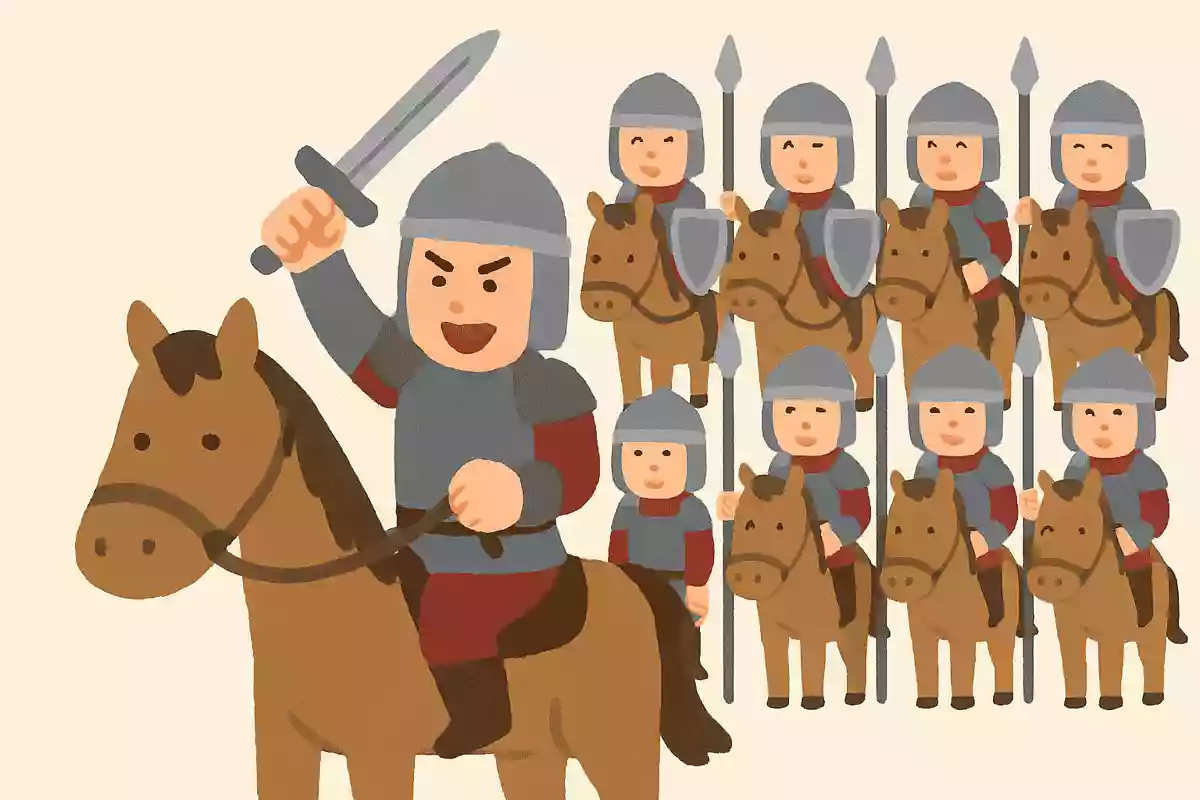
Next, here are the traits we want in the member who will take the front position of the horse formation.
In a cavalry battle, your weight naturally shifts forward when advancing or during one-on-one duels, so it’s best to place a strongly built member at the front.
If the front member can firmly hold their ground, the rider on top can focus on the match with confidence.
Tips for forming a mounted formation: “cross” and “matching heights.”
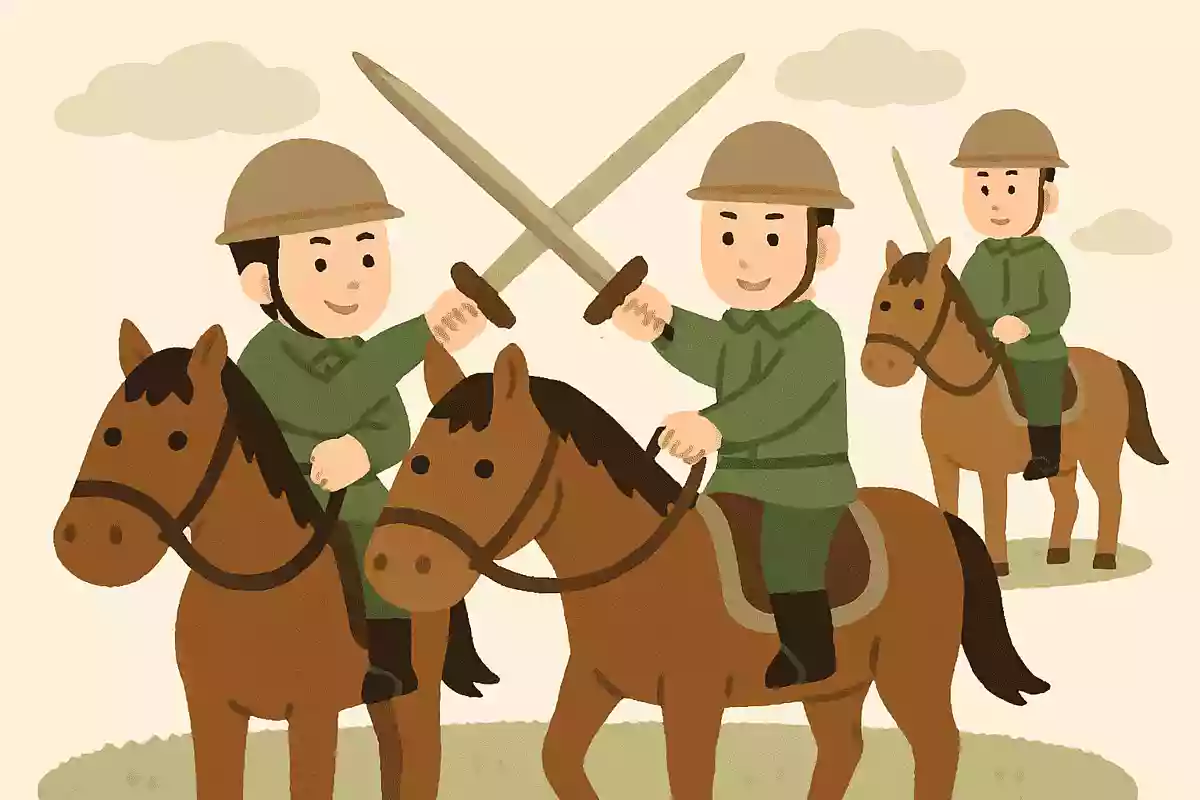
After introducing recommended team placements for a cavalry formation, I’ll share two tips for how to form the “kiba” (horseback) properly.
The basic layout is one person in front and two in back.
The person on the right rear links their right hand with the person in front and places their left hand on the front person’s left shoulder.
Conversely, the person on the left rear links their left hand with the person in front and places their right hand on the front person’s right shoulder.
This is the first tip: it causes the rear members’ arms to cross, making the formation much more resistant to collapsing when colliding with an opposing group.
The second tip is to match the heights of the members forming the “kiba.” In particular, if the two people in the back are of similar height, the rider will be able to sit more stably, so try to choose members who are as close in height as possible.
For jockeys, either tall people or short people
Lastly, as a tip for personnel placement, let’s talk about the riders.
Those who make good riders are either tall people or, conversely, smaller individuals with light body weight.
Tall people are suitable not only because, as noted in the tips for positioning the horse carriers, attacking from above is advantageous, but also because having a taller height and longer reach gives them a competitive edge.
On the other hand, smaller, lighter individuals are well-suited as riders because putting a lighter person on a fast horse increases mobility even further, allowing them to excel at disrupting the opposing team’s horses in team battles.
It’s important to assign clear roles to each horse unit and allocate personnel to fulfill those roles accordingly.
Overall tips for cavalry battles (1–10)
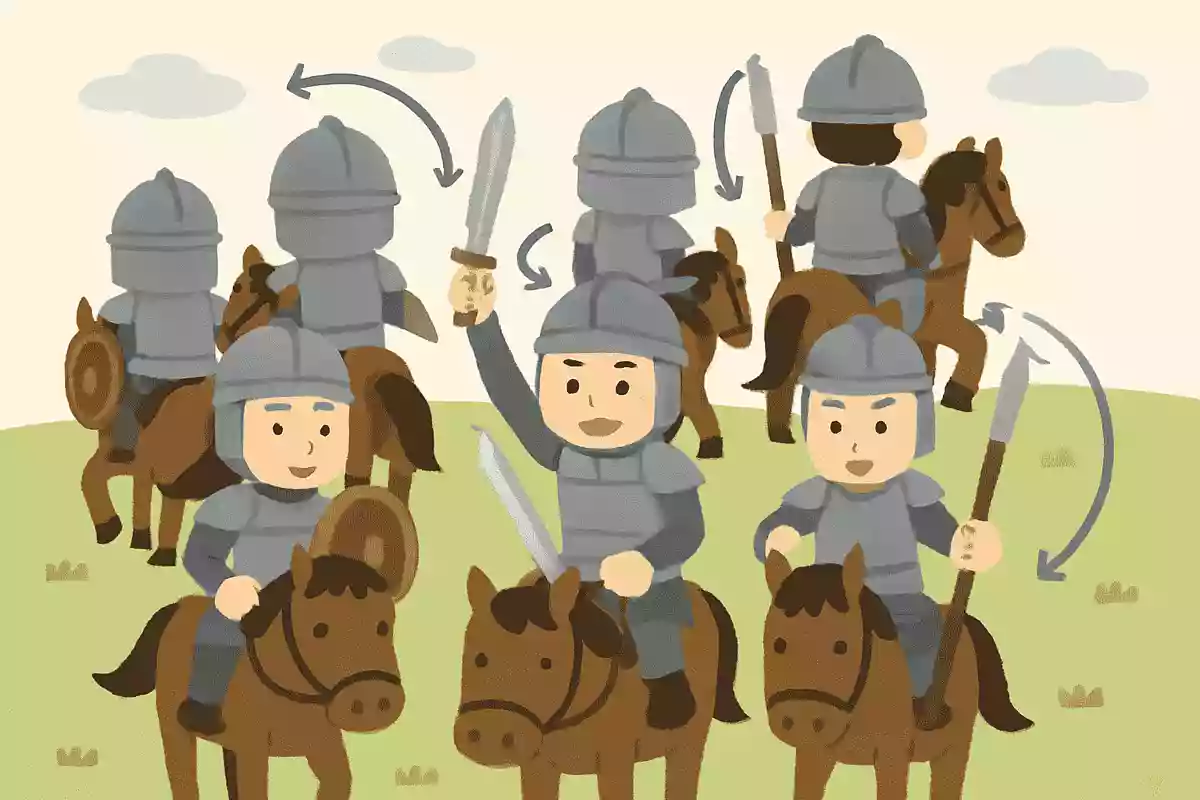
Now that we’ve covered tips for assigning personnel, let’s finally move on to strategies for the cavalry battle matches.
First, regardless of whether it’s a team battle or a one-on-one duel, I’ll go over tips that apply to cavalry battles as a whole.
These are the basics of cavalry battles, so be sure to master them!