

[For Kids] Trivia & Fun Facts Quiz About June

June marks the start of the rainy season, when it rains a lot and it becomes harder to go play outside.
For those looking for activities that can brighten a gloomy mood, this article offers quizzes with trivia and fun facts about June!
These quizzes are for children, so please make use of them during playtime at daycare or kindergarten, or for spending time at home.
Even children who don’t have a great impression of June might, through these quizzes, start to think, “So that’s what June is like,” and enjoy taking an interest—if even just a little, we’ll be happy.
- Trivia & fun facts about June
- [Easy] Quizzes That Elementary School Students Can Solve! A Collection to Nurture Wisdom
- [For Kids] November Trivia Quiz & Fun Facts: Let’s Learn While Having Fun!
- Rainy season trivia roundup: fun facts you'll want to share with someone
- Indoor games and recreational activities recommended for June
- Learn to Love the Rain! Fun Facts & Trivia Quiz about the Rainy Season for Kids
- [For Elementary School Students] Trivia About April
- Trivia quiz with useful tips to know: fun facts that come in handy at school or at home [for kids]
- [For Kids] December Trivia Quiz & Fun Facts! Learn about seasonal events and traditions!
- [For Kids] Fun Summer Trivia Quiz & Facts
- [For Kids] Trivia Quiz & Fun Facts About Rain
- Will you like May even more once you know? Fun May trivia elementary schoolers should know
- Make your summer festival even more fun! Trivia quizzes and fun facts for kids
[For Kids] Trivia & Fun Facts Quiz About June (21–30)
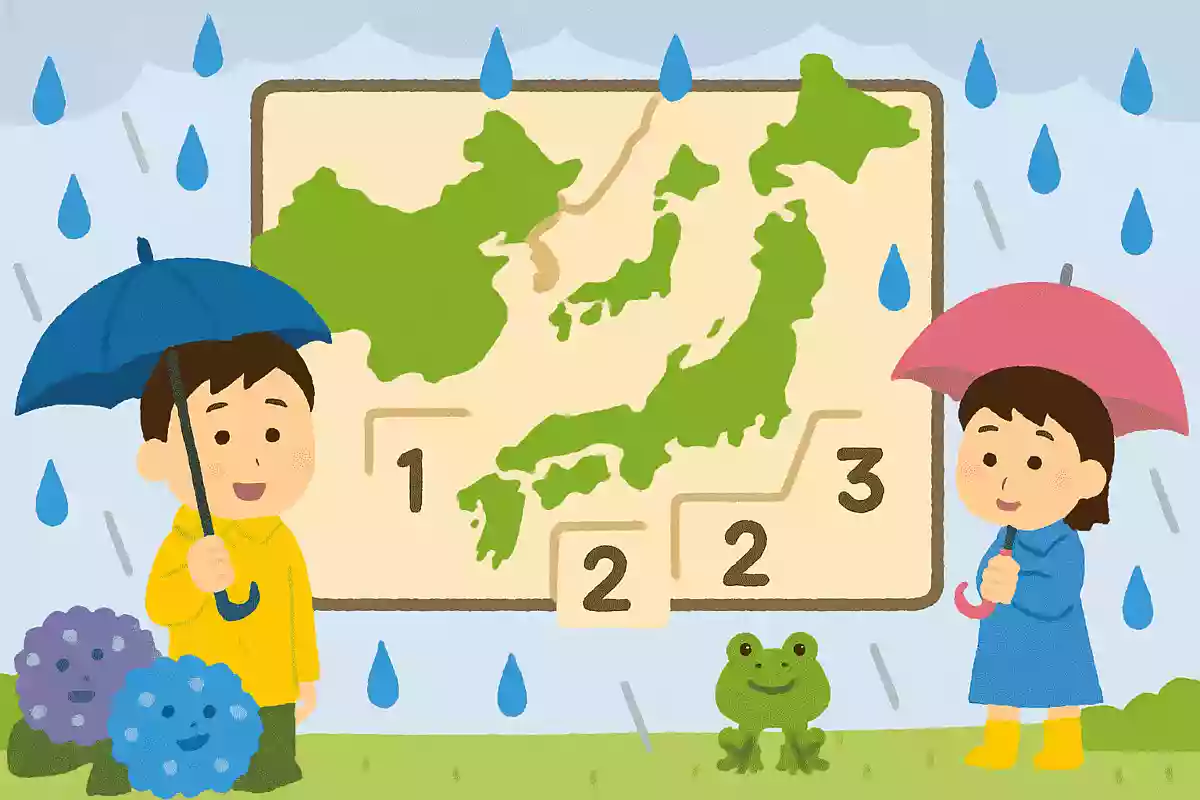
Which of these countries has a rainy season (tsuyu)?
- Italy
- Brazil
- South Korea
See the answer
South Korea
What is known as the rainy season (tsuyu) is observed in Southeast Asia and is said to be caused by the stagnation of the “baiu front.” This Southeast Asia–specific weather phenomenon is characterized by long-lasting, gentle rainfall and high humidity. It is said that no weather phenomenon comparable to tsuyu is observed in countries like Italy or Brazil.

In the children’s song “Amefuri,” what does “janome” refer to?

- rickshaw
- rubber boots
- umbrella
See the answer
umbrella
“Janome” refers to a “janome-gasa,” an old-style Japanese umbrella whose large, round patterns painted on the canopy resemble a snake’s eye. It appears in the children’s song ‘Amefuri’ and was once a staple item for rainy days. While we still use umbrellas when it rains, opportunities to see a janome-gasa have become rare.
What shape are raindrops?

- teardrop-shaped
- meat-bun-shaped
- triangle
See the answer
meat-bun-shaped
Real raindrops are not teardrop-shaped; they look more like a steamed bun, with a rounded top and a flattened bottom. This is because air resistance causes the lower part to spread out. Small raindrops are spherical, but as they get larger, they take on the steamed-bun shape.
What sweets do we eat on June 30?

- yokan (sweet red bean jelly)
- Minazuki (the traditional Japanese name for the sixth month)
- jelly
See the answer
Minazuki (the traditional Japanese name for the sixth month)
In the old lunar calendar, June is called Minazuki. So the sweet we eat is also called Minazuki. It’s a traditional Japanese confection: steamed uirō topped with azuki beans and coated with kudzu starch, giving it a cool appearance. It’s the perfect wagashi for the humid, muggy season.
Since what era have teru teru bozu existed?

- Jōmon period
- Warring States period
- Edo period
See the answer
Edo period
It is said that teru-teru bozu originated in the Edo period. When people wanted the rain to stop and to pray for clear weather, they made them from paper or cloth and hung them by the window. People in the Edo period, just like today, wished for sunny weather with teru-teru bozu.
Which country’s deity is the origin of the June bride?

- Italy
- America
- China
See the answer
Italy
The origin of the June bride comes from Juno (also spelled Iuno), the goddess of marriage in Roman mythology. In Roman myth, Juno was regarded as the deity who protects the home and marriage, and June was considered her month. For this reason, the origin is attributed to Italy.
Which country has the highest umbrella consumption in the world?
- Japan
- China
- United Kingdom
See the answer
Japan
The answer is Japan. Japan has a very high consumption of umbrellas due to the rainy season, typhoons, and frequent sudden showers. In particular, vinyl umbrellas are used in large numbers every year because they can be easily purchased at convenience stores and train stations. We want to use our resources carefully, don’t we?