

![[For Kids] Fun Facts & Trivia Quiz about Koinobori (Carp Streamers)](https://media.ragnet.co.jp/img/1200__png__https://www.studiorag.com/files/2025/04/fbdd9a5881ad25c358153d5e32917385.webp)

In May, there’s a long holiday called Golden Week, and many families—both adults and children—look forward to it, don’t they?
On Children’s Day, which falls on the last day of Golden Week, you’ll often see koinobori (carp streamers) fluttering grandly against the blue sky all across Japan.
In this article, we’ll introduce trivia and fun quiz questions about koinobori.
They’re designed for children, but there are plenty of facts that even adults might not know.
Be sure to enjoy them together with your kids!
- Little-Known Trivia and Fun Facts About Koinobori (Carp Streamers)
- [Sakura Quiz] Trivia & Fun Facts Quiz about Cherry Blossoms for Kids
- Let's get excited with a two-choice quiz that everyone—from kids to adults—can enjoy!
- Fun for Children’s Day! A Collection of Performance and Play Ideas Recommended for Early Childhood Education
- Will you like May even more once you know? Fun May trivia elementary schoolers should know
- Surprisingly, there’s a lot we don’t know? A quiz to learn trivia about May!
- [For Kids] December Trivia Quiz & Fun Facts! Learn about seasonal events and traditions!
- Lesser-known facts about Mother’s Day that might surprise you—tidbits you’ll want to share with someone
- Make your summer festival even more fun! Trivia quizzes and fun facts for kids
- [For Kids] Fun Summer Trivia Quiz & Facts
- Trivia quiz with useful tips to know: fun facts that come in handy at school or at home [for kids]
- Recommended for elementary school students! Trivia quiz you'll want to share once you know it
- [For Elementary School Students] A Collection of Fun, Educational Quiz Ideas for Mother's Day
[For Kids] Fun Facts & Trivia Quiz about Koinobori (Carp Streamers) (1–10)
Since what era did people start displaying koi-shaped streamers?

- Heian period
- Edo period
- Showa era
See the answer
Edo period
Koinobori (carp streamers) were originally displayed in samurai households during the Boys’ Festival (Tango no Sekku) to pray for children’s health and growth, and their origins date back to the Edo period. While there was already a custom in the Heian period of displaying May dolls and warrior dolls, koinobori only became widespread from the Edo period onward. Entering the Showa period, the custom of displaying koinobori spread even more widely across the country.

What is the meaning of displaying carp streamers (koinobori) on Boys’ Day (Tango no Sekku)?
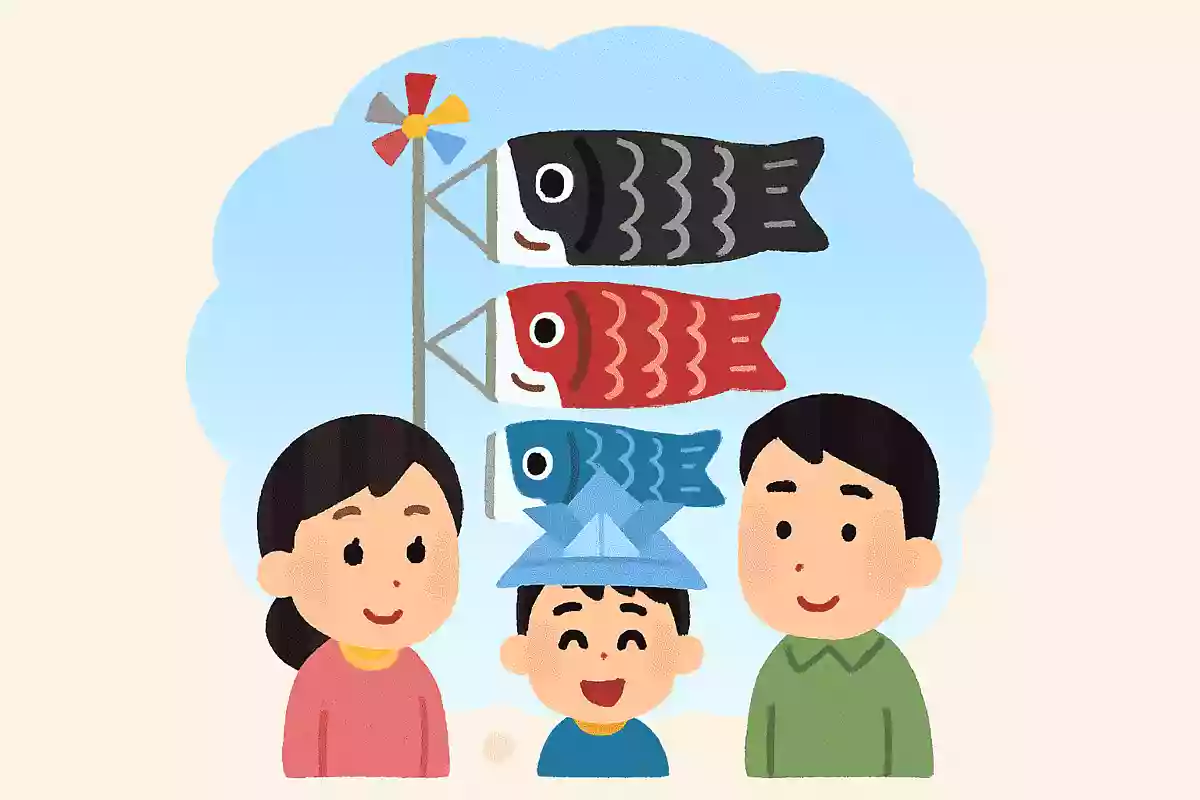
- Wishing for children's health and growth
- Drive away evil spirits
- Deepen family bonds
See the answer
Wishing for children's health and growth
The reason we display carp streamers on Children's Day is to pray for children's health and growth. The image of a carp swimming up a waterfall is likened to a child's development and robust vitality, and families put them up as a custom to wish for their children's health and future success.
Until what age do you display carp streamers?
- Until the child enters elementary school
- Until the child enters junior high school
- It depends on the family.
See the answer
It depends on the family.
We display carp streamers to wish for children’s healthy growth and to celebrate their safe development. There isn’t a specific age for displaying them; it varies by family and region. The number of days they are displayed also follows local customs.
Why have carp streamers become a symbol of May 5?
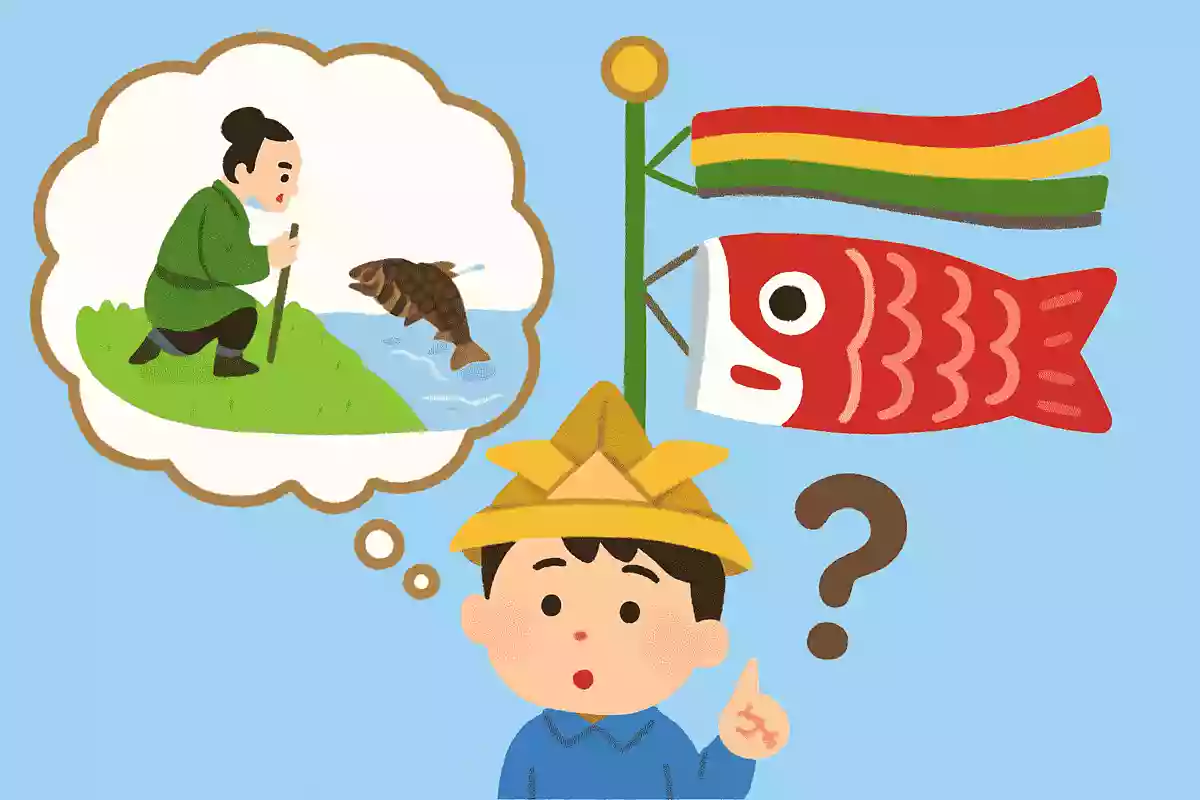
- Because it’s the day the carp streamers were made.
- For the event/festival of Tango no Sekku (the Boys' Festival)
- Because May 5th is Fish Day
See the answer
For the event/festival of Tango no Sekku (the Boys' Festival)
The custom of displaying carp streamers is closely tied to the event held on May 5th known as Tango no Sekku (the Boys’ Festival). Tango no Sekku originated in ancient China and is regarded as a rite to ward off evil spirits and pray for health and protection from illness. After it was adopted in Japan, the practice of displaying carp streamers on this day became a tradition to pray for the health and growth of boys.
In households with only daughters, is it not allowed to display koi nobori?
- Do not decorate
- You may display it.
See the answer
You may display it.
Koinobori are traditionally displayed in the lead-up to Tango no Sekku, the Boys’ Festival on May 5, as part of an event meant to pray for children’s healthy growth. Whether you can display them does not depend on the child’s gender. Although Tango no Sekku has been known as a festival for boys, there is absolutely no problem with families who have girls putting up koinobori as well, since the meaning is to wish for children’s health and growth. In recent years, pink koinobori designed for girls have also been sold.
What does the streamer (fukinagashi) above the carp streamers (koinobori) signify?
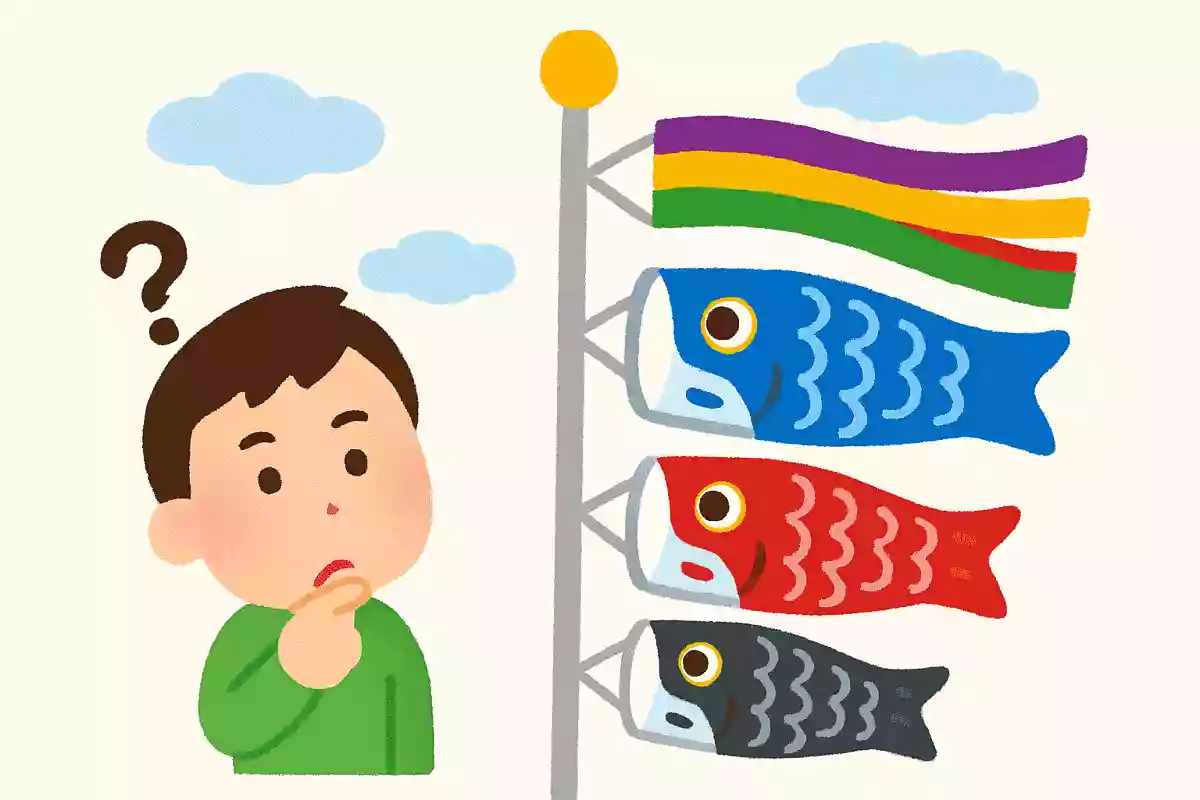
- Wishing for my family's health and happiness.
- Ward off evil and protect the home
- Praying for a good harvest
See the answer
Ward off evil and protect the home
Each of the five colors of the streamers has its own meaning, embodying wishes to protect the family from misfortune and to drive away evil influences from the home. They are said to flutter in the wind to dispel negative energy and serve to safeguard the household.
Which member of the family does the black carp streamer, the “magoi,” represent?

- Dad
- Mother
- Grandpa
See the answer
Dad
The “magoi” in a koinobori is the largest carp streamer and symbolizes the father of the family. In the Edo period, when koinobori became popular, only a single black magoi was displayed, but today koinobori represent the whole family.
Koinobori—why was the carp chosen as the motif?
- Because vivid colors were preferred
- to symbolize the koi’s strong vitality
- Because the image of a carp swimming upstream represents growth and success.
See the answer
Because the image of a carp swimming upstream represents growth and success.
The reason carp streamers (koinobori) are modeled after carp comes from the Chinese legend of “Climbing the Dragon Gate.” In this tale, a carp bravely swims up a river’s rapids and eventually transforms into a dragon. Symbolizing overcoming hardship and achieving success, the story conveys wishes for children’s healthy growth. Inspired by the carp’s image, Japan began displaying koinobori.
Is the custom of displaying carp streamers unique to Japan?
- A custom unique to Japan.
- There are similar customs in other Asian countries.
- It is a custom that can be seen in any country around the world.
See the answer
A custom unique to Japan.
The origin of the Boys’ Festival (Tango no Sekku) is in China, but the custom of displaying carp streamers (koinobori) is unique to Japan. While various Asian countries have similar customs—albeit in different forms—that pray for children’s health and growth, the koinobori themselves are a distinctly Japanese tradition.
Are you only allowed to display carp streamers until May 5?
- Clean up on May 5
- There are no particular rules.
See the answer
There are no particular rules.
There aren’t any strict rules about how long to display koinobori carp streamers. In many cases, they’re put up before Golden Week and kept up until Children’s Day on May 5, but some regions keep them up longer. In short, it depends on family and local customs, and it isn’t limited strictly to May 5.