

[For University Students] A Roundup of Fun Games and Recreational Activities


We’re introducing recommended games and recreational activities for college students!
We’ve gathered a variety of options—from exciting activities perfect for club or seminar retreats and welcome/farewell parties, to simple games for small groups, and large-scale recreation suited for spacious venues like school grounds.
There are plenty of activities you can enjoy indoors too, so no need to worry about the weather on the day!
These can be used across many event scenarios, so feel free to use them as a reference.
Let’s play some classic recreational activities and trending games, and have a great time together!
- [Simple Games] Recommended Indoor Recreational Activities for Adults
- Indoor games and recreational activities recommended for college students
- A roundup of recommended icebreakers for college students
- No worries even in the rain! Fun recreational activities you can do in the gym
- Team-based recreational activities for adults that are fun even with large groups
- Recreation Ideas That Truly Excite High School Students! A Fun Collection of Activities
- A collection of simple indoor recreational games
- Recreation Popularity Rankings for High School Students
- Fun activities for junior high school students. Recreation games.
- Get the Fun Going! Easy Classroom Games You Can Play at School: Recreational Activities for the Whole Class
- Liven up even first meetings! A collection of fun games perfect for welcome parties
- Games and activities everyone can enjoy together. A collection of fun play ideas.
- [For Adults] Exciting Bus Recreation
[For University Students] A Collection of Exciting Games and Recreational Activities (11–20)
New: When-Where-Who-What Game

A game where you shuffle cards on which everyone has written “when,” “where,” “who,” and “what they did,” and then make a single sentence.
It’s a fun activity on its own, but a new version is introduced where you actually carry out the sentence.
In this version, you omit “when,” write the names of the participating members under “who,” and for “what they did,” the key is to write actions that are just barely feasible in real life.

Perfect Match Game
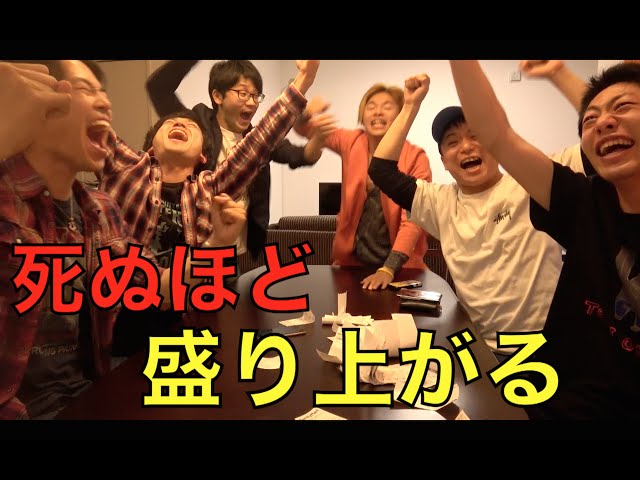
This is the “Nanto Pittari Game,” where you play by asking questions to get as close as possible to a target number.
Choose one person from the opposing team and ask a question related to numbers.
Add their answer to your team’s total, and the team that gets closer to the target number wins.
However, if you exceed the target number, you’re out.
The larger the target number, the harder the questions become.

Tag (or Tag, holding hands)

This is a game that adds a new element to the basic tag rule of running away so as not to get caught by the tagger: taggers hold hands and form a chain.
When someone is caught, they don’t switch roles; both become taggers and, from then on, chase the runners while holding hands.
Quick decisions are crucial for catching runners, and this becomes more challenging as the number of taggers grows.
With more players, new strategies become possible, so in addition to speed, teamwork is also an important factor.

Kaki no Tane Mountain CollapseNEW!

Arrange some Kaki no Tane (spicy rice crackers) on a plate and stand a single chopstick upright in the center.
When it’s your turn, eat one piece of Kaki no Tane.
Repeat this, and whoever knocks over the chopstick loses.
You can safely eat from the outer edge, or you can raise the tension by eating pieces closer to the center.
If you’re okay with spicy flavors, the rules are simple—just eat! It’s a relaxing game to play while snacking, and it’s likely to spark fun conversation.
Introducing someone else

In settings where many people are meeting for the first time, this “introducing others” activity is highly recommended.
Unlike self-introductions where you talk about yourself, here you introduce someone else to everyone.
The method is: first, pair up, and ask each other about your profiles—hometowns, hobbies, and so on.
Then, present what you learned to the rest of the group as if giving a short presentation.
Since you’ll be talking during the preparation stage, communication happens naturally, and because you’re introduced more objectively than in a self-introduction, others can present you to the group in a more appealing way.
Spy Tag

Heart-pounding excitement! Let’s play “Spy Tag”! It’s best to play inside a building that’s a bit larger than usual compared to regular tag.
And unlike ordinary tag, the real thrill comes from the presence of a spy.
The spy’s job is to secretly tell the tagger where everyone is hiding.
No one knows who the spy—chosen by drawing lots—actually is.
[For University Students] A Collection of Exciting Games and Recreational Activities (21–30)
Signaling Game

Do you know the “Traffic Signal Game”? To put it simply, it’s a word game where you quickly answer with something that matches the color that’s called out.
For example, if the caller says “red, green, yellow,” you might respond rhythmically with “apple, spinach, banana.” It’s okay if colors or answers repeat.
It’s also fun to tweak the rules as you play—like adding “no repeating the same item in a row” or limiting it to categories such as “foods.”