

A roundup of recommended icebreakers for college students

An icebreaker refers to simple activities or games designed to ease tension among participants, shorten the emotional distance between them, and facilitate smooth communication.
They’re especially effective in situations where people are meeting for the first time.
If you’re a university student, you’ve probably encountered them in first classes, group work, club activities, or even during job hunting.
In this article, we’ll introduce a range of easy icebreakers that help people get closer to one another.
We’ve focused on activities based on self-introductions and fun games that progress through mutual communication, so pick the ones that fit the situation where you want to use an icebreaker.
- [For University Students] A Roundup of Fun Games and Recreational Activities
- [Self-Introduction & Games] Icebreaker Ideas Collection
- Icebreaker Ideas and Games Collection
- Games you can play with just conversation. Classic and popular activities you can enjoy without any props!
- Indoor games and recreational activities recommended for college students
- Fun games recommended for making friends with people you’ve just met
- Liven up even first meetings! A collection of fun games perfect for welcome parties
- Get closer in no time, even with first-time meetings! Games that liven up welcome parties
- A roundup of recommended personality tests for icebreakers
- A simple and fun co-op game that enhances teamwork
- Get the Fun Going! Easy Classroom Games You Can Play at School: Recreational Activities for the Whole Class
- [Simple Games] Recommended Indoor Recreational Activities for Adults
- [In a Short Time] Icebreakers and Fun Games That Shine at Morning Meetings
Summary of recommended icebreakers for university students (1–10)
Helium ring

Let me introduce an icebreaker called “Helium Ring,” which can be played with about five people or more! Form a team and stand in a circle, then each person places a hula hoop on the first joint of their index finger.
Set the height of the hoop around chest level.
It’s a team game where you’re challenged to lower the hoop all the way to the ground without letting it come off anyone’s index finger.
It may look simple at first glance, but it can be tricky if you can’t control the hoop as you expect or if everyone’s timing isn’t in sync.

Shiritori self-introduction
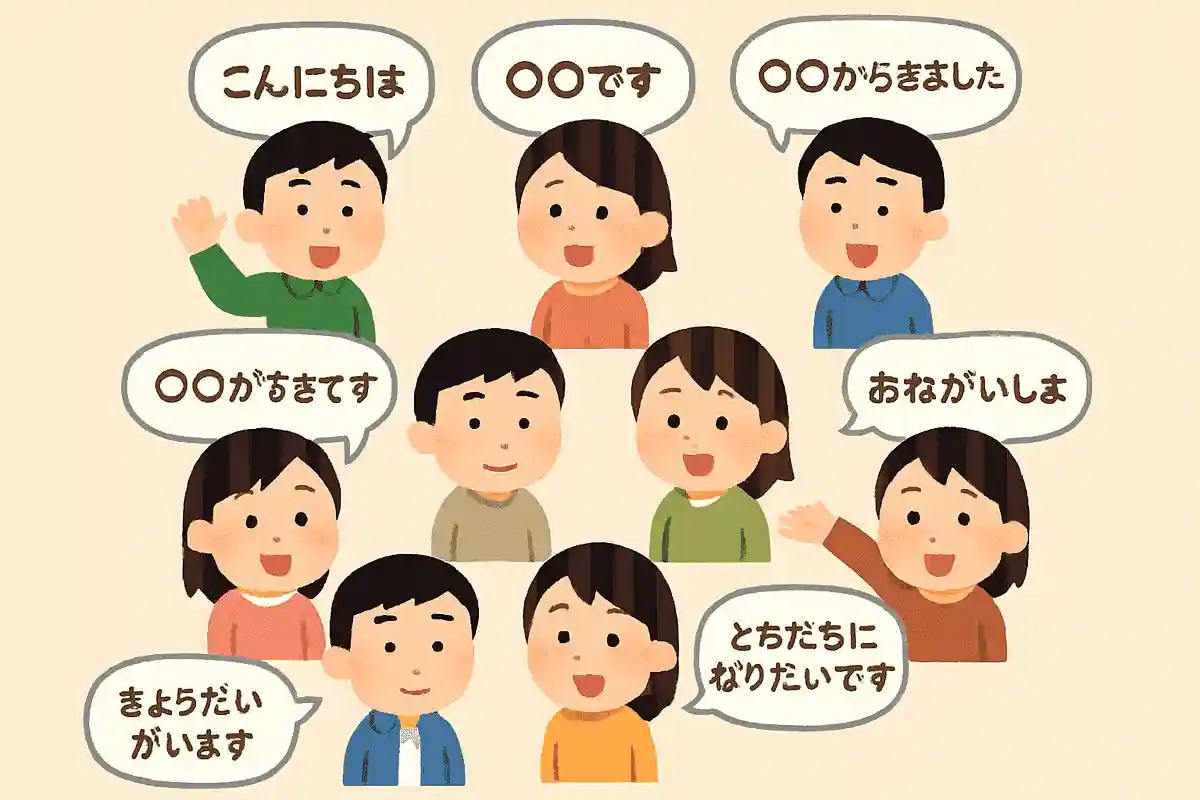
A word game where you connect words using the last character, called “shiritori.” I’m sure many of you know it well.
This icebreaker uses shiritori for self-introductions.
For example, the first person says their name.
If the last character of the name is “ko,” then the second person starts their introduction with “ko.” Something like, “I’m ◯◯, and I love Kobe.” Self-introductions tend to become formulaic based on the first person, so having a rule like this can help bring out unexpected aspects, making it fun for both yourself and everyone around you!

paper tower

Paper Tower is an icebreaker where, as the name suggests, you build a tower using paper.
However, you may only use paper—no glue or scissors.
You fold or roll the paper to construct the tower.
Set a time limit for building and hold a strategy meeting for each team beforehand.
Have everyone actually handle a sheet of paper, folding or bundling it to think through ideas.
After a proper strategy session, teams build their towers.
When time is up, stop touching the towers and let them stand on their own.
The team with the tallest free-standing tower wins.

Recommended Icebreakers for College Students (11–20)
Who am I? game

Are you familiar with the game “Who Am I?” In this game, everyone except one person is a guesser, and the goal is to figure out who that one person is.
That “someone” could be a food, a building, an animal, and so on.
You ask various questions to narrow it down and arrive at the answer.
From yes/no questions to more probing ones, everyone takes turns asking questions, and once the whole team has figured it out, you give the answer—this format seems like a great way to boost teamwork.
trifectaNEW!

What would you do if you had to spend 100 million yen in a single day? What would you do if you could stop time for an hour? How would you answer when asked such outlandish questions? Sanrentan is a game where you deduce the other person’s values and preferences and try to guess their answers perfectly.
Written in kanji as “三連単,” it sounds a bit like horse racing predictions.
It’s a great icebreaker for getting to know someone.
Although it’s sold as a card game, handwritten slips work perfectly well too.
Only One Game
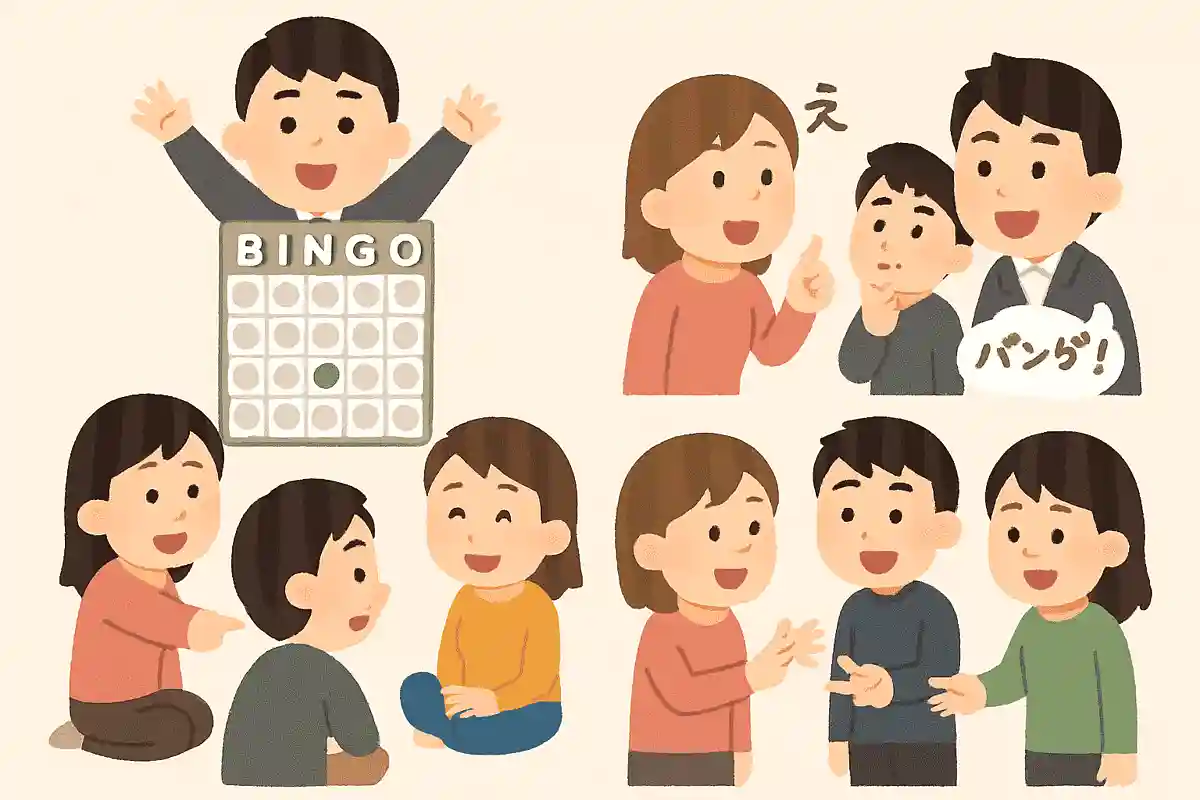
Even when you introduce yourselves formally, it can be hard to break the ice.
That’s where the “Only One Game” is perfect.
In this game, participants say things that are likely true only for themselves.
For example, striking profile points like “I know a celebrity” or “I once won the lottery.” Because distinctive stories tend to come out, it also makes it easier to remember each person.
On the flip side, even if you say something that applies to someone else, you end up discovering common ground and getting closer anyway—so it’s a win-win!

Finger Catch Game

Let’s break the ice and build camaraderie with “Finger Catch,” a game fun for kids and adults alike! Participants form a circle.
Make your left hand into a loose fist shaped like a tube, and extend only the index finger of your right hand, placing it into the tube of the person to your right.
At the cue “Catch,” use your left hand to catch the finger of the person on your left, while using your right hand to pull your own finger away so it doesn’t get caught by the person on your right.
Can you succeed with both hands at once? It’s also fun to delay the cue instead of saying it right away, or to fake people out with words that start with the same sound as “Catch.”