

From Showa-era kayōkyoku to pop: songs that sound cool when you can really sing them


Many of you probably want to sing cool, deep tracks at karaoke with style.
In particular, Showa-era kayōkyoku and New Music, as well as early-to-mid Heisei J-POP, are packed with timeless masterpieces that still sound fresh decades after their release—a real treasure trove of cool, mature songs.
It’s precisely because of that universal appeal that these songs continue to be sung by today’s younger generation.
In this article, I’ll introduce plenty of those songs that, if you can pull them off, will give you that sophisticated edge.
I’ve picked selections mainly from Japanese music of the ’70s through the ’90s, with some of the latest J-POP mixed in, so use this as a reference when choosing songs for karaoke!
- Must-see for men: Songs that look cool if you can sing them at karaoke—numbers that women can’t help but be captivated by.
- Cool songs from the Showa era. Masterpieces from Showa that shine with sensuality, passion, and rugged charm.
- A collection of nostalgic hits from the ’70s to 2000s that are perfect for livening up karaoke
- A collection of iconic, cool Showa-era kayōkyoku classics sung by male vocalists
- [Men in Their 50s, Gather Up!] Classic Karaoke Crowd-Pleasers & Easy-to-Sing Hits
- [Classic Showa Kayō Hits] The captivating Showa-era pop songs beloved even by younger generations
- [Songs from the Showa Era] Introducing classic tracks that are easy to sing at karaoke.
- Karaoke songs for men in their 40s: a curated selection of hit tracks women want to hear!
- Heisei-era masterpieces: Easy to sing! Carefully selected songs recommended for karaoke choices!
- Songs Women Want Men to Sing: Popular Karaoke Picks Chosen by Girls
- Even karaoke beginners can relax! Easy-to-sing songs for men
- [Popular and Crowd-Pleasing!] Stylish Song Selections and Karaoke Tracks
- A lineup of classic hits! Karaoke songs recommended for the yutori generation
From Showa-era kayōkyoku to pop: Cool songs that sound suave when you can really sing them (71–80)
Love MemoryMatsuzaki Shigeru
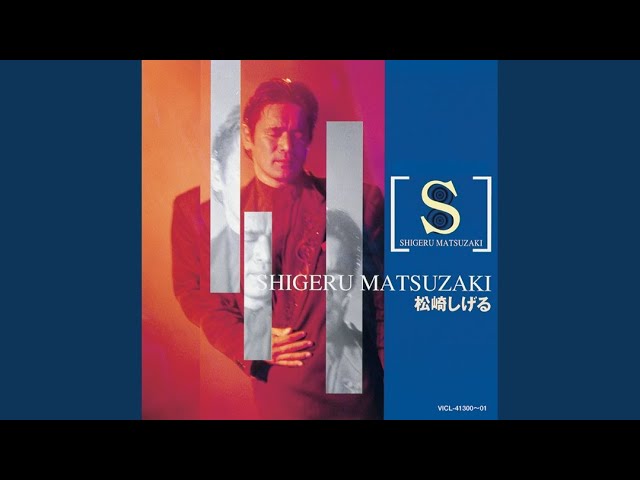
You don’t often see it in Japan, but in Europe there are many competitions where singers vie on pure ability.
Love Memory was composed after a director at Pictor Records was deeply impressed by the Mallorca Music Festival and wanted to let the world know that Japan, too, has top-tier talent.
As a result, Shigeru Matsuzaki was chosen as the featured powerhouse vocalist.
The song went on to take second place in the overall category at the Mallorca Music Festival.
Ironically, it isn’t well known in Japan, but it’s actually an incredible piece.
By the way, at the time the chorus was reportedly arranged in Spanish.
Given all this, the song is extremely difficult, but it’s crafted to be as cool and sophisticated as it gets—so why not give it a try?

Tiger & DragonCRAZY KEN BAND

This is the fifth single by the 12-member band Crazy Ken Band, led by Ken Yokoyama—who calls himself the top sound creator in the East—and known for their popularity with a mixture sound that incorporates a variety of musical genres.
It’s a track that made a powerful impact, boasting multiple tie-ins with TV dramas, music shows, and variety programs.
The repeated hook in the final chorus is the kind of phrase that makes even listeners at karaoke want to sing along.
Beyond its catchy chorus, the entire song overflows with cool, mature flair—a rock number that would be undeniably cool to sing at karaoke.

Time, stop.Yazawa Eikichi

Eikichi Yazawa, a driving force in Japan’s rock scene.
Many people admire not only his songs but also his character and way of life.
One track I’d like to highlight is Jikan yo Tomare (“Time, Stand Still”), which sings about a no-nonsense view of love.
It portrays a man thinking of the one he loves.
The lyrics are romantic yet distinctly masculine.
If you try it at karaoke, take your time and sing with feeling.
Since much of the song sits in the lower register, it’s a good pick even if high notes aren’t your strength.

Imperial Regent Declarationsadamasashi

Kuwata Masashi’s classic song “Kampaku Sengen” (The Patriarch’s Declaration) centers on a domineering, head-of-the-household man on the verge of marriage.
Because Masashi Sada himself wrote both the lyrics and music, some people have mistaken him for being that kind of authoritarian husband, but in reality, he was motivated by seeing a society with more and more timid men and chose to portray a strong-willed male figure on purpose.
Although the song initially faced strong backlash from women when it was released, it has since become one of Sada’s signature tracks.
It’s a song brimming with rugged charm—be sure to give it a listen!
Sake, Tears, Men, and WomenKawashima Eigo

This is the first solo single by singer-songwriter Eigo Kawashima, whose songs, capturing the unique melancholy and inner emotions of men, have been loved across generations.
Used in a commercial for the sake brand Kizakura, the song begins with a heartrending piano melody that truly stirs the soul.
If you can pull it off at karaoke, many listeners will likely be captivated by its cool, mature vibe.
It’s also a great choice for younger people to sing at karaoke with their bosses or seniors, and it’s widely known as one of Kawashima’s signature numbers.
Hold my soulHimuro Kyosuke
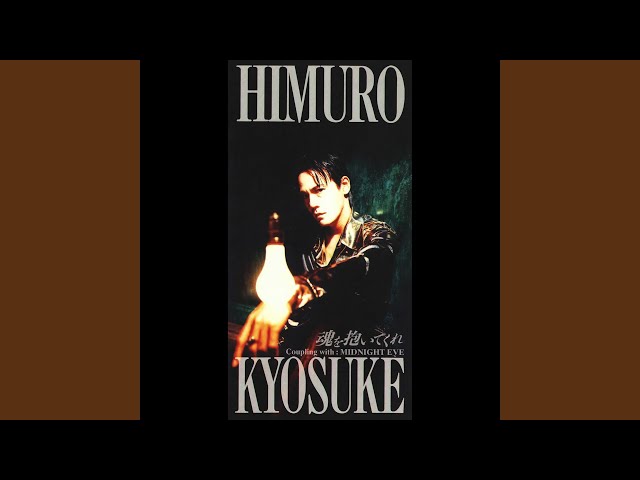
It was released in 1995 as Kyosuke Himuro’s 11th single.
It was used as the theme song for the TV Asahi drama “Kaze no Keiji: Tokyo-hatsu!” and in a commercial for Pioneer’s Carrozzeria, and it reached No.
2 on the Oricon Weekly Singles Chart.
It is one of Kyosuke Himuro’s most popular and representative songs.
brandy glassIshihara Yūjirō

This is a song released by Yūjirō Ishihara in 1977 that gained nationwide attention after being used in the TV Asahi drama “Seibu Keisatsu.” It was reissued two and a half years later, on November 25, 1979.
On the Oricon charts, it reached a peak position of 11th and became a long-running hit.