

[Masterpiece Classics] A special showcase of gem-like masterpieces so beautiful they’ll move you to tears


Masterpieces of classical music are played on TV, in movies, and in shopping malls, permeating our daily lives as background music.
There are many times when a piece that mysteriously brings you to tears turns out to be a work of classical music.
This time, from among such classical works, we’ve carefully selected timeless masterpieces under the theme “so heartbreakingly beautiful they’ll make you cry.”
Please enjoy to your heart’s content the profound sonorities unique to classical music, which combines both delicacy and boldness.
- A poignant classic masterpiece. Recommended classical music.
- Timelessly beautiful classical masterpieces. Recommended classical music.
- [Violin] A curated selection of beloved classic masterpieces and popular pieces that continue to be cherished across eras
- Cool classical masterpieces. Recommended classical music.
- Masterpieces of classical piano that are too beautiful for words. A gathering of delicate tones that cleanse the soul.
- [Orchestra] Introducing famous and popular pieces
- Popular classical piano pieces. A collection of masterful performances by Japanese pianists.
- Cello Masterpieces: A comprehensive introduction to exquisite classical works that let you savor its profound timbre
- Classical Masterpieces: Recommended Works You Should Hear at Least Once
- [Ultra-Advanced] Even challenging for advanced players! A curated selection of highly difficult piano pieces
- Gabriel Fauré | Introduction to His Famous and Representative Works
- Masterpieces for Harp: A curated selection of distinguished works featuring noble and delicate tones
- Today's Classics: Recommended classical music and great performances to listen to today
[Masterpiece Classics] A Showcase of Exquisitely Beautiful Gems That Will Move You to Tears (41–50)
From “Fantasy Miniatures,” No. 1: ElegySergei Rachmaninov

Sergei Rachmaninoff, the world-renowned composer and pianist born in Russia, wrote many works whose melodies are not only beautiful but steeped in sorrow.
There are countless Rachmaninoff pieces suitable for introduction in this article, but the one featured here is the first piece, “Élégie,” from his 1892 solo piano set Morceaux de fantaisie.
While the second piece, “Prelude,” may be more famous, the beauty and poignancy of the melody in “Élégie” are equally remarkable.
Centered on left-hand arpeggiated figures, the music unfolds with a flowing, melancholic grace that is truly gorgeous.
To think that Rachmaninoff completed such a work at the young age of 19—his talent can only be described as astonishing.

[Masterpieces of Classical Music] A comprehensive introduction to exquisitely beautiful gems that will move you to tears (51–60)
Violin Concerto in E minor, First MovementFelix Mendelssohn

Felix Mendelssohn, a composer who represents German Romantic music.
A child prodigy, he displayed musical talent from an early age and not only produced numerous masterpieces, but also earned credit for reviving Bach’s music, which had been fading into obscurity at the time.
Among his works, a piece I recommend for its poignancy is the First Movement of the Violin Concerto in E minor.
Its melody conveys beauty, but unlike Chopin or John Field, it is crafted to express a passionate intensity—an impassioned kind of wistfulness and beauty.

Dance of the Blessed Spirits from the opera Orfeo ed EuridiceChristoph Willibald Gluck
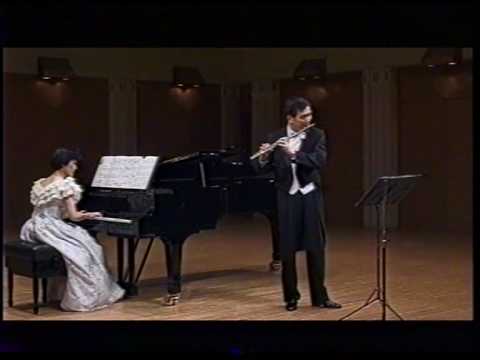
The opera Orfeo ed Euridice consists of three acts and is set on a stage that blends the wondrous world of spirits from Greek mythology with reality.
It tells the story of the love between the husband Orfeo, who bravely fights to reclaim his deceased wife from the realm of spirits and bring her back to the living world, and his wife Euridice.
It is a tale similar to the Japanese myth in which Izanagi travels to the land of the dead to see Izanami.
Dance of the Blessed Spirits is performed in Act II, in the scene where spirits dance in the meadows of heaven.
It’s a bright and beautiful piece that lets you imagine the spirits dancing joyfully, isn’t it?

“Dreaming” from “Scenes from Childhood”Robert Schumann

This is the seventh piece from Scenes from Childhood, which Robert Schumann began composing in 1838.
It is the most famous piece in the set and is also popular in music boxes.
Franz Liszt was deeply moved by this piece and is said to have written Schumann a letter much like a fan letter.
Unlike later works such as Schumann’s Album for the Young, which consists of exercises for children, this series portrays the world of a child’s heart and is intended for adults.

Two Elegiac MelodiesEdvard Grieg

Two pieces selected from the song collection Twelve Melodies, Op.
33, set to poems by the Norwegian farmer-poet Aasmund Olavsson Vinje, were arranged by Edvard Grieg himself for string orchestra as Two Elegiac Melodies.
The two movements are Heart Wounds and The Last Spring.
Though steeped in sorrow, their grand sense of scale strongly conveys Grieg’s Nordic character.
These works soothe a downcast spirit and calm a restless heart.

String Quartet No. 2, Movement 3: NocturneAlexander Borodin

Borodin was one of the composers known as the “Mighty Handful” (or “The Five”), a group in late 19th-century Russia who sought to create a nationalistic art music.
Although he was not a professional composer but a chemist working at an army hospital, he left behind deeply expressive masterpieces.
This piece, too, is characterized by the rich sonority of the strings.
The cello sings an emotional, beautiful melody, which the violin then takes up and continues to render with heartfelt expression.
Borodin dedicated this work to his wife as a commemoration of the 20th anniversary of confessing his love to her.
String Quartet No. 77 in C major, Op. 76 No. 3, Hob. III:77, II. “God Save Emperor Francis”Franz Joseph Haydn

Among the works of Franz Joseph Haydn, often called the father of classical music, his string quartets hold a special place.
Composed in 1797, this piece was created as a tribute to Emperor Francis II of Austria.
The melody used in the second movement is based on the Austrian national anthem, which Haydn himself composed.
Its world of sound—woven from beautiful melodies and masterful variations—will deeply move listeners.
Seamlessly blending patriotism with musical creativity, this work is highly recommended for those who wish to fully savor the allure of classical music.