


Riddles that everyone can enjoy, from children to adults.
In this collection of ideas, we’ve gathered simple riddles that even small children can solve.
It could be fun to trade riddles with your child and compete, or for adults to try them as brain training.
The simpler they are, the trickier they can be.
- Easy Riddles for Elementary School Students
- [Simple Riddles] A curated selection of fun questions that will excite everyone from kids to adults!
- Let's Think Outside the Box! A Collection of Challenging Riddles for Kids
- So tricky you’ll be fooled! A collection of trick riddles that both adults and kids can enjoy.
- Fun riddles that kids will love
- Fun Brain Teasers for Kids and Adults Alike!
- Mental Workout: Casual Challenge! Riddles for Adults
- Interesting riddles: a collection of simple and fun questions
- Fun quizzes for elementary school kids: a collection of questions everyone can enjoy together
- [Challenge] Stimulate your intellectual curiosity with a general knowledge quiz you might not know!
- [Trick Quiz] Quiz Questions That Excite Everyone from Kids to Adults
- Let's get excited with a two-choice quiz that everyone—from kids to adults—can enjoy!
- Recommended riddles for elementary school students. A collection of kid-friendly riddles.
Fun for kids and adults alike! Train your brain with easy riddles (1–10)
When is honey sweet?
@igosso.youtube♪ Original Song – Igossou [YouTube] – Igossou [YouTube]
Honey is sweet and delicious, isn’t it? You can pour it on pancakes, add it to tea instead of sugar—there are countless dishes and products that use honey.
So let’s try a honey-themed trick quiz! When is honey sweet? “In the season when bees fly a lot?” “Does it have something to do with the number eight?” Many people might think that, but the answer is actually very simple! Just think: when do you feel it’s “sweet”? If you approach it that way, the correct answer should come to you easily!

There are 5 candies. If you lick one, how many are there?
@igosso.youtube♪ Original Song – Igossou [YouTube] – Igossou [YouTube]
It seems like a question that would trip up adults more than children.
When you read the problem statement, you instinctively want to treat it like an arithmetic problem and think, “5 – 1 = 4, so the answer is 4!” But remember, it’s a trick question.
The hint to solving it is that the candy wasn’t given to someone else, nor did it disappear.
If you think about how many candies you have after you lick one, you should arrive at the correct answer.
An elementary school student with a flexible mind might solve it right away!
What kind of bird plays by getting tangled in string?
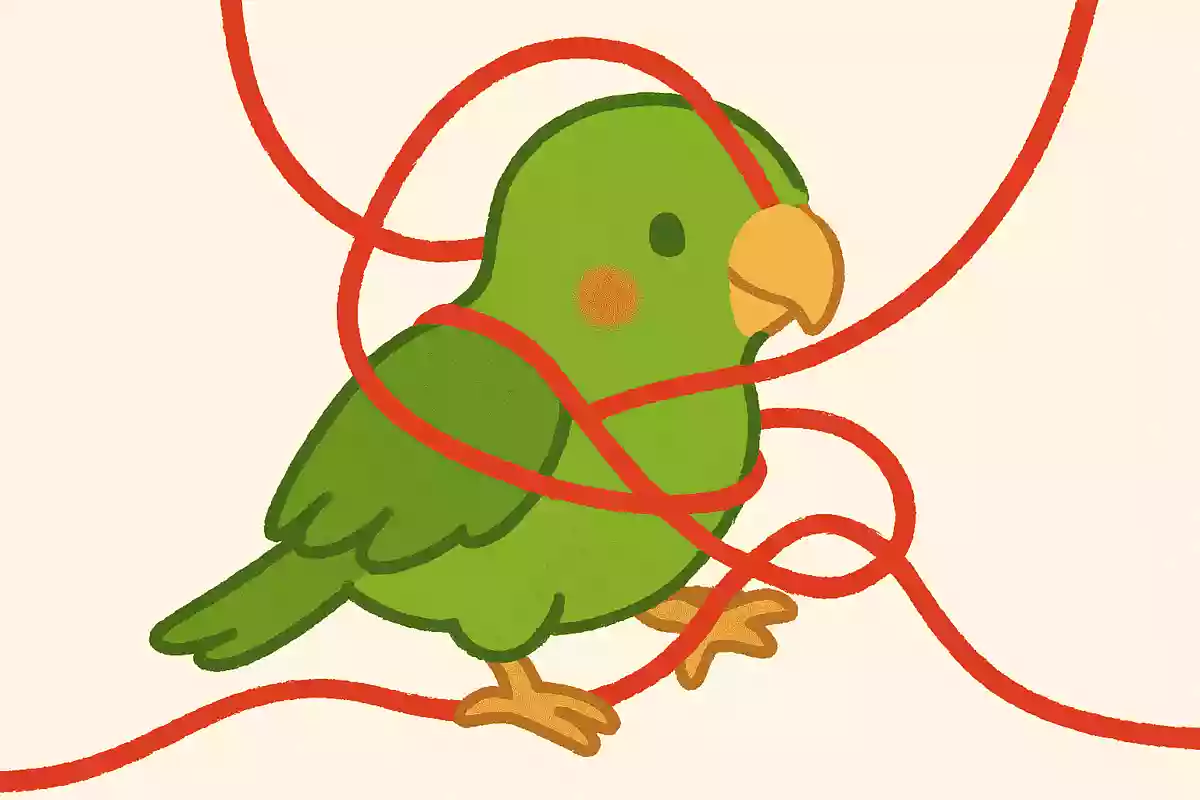
If a bird gets tangled in a string, you’d think it wouldn’t be able to spread its wings and fly, right? That would be true for an ordinary bird.
But there’s a bird that can still “fly” even when it’s tangled in string.
It’s not a bird soaring in the sky, but one that changes into various shapes in your hands.
To find the answer, try thinking of words that include “tori” (bird).
What words come to mind? Here’s a hint: it’s a game played with string.
Have you figured it out? The answer is ayatori (cat’s cradle).
20 fun riddles

This video features 20 simple riddles.
The riddles themselves are easy, but some of the vocabulary is a bit challenging, making it perfect for elementary school children or adults getting back into riddles after a while.
Give it a quick try!

What gets smaller the bigger it gets?
The bigger it gets, the smaller it becomes… What does that even mean? you might wonder.
“Getting bigger” and “getting smaller” are opposites, and something that gets bigger doesn’t become smaller.
What we need to consider when solving this riddle is how to interpret “bigger.” In this puzzle, “bigger” means “growing.” When you grow, isn’t there something that becomes smaller? You probably experience it often when the seasons change.
The answer is clothes! As your body grows and gets bigger, the clothes you wore last year become too small and no longer fit.
What animal is bigger than a whale but smaller than a killifish?
See the answer
dolphin
To say that there’s no animal bigger than a whale and smaller than a killifish, we use a pun: we say “iruka” (which means dolphin) as a play on words with “inai” (there isn’t). The trick is to change the intonation when you say the comeback line, like “Sonna no iruka!” (which can sound like “Is that a dolphin?” or “Who would buy that?” depending on intonation). The correct answer is “iruka” (dolphin).

10 easy riddles that kids can enjoy

This is a video that collects 10 riddles that are simple and enjoyable for both adults and children.
They’re very easy, so I think it’s perfect for little kids trying riddles for the first time and for adults getting back into riddles after a while.
It’s also nice that the kanji have furigana.