

![[For Seniors] Popular Hand-Play Songs: Fun Brain-Training Ideas](https://i.ytimg.com/vi_webp/Tz2dMj8cceI/maxresdefault.webp)


To increase opportunities for physical activity and social interaction, many older adults visit facilities such as day-service centers.
However, there may be many who find it difficult to start conversations on their own and end up sitting by themselves.
In this article, we introduce simple hand-play songs that can be done while seated! If it’s a tune they’ve heard before, they can join in with enjoyment, which can also help spark interaction with other participants.
In addition, raising the arms and moving the fingers serves as brain training and is important for preventing cognitive decline.
Please try these as fun recreational activities!
- [For Seniors] Hand and finger play roundup: Finger exercises that lead to brain training
- [For Seniors] Enjoy Easily! Hand Play 'Shimoshika Meyo' (If If, Tortoise)
- Energetic and Lively! Sing-and-Exercise Program for Seniors
- [For Seniors] Songs Everyone Can Sing Together! A Roundup of Recommended Crowd-Pleasers
- For Seniors: Fun and Lively Exercise Recreation
- [Brain Training for Seniors] Recommended Hand-Play Recreation for Dementia Prevention
- Hand games that liven things up for seniors—also great brain training
- [For Seniors] Recommended Rhythm Play and Exercises
- [For Seniors] Fun and Engaging Brain-Training Recreation
- [Sing for your health!] Popular songs among seniors. Also recommended for recreational activities.
- [For Seniors] Easy and fun seated activities you can do in your room
- [For Seniors] A heartwarming round song. Let’s layer our voices with this nostalgic classic.
- [For Seniors] Guaranteed to Be a Hit! Popular Day Service Recreational Activities
[For Seniors] Popular hand-play songs. Fun brain-training ideas introduced (1–10)
Song of the Frogs

Hand-play activities set to the song “Kaeru no Uta” (Song of the Frog) can be expected to stimulate the brain by moving the fingers in rhythm.
For example, you can alternately form a snail shape with your hands in time with the song, and, playing on the word “kaeru” (which also means “to flip/turn over”), add a motion where you turn your hands upside down mid-routine to boost both fun and focus.
If you also extend your hands forward to make a ‘open palm’ (pa) shape, then pull them back into a ‘fist’ (gu) shape, you’ll be coordinating fingers and arms in different ways, which helps train judgment and reflexes.
By adding variations to the movements, it’s easier to keep going without getting bored, and because it can be done while seated, it’s a recommended recreation activity in care settings.

The railroad tracks go on forever.

Here’s an idea for a fun hand-play song that lets you move your body to the rhythm: “I’ve Been Working on the Railroad” (Senro wa Tsuzuku yo Doko Made mo).
Face your partner, press your palms together, and alternate clapping, adding movements up, down, left, and right to keep it from becoming monotonous while building concentration and reflexes.
Changing the tempo—speeding it up or slowing it down—adds variety so it stays engaging.
Since it only uses hand and arm movements, participants can join in while seated.
Facing each other also naturally encourages smiles and conversation, making it a great activity for social interaction.
Rhythmic exercises with pop songs

“Rhythmic Exercise with Kayōkyoku” is a wonderful activity that lets you move your body while having fun.
Clapping your hands or stepping your feet to nostalgic kayōkyoku naturally brings a smile to your face.
Moving with the rhythm helps build strength and maintain cognitive function.
Because these are songs you’ve long been familiar with, it’s also appealing that you can enjoy humming along to the lyrics.
You can even participate while seated, so it’s reassuring for those who aren’t confident in their stamina.
If everyone sings and dances together, the conversation will flow and you’ll have a great time.
It’s a lovely exercise that energizes both mind and body—be sure to give it a try!
Momotaro
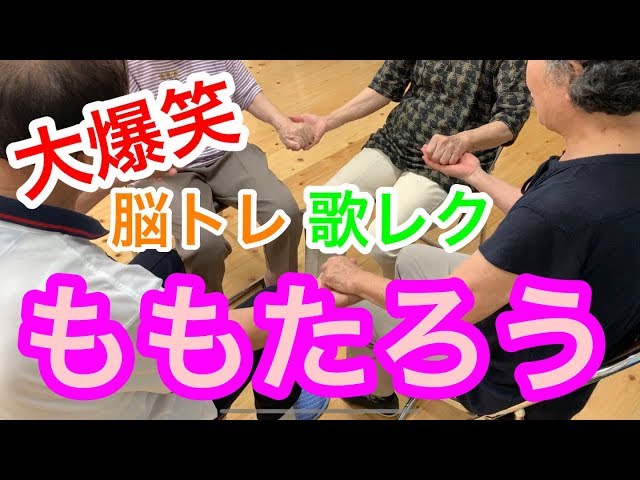
We’d like to introduce a hand-play activity idea called “Momotaro” that uses time for singing, moving your body, and sharing joyful laughter.
All you do is move your hands to a nostalgic melody, so it’s easy to join in even while seated and is popular with older adults.
For those who find it hard to speak, the song can help soften their expressions naturally and become a starting point for conversation.
Alternating open-and-close motions of the left and right hands while singing stimulates the brain and is expected to help prevent cognitive decline.
It can be enjoyed by small groups or entire groups together and is used as a place for social interaction.
It’s a simple yet profound idea that lets you rediscover the power of hand-play activities.
The Hare and the Tortoise
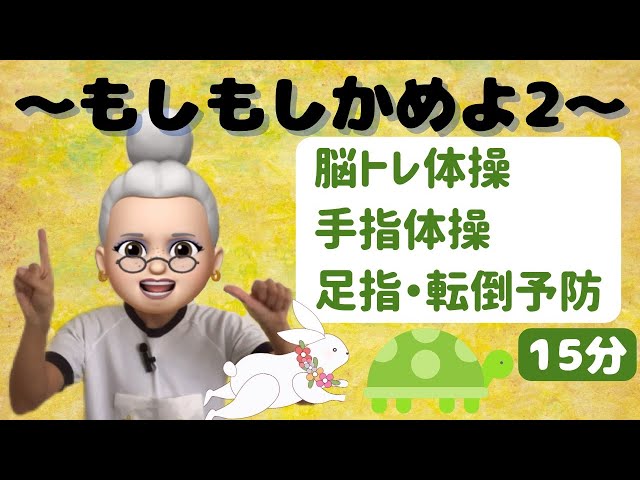
“The Tortoise and the Hare” is a children’s song that sets Aesop’s fable directly to lyrics.
Because it has long been passed down as a nursery rhyme, many older adults will remember hearing it often in their childhood.
The story of the slow tortoise and the hare racing is well known.
In the end, the hare, who underestimated the tortoise, loses the race.
When using it for recreation, exercising while singing this song provides good stimulation for the brain.
Even if you make mistakes in the movements, the key is not to stop and to enjoy continuing all the way to the end.

butterflied sardine(s)

The hand game “Iwashi no Hiraki,” where you flap your hands open and closed, is simple yet uses the fingers precisely and stimulates the brain.
Repeating it to songs or rhythms improves concentration and may help prevent cognitive decline.
It can be done while seated, so it’s easy on older adults, and even those who aren’t comfortable speaking up can participate easily.
If you randomly change the type of fish to match the number of fingers, it stays engaging without getting boring.
It’s a quick, fun brain training activity recommended for seniors.
Zuizui Zukkorobashi

Let me introduce a traditional hand game that uses an old children’s song, “Zuizui Zukkorobashi.” Participants sit in a circle and make small rings with their hands.
One person goes around inserting a finger into each hand ring in turn, and the person whose hand the finger enters on the last beat of the song switches places and becomes “it.” It’s simple, but by focusing on the timing of inserting the finger and staying aware, it helps develop attention and a sense of rhythm.
Another plus is that it can be done comfortably while seated without large body movements, making it a good opportunity to encourage interaction among participants.
It’s recommended as a fun recreational activity that stimulates the brain.