

[For Seniors] Popular Hand-Play Songs: Fun Brain-Training Ideas


To increase opportunities for physical activity and social interaction, many older adults visit facilities such as day-service centers.
However, there may be many who find it difficult to start conversations on their own and end up sitting by themselves.
In this article, we introduce simple hand-play songs that can be done while seated! If it’s a tune they’ve heard before, they can join in with enjoyment, which can also help spark interaction with other participants.
In addition, raising the arms and moving the fingers serves as brain training and is important for preventing cognitive decline.
Please try these as fun recreational activities!
- [For Seniors] Hand and finger play roundup: Finger exercises that lead to brain training
- [For Seniors] Enjoy Easily! Hand Play 'Shimoshika Meyo' (If If, Tortoise)
- Energetic and Lively! Sing-and-Exercise Program for Seniors
- [For Seniors] Songs Everyone Can Sing Together! A Roundup of Recommended Crowd-Pleasers
- For Seniors: Fun and Lively Exercise Recreation
- [Brain Training for Seniors] Recommended Hand-Play Recreation for Dementia Prevention
- Hand games that liven things up for seniors—also great brain training
- [For Seniors] Recommended Rhythm Play and Exercises
- [For Seniors] Fun and Engaging Brain-Training Recreation
- [Sing for your health!] Popular songs among seniors. Also recommended for recreational activities.
- [For Seniors] Easy and fun seated activities you can do in your room
- [For Seniors] A heartwarming round song. Let’s layer our voices with this nostalgic classic.
- [For Seniors] Guaranteed to Be a Hit! Popular Day Service Recreational Activities
[For Seniors] Popular hand-play songs. Fun brain-training ideas introduced (1–10)
Where are you from?
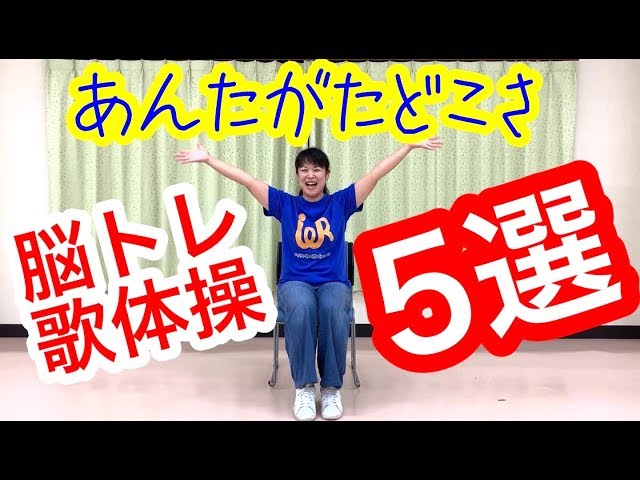
Antagata Dokosa is known as one of the handball (temari) songs among traditional children’s songs.
There are two theories about its setting: Kumamoto City in Kumamoto Prefecture, and Kawagoe City in Saitama Prefecture.
Many older adults may remember playing with a ball to this song when they were young.
Sitting down, they clap their hands while patting their thighs, and add steps like stomping and swinging their arms.
Because it involves performing various movements simultaneously, it seems likely to help invigorate both body and mind.

The Bento Box Song

Here’s an idea for enjoying the “Obentōbako no Uta” in completely different ways just by changing the tempo.
For example, when you sing it slowly, imagine a heavy, large lunch box and make your movements big and relaxed.
Conversely, when you speed up the tempo, pretend you’re making a small, cute lunch box, using compact, rhythmic motions.
Switching between these images stimulates brain activity and also provides sensory input to the hands.
It’s an enjoyable game you can do while seated, with little strain—and it’s sure to bring out smiles.

a small brown bottle

We would like to introduce the hand-play song “Brown Little Bottle,” which lets you enjoy moving both your brain and body through creative actions.
It begins with the basic flow of clapping to the rhythm and taking rests, and midway through, changing the clapping frequency stimulates concentration and reaction speed.
Once you get used to it, adding arm raises and lowers engages the arms and shoulders and brings a stronger sense of rhythm to the movements.
Finally, by adding marching in place, it expands into light, full-body exercise.
Because the movements change little by little, it’s hard to get bored, and since it can be done while seated, it’s recommended as a lively recreational activity in caregiving settings.
[For Seniors] Popular hand-play songs: Introducing fun brain-training ideas (11–20)
tea caddy

“Chatsubo” is an easy hand-play song, so it’s a great one to try.
A chatsubo is a container used to store tea leaves.
The line in the lyrics, “the tea jar has no lid,” refers to the old custom of covering the jar from above with washi paper instead of using a lid.
The lyrics are simple and easy to remember, making it a recommended hand-play song for older adults as well.
You cup your hands to mimic a tea jar and move your left and right hands in turn.
This naturally engages the hands and fingers, providing good stimulation for the brain.
Moving your hands while singing also makes it a form of brain training.
The Hill Where Mandarin Orange Blossoms Bloom

Clap hands alternately while facing each other as you sing.
Even such a simple movement can instantly turn into enjoyable communication when done to a song.
Moving your hands to the gentle melody of “Mikan no Saku Oka” stimulates the brain and helps prevent cognitive decline.
It can be done while seated, reducing physical strain, and it’s an easy activity for those who struggle to find a way to start a conversation.
This low-pressure hand game fosters interaction even in care settings and is perfect for daily recreation.
Ochara-ka-hoi

By moving your body to the lyrics of the traditional hand-clapping song “Ocharaka Hoi,” it quickly turns into a game that stimulates the brain.
For example, during “Ses-ses-se,” place your hands on your back, and during the “Yoi-yoi-yoi” part, have your right hand represent 4 and your left hand represent 1, alternating the gestures.
Adding these actions engages memory, attention, and decision-making at the same time.
Performing multiple movements simultaneously like this is effective in preventing cognitive decline.
It can be done while seated and doesn’t depend on the number of participants.
It’s easy to introduce in care settings and is a type of brain training that people can continue without getting bored.
Yakiimo goo-choki-pa

Here is an idea for a hands-on rhythm game called “Yakiimo Goo-Choki-Paa.” It’s a simple activity where you move your hands like rock-paper-scissors in time with the lyrics, but syncing to the rhythm stimulates the brain and quickly turns it into training that uses judgment and reflexes.
The motions naturally bring smiles as you play, easing tension and sparking interaction with those around you.
Although the movements are simple, they unexpectedly engage both mind and hands, making it easy to try and hard to get bored of.
Because it’s done while seated, even those concerned about their stamina can participate comfortably.