

[For Seniors] Kanji Quiz on Flowers: From Easy Questions to Tough Challenges, All in One Go

There are surprisingly many difficult kanji for flowers we see in everyday life, aren’t there? Even if you can write sakura (cherry blossom) or kiku (chrysanthemum), when it comes to kanji for flowers like tsutsuji (azalea) or tanpopo (dandelion), even older adults might not recall them right away.
But that difficulty is exactly what makes them fun as a quiz.
The kanji for flowers often reflect their characteristics, appearance, or origins, and the more you learn, the more fascinating discoveries you’ll find.
This time, we’re introducing a quiz featuring kanji for familiar flowers.
Why not enjoy reminiscing about beloved blooms through kanji?
- [For Seniors] Let’s Get Excited with a Winter Flower Kanji Quiz! Introducing Some Challenging Questions
- [For Seniors] Let’s Have Fun with an Autumn Flower Kanji Quiz! A Collection of Kanji That Look Readable but Aren’t
- [For Seniors] Difficult-to-Read Kanji for Everyday Items: Take on a quiz full of surprises and discoveries
- [For Seniors] How many can you read? A kanji quiz of familiar things that look readable but aren’t
- [For Seniors] Challenging but Exciting! Kanji Quiz
- [For Seniors] Fun and Exciting! Difficult Kanji Quiz
- [For Seniors] Quiz on Kanji with Many Strokes
- [For Seniors] How many can you read? A comprehensive showcase of difficult food kanji
- [For Seniors] Prevent Dementia with a Look-Alike Kanji Quiz! Introducing Commonly Confused Characters in a Multiple-Choice Format
- [For Seniors] Spring-themed quizzes: Fun trivia questions that help prevent dementia while you solve them
- [For Seniors] Perfect for Dementia Prevention! Jumbled Kanji Quiz
- [For Seniors] Conversation Starters! A Collection of Trivia and Quizzes About Cherry Blossoms
- [For Seniors] Difficult Country Names Kanji Quiz
[For Seniors] Flower Kanji Quiz: From Easy Questions to Tough Challenges, All at Once (1–10)
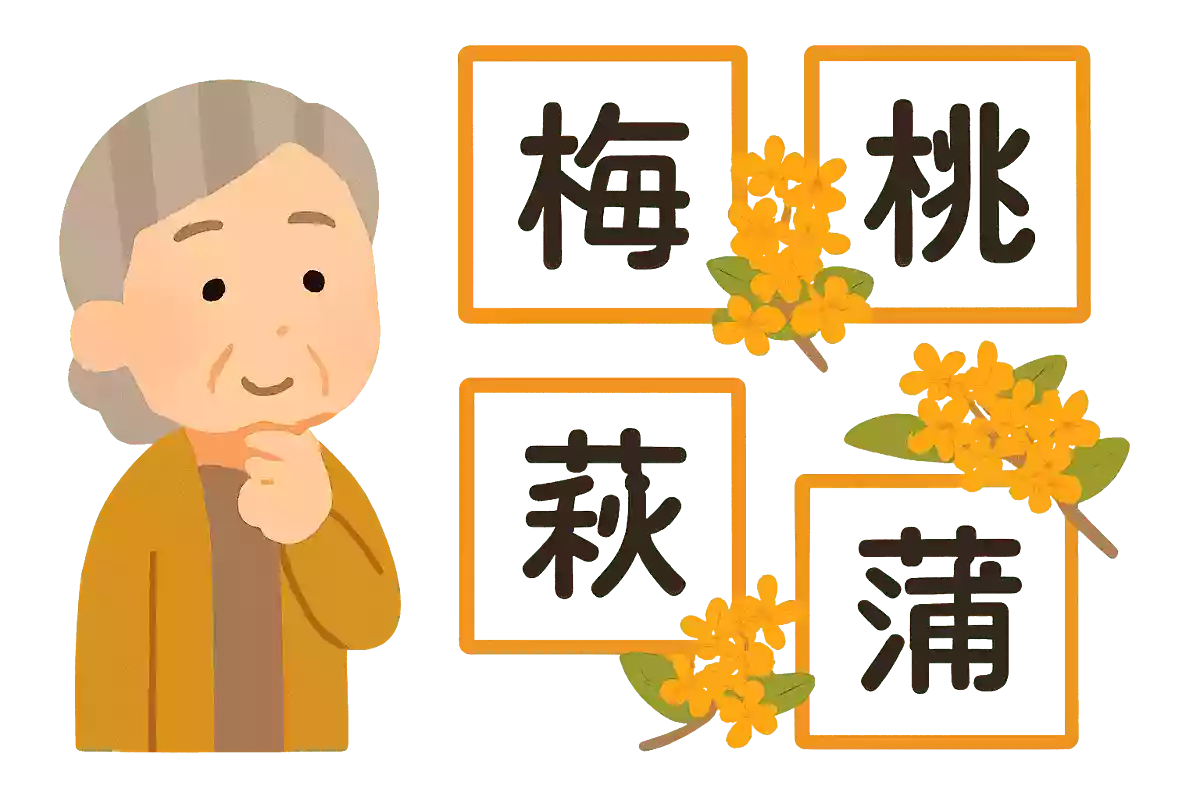
osmanthus (fragrant orange osmanthus; sweet olive)
See the answer
fragrant olive (osmanthus)
Osmanthus fragrans var. aurantiacus (kinmokusei) is an evergreen small tree in the Oleaceae family native to China. In autumn it produces many small orange blossoms that give off a sweet, strong fragrance. It has long been cherished in Japan, and its scent is sometimes used in perfumes and incense. Visually beautiful as well, it is one of the symbols that herald the arrival of autumn. It is especially common as a garden or street tree, and the sight of the tree covered in golden flowers is the origin of its Japanese name.

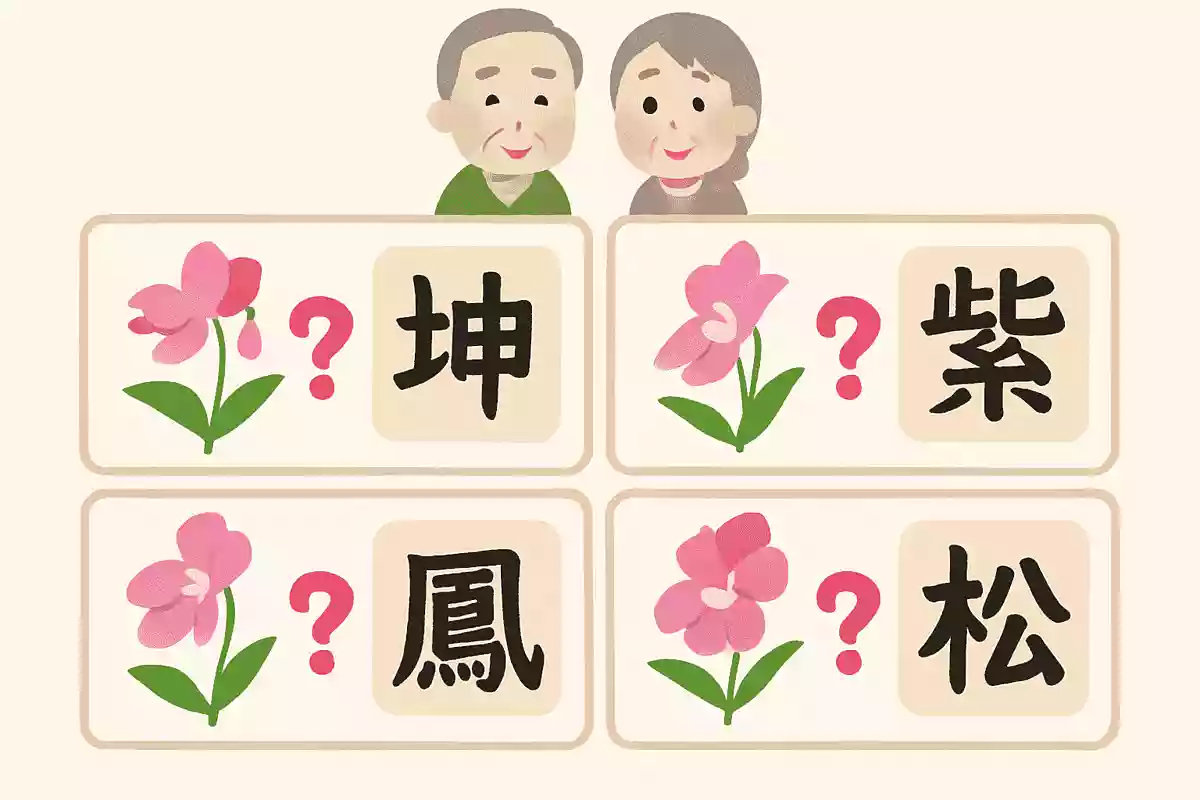
touch-me-not (balsam; Impatiens balsamina)
See the answer
touch-me-not (balsam flower)
Balsam, also known as impatiens, is characterized by its colorful summer blooms. Another notable trait is that when you lightly touch the seed pods that form after the flowers wither, the seeds burst out forcefully. The kanji character 鳳 (hō) comes from the legendary bird, the phoenix, and 仙 (sen) evokes immortals and associations with longevity or immortality. In Japan, this flower has long been familiar—children used to play with it, and it is well known among older people as well.
iris
See the answer
shobu
Shōbu (sweet flag) is a plant associated with the Tango no Sekku festival on May 5. On this day, there is a custom of taking a “shōbu bath” to ward off evil and pray for good health. Shōbu is characterized by its strong fragrance, which is said to have antiseptic and relaxing effects. The same kanji can also be read as “ayame,” but they are different plants. Shōbu typically grows in waterside areas.
[For Seniors] Flower Kanji Quiz: From Easy to Difficult Questions, All at Once (11–20)
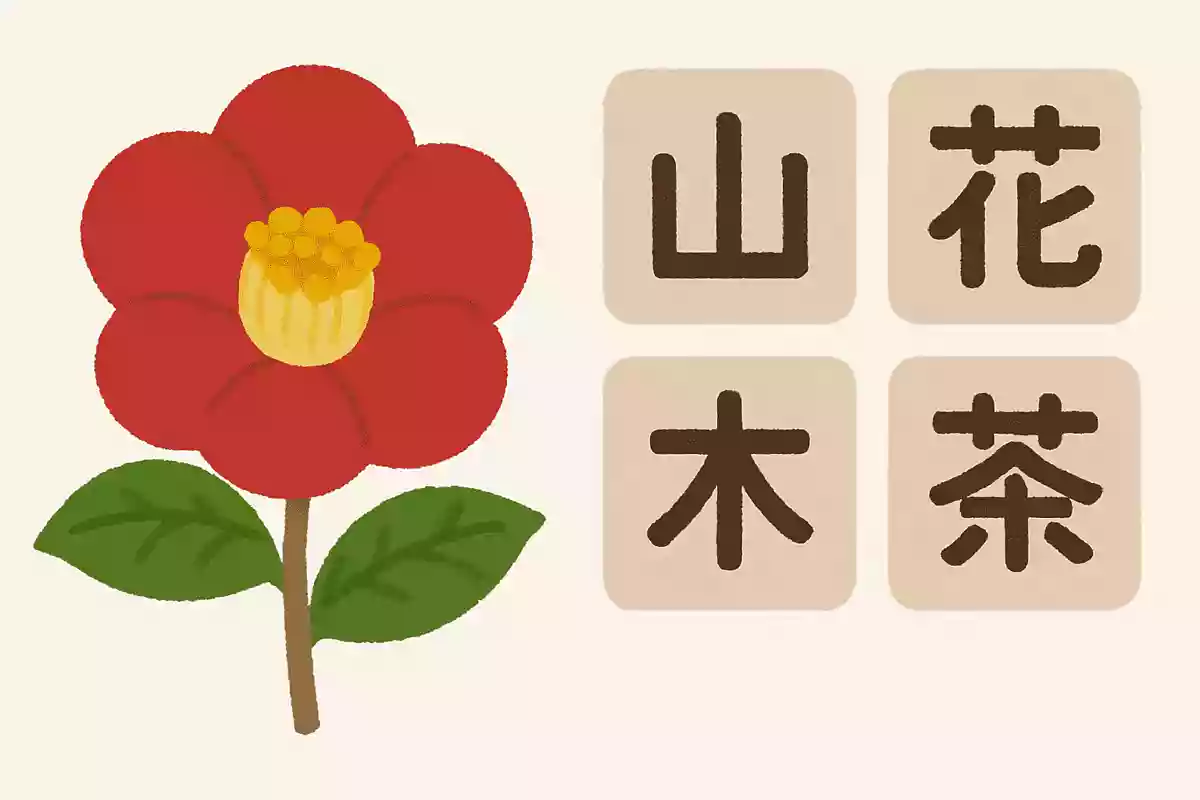
sasanqua (Camellia sasanqua)
See the answer
sasanqua
Sasanqua (sazanka) is a plant in the camellia family that blooms with red or white flowers around the beginning of winter. Its flower language is said to be “overcoming difficulties” and “single-minded devotion,” and its persistence in blooming even in the cold resonates with the Japanese heart. Although sasanqua and camellia look very similar, they differ in aspects such as how their flowers fall. It is also a familiar flower beloved enough to be sung about in the children’s song “Takibi” (Campfire).
Chinese bellflower
See the answer
bellflower
The balloon flower (kikyō) is also cherished as a symbol of autumn. Its star-like, five-pointed blossom is a distinctive feature, and its beauty has led to its use in many family crests and traditional patterns. The roots of the balloon flower are also used in Chinese herbal medicine, making it closely connected to our daily lives. Its flower meanings are “sincerity” and “purity.” Be sure to remember the reading “kikyō.”
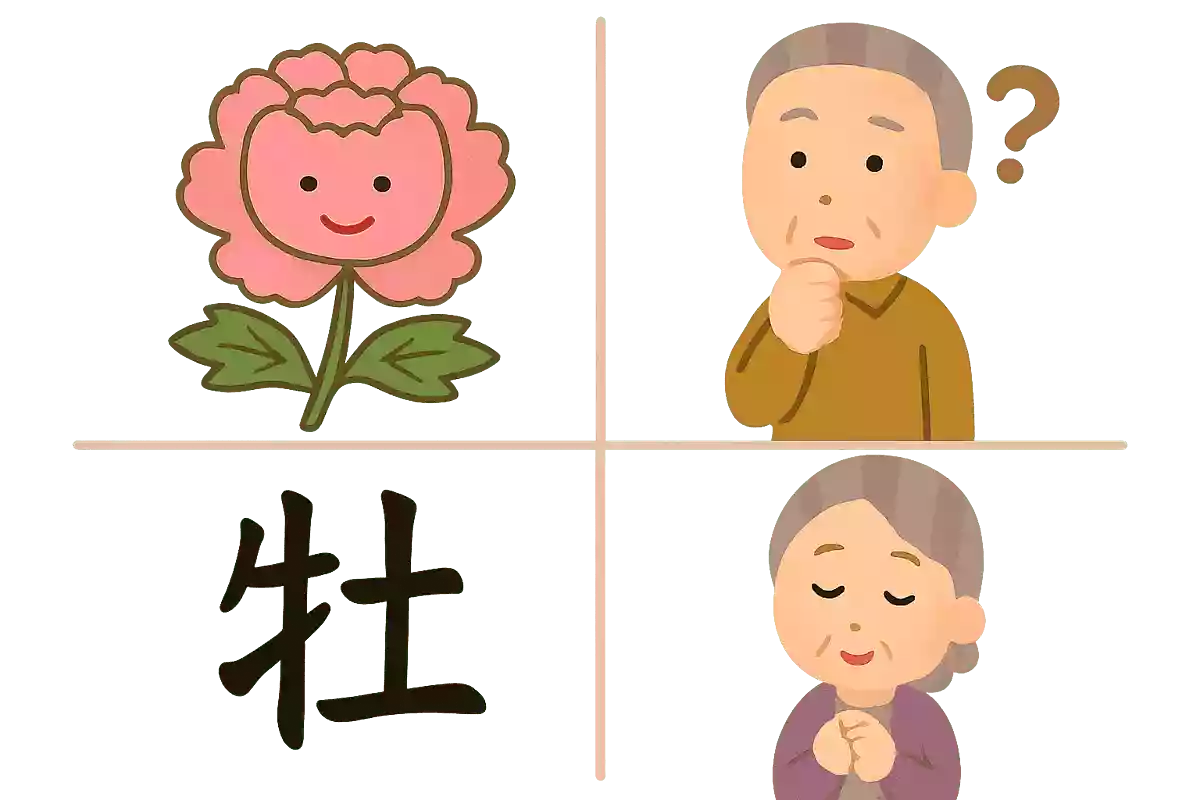
peony
See the answer
Button
The peony is a plant that produces beautiful large blossoms in early summer and originates from China. In Japan, it has long been cherished in gardens, paintings, and poetry. The character “牡” means male, and “丹” means red, reflecting the flower’s vivid coloration. Even today, it can be considered one of the flowers most familiar to older generations.
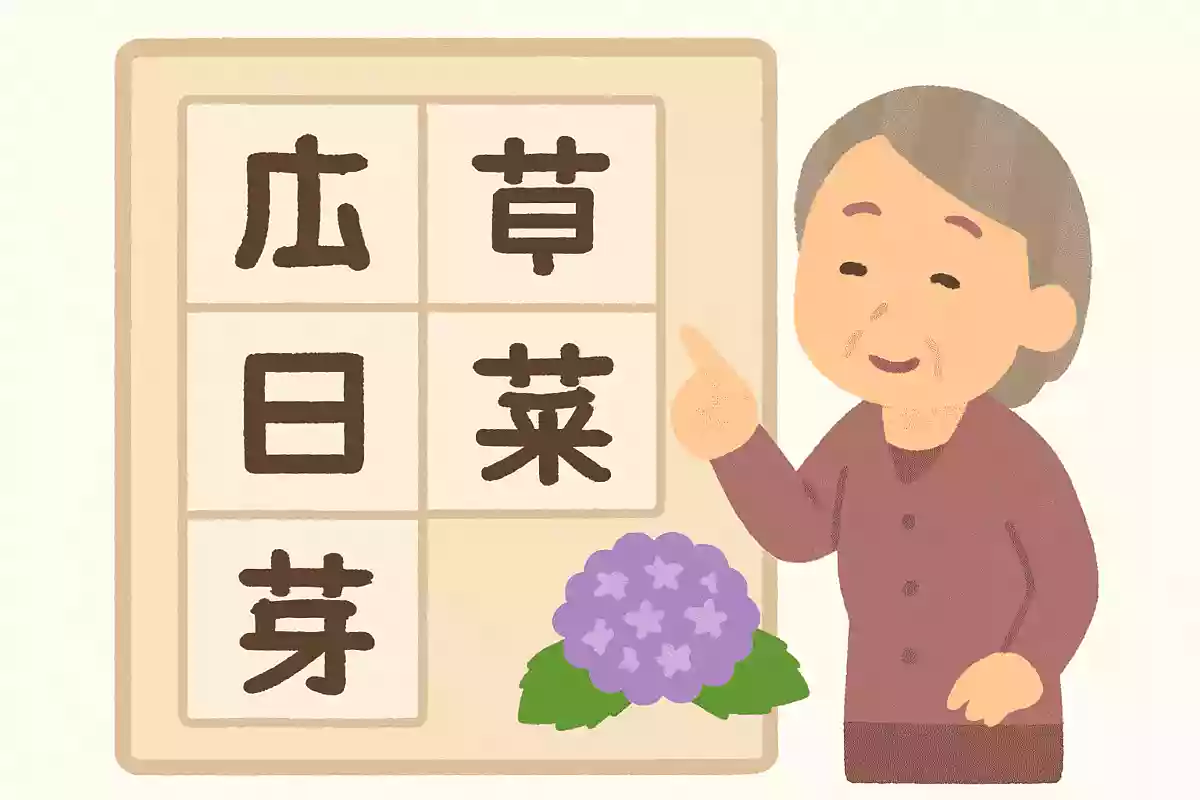
hydrangea
See the answer
hydrangea
Hydrangeas are flowers famous as a symbol of Japan’s rainy season. They are said to have originally come from China and have been beloved in Japan since ancient times. A distinctive feature is that their color changes depending on the soil’s acidity, letting you enjoy shades of blue, purple, pink, white, and more. They typically reach full bloom around June, and their rain-kissed appearance is cherished by many people.