

![[For Seniors] Kanji Quiz on Flowers: From Easy Questions to Tough Challenges, All in One Go](https://media.ragnet.co.jp/img/1200__png__https://www.ragnet.co.jp/files/2025/09/b43d40bbae92bb4038fb8d0a3b7c6b5c.webp)
[For Seniors] Kanji Quiz on Flowers: From Easy Questions to Tough Challenges, All in One Go

There are surprisingly many difficult kanji for flowers we see in everyday life, aren’t there? Even if you can write sakura (cherry blossom) or kiku (chrysanthemum), when it comes to kanji for flowers like tsutsuji (azalea) or tanpopo (dandelion), even older adults might not recall them right away.
But that difficulty is exactly what makes them fun as a quiz.
The kanji for flowers often reflect their characteristics, appearance, or origins, and the more you learn, the more fascinating discoveries you’ll find.
This time, we’re introducing a quiz featuring kanji for familiar flowers.
Why not enjoy reminiscing about beloved blooms through kanji?
[For Seniors] Flower Kanji Quiz: From Easy Questions to Tough Challenges, All at Once (1–10)
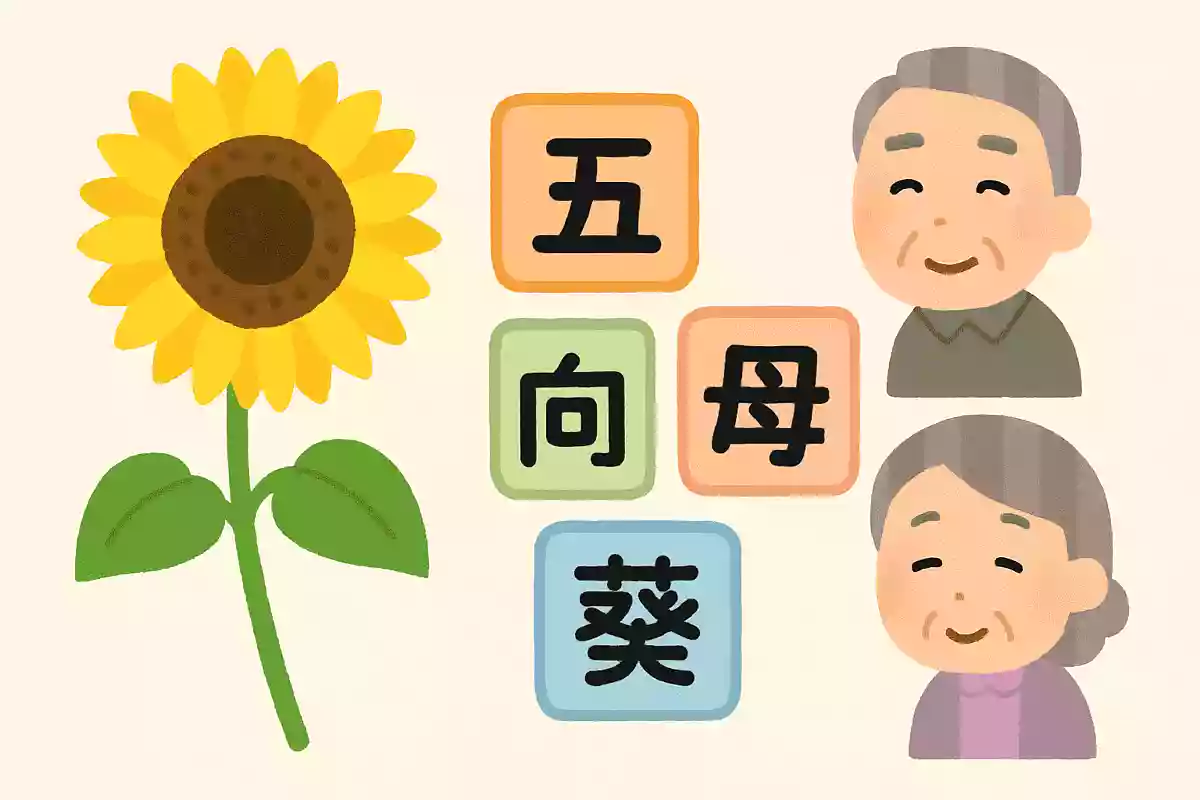
sunflower
See the answer
sunflower
The sunflower is a large yellow flower that blooms in summer and has the characteristic of turning its head to follow the sun’s movement. The name “himawari” literally means “facing the sun,” with “hi” meaning sun and “awari/aui” referring to a plant. In Japan, it often appears as a hallmark of summer vacation and in elementary school observation diaries, and it is cherished as a symbol of energy and brightness. Its seeds are also used for food and oil, making it a flower that is useful in daily life as well as for ornamental purposes.

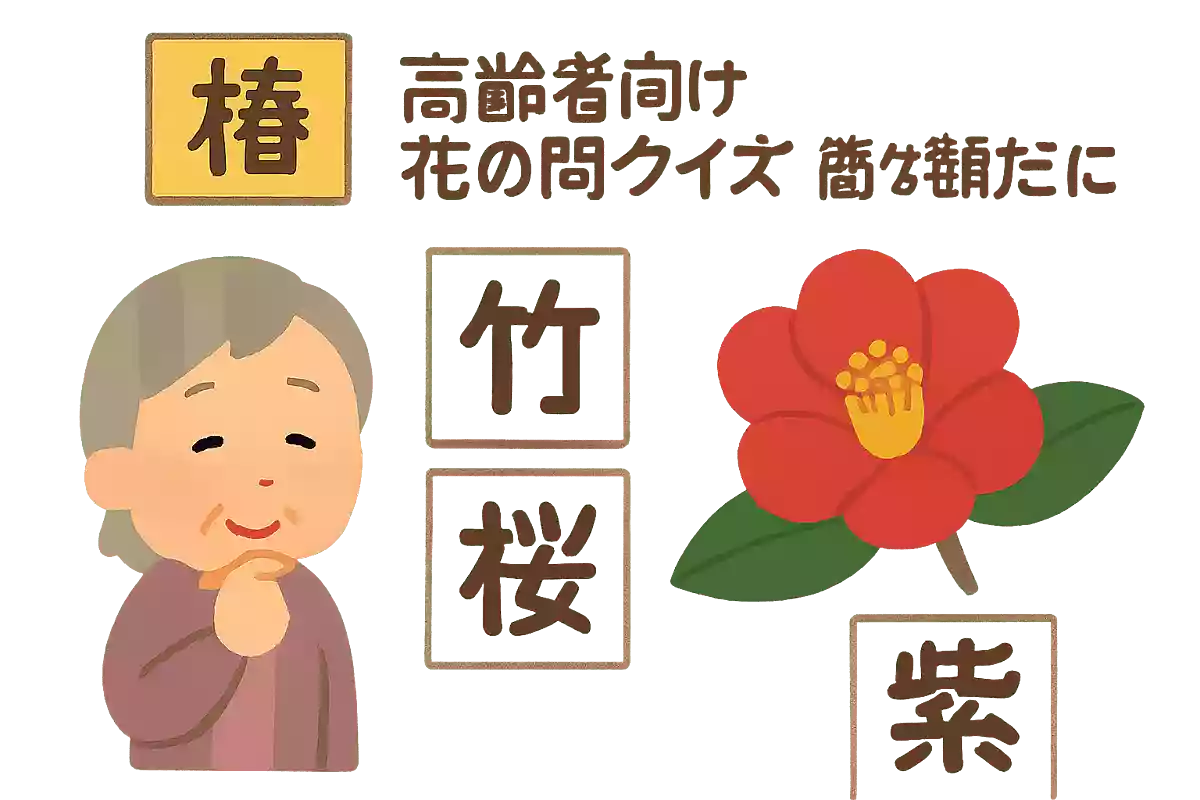
Camellia
See the answer
camellia
Camellias (tsubaki) are evergreen trees native to East Asia, including Japan, and are cherished for their vibrant red, white, and pink blossoms that bloom from winter to spring. Since ancient times, camellia oil extracted from these trees has been used as a hair oil to add luster, as cooking oil, and as lamp oil. Camellias are also celebrated in classical Japanese poetry, such as the Manyoshu, and have long been beloved by the Japanese people.
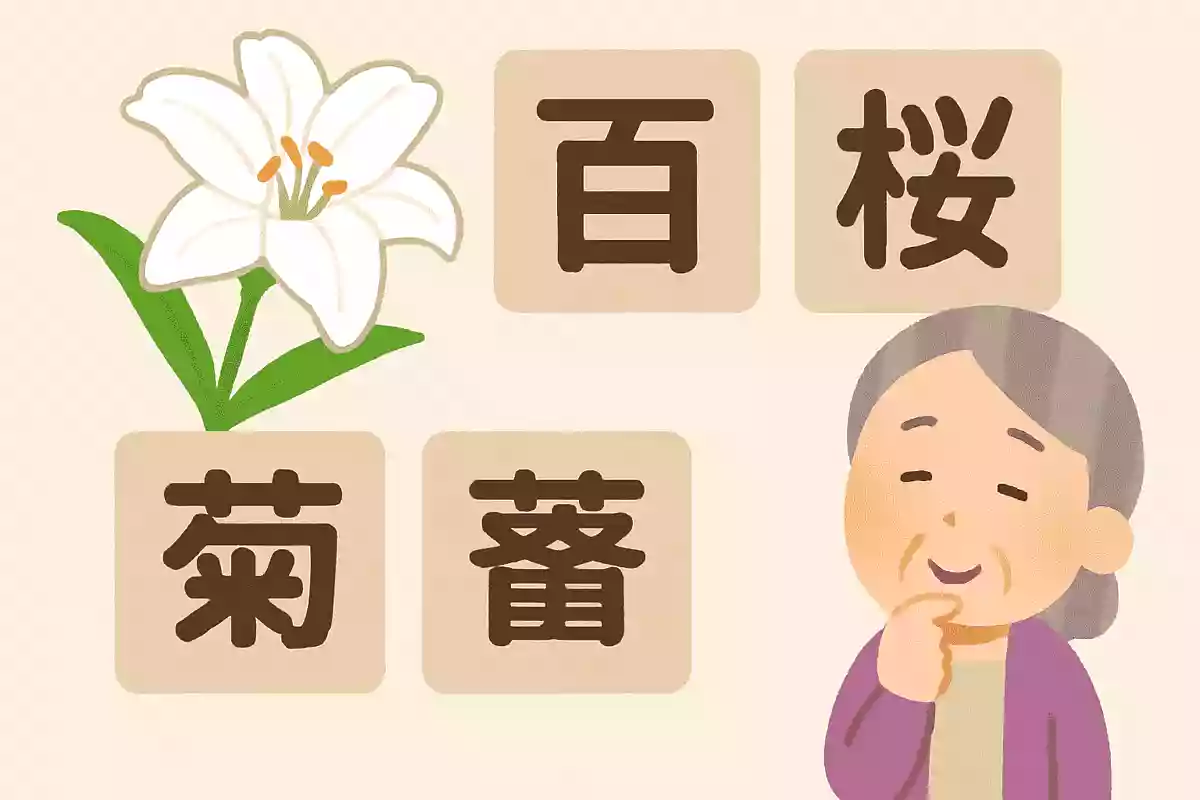
lily
See the answer
Yuri
The lily is a perennial plant in the Liliaceae family, known for its large, beautiful flowers in white, pink, yellow, and other colors. As the kanji for “hundred” suggests, some say the name “yuri” (lily) comes from its petals appearing to overlap in great numbers. In Japan, lilies are also popular as flowers for Buddhist offerings and as gifts.
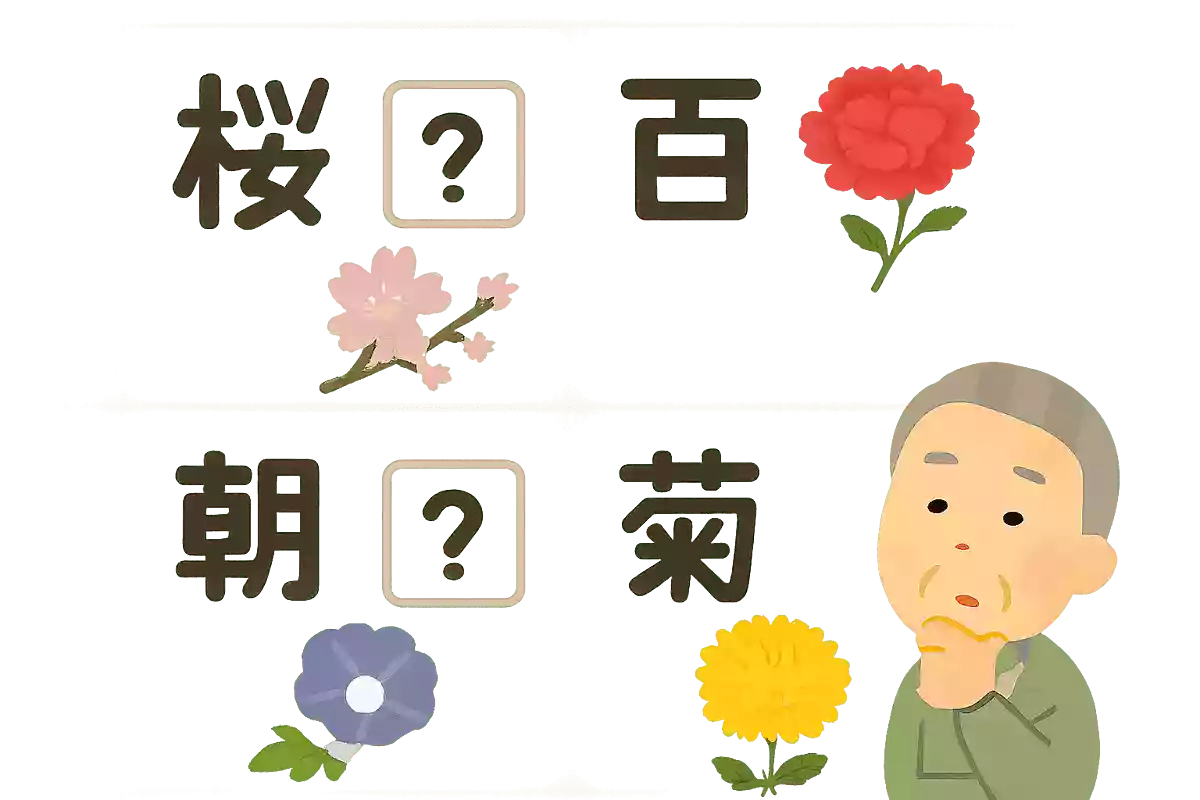
cosmos (flower)
See the answer
cosmos
“秋桜” is read as “cosmos” in Japanese. The kanji were chosen to evoke the image of beautiful cherry blossoms blooming in autumn, but in fact it isn’t related to cherry trees; it’s an annual plant in the Aster family. It originates from Mexico and is said to have been introduced to Japan in the Meiji era. It comes in various colors—pink, white, magenta, and more—brightening autumn landscapes. “Akizakura” is also well known as the title of a famous song by Momoe Yamaguchi.
violet

See the answer
Sumire
Violets (sumire) are cherished as a representative spring flower that blooms in fields and mountains, and many older adults may have memories associated with this flower. The kanji for “sumire” (菫) uses the grass radical combined with the character 堇. Found throughout Japan, violets are characterized by their small purple blossoms, and their modest yet beautiful appearance has long been loved by many people.
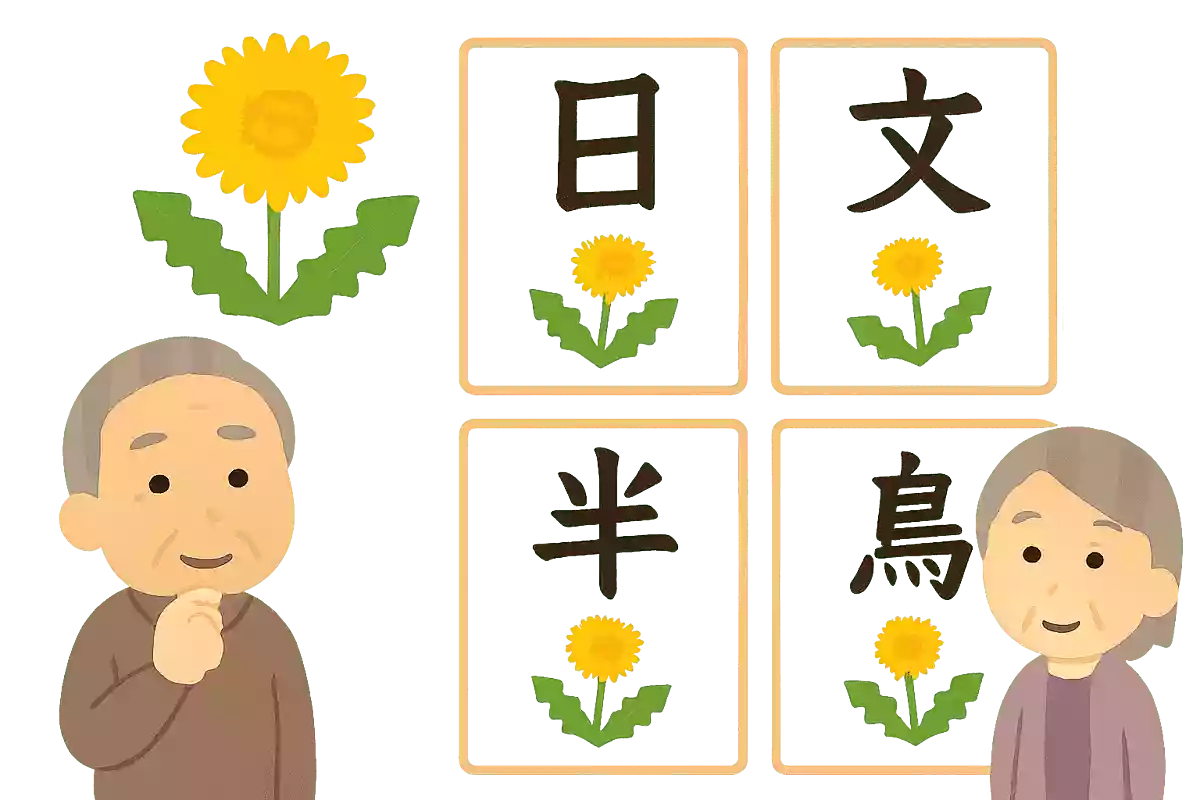
dandelion
See the answer
dandelion
The dandelion is a wildflower that blooms with yellow blossoms in spring and is a perennial in the aster family. After flowering, it turns into a round puff of seeds that are carried by the wind. It can be seen throughout Japan, and it’s common to see children blowing the seed heads for fun. The kanji 蒲公英 was brought from China and is also used as the Japanese name. Although it’s a familiar flower, the kanji are difficult, so it often appears as a quiz question.
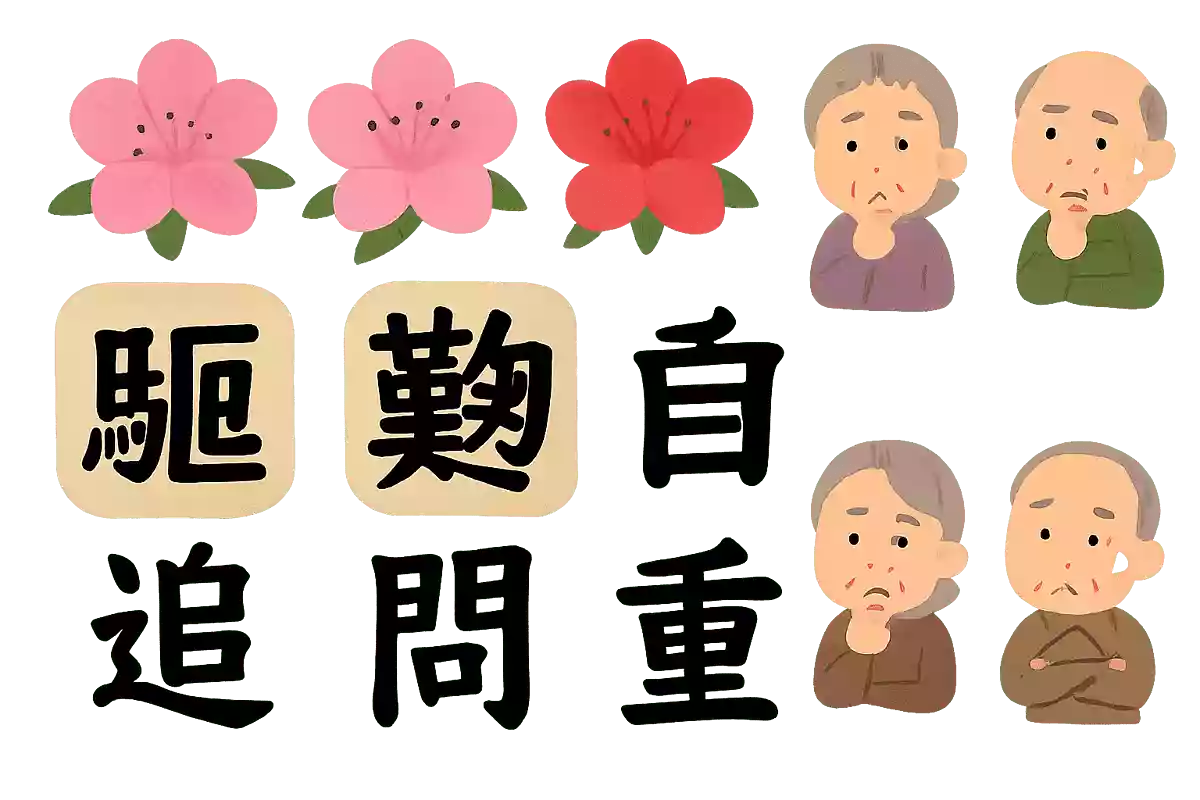
azalea
See the answer
azalea
Azaleas (tsutsuji) are plants that bloom with beautiful flowers in spring and are widely distributed throughout Japan. While the word “tsutsuji” itself is well known, writing it in kanji as 「躑躅」 is quite difficult. These characters are ateji borrowed from Chinese, and both 「躑」 and 「躅」 originally mean “to stop” or “to hesitate.” It’s said that this kanji was applied because azaleas are so beautiful that you can’t help but stop in your tracks to admire them.