

![[For Seniors] Let’s Get Excited with a Winter Flower Kanji Quiz! Introducing Some Challenging Questions](https://media.ragnet.co.jp/img/1200__png__https://www.ragnet.co.jp/files/2025/10/ffe3d7e5dc47a4bf31540b40ba9a9307.webp)
[For Seniors] Let’s Get Excited with a Winter Flower Kanji Quiz! Introducing Some Challenging Questions

Beautiful flowers that bloom in the winter chill each carry evocative kanji names.
Readings for less common characters—like “猩猩木,” “三色菫,” and “迷迭香”—can be surprisingly tricky.
This time, we’re introducing a winter flower kanji quiz you can enjoy together with older adults.
Learning the origins of the nostalgic flowers’ kanji may deepen your affection for them.
Let’s rediscover the charm of winter blossoms while sharing heartwarming conversations.
Now then, how many can you answer?
[For Seniors] Have Fun with a Winter Flower Kanji Quiz! Introducing Challenging Questions (1–10)
pansy
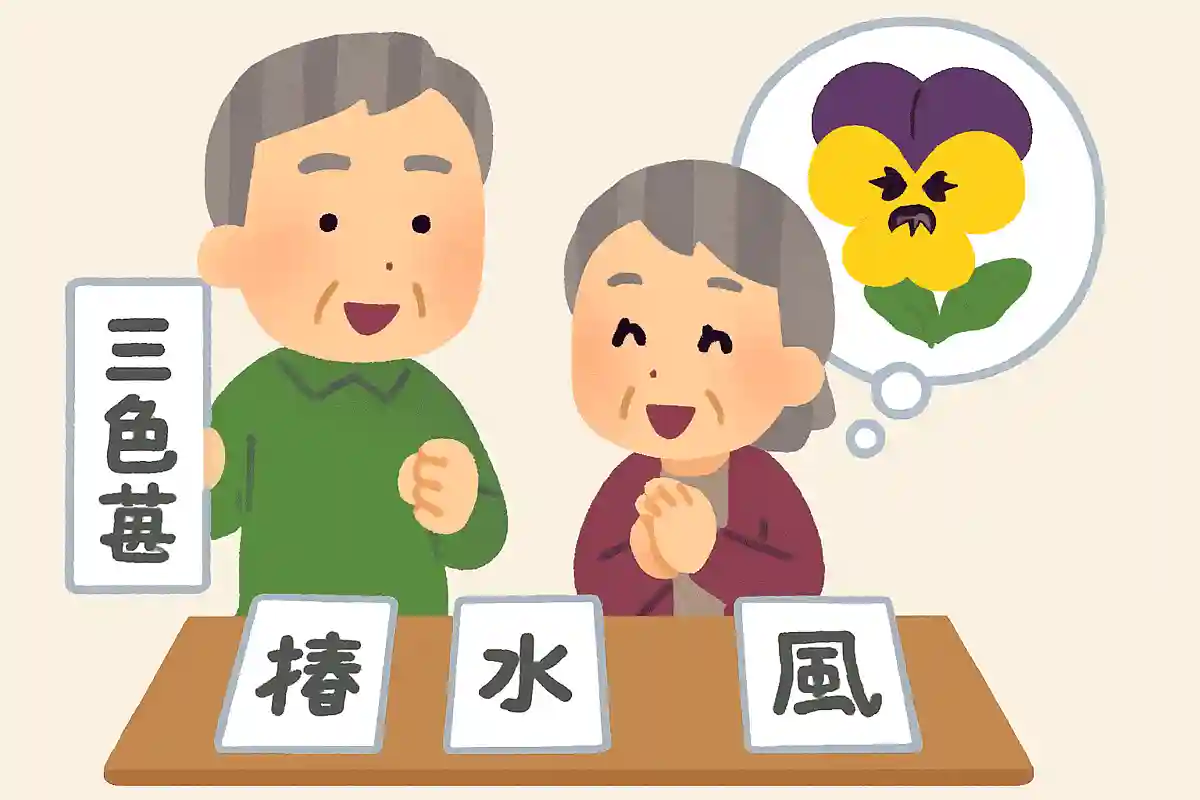
See the answer
pansy
“Sanshokusumire” is the kanji notation for the flower commonly known as the “pansy.” “Sanshoku” means it has multiple colors, and “sumire” indicates it belongs to the violet family. Pansies are widely used in flower beds and potted plants from winter to spring each year and are popular among older adults as well. Their vivid, showy colors brighten up winter landscapes that tend to feel bleak. In Japan, they have been familiar since the Meiji era and are also known for their strong cold tolerance.

winter camellia
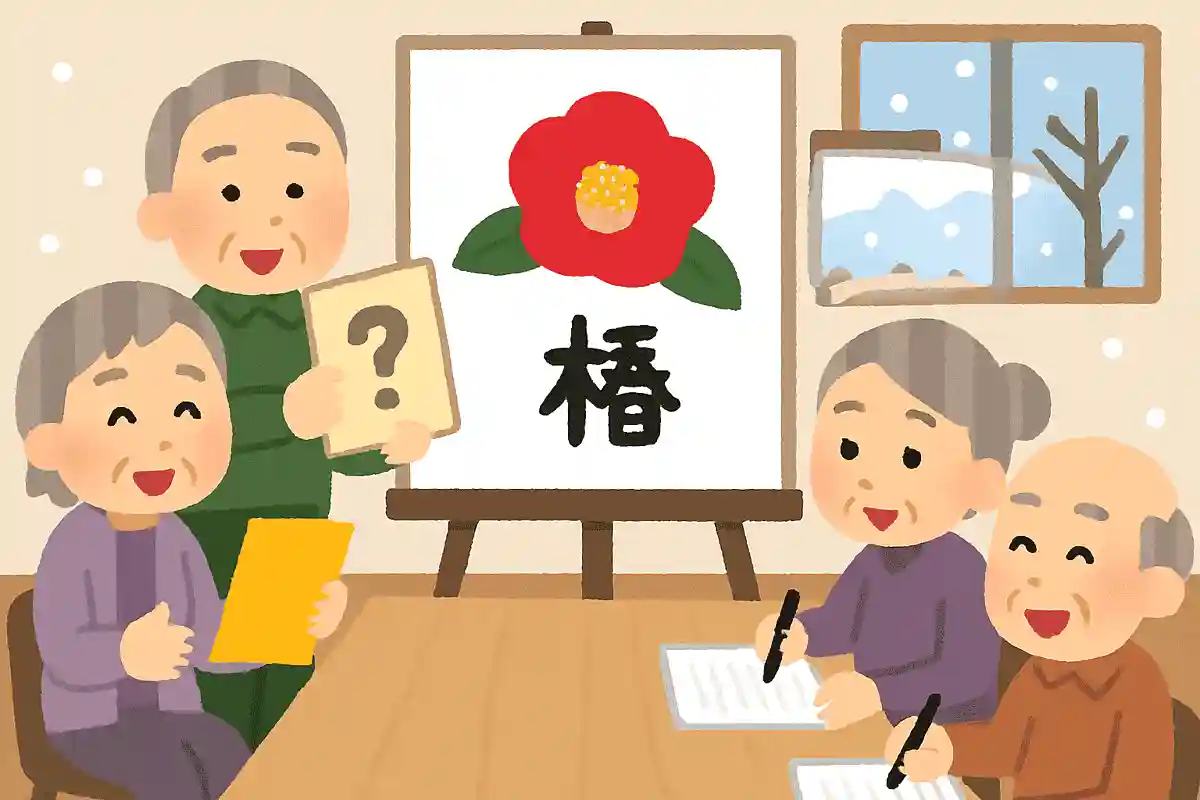
See the answer
Sasanqua camellia
“寒椿” is read as “kantsubaki.” It refers to a type of camellia that blooms during the cold winter season and is a common winter flower in Japanese gardens and parks. It is slightly smaller than the ordinary camellia and more cold-resistant. For that reason, it delights people in the bleak winter months with its beautiful red or pink blossoms. Kantsubaki is also frequently used as a winter seasonal word (kigo) in haiku.
Bloodtwig Dogwood
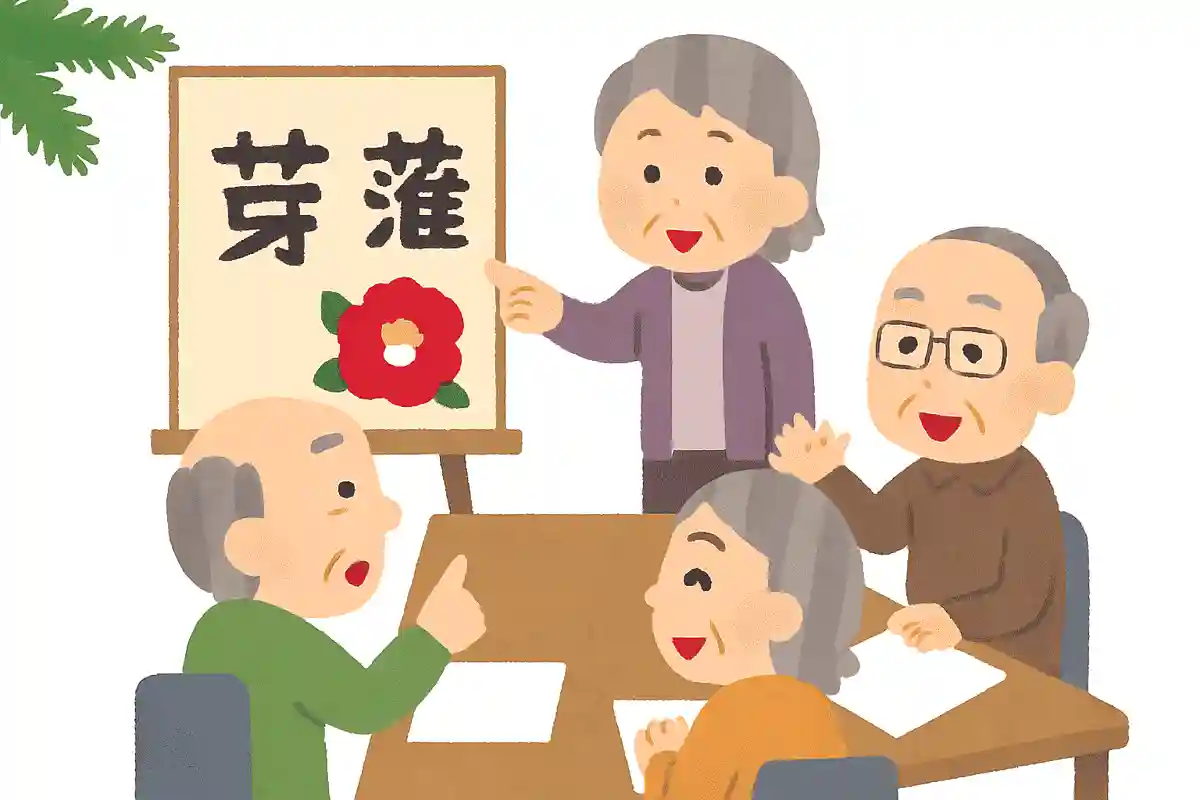
See the answer
poinsettia
“Shōjōboku” refers to the poinsettia, a representative winter flower. Poinsettias are known for their red-colored leaves (strictly speaking, bracts) around Christmastime, and in Japan they are commonly displayed in homes and public spaces during winter. “Shōjō” is the name of a mythical creature with a red face and is sometimes used to evoke the color red. For this reason, the kanji name “猩猩木” (literally, ‘shōjō tree’) was given to the red plant poinsettia. It’s one of the kanji terms worth remembering to deepen your knowledge of winter plants and seasonal matters.
daisy
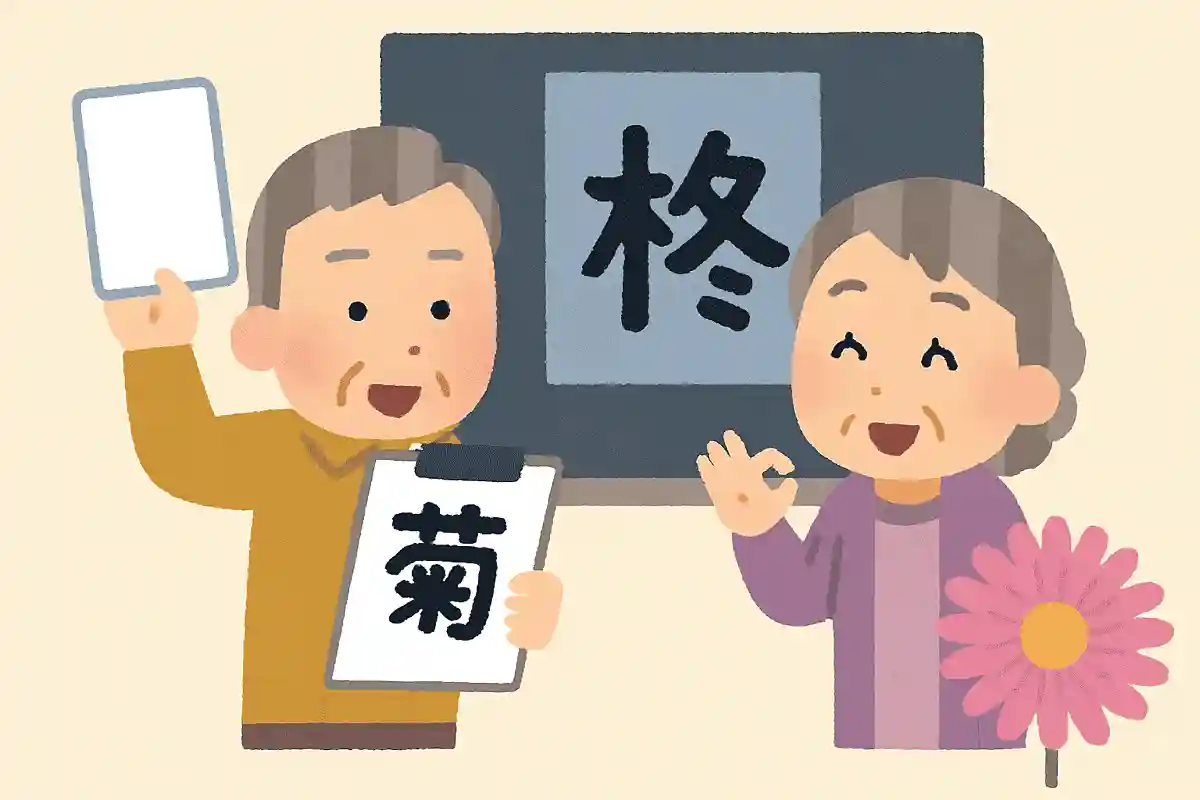
See the answer
Hina Daisy (Daisy)
“Hinagiku” (雛菊) is the Japanese name for the flower known as the common daisy. It sometimes blooms from the cold of winter into early spring and is characterized by its small, charming appearance. The character 雛 (hina) can mean chick or child, conveying a sense of smallness and cuteness. 菊 (kiku) means chrysanthemum, though “hinagiku” itself is also cherished as a horticultural variety. Many older people may remember it as a modest, gentle flower from their childhood. It is also enjoyed as a kanji associated with winter flowers.
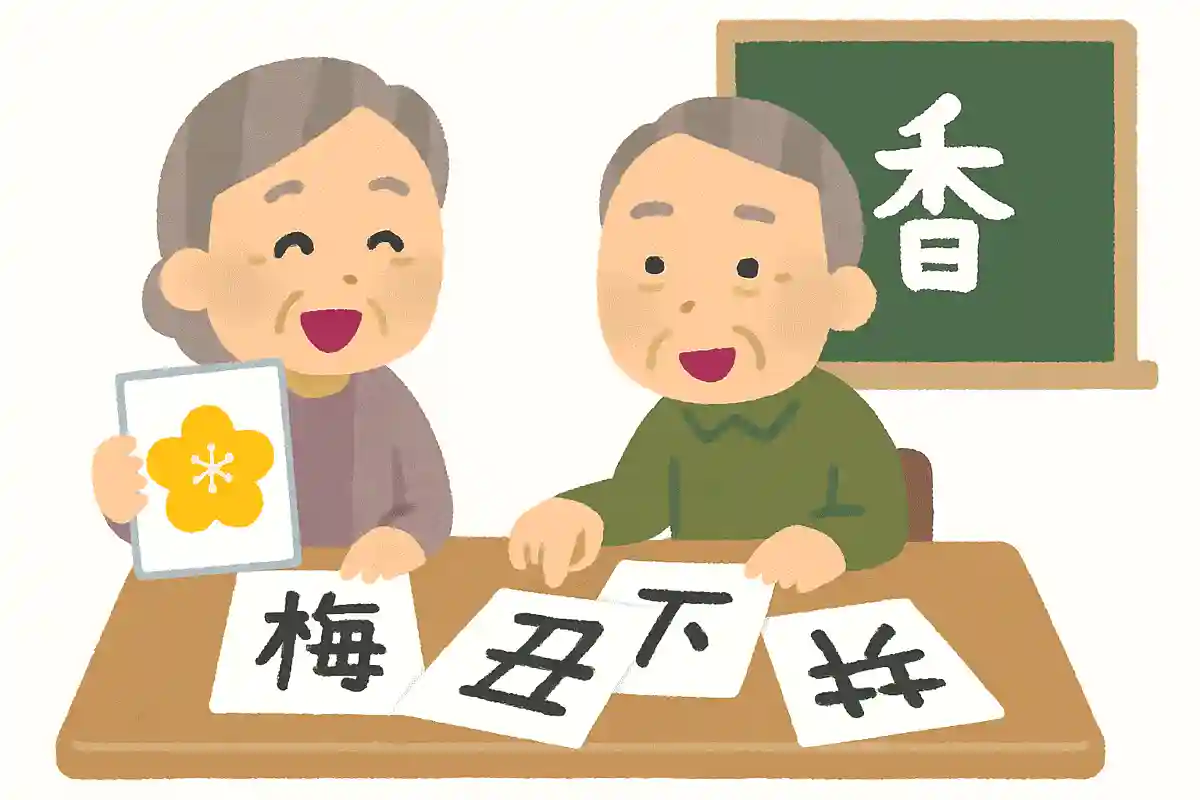
Yellow plum (ōbai) / Japanese apricot in yellow bloom
See the answer
wintersweet
Japanese allspice (ōbai) is a deciduous shrub native mainly to China, distinguished by its yellow blossoms that bloom from winter to early spring. As its name suggests, it bears flowers resembling yellow plum blossoms, but it actually belongs to the olive family (Oleaceae), not to the plum (ume). In Japan, it is often planted in gardens and parks as an auspicious flower, and its bright yellow blooms in the cold of winter make it cherished as a harbinger of early spring. The flowers have a faint fragrance and are popular for ornamental use.
Creeping zinnia
See the answer
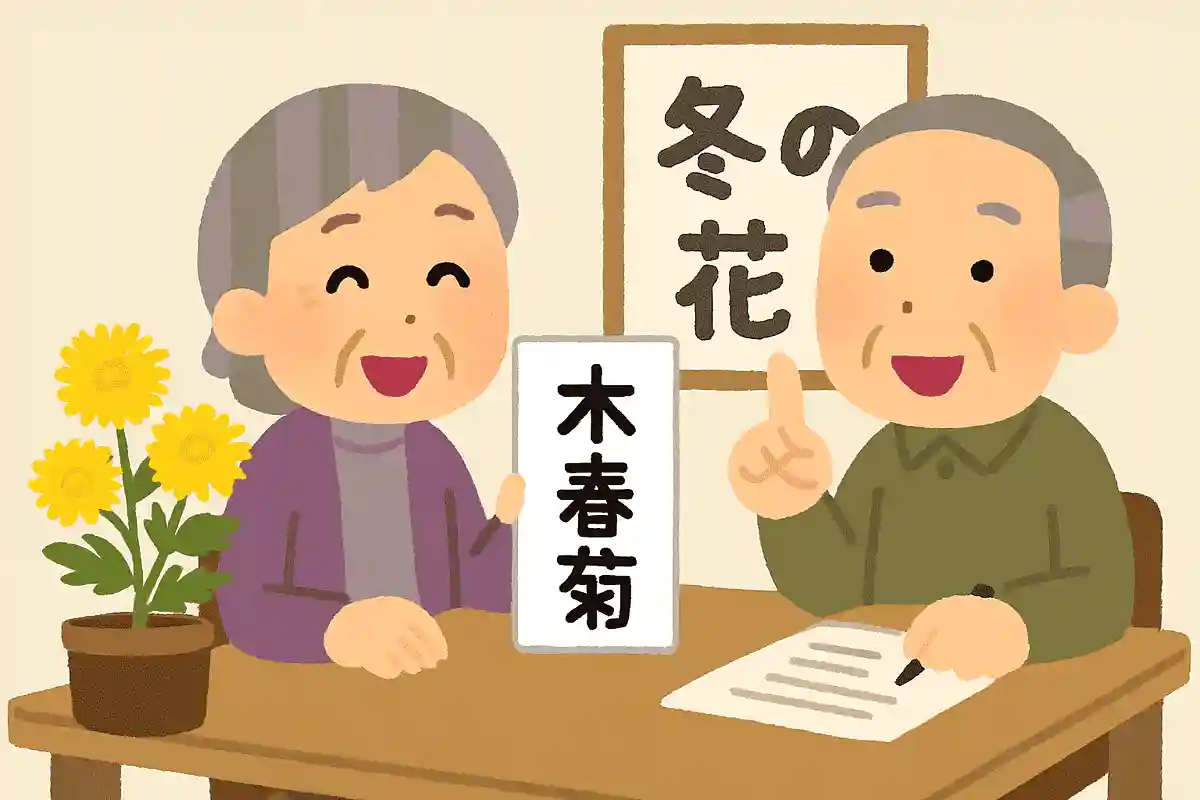
Margaret
“Koshungiku” is the Japanese name for the marguerite. The marguerite is a perennial in the Aster family that blooms in various colors—white, pink, yellow, and more—from winter to spring. The word “ki” (tree) indicates that, unlike a herbaceous plant, it has sturdy, woody stems, while “shungiku” (garland chrysanthemum) refers to the flower’s resemblance to shungiku blossoms. In Japan, marguerites are widely appreciated as ornamental plants, adding color to winter landscapes in potted arrangements and gardens. Because they produce delicate flowers in the cold season, marguerites are also a popular winter flower among older adults.
daffodil
See the answer
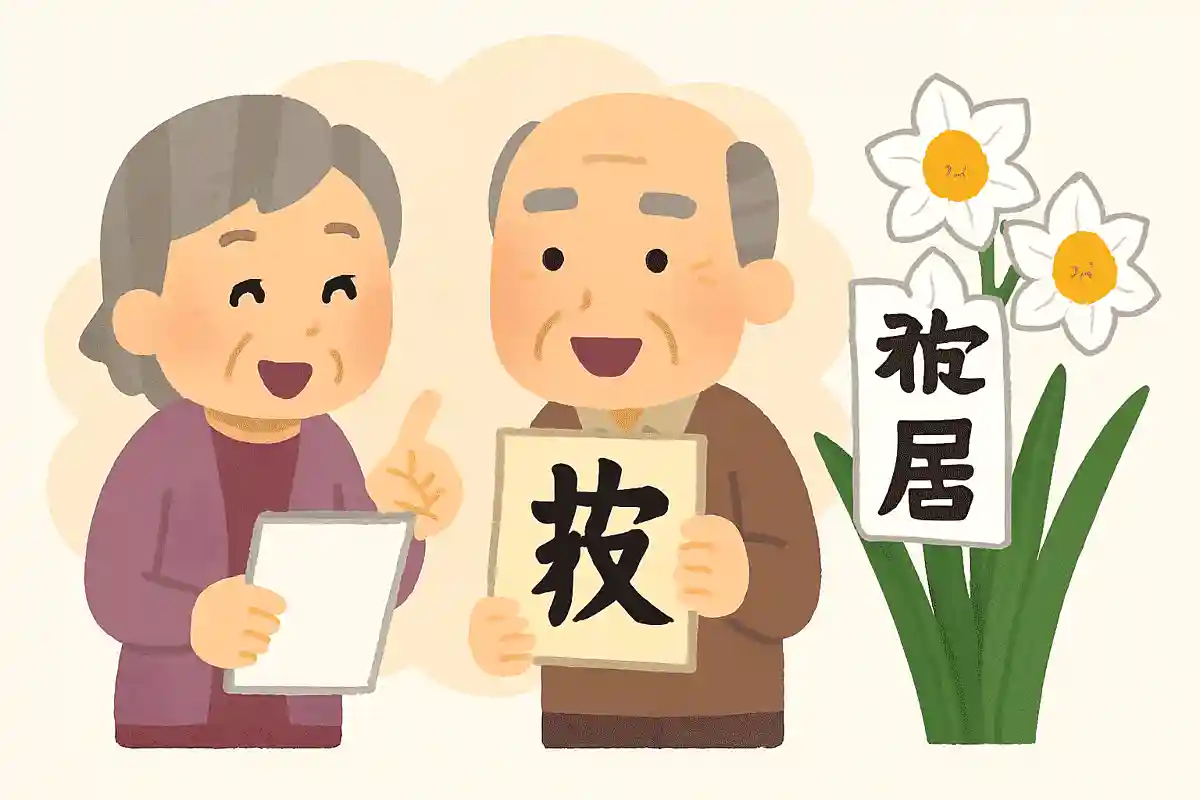
daffodil
“水仙” is read as “suisen.” It’s a flower commonly seen in flower beds, gardens, and parks from winter to early spring. It has white or yellow petals and a trumpet-shaped corona in the center, with an elegant fragrance. The name is said to come from its pure, water-like appearance and its beauty reminiscent of an immortal sage. In Japan, it’s also used as a seasonal word for winter to spring and is a flower familiar to many older people.