

![[For seniors] Classic winter kigo. Compose a verse with your favorite seasonal word.](https://i.ytimg.com/vi_webp/2vmwV56KvZY/maxresdefault.webp)
[For seniors] Classic winter kigo. Compose a verse with your favorite seasonal word.

When winter comes, the temperature drops sharply, the air turns crisp, and the scenery transforms.
Winter kigo—seasonal words—let us savor these shifts through language.
Words like “snow,” “winter solstice,” and “withered fields” instantly conjure vivid scenes.
They’re easy to incorporate into activities like haiku gatherings or quizzes, making them handy in many settings.
Sharing memories of winter through kigo is sure to spark lively conversation.
Why not find your favorite kigo and compose a verse of your own? Enjoy the seasonal ambiance as you have fun with it!
[For Seniors] Classic winter kigo. Compose a verse with your favorite kigo (1–10)
winter day

Even in winter, when the cold seeps into your bones day after day, the sun rises and shines every day.
Unlike the blazing summer sun, its rays are gentle and faint.
Such a scene can be beautifully expressed in Japanese with the word “fuyubi,” the winter sun.
Let’s try composing haiku that portray the cold, wintry world using words that also carry warmth.
Though the sunlight is modest, it can inspire haiku that feel hopeful.
For older people as well, adding “winter sun” may infuse their reflections and feelings about the season with a touch of kindness.
It almost feels like it could blow away the harsh chill.

winter solstice
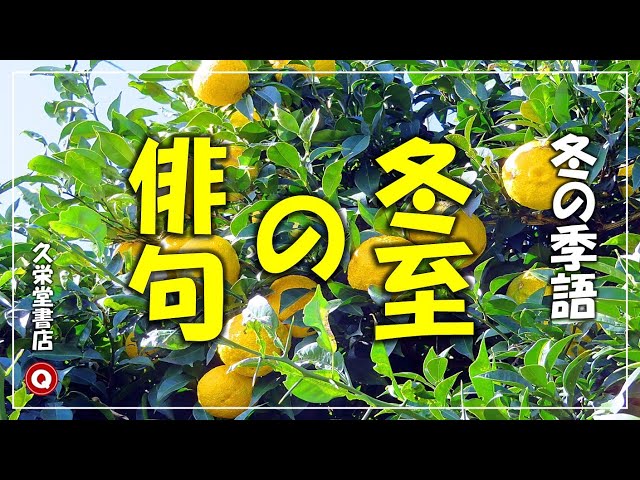
There is a famous haiku by Yosa Buson that goes, “A poor Confucian scholar comes to visit—winter solstice.” Kobayashi Issa also has, “Even Japan’s winter solstice—plums have already bloomed.” The winter solstice, said to have the shortest daylight of the year, tends to evoke an image of gloom or loneliness, but I feel that deliberately composing in a bright, breezy tone might bring one closer to a good haiku.
The customs that broaden the image of the solstice—bathing with yuzu, eating pumpkin dishes—are endearing as well.
All of these are events expressing wishes for health and safety, so it might also be nice to infuse a poem with thoughts for others.
blizzard

It is a seasonal word that describes a winter natural phenomenon in which snow swirls violently with strong winds.
As the snow falling from the sky is whipped up by the wind until visibility turns a hazy white, one keenly feels the severity of winter.
When you picture trees swaying in a blizzard, snow beating against house windows, and a town fallen silent, a powerful winter scene unfolds.
The dynamic landscape woven by snow and wind lends a strong impression to haiku.
Composing while sensing the great force of nature and the harshness of winter makes this a compelling seasonal word that can produce a striking verse.

cough

It is a word that describes changes in the body that occur in dry air and cold.
In winter, the air turns cold and people are more likely to fall ill, so one can sense the season from the familiar occurrence of coughing.
By depicting the sound of a cough echoing in a quiet room or heard in the stillness of a cold night, you can express the atmosphere of winter air and daily life.
Combined with images like the winter night’s quiet or the warmth inside a room, it can turn an everyday moment into a memorable verse.
It is a season word that, grounded in familiar bodily sensations, conveys the season while closely reflecting scenes from daily life.
The mountain sleeps
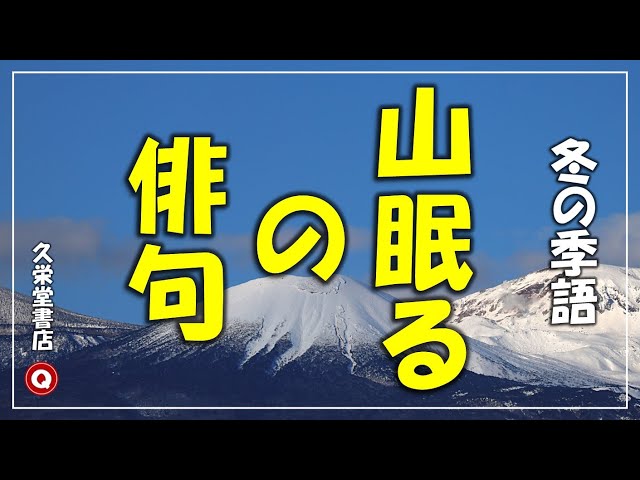
I feel the depth of Japanese thought in describing the mountains, whose trees have withered and fallen silent in winter, as “sleeping.” By calling it sleep, the winter mountain scenery can differ from person to person, and it seems to broaden the range of each person’s interpretation of the mountains.
It invites us to imagine our own winter mountains—places buried deep in snow or paths covered with dead leaves.
I hope older adults, too, will engage with the seasonal word while feeling the scenery and atmosphere of winter mountains from their memories.
It seems likely to spark reminiscences and open up conversations with older adults.
year’s end

What is your year’s end like? Or what was it like? Did you wrap up work around December 29 and leisurely prepare for the New Year, enjoying a calm close to the year? Or perhaps some of you spent the year-end still working through the holidays, hardly able to feel the New Year mood.
There’s a famous haiku by Masaoka Shiki: “Tarachine no areba zo kanashi toshi no kure.” It expresses the particular loneliness of year’s end that arises precisely because one has parents.
Whether busy, excited, or relaxed—why not try composing a haiku that reflects your own feelings?
shigure (late autumn/early winter drizzle)

Rain that falls at the beginning of winter is called “shigure.” Unlike rain that continues steadily, it falls lightly in short bursts and then stops, and with each passing shower, winter draws nearer.
Because it evokes the arrival of winter, it is also used in haiku as an expression of loneliness.
As another name for the tenth month of the lunar calendar, there is also the term “shigure-zuki.” Some older adults may sense the approach of winter from the light, sporadic showers of late autumn.
The word shigure is known nationwide, but in fact, shigure is said to fall only in certain regions of Japan.