

![[For Seniors] A Collection of Famous Autumn Haiku: Introducing Beautiful Verses That Evoke Vivid Scenery](https://media.ragnet.co.jp/img/1200__png__https://www.ragnet.co.jp/files/2025/10/c1314234bb8a1f48481af97e184acda1.webp)
[For Seniors] A Collection of Famous Autumn Haiku: Introducing Beautiful Verses That Evoke Vivid Scenery

Why not enjoy composing haiku that let you feel the changing of the four seasons in everyday life? Persimmons ripening in vivid colors, maple leaves turning red, the clear, cloudless autumn sky.
A single verse that captures the richness of autumn has the power to soothe the heart.
For older adults, haiku is a wonderful creative activity that heals the mind and stimulates the brain.
As a traditional Japanese art, haiku can overlap with cherished memories and spark new emotions.
During a stroll or while viewing the autumn foliage indoors, try creating heartwarming haiku on the theme of autumn.
[For Seniors] A Collection of Famous Autumn Haiku: Introducing Beautiful Verses That Evoke Vivid Scenes (1–10)
On this road, with no one passing by, autumn evening falls.Matsuo Bashō
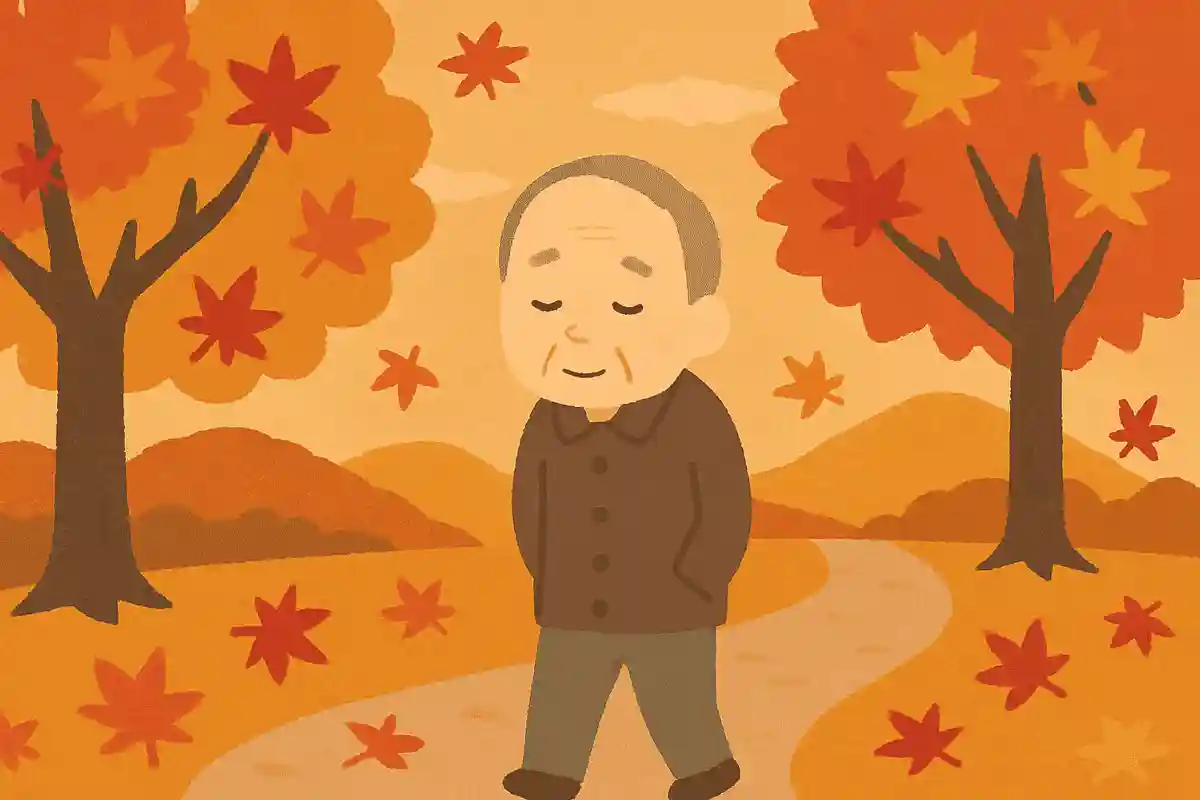
This is a haiku said to have been composed by Matsuo Bashō at the last poetry gathering he attended late in life.
It uses the seasonal word “aki no kure” (autumn’s dusk), which evokes the end of a season, and the preceding phrase “kono michi ya yuku hito nashi” (“on this road, no one passes”) also conveys a certain loneliness.
At the time, Bashō is said to have been troubled by power struggles among his disciples, and perhaps due to the strain, he passed away a few weeks after the gathering.
As he approached the end of his life, he may have felt the solitude of having no successor…

Mountains grow dim; on the fields at dusk, silver grass sways.Yosa Buson
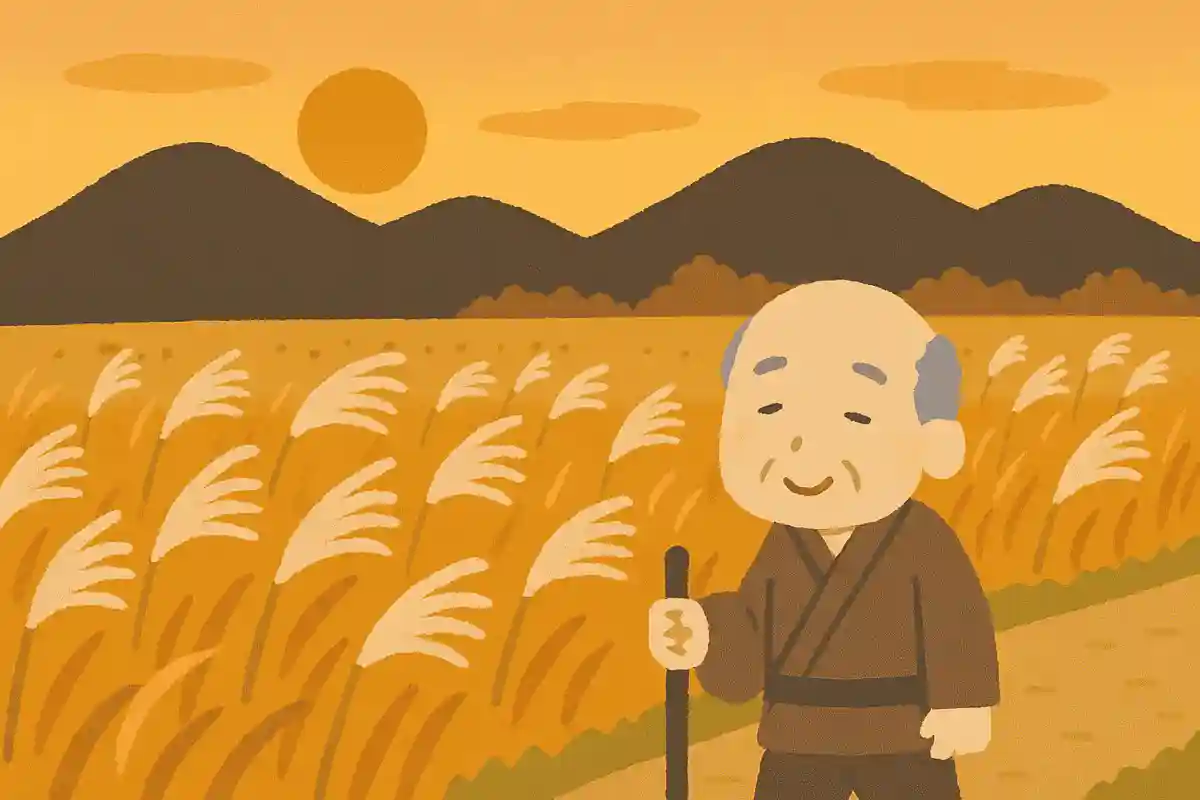
When autumn comes, there are likely some elderly people who go with their families to the mountains to view the autumn leaves.
Some of you may be looking forward to the foliage as well.
Even when the mountains are at their peak for autumn colors, it is often the case that the city and the plains have not yet turned.
Surely Yosa Buson, too, must have gazed at the distant, reddening mountains and overlaid that image with the plants familiar to him, composing a verse about an autumn day.
You can picture a scene seen with a wide field of view at the early-arriving dusk of autumn.
Incidentally, the susuki (Japanese pampas grass) that appears in haiku is said to be a plant that has long been closely connected to everyday life.

A child cries, “Please fetch me the bright full moon.”Kobayashi Issa
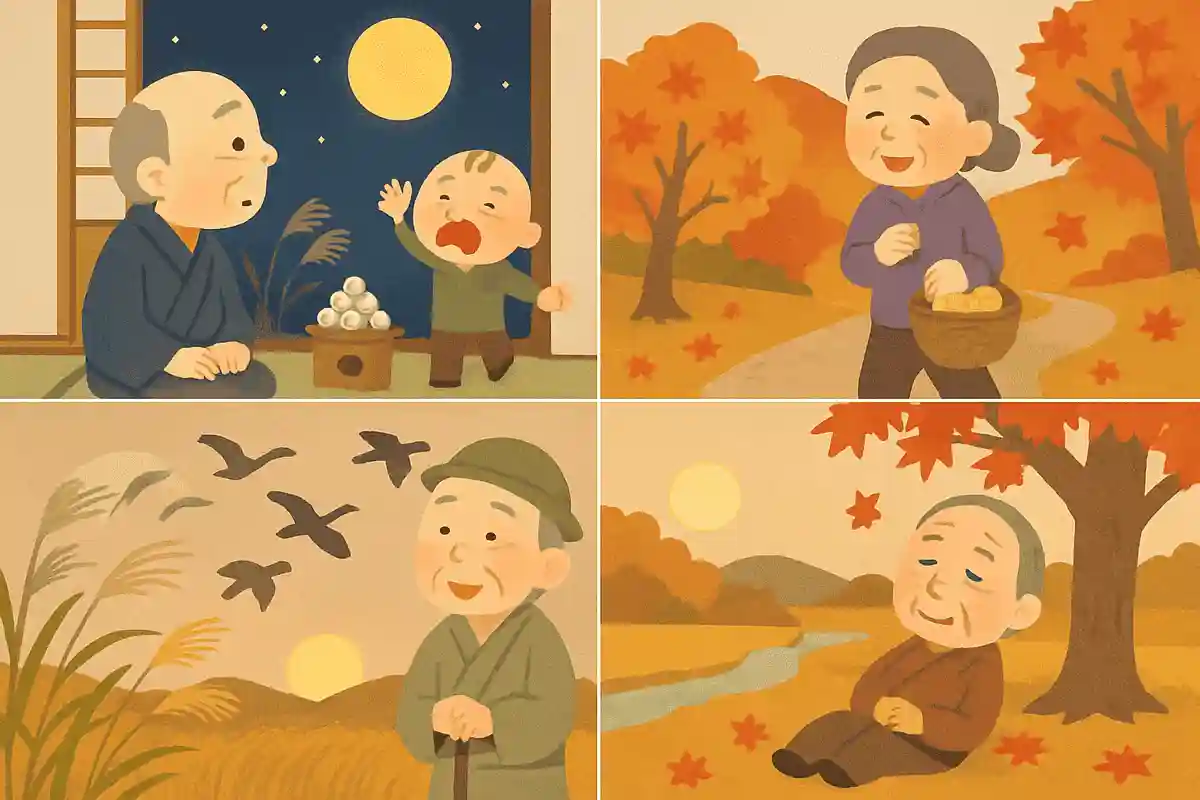
The autumn moon is truly beautiful, isn’t it? They say the air in autumn is clear, with less dust and pollen, so the moon’s outline is easier to see.
This piece describes a child being carried on someone’s back, pleading, “Please get the moon for me,” and I can understand that longing.
The child’s innocent request feels very heartwarming.
Autumn can evoke a sense of loneliness, but the haiku conveys a comforting warmth.
How about using this as a reference for creating heartwarming haiku together with older adults?
Scattering pampas grass—one can see the cold coming.Kobayashi Issa
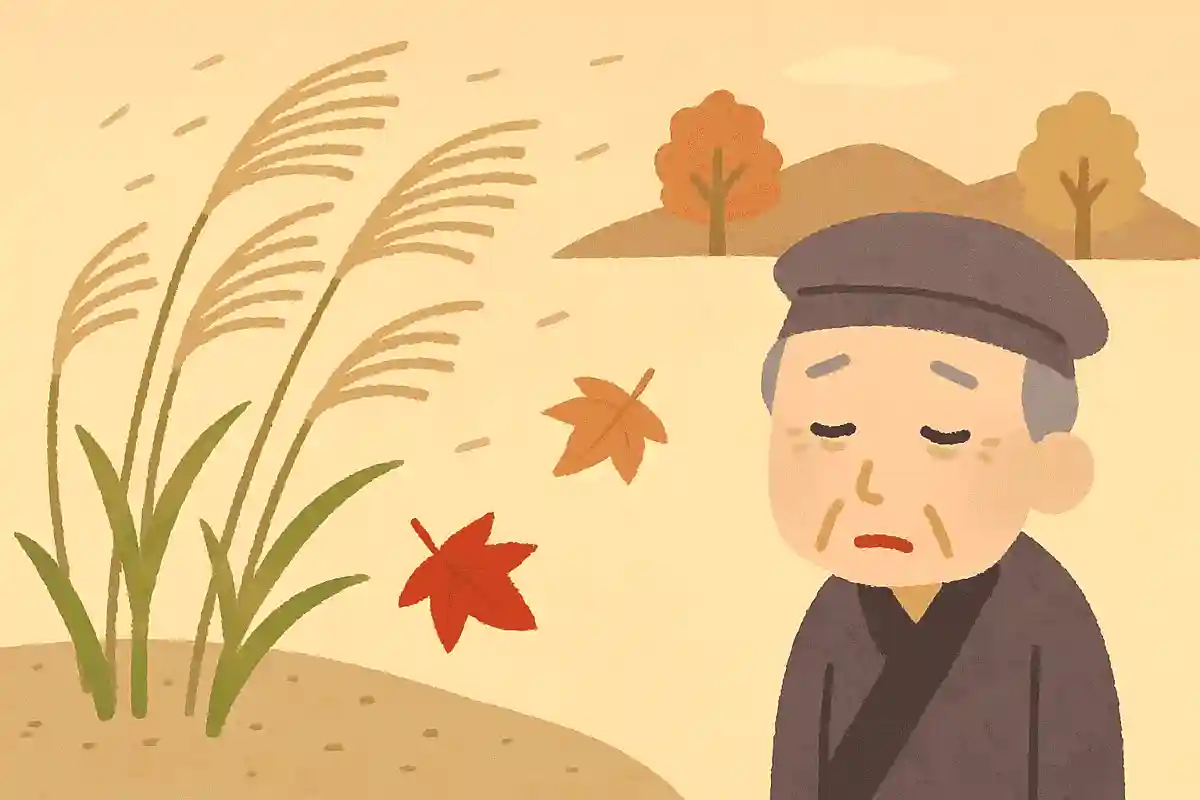
Susuki (Japanese pampas grass) is often offered together with bush clover during moon-viewing.
As autumn gradually deepens and the pampas grass withers, this haiku lets us sense the approach of winter.
Haiku about the changing seasons can help older adults—who may find it difficult to feel the seasons—experience them more vividly.
It also sounds fun to compose haiku that weave in the scenery and impressions that older adults notice when they go out for a walk or into the garden.
Try creating refined haiku that evoke the gentle passage of autumn while you relax in a warm room.
Autumn winds—the red flower the insects loved.Kobayashi Issa
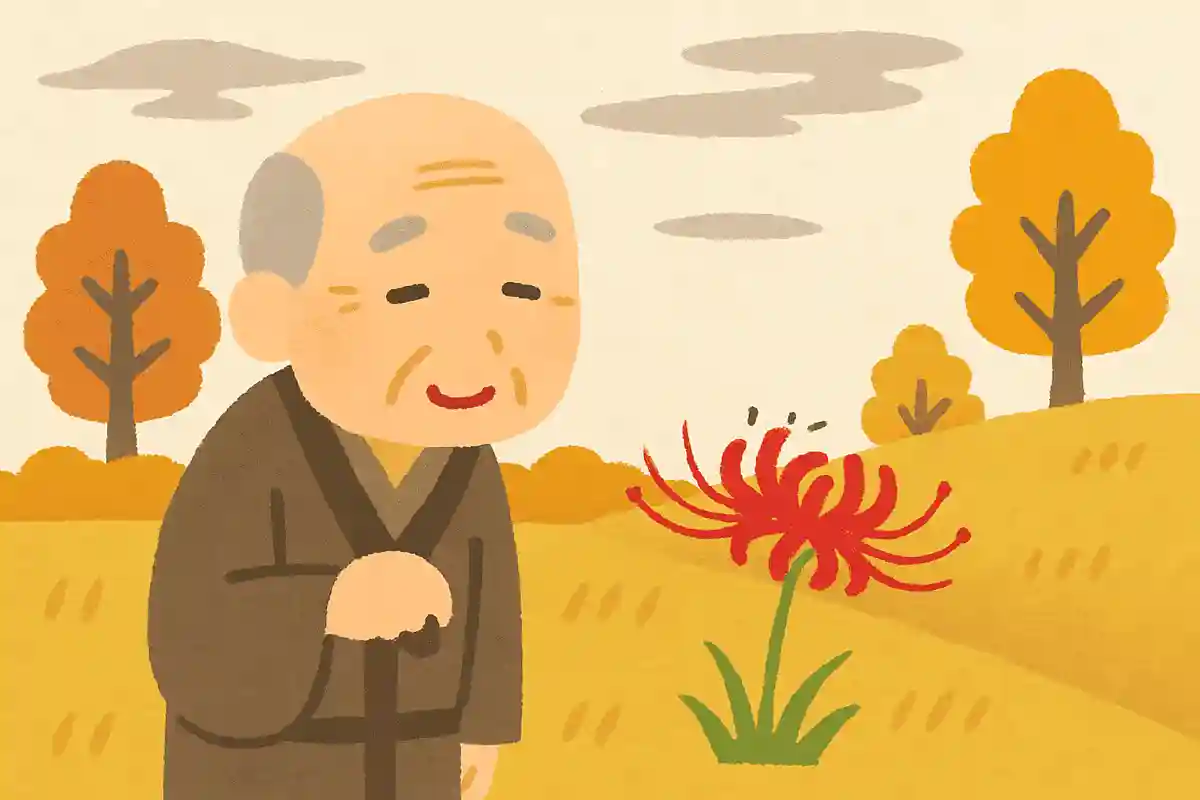
This is a haiku by Kobayashi Issa, renowned as one of the three great haiku poets of the Edo period.
He established the Issa style, which avoids difficult expressions and words, and this haiku is one example.
Issa composed it while visiting the grave of his eldest daughter, who had died young.
As the autumn wind blew, he saw a red flower swaying and remembered how his child had wanted to pluck it.
The haiku conveys both the loneliness of autumn and the deep sorrow of losing one’s child—beautiful yet painful in its content.
The bright autumn moon—circling the pond all through the nightMatsuo Bashō
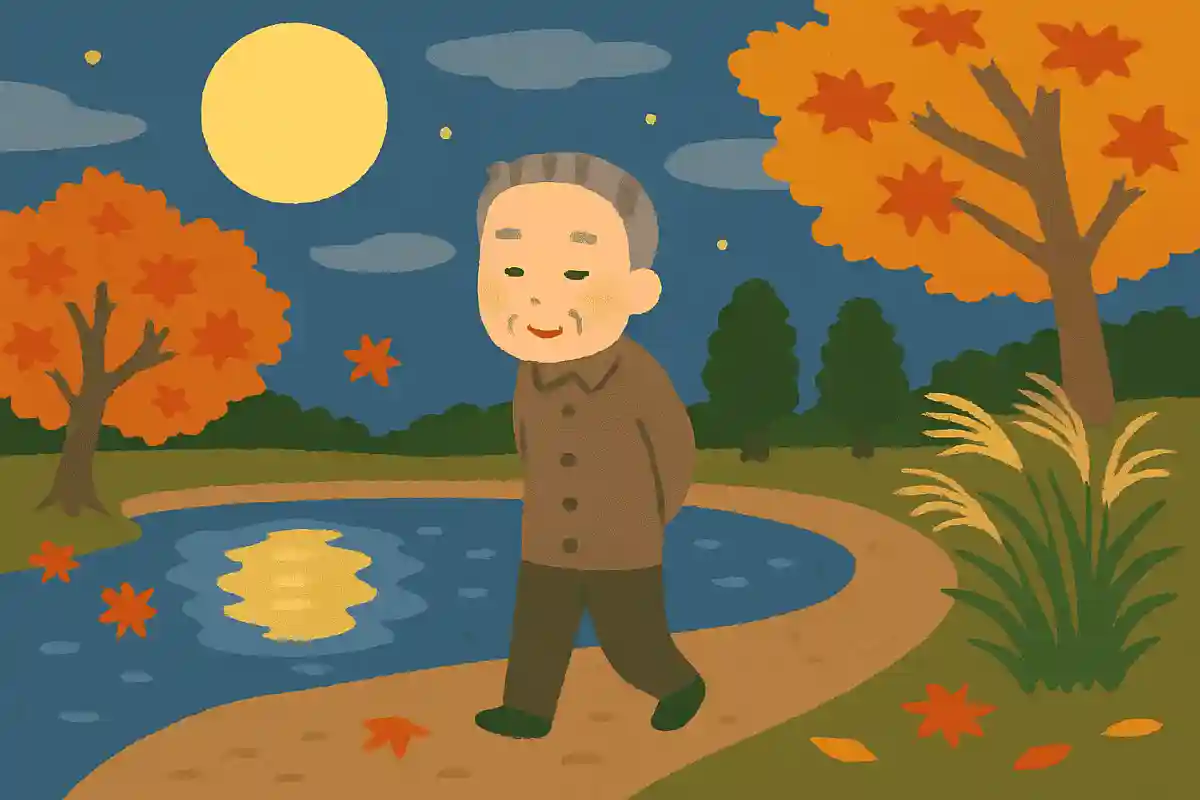
Autumn is the season for moon viewing, isn’t it? Gazing at the beautiful moon can make you feel as if your heart is being cleansed.
They say there’s actually a reason why the moon looks especially beautiful in autumn.
The season is dry and the air is clear, and the moon sits at just the right height for viewing.
Did Matsuo Bashō perhaps spontaneously compose a haiku upon seeing the bright moon? When you enjoy moon viewing with older adults, it might be fun to compose haiku together as well.
Matsuo Bashō was a haiku poet active in the Edo period.
There’s a special charm in composing a poem while looking at the same moon that Bashō once saw.
In deep autumn—what is my neighbor doing?Matsuo Bashō
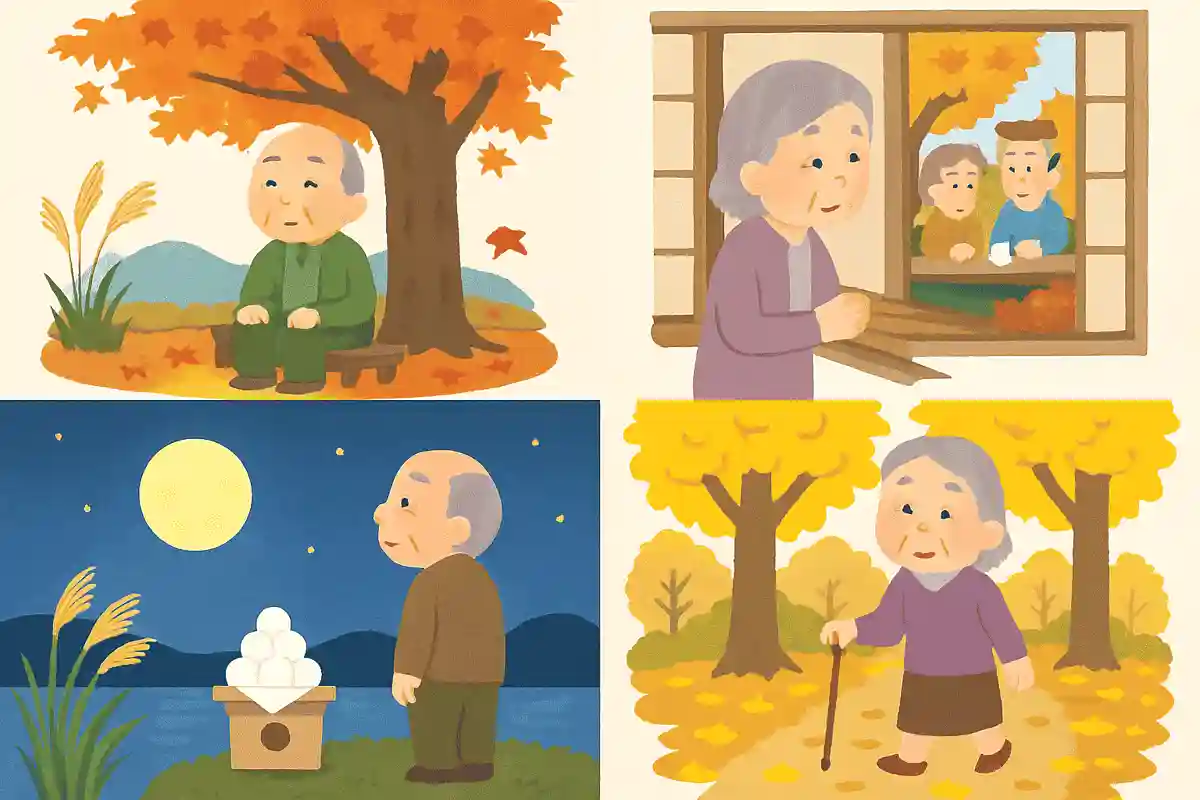
As autumn deepens, the colored leaves begin to fall to the ground, don’t they? It’s also a time when the whole town takes on a slightly lonely atmosphere.
Here is a late-autumn haiku by Matsuo Bashō that conveys that sense of longing for human company.
In autumn, the sun sets earlier.
As the nights grow longer, we have more time alone with our thoughts, which can make us feel uneasy, can’t it? Our interactions with the people next door lessen, and Bashō may have felt as if life itself were fading like the evening sun.
Or perhaps the sounds from a neighbor’s place softened his loneliness.
Haiku composed by older people may carry especially deep meaning.
If someone has crafted a haiku, try listening to the story behind it.