

For Seniors: Famous Haiku of November — Introducing Verses Depicting Beautiful Autumn Scenery

November, when the deepening of autumn can be felt, is the perfect season for crafting haiku about autumn leaves and the arrival of winter.
Setting seasonal scenery and movements of the heart to the rhythm of 5-7-5 lets you savor the joy of choosing words and the delight of creation.
This time, we present haiku that feature late-autumn atmospheres and familiar scenes.
We’ve gathered many verses using November season words such as “kogarashi” (winter wind), “hatsu-shimo” (first frost), and “chiru momiji” (falling autumn leaves).
Imagining the depicted scenes or trying your own hand at a verse will naturally spark conversation and bring a richly fulfilling moment.
May you spend a little while feeling autumn’s deepening, together with autumnal scenes woven in words.
[For Seniors] Famous Haiku for November: Introducing 10 Poems Depicting Beautiful Autumn Scenes (1–10)
The layered hills—little spring (a mild autumn day)Soseki Natsume
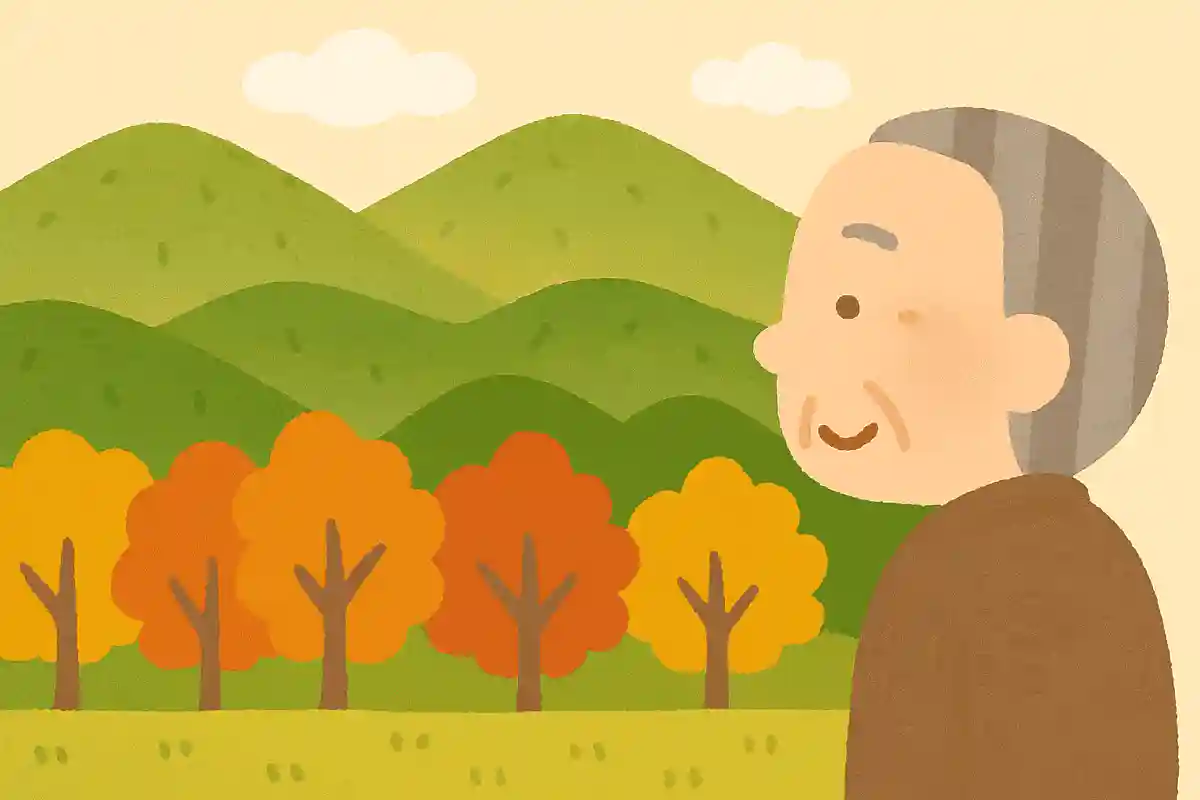
This is a haiku about the gentle “koharu-biyori,” the mild, springlike days from late autumn to early winter.
“Kusayama” refers to softly contoured hills covered in grass, and their appearance of layering one behind another is expressed as “overlapping.” In the clear air of late autumn, wrapped in sunlight, you can almost see the distant hills tenderly overlapping.
The seasonal word “koharu kana” conveys that gentle, warm sunshine and a sense of calm before winter arrives.
Please quietly savor this comforting blessing of the season before the cold deepens.

First mist— even the crisp bite of the stalk, only until last yearKobayashi Issa
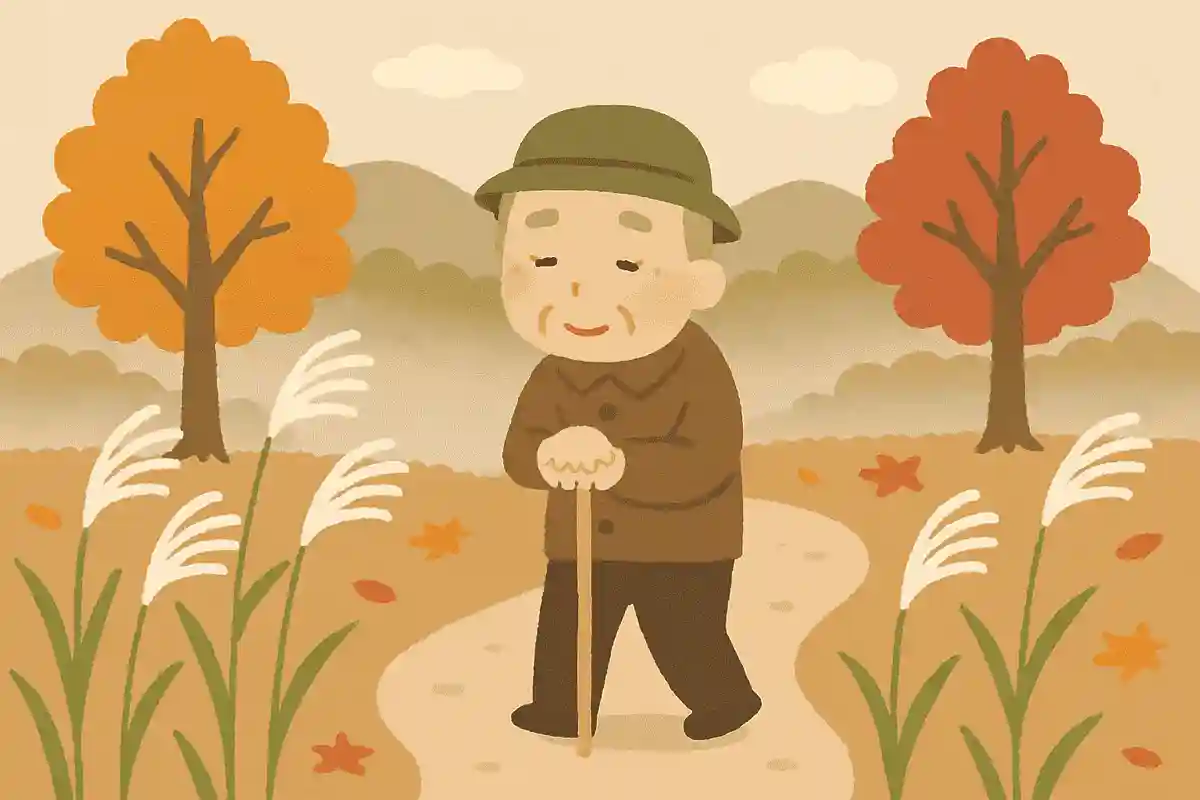
This is a poem by Kobayashi Issa about a quiet morning from late autumn into early winter.
“First mist” refers to the soft fog that settles at the beginning of winter.
Within the white mist enveloping fields and meadows, Issa gazes at the withering grass stalks.
“The crisp bite of the stalk” evokes the crunchy sensation when chewing grass.
By adding “until last year,” he laments that this year the grass has already withered and lost its freshness.
In Issa’s heart, there must have been a lingering attachment to the passing seasons and a quiet reflection on growing older.
On a calm morning in November, this gentle yet poignant verse evokes memories of days gone by, as if glimpsed beyond the mist.
A sleeping child, using its mother as a shield against the frost.Kobayashi Issa
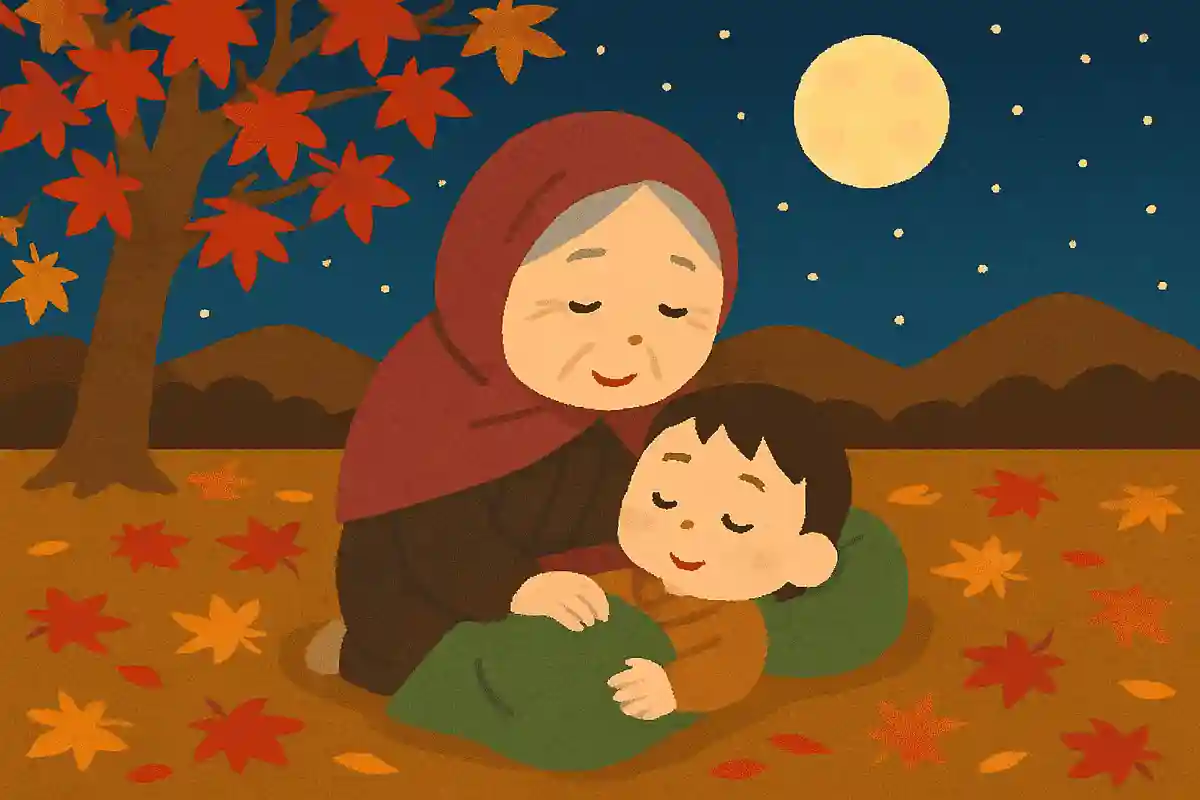
A verse depicting a warm parent-and-child scene from late autumn into early winter, as the cold deepens.
“Frost shelter” means protection from cold frost and chill.
The mother’s warmth is likened to a “frost shelter,” gently portraying a child sleeping soundly against her breast.
Though it’s cold enough for frost outside, only around the mother and child is there a calm, warm air.
It’s a poem that lets you feel human warmth and deep affection amid the severity of nature.
Reading it in November, as the chill grows, spreads a gentle feeling that warms the heart.
A balmy autumn day— / a red dragonfly sits / biting a stoneMurakami Kijo
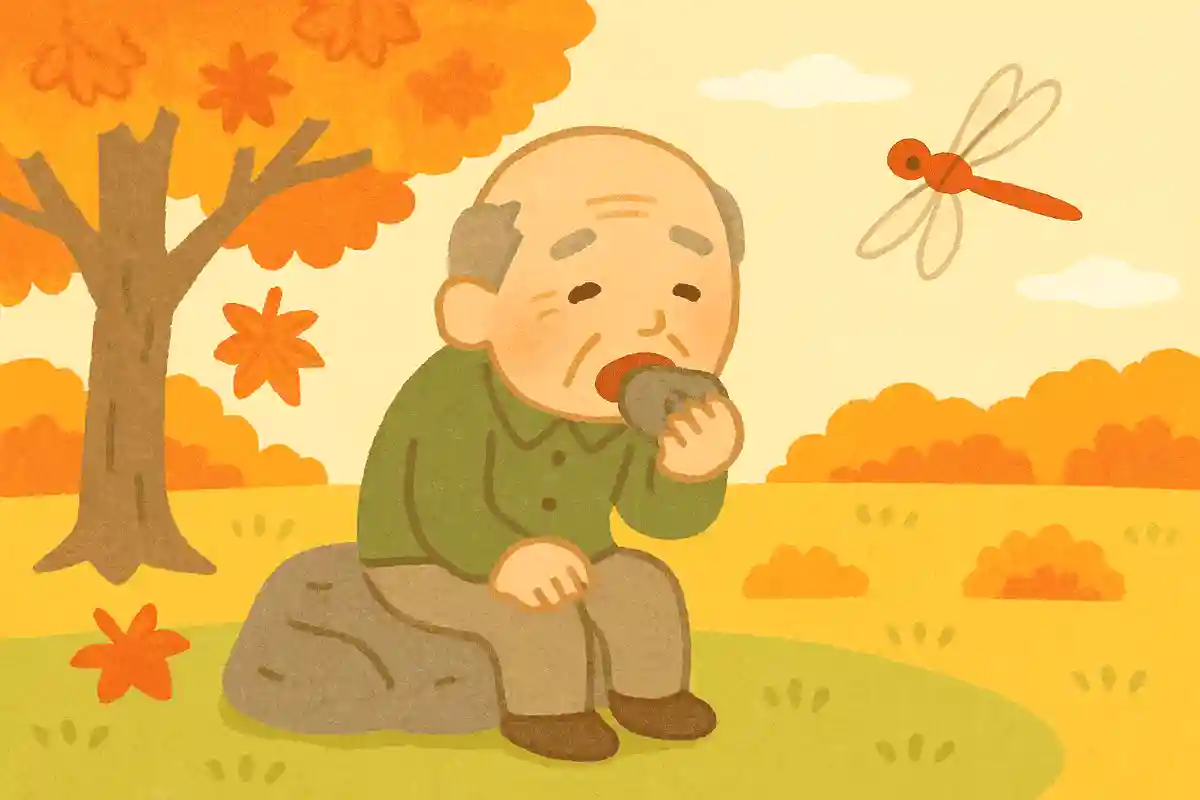
This is a verse about the gentle “koharu-biyori,” the mild spell before winter sets in.
“Koharu-bi” refers to warm, springlike sunshine that appears at the beginning of winter.
The phrase “a red dragonfly biting a stone” depicts a red dragonfly resting on a stone in a sunny spot, so still it looks as if it were holding the stone in its mouth.
Even in the cold, the dragonfly savoring a brief moment of warmth conveys both the quiet and the resilience of life in nature.
Bathed in the soft November light, it is a warm little poem that lets you feel the turn of the seasons and the tender warmth of a small life.
Even if the lodging is cold, let it be a shower of people.Matsuo Bashō
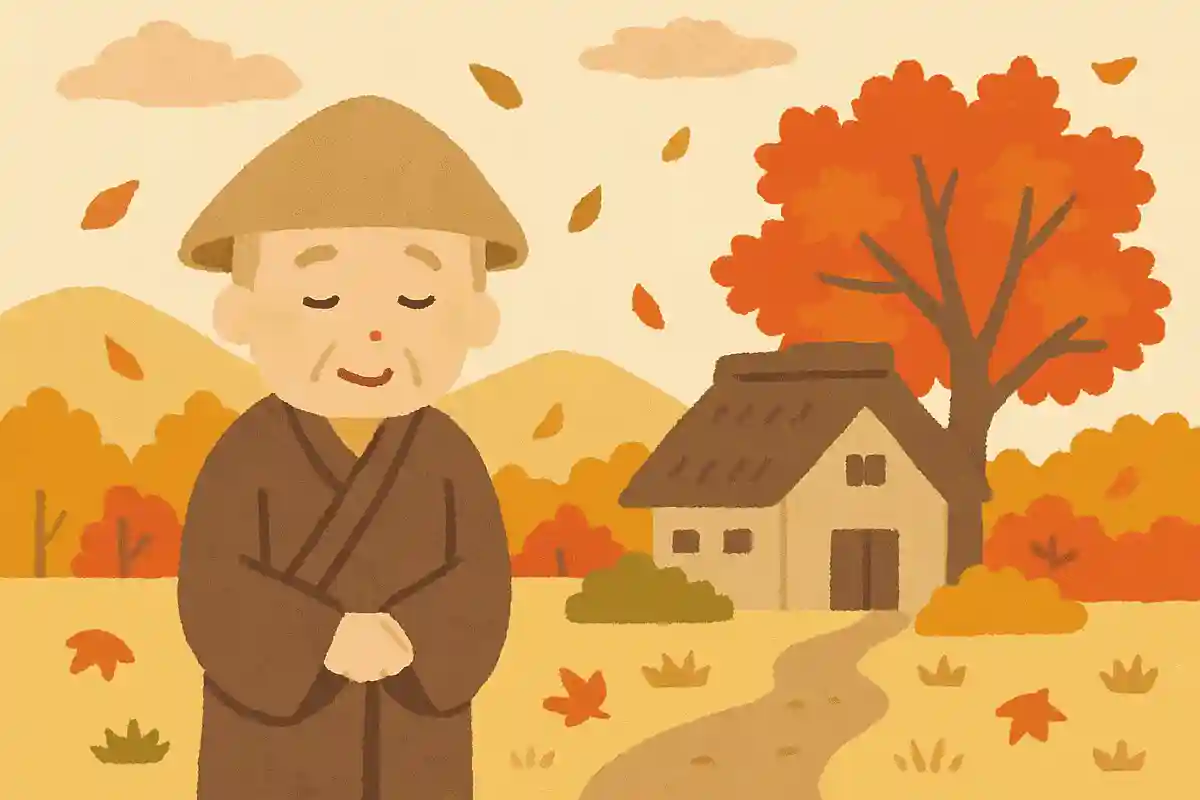
This is a haiku about shigure, the intermittent cold rain that falls from late autumn into early winter.
“Shigure” refers to the chilly showers that start and stop around the beginning of winter.
“Yado” means a house or lodging where people take shelter.
While the cold shigure falls outside and the wind bites, the scene evokes people huddling together indoors, sharing warmth.
The poet finds human warmth amid the cold, contrasting the chill of being struck by the shigure outside with the warmth of the human heart.
Reading it on a cold, rainy day in November, one can feel a gentle compassion that quietly sinks into the heart.
First snow— on the half-crossed bridgeMatsuo Bashō
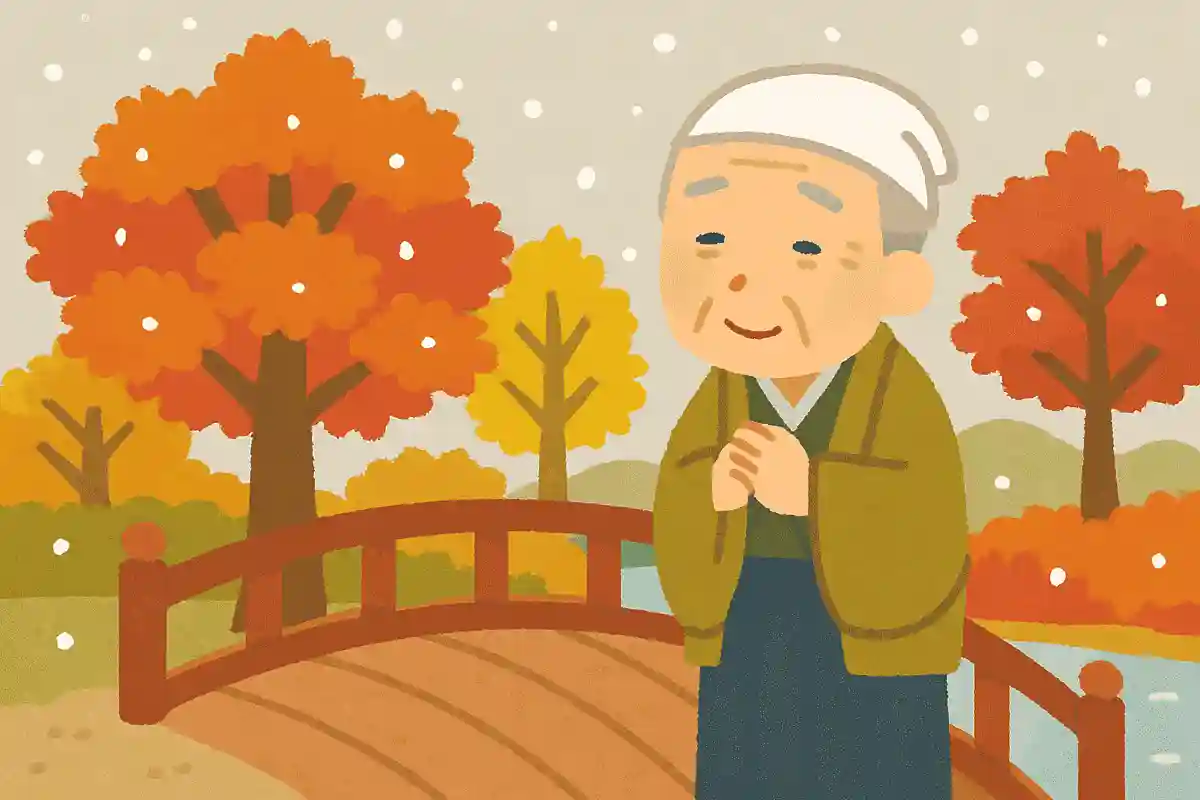
This is a haiku by Matsuo Bashō depicting a quiet scene at the beginning of winter.
“First snow” refers to the first snowfall of the year—not yet enough to blanket the ground, just flakes gently drifting down from the sky.
“On the bridge, just as one is starting to cross” means he was right at the point of stepping onto the bridge.
Encountering the first snow during his journey, Bashō likely paused on the bridge and deeply felt the arrival of winter.
One senses the stillness within the cold, and a calm acceptance of the changing seasons.
It is a verse well-suited to November’s first snow, where a traveler’s reflections gently overlap with the beauty of nature.
At the end of the road— a lodging in the valley where crimson leaves fallMorikawa Kyoroku
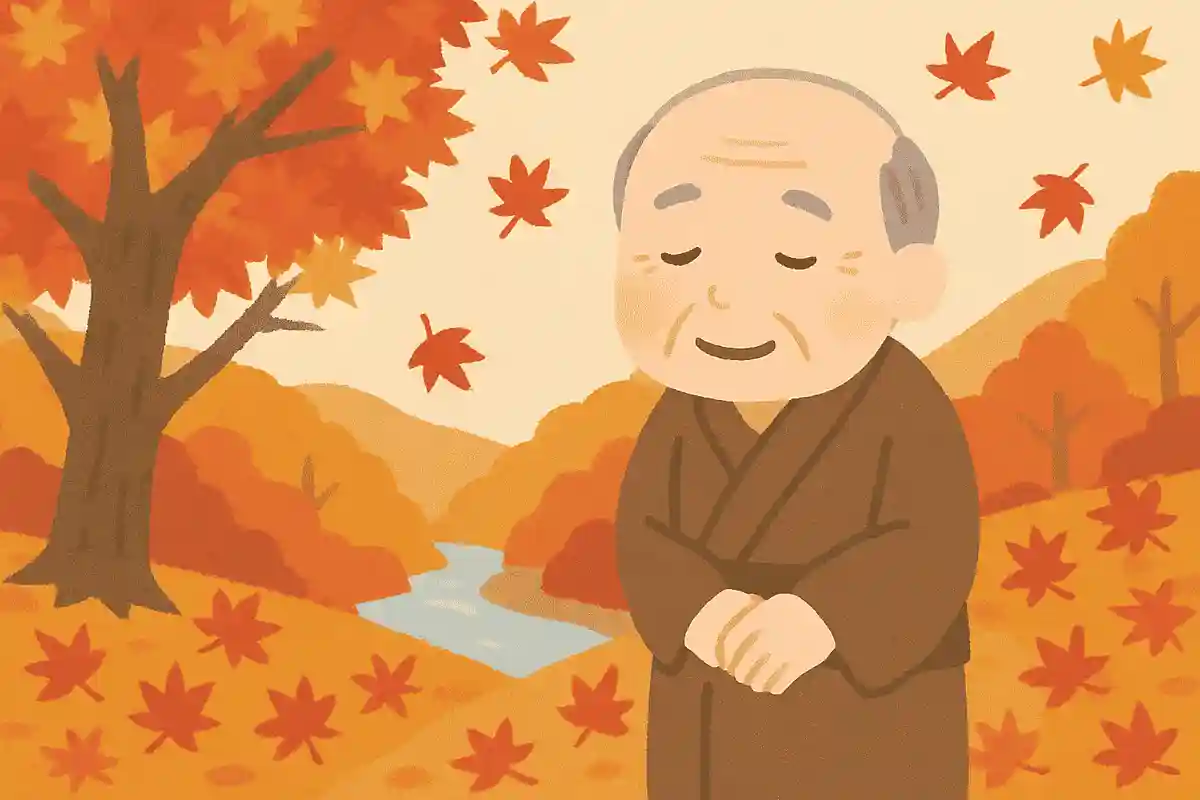
It describes a quiet mountain scene at the end of autumn.
“Iki-ataru” means that the path comes to an end where it runs into a ravine.
As you walk along the mountain trail, you eventually reach a deep valley where the path stops.
In that tranquil hollow, the phrase “the valley’s end where scarlet leaves fall” expresses the sight of autumn leaves fluttering down.
In the hush where you can almost hear the leaves as they drop, you sense autumn ending and winter drawing near.
It’s an evocative November verse that suggests the end of a journey or the close of the year.