

For Seniors: Famous Haiku of November — Introducing Verses Depicting Beautiful Autumn Scenery

November, when the deepening of autumn can be felt, is the perfect season for crafting haiku about autumn leaves and the arrival of winter.
Setting seasonal scenery and movements of the heart to the rhythm of 5-7-5 lets you savor the joy of choosing words and the delight of creation.
This time, we present haiku that feature late-autumn atmospheres and familiar scenes.
We’ve gathered many verses using November season words such as “kogarashi” (winter wind), “hatsu-shimo” (first frost), and “chiru momiji” (falling autumn leaves).
Imagining the depicted scenes or trying your own hand at a verse will naturally spark conversation and bring a richly fulfilling moment.
May you spend a little while feeling autumn’s deepening, together with autumnal scenes woven in words.
- [For Seniors] A Collection of Famous Autumn Haiku: Introducing Beautiful Verses That Evoke Vivid Scenery
- [For Seniors] Famous Haiku for December: Masterpieces Depicting Winter Scenes and Year-End Moments, Plus Tips on How to Compose Them
- [For Seniors] Evoking autumn scenes: Introducing beautiful haiku for October
- [For Seniors] Haiku for September: Introducing Verses Perfect for Autumn
- [For Seniors] Winter Haiku: Introducing Beautiful Masterpieces by Famous Haiku Poets
- [For seniors] Classic autumn kigo: beautiful words that depict evocative scenesNEW!
- [For Seniors] Fun Origami Ideas to Feel the Season in November
- [For Seniors] Famous Haiku About January: Learn New Year Season Words and Tips for Composing
- [For Seniors] Liven Up November Day Services! Fun Autumn Event Ideas
- For Seniors: Simple and Fun! November Recreation Ideas
- [For Seniors] Haiku for March: Enjoying a Spring Moment with Famous Verses
- [For Seniors] Recommended Trivia Quizzes & Fun Facts for November
- [For Seniors] Haiku Introductions for May: A Fun Recreation Activity
[For Seniors] Famous Haiku for November: Introducing 10 Poems Depicting Beautiful Autumn Scenes (1–10)
Winter’s withering wind—shadows of snow run across the open plainOgai Mori
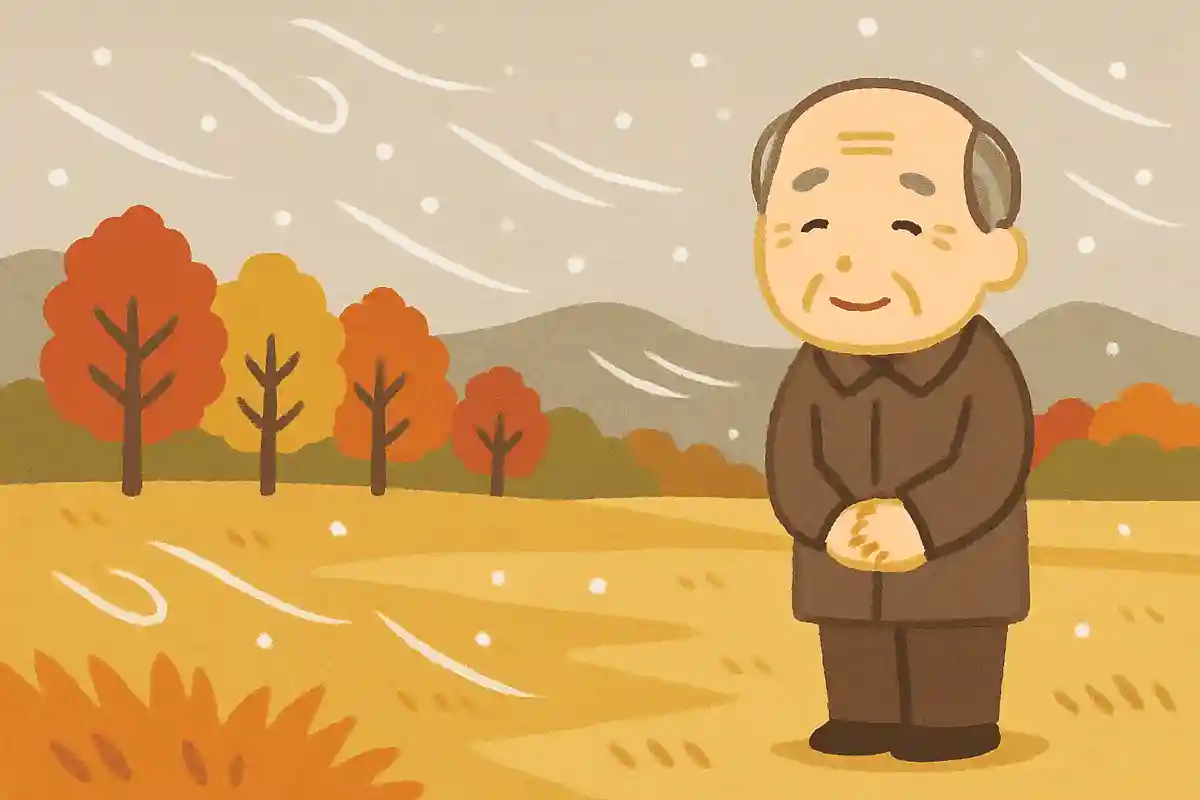
This is a verse that sings of the season when the cold north wind heralds the arrival of winter.
“Hirono” means an expansive, open field, evoking the force of the wintry wind sweeping across it.
“Yuki no kage” refers to the sight of snow skimming the sky as it dances— not yet enough to accumulate, but fluttering flakes that, carried by the wind, seem to race along.
Within the cold, the poem conveys the movement of nature and the beauty of winter.
In November, as late autumn turns to early winter, you can quietly savor the chill and stillness of the changing season.

Moonlit shadows—outside, the Tenth Night, scarcely a soul passing by.Masaoka Shiki
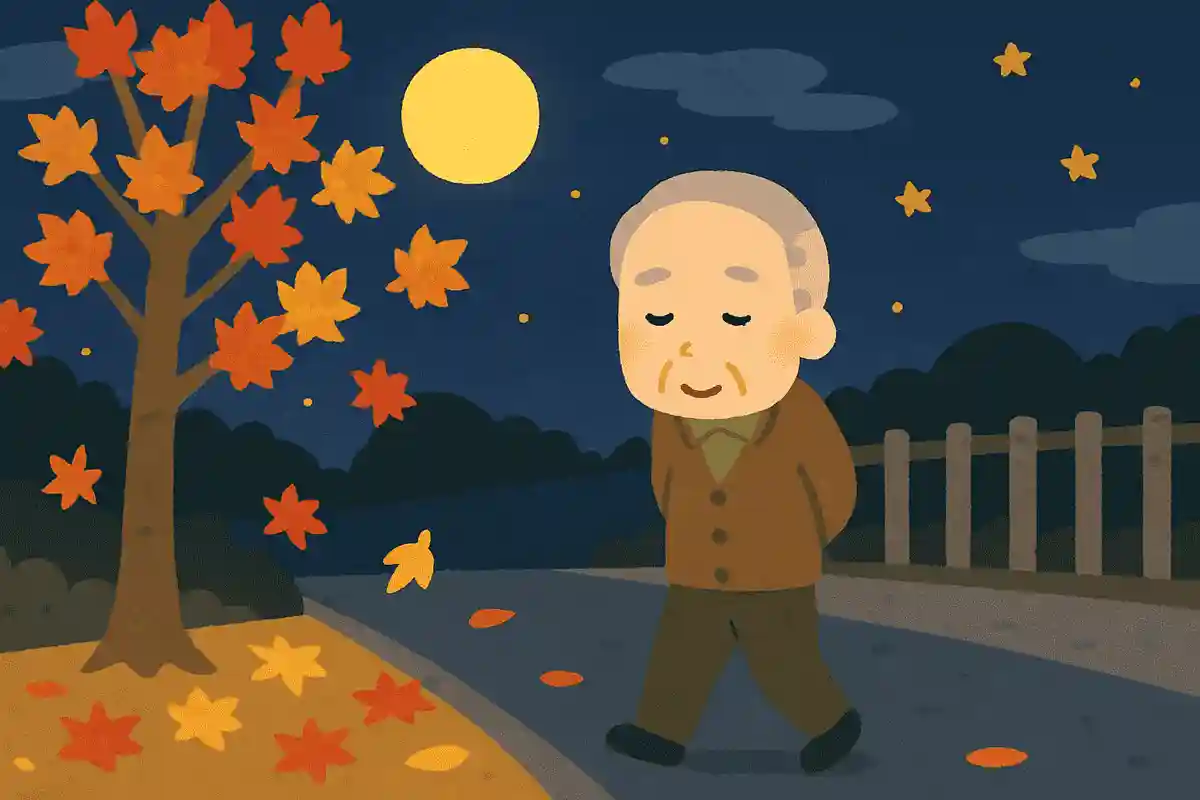
This is a haiku by Masaoka Shiki that contemplates the quiet of a late autumn night and the flow of human life.
“Jūya” refers to a Buddhist observance held in November, an event where people visit temples.
On a night softly lit by the moon, people are passing outside on their way to this “Jūya.” Though Shiki was living with illness, he gazed at this tranquil scene from his room, perhaps contrasting the movement of the world with his own stillness.
The word “tsukikage” (moonlight) carries feelings that are gentle yet fleeting.
It is a deeply moving verse that evokes, on a clear November moonlit night, the warmth of human faith and the quiet of life.
Out-of-season blossoms—how moving they are, the mountain cherry.Akiko Mizuhara
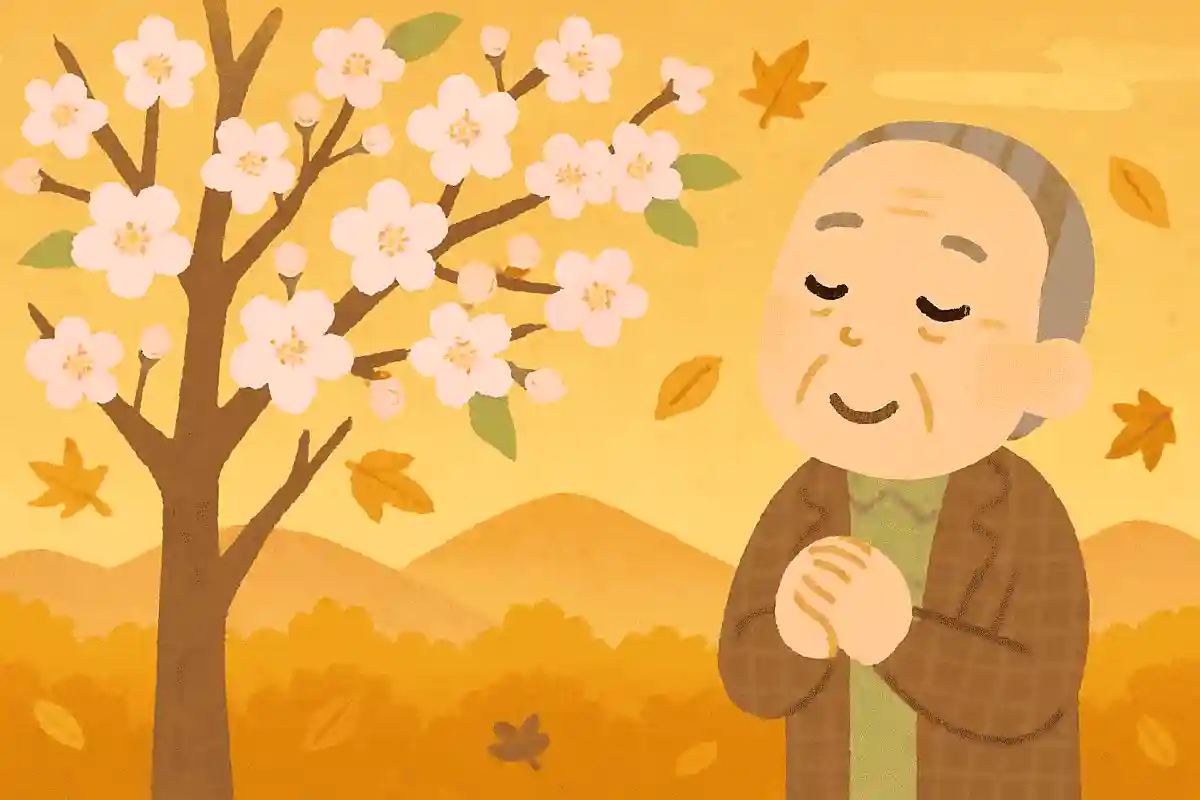
A single verse composed by Mizuhara Shuoshi as he gazed at a mountain cherry quietly blooming in the calm of late autumn.
Kaeribana refers to flowers that bloom again after their proper season has passed.
Seeing a mountain cherry on a November mountainside blooming as if it were spring, Shuoshi was surely moved by the strangeness and transience of the seasons.
In the phrase “michite aware ya,” there is not only an appreciation of the flower’s beauty, but also a deep, poignant feeling for the passage of time and the fragility of life.
In a quiet mountain in late autumn, this evokes a gentle warmth—joy and wistfulness at encountering an out-of-season blossom.
[For Seniors] Famous Haiku for November: Introducing Poems Depicting Beautiful Autumn Scenery (11–20)
A train passes down the street—how strange—the Tori-no-Ichi fair.Masao Kume
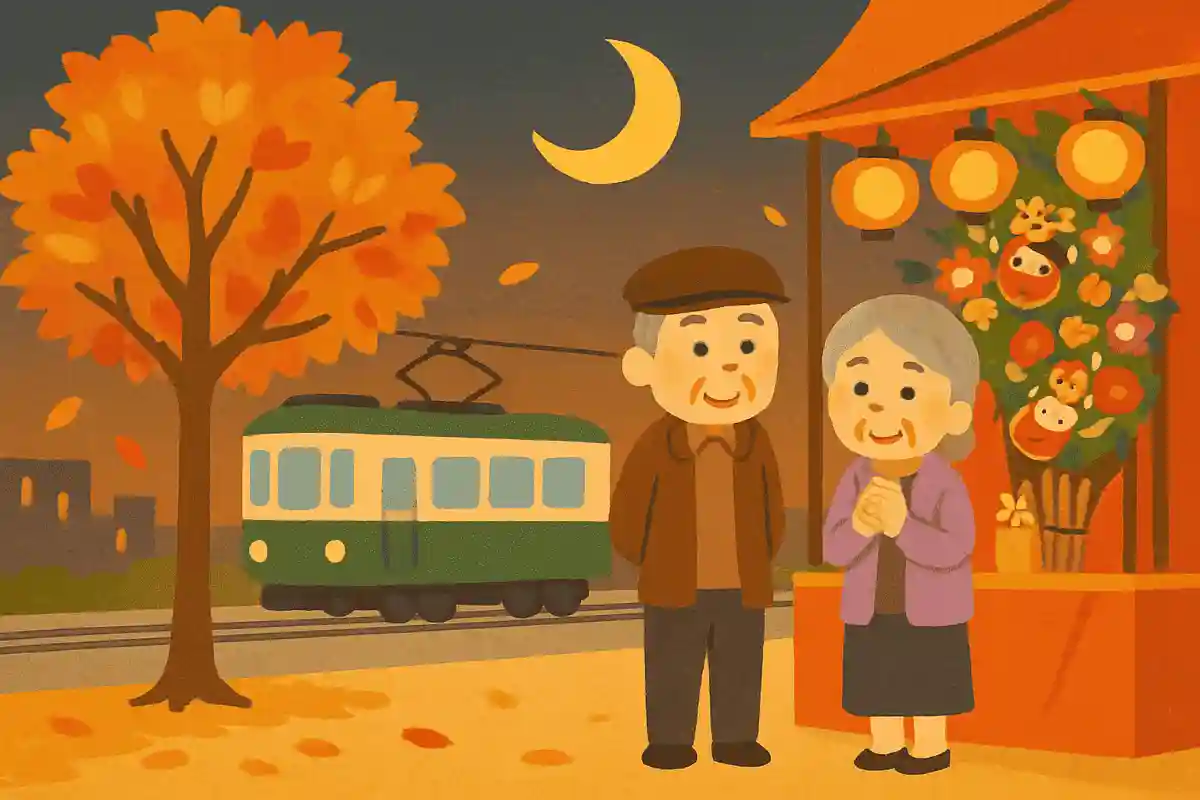
Here is a haiku by Masao Kume, composed while gazing at the lively cityscape of November.
The phrase “the streetcar passing along the street” refers to the trams busily coming and going through the city.
Their motion and sound evoke a somewhat mysterious sensation in the poet.
The Tori-no-Ichi is a fair for prosperous business held in November, where stalls and the bustle of people color the streets.
Kume contrasts the modern speed of the streetcar with the traditional liveliness of the Tori-no-Ichi, sensing the extraordinary within the everyday and the shifting of the seasons.
On a November street corner, you can gently savor a scene where nostalgia and newness mingle.
Out to sea I go—no place for the wintry wind to returnSeishi Yamaguchi
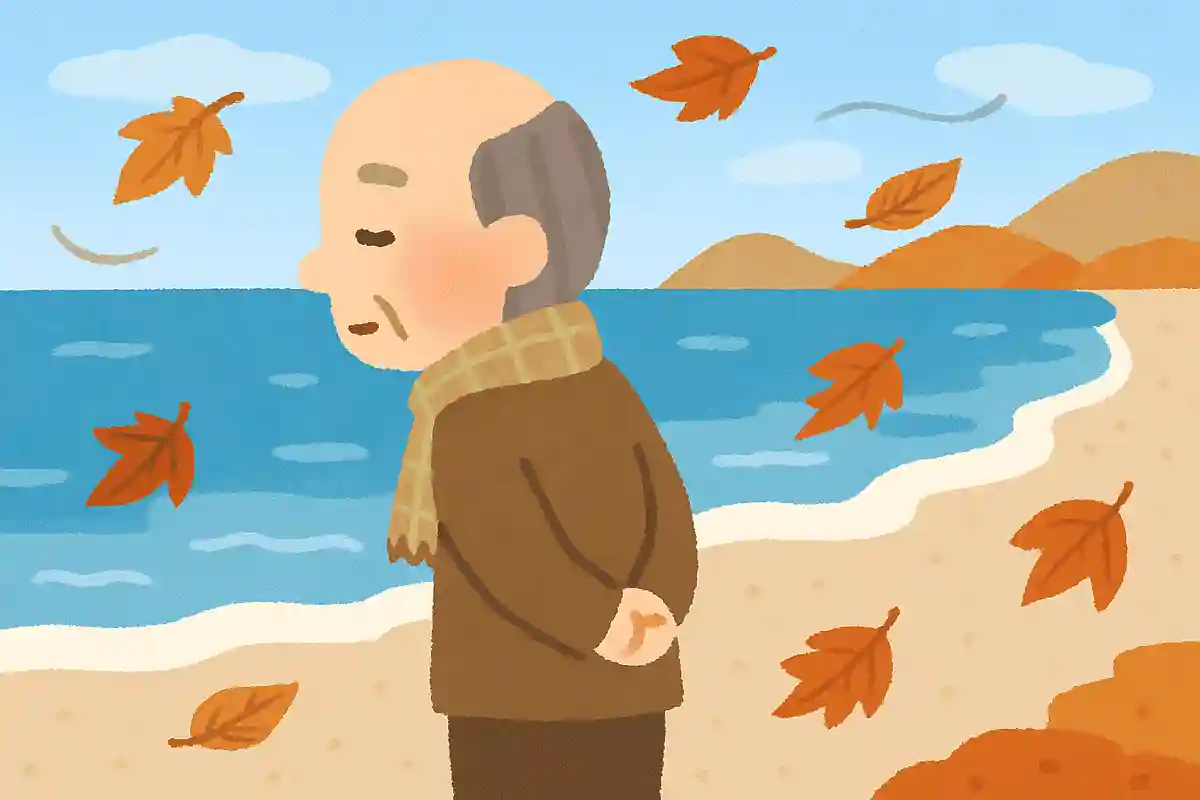
This verse was composed by Seishi Yamaguchi, a haiku poet of the Meiji era.
“Kogarashi” refers to the strong, dry wind that blows from autumn into winter—something many may have heard mentioned in weather reports.
The phrase means that once the kogarashi goes out to sea, it has nowhere to go and never returns to land.
Around the age of fifty at the time, Yamaguchi was living near Ise Bay due to wartime evacuation.
He later stated explicitly that he likened the kogarashi to kamikaze pilots in this poem.
The verse conveys the lament that, like the kogarashi, the kamikaze depart and never come back.

The season’s first autumn shower—I find myself fondly longing for someone, waiting.Ritsuko Hoshino
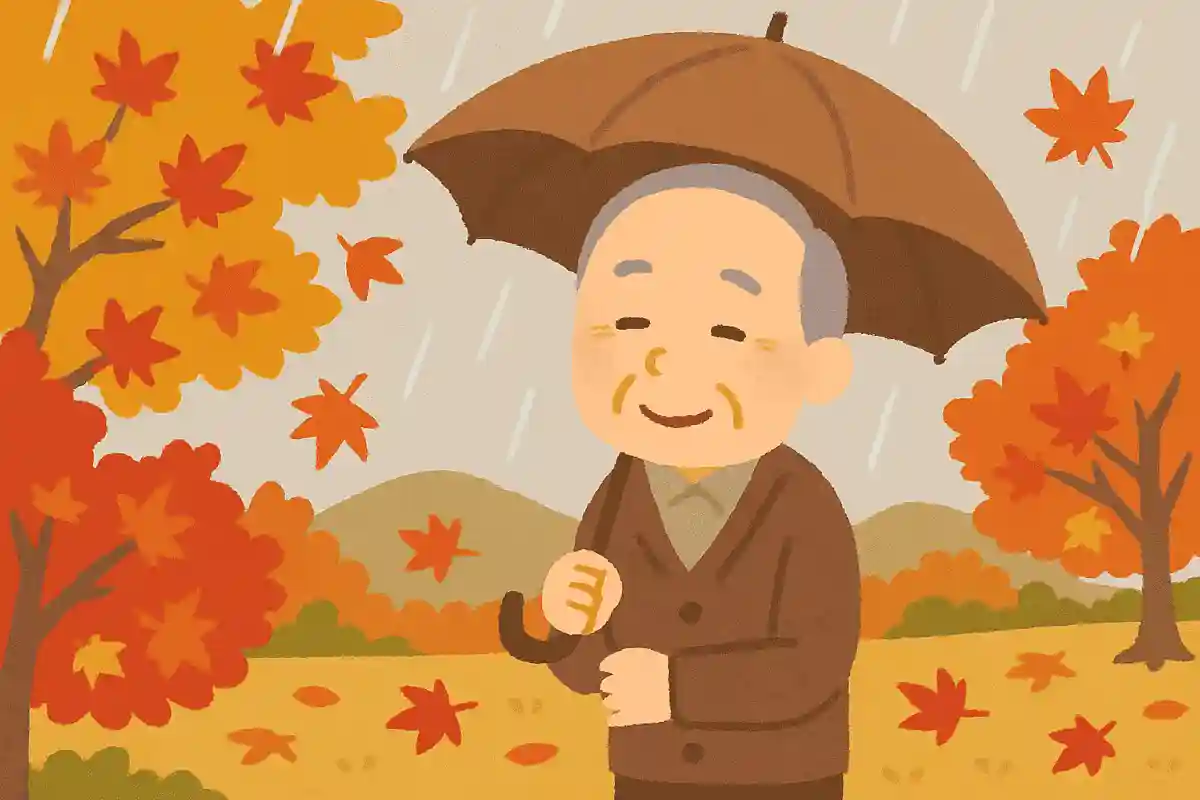
Tatsuko Hoshino was a haiku poet of the Meiji era and the second daughter of Takahama Kyoshi.
“First winter shower—how I long for people, and I keep on waiting.” The seasonal word here is “first winter shower” (hatsu-shigure), meaning a sudden rain that falls between autumn and winter.
The poem portrays someone waiting, feeling lonely and yearning, for a beloved person to arrive in the slightly chilly weather of such rain.
How long have they been waiting? In an era when communication wasn’t as easy as it is today, one simply waited for the beloved to come—conveying a poignant, fleeting atmosphere.
The north wind blows—there goes the figure, seen from behind.Aran-seki Hattori

Hattori Ransetsu was a haiku poet of the Edo period and is regarded as a leading disciple of Matsuo Basho, from whom he learned haikai.
The verse “Kogarashi no / fukiyuku ushiro / sugata kana” was composed by Hattori Ransetsu when his master, Basho, set out on a journey.
It is not merely about being blown by a wintry wind; it was written to bless Basho’s prospects and to express a feeling of farewell.
“Kogarashi” refers to a cold wind strong enough to scatter the leaves from the trees.
From the phrase “fukiyuku” (blowing onward), one can sense a vigor in the figure of Basho’s departing back.