

![[For seniors] Classic spring kigo: beautiful words that evoke the season](https://media.ragnet.co.jp/img/1200__png__https://www.ragnet.co.jp/files/2026/03/03b2d048c69a8f0dbcf97e5044a2867e.webp)
[For seniors] Classic spring kigo: beautiful words that evoke the season

When you sense the arrival of spring, there are seasonal words that you can’t help but hum to yourself, aren’t there? In this article, we’ll introduce plenty of spring kigo that are especially friendly and familiar for older adults.
Beautiful words like “harumeku” (to take on a springlike feel) and “spring breeze,” which evoke vivid scenes just by hearing them, are perfect for haiku-making or sparking conversation.
Enjoy wordplay using seasonal terms in recreation or everyday chats, and you’ll feel the changing seasons more closely.
Please savor to your heart’s content the rich world of words unique to spring.
[For seniors] Classic spring kigo: Beautiful words that evoke the season (1–10)
Hinamatsuri (Doll Festival / Girls’ Day)
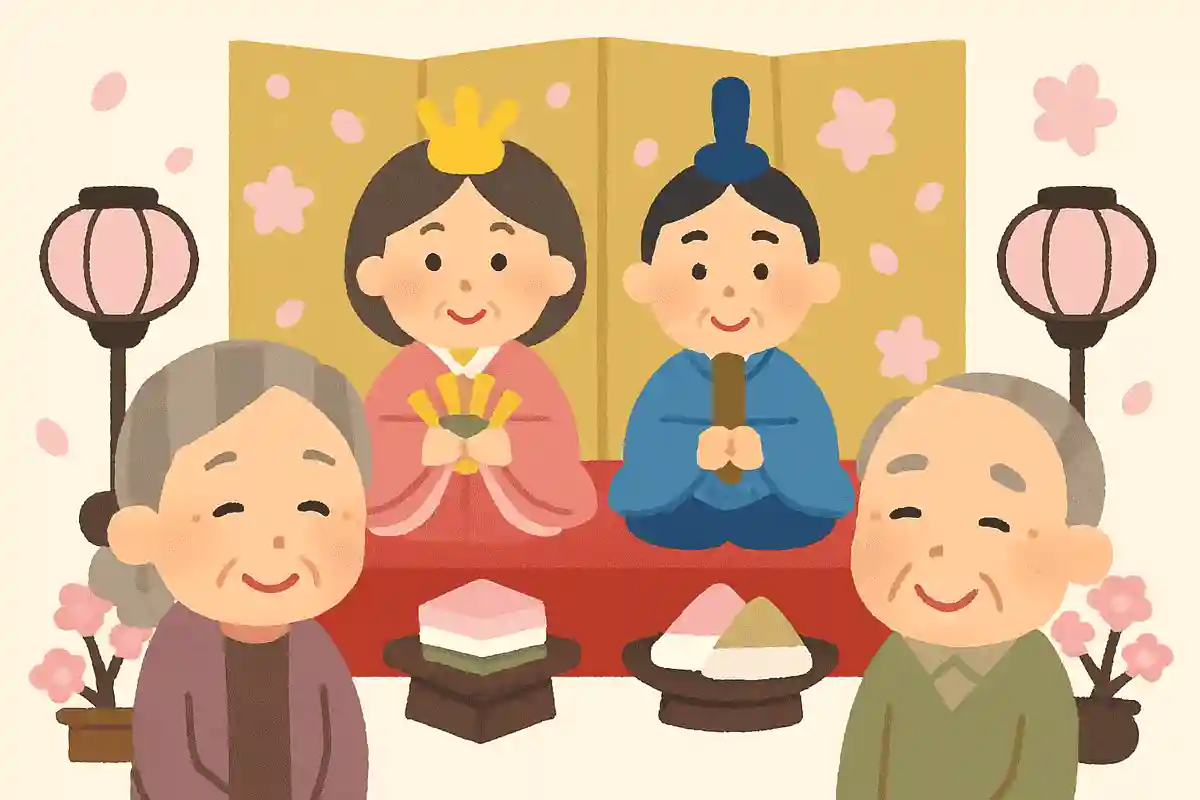
In the Heian period, aristocrats’ children played house with dolls in a pastime called hiina-asobi.
Over many centuries, this is said to have developed into today’s Hinamatsuri (Girls’ Day).
The hina dolls, which were originally set afloat on rivers, also came to be displayed as they are today starting around the Edo period, when they developed into craftworks.
Hoshino Tatsuko’s poem, “While arranging the hina dolls, I am suddenly loath to part with life,” is a verse that truly captures the delicate sensibilities characteristic of a female haiku poet.
Another fine, everyday-life-infused poem by a woman haiku poet is Kaga Chiyo’s: “Preparations for the meager lamp—the dolls’ kitchen.”
bush warbler

The bush warbler, famous as a bird that heralds spring.
Every Japanese person knows its “hoo-hokekyo” song, right? Of course, the bush warbler is a popular seasonal word that appears often in haiku, but it’s also beloved by literary giants: going back to Murasaki Shikibu’s The Tale of Genji and, in modern times, Hori Tatsuo’s The Beautiful Village, it makes its appearance.
In Natsume Sōseki’s Grass Pillow, there’s a scene where the protagonist hears the warbler and muses, “This is what art truly is.” I highly recommend this book to anyone who hasn’t read it yet for its depiction of the warbler’s voice as something that makes you forget the mundane world.
twittering

Saezuri is read as “saezuri” or “saedzuri,” and it can also be written as “saezuri” with the suffix -ri.
In spring, when the breeding season arrives, small birds chirp loudly—chun-chun, chee-chee.
Of course, birds vocalize year-round, but in the world of haiku, “saezuri” (birdsong) is considered a seasonal word for spring.
With males guarding their territories and both males and females engaging in courtship, the springtime chorus is wonderfully lively.
The bush warbler’s “hō-hokekyo” and the skylark’s chattering “pīchiku-pāchiku” are famous examples.
The voice that sounds like “tsutsu-pii, tsutsu-pii” belongs to the great tit.
It makes you want to prick up your ears and go in search of birdsong, doesn’t it? When using it in haiku, it’s best not to explain the saezuri at length.
to feel like spring; to become spring-like

What makes you feel the arrival of spring? Is it when the water from the tap feels just a touch warmer, or when you notice buds beginning to form on the flowers swaying by the roadside? You might also think, “Ah, it’s spring,” when words like entrance ceremonies and graduation ceremonies appear around you.
The beauty of the expression “-meku” isn’t limited to spring, but it somehow carries a vigor that seems to spur on the breath of life.
It’s one of those seasonal words you’ll want to use more and more—whether as a casual greeting added to a letter or as the star of a favorite postcard.
cherry blossom

There are various theories, but it is said that wild species of cherry trees have existed in Japan since ancient times.
Representative wild species include Yamazakura and Oshima-zakura.
It’s understandable that something like a “sakura culture” runs through the DNA of the Japanese people, who have been gazing at blossoms blooming in spring for nearly 2,000 years.
Of course, in the world of haiku it is also one of the most frequently used seasonal words, and Matsuo Bashō’s famous line “Samasama no koto omoidasu sakura kana” (“Cherry blossoms that bring to mind all manner of things”) appears in many textbooks.
There are so many sakura-related seasonal words—such as hana no en (flower banquet), hanagoromo (flower robes), hana-zukare (flower weariness), yozakura (cherry blossoms at night), and hanami-bune (flower-viewing boats)—that they can’t all be listed here.
When composing a haiku, it’s better to avoid making the scenery overly grand.
plum

I’ve heard that in Wakayama Prefecture, famous for its umeboshi, people feel the arrival of spring more from plum blossoms than from cherry blossoms.
Plum gardens open everywhere, and events and festivals related to plums are held throughout the region.
Plum blossoms can begin as early as late January.
Aransetsu’s haiku “Ume ichirin ichirin hodo no atatakasa” (One plum blossom—just about that much warmth) is so well-known it could be called the most famous plum-blossom haiku.
Of course, when you go out to view the plum blossoms, you’ll want to casually recite it.
By the way, despite containing the character for “plum,” both “sōbai” (early plum) and “kanbai” (winter plum) are winter season words, so don’t mix them up.
the other shore; the afterlife; equinox week (Higan) in Buddhism

Speaking of Higan, it comes in both spring and autumn.
Even so, when simply saying “Higan,” in the world of haiku it’s treated as a seasonal word for spring.
Incidentally, the autumn Higan is called “Aki-Higan.” The Buddhist observance of honoring one’s ancestors and praying for rebirth in the Pure Land has, these days, lost some of its conscious significance, and for many people it has vaguely become “a day to visit the graves.” For spring Higan, think “anticipation of warmth, gentle sunlight”; for autumn Higan, think “the approaching footsteps of winter, gratitude for the harvest.” If you picture such things, you’ll surely compose good haiku.