

![[For seniors] Classic autumn kigo: beautiful words that depict evocative scenes](https://i.ytimg.com/vi/9Kn8-0KQxLY/hqdefault.jpg)
[For seniors] Classic autumn kigo: beautiful words that depict evocative scenes

When you feel the autumn breeze gently brushing your skin, you may suddenly feel like uttering words of the season.
In this article, we introduce autumn kigo—seasonal words—that are familiar and approachable for older adults.
We’ve gathered a wide range, from well-known terms like “clear autumn skies” (akibare) and “autumn foliage” (kōyō), to more evocative ones such as “harvest moon” (meigetsu) and “deepening autumn” (aki fukashi).
Spending time with these beautifully resonant seasonal words helps you sense the changing seasons with your whole being and naturally sparks conversation.
As you picture each scene in your mind, why not savor a tranquil moment of deepening autumn?
[For seniors] Classic autumn season words: Beautiful terms that depict evocative scenes (1–10)
Tanabata
Tanabata is an event held on July 7 and a term derived from the legend that Orihime and Hikoboshi cross the Milky Way to meet only once a year.
The widely known scene is of people gazing up at the night sky while making wishes.
Along with the custom of decorating bamboo branches with tanzaku paper strips, it evokes images of stars, night, and a tranquil atmosphere.
Amid twinkling stars, it conveys a somewhat dreamy, gentle passage of time.
Precisely because it is a story limited to a single night, it leaves an even deeper impression on the heart.
It is a word that carries greater elegance as the tale and its imagery overlap.

harvest moon
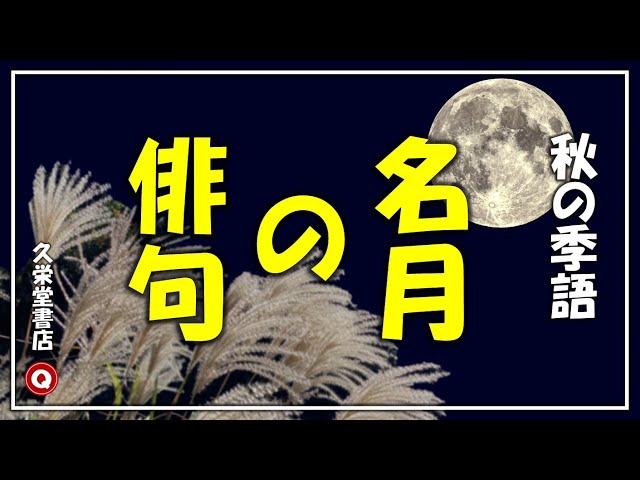
“Meigetsu” refers to the full moon seen especially on the night of the fifteenth day of the eighth month in the lunar calendar, and is one of the representative seasonal words for autumn.
The moon shining in the clear air is considered particularly beautiful at this time of year and has long been cherished by many.
The word conveys not only that the moon is full, but also feelings of tranquility, comfort, and gratitude for a bountiful harvest.
It evokes a scene in which, gazing up at the night sky, one senses a gentle flow of time.
The charm of “Meigetsu” lies in how a single word can convey the very air and quiet of an autumn night.
It is a term of depth, making it easy to understand why it has been used in haiku and tanka.
long autumn nights

Yonaga, or “long nights,” is a seasonal word that captures how the nights feel longer as autumn deepens.
As the days grow short, it conveys the sense that night stretches on at an easy pace, evoking the quiet expansion of time spent in stillness.
Moments lost in reading or reflection, time flowing in hushed air—yonaga layers together scenes of calm and composure.
It is a uniquely autumnal word that conveys a gentle respite from bustle and the feeling of time moving unhurriedly.
clear, limpid water
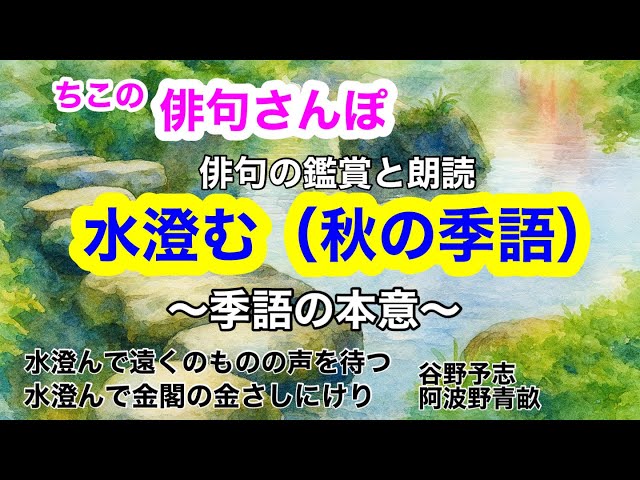
“Mizusumu” is a seasonal word that describes how water becomes limpid with the autumn chill.
Rivers, ponds, and lakes gain a crystalline clarity, so pure you can see all the way to the bottom.
The murkiness and warmth of summer subside, and along with the crisp air comes a sense of stillness.
On the clear surface, the sky and surrounding scenery are reflected with striking sharpness, making the whole world seem taut and focused.
Its transparency is not just visual; it brings a feeling as if the heart itself is cleansed, conveying autumn’s distinctive, dignified air.
It’s a word that suggests a view which, simply by gazing at it, seems to bring one’s feelings into calm alignment.
Pacific saury

Sanma (Pacific saury) is a quintessential taste of autumn, named “the fish like a sword caught in autumn” for its long, slender, silver-glinting form.
Rich in nutrients and deliciously fatty, it has long been beloved—so much so that an old saying goes, “When sanma comes out, the masseurs go in,” implying people feel so well they need fewer treatments.
Its grilling aroma and the scene at the dining table evoke the season’s arrival, and its name varies by region.
Beyond flavor, it is clear that sanma has become rooted as something that lets people feel the presence of autumn in daily life.
clear autumn sky

“Akibare” is a word that describes the kind of weather in autumn when a clear, cloudless blue sky stretches overhead.
With low humidity and dry air, the sky feels higher, and distant views appear crisp and distinct.
One can imagine gentle, refreshing days flowing by.
In scenes wrapped in a cloudless blue sky and soft sunlight, there is a simultaneous sense of calm and openness.
The harsh summer heat has passed, making this a particularly comfortable season with a unique atmosphere, and the word’s charm lies in how it even conveys that pleasant feeling.
Deep autumn

“Akifukashi” is an expression that evokes the height of autumn, when the deepening of the season is felt keenly.
The chill in the air, the changing colors, and the earlier nightfall all overlap, carrying a sense that autumn is drawing to a close.
Around this time, everything one sees, hears, or calls to mind is tinged with a faint feeling of fulfillment mixed with lack.
Even without a clear reason, there is a lingering resonance that draws the heart, and its flavor lies in how delicately it captures that subtle transition.