

![[Gifu Prefecture] Local Quiz! For Seniors](https://media.ragnet.co.jp/img/1200__png__https://www.ragnet.co.jp/files/2025/05/b1483b9463dba4908967a50c59968fe7.webp)
[Gifu Prefecture] Local Quiz! For Seniors

This time, we’re introducing a fun quiz about Gifu Prefecture.
Gifu is famous for its rich natural environment.
We’ve gathered questions that make the most of Gifu’s characteristics and will feel familiar to older adults.
Some are trick questions, too.
For example, while “Hida beef buns” are a famous souvenir, we’ve included questions designed to make you mix up beef and pork.
Also, for topics like the seasons for growing agricultural products, be sure to listen to the question carefully before answering.
People from Gifu, of course, and those with no connection to the prefecture can enjoy it!
Gifu Prefecture Local Quiz! For Seniors (1–10)
What river is famous in Gifu Prefecture?

- Kakita River
- Nagara River
- Shimanto River
See the answer
Nagara River
The Nagara River flows through nearly the center of Gifu Prefecture, bringing life to the urban areas. Its source is in the Hida Mountains, and the region is also known as a tourist destination for its beautiful scenery. In particular, the Kawaramachi area along the Nagara River is famous for traditional cormorant fishing, a hallmark of summer. Nearby is Gero Onsen, a hot spring resort also known for its riverside location.

What famous vegetable is grown in Gifu Prefecture in winter?
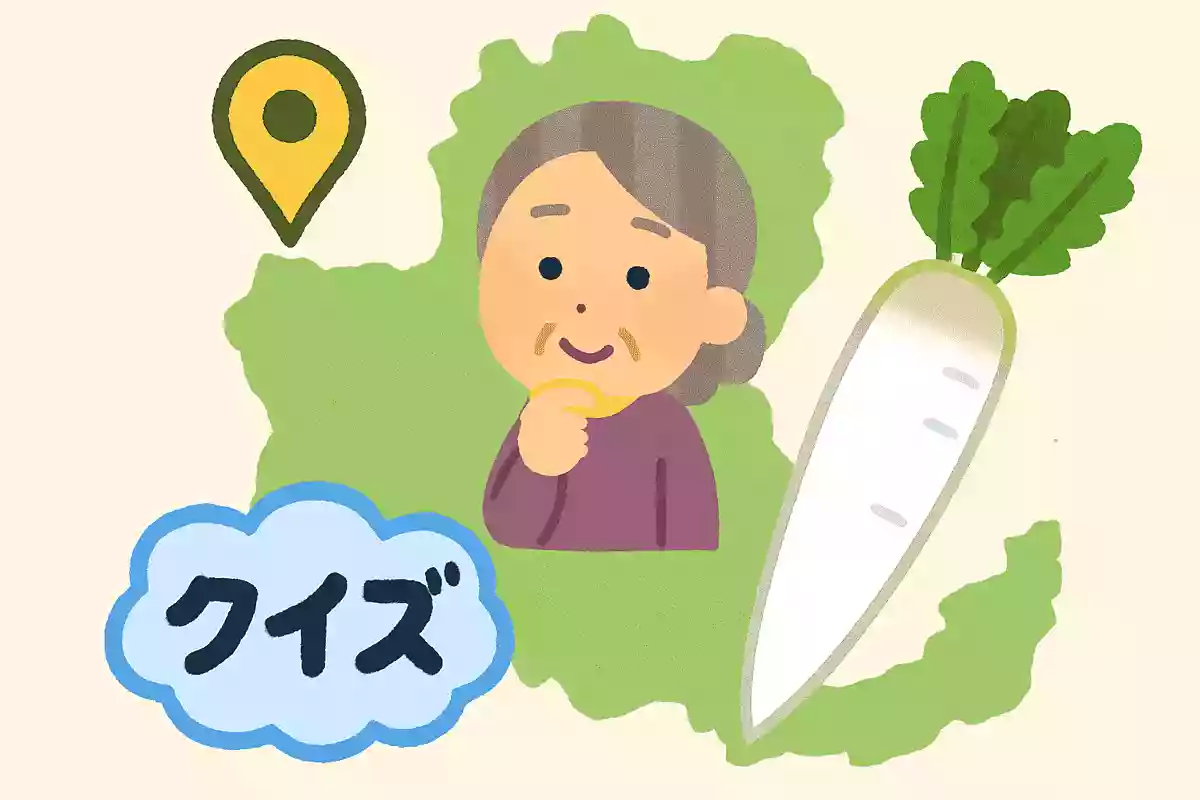
- tomato
- shiitake mushroom
- Chinese cabbage
See the answer
Chinese cabbage
In Gifu Prefecture, Chinese cabbage grown by making use of the winter cold is famous. Exposure to the cold reduces excess moisture and enhances sweetness, making it delicious. In particular, “Hida-Takayama Chinese cabbage” is known as a brand-name vegetable, prized for its sweetness and umami.
What crafts is Gifu Prefecture famous for?
- Hasami ware
- Mino washi (traditional Japanese paper from Mino)
- Nambu ironware
See the answer
Mino washi (traditional Japanese paper from Mino)
Mino washi is a traditional craft with a history of over 1,300 years and is inscribed on UNESCO’s Intangible Cultural Heritage list. It is widely used as an essential part of traditional Japanese life and culture, such as for calligraphy paper and shoji screens.
What are some interesting dialects in Gifu Prefecture?

- outrageous; absurd; exorbitant
- nonsense
- very; extremely; super (Okayama dialect)
See the answer
outrageous; absurd; exorbitant
"Berabō" is used in Gifu Prefecture to mean "very" or "extremely." For example, if you say "berabō ni umai," it means "very delicious."
Who are the famous educators from Gifu Prefecture?

- Yukichi Fukuzawa
- Umeko Tsuda
- Jinzō Naruse
See the answer
Umeko Tsuda
Umeko Tsuda was an educator from Gifu Prefecture and is known as Japan’s first female overseas student. She founded a higher girls’ school (the predecessor of today’s Tsuda University) and was also called the “Saint of Mino Province.”
What are some famous mountains in Gifu Prefecture?

- Mount Ontake
- Hodosan (Mount Hodo)
- Mount Takao
See the answer
Mount Ontake
Mount Ontake is an active volcano standing 3,067 meters tall, located on the border between Nagano and Gifu Prefectures, and is known as an object of worship. It is also cherished as a place for many outdoor activities, such as hiking and nature observation.
Where is the World Heritage site located in Gifu Prefecture?

- Yakushima
- Itsukushima Shrine
- Shirakawa-go
See the answer
Shirakawa-go
The World Heritage Site in Gifu Prefecture is Shirakawa-go (the Gokayama gassho-style villages). The region’s distinctive gassho-style houses are a unique architectural form built to withstand harsh winters, and their historical value is highly esteemed.