

[For Seniors] June Haiku Showcase: Ideas to Feel Summer

As June begins, the gentle, rainy monsoon season arrives.
With raindrops moistening the leaves and the scent of early summer in the air, this is the perfect time to savor the beauty of nature.
For older adults, haiku is a wonderful way to enrich the heart while enjoying such seasonal changes.
Still, you may sometimes wonder, “How should I express the rainy season?”
In this article, we’ve carefully selected haiku that are perfect for June.
Let’s enjoy the depth of haiku together while feeling the early summer atmosphere!
- [For Seniors] Summer Haiku: Ideas to Feel the Season
- [For Seniors] Haiku Selections for July: Ideas to Feel the Summer
- For Seniors: Enjoy the Rainy Season—Event Ideas Perfect for June
- [For Seniors] June Health Topic: Recreational Activities to Enjoy the Rainy Season
- [For Seniors] Brimming with June’s seasonal charm: A roundup of fun craft ideas
- [For Seniors] Haiku Introductions for May: A Fun Recreation Activity
- [For Seniors] Summer kigo: A list of famous seasonal words to enjoy while savoring their elegance
- [For Seniors] Interesting spring haiku: introducing verses with striking kigo and unique expressions
- [For Seniors] Famous Haiku for December: Masterpieces Depicting Winter Scenes and Year-End Moments, Plus Tips on How to Compose Them
- [For Seniors] Enjoy June! Introducing Simple, Recommended Wall Decorations
- [For Seniors] Haiku for September: Introducing Verses Perfect for Autumn
- [For Seniors] Quizzes That Capture June: A Collection of Trivia and Fun Facts
- [Elderly] Haiku with the theme of August: Introducing famous verses
[For Seniors] Haiku Introductions for June: Ideas That Evoke Summer (1–10)
June parting—one bowl of shaved ice between us

Sodao Nakamura was born in China in 1901 and, in Japan, studied what is known as national literature.
He learned haiku under Kyoshi Takahama and later became the first president of the Haiku Poets Association, contributing to the development of the haiku world.
This verse means that on a day in June, they parted in a hurry without even having time to share a drink, and instead ate ice cream together.
Imagining two men, not drinking sake but busily licking ice cream, makes the scene seem a little comical, doesn’t it?

Children, the daylilies have bloomed—let’s peel a melon.

Matsuo Basho is one of the greatest haikai masters in Japanese history and is known worldwide.
From Basho’s haiku, “Children, the bindweed blooms—let’s peel the melons,” we can picture lively children.
It feels as if Basho is calling out to the children who have been eagerly awaiting the time when the daytime bindweed blooms.
From a snapshot of everyday life, we sense the seasons through nature and plants, and Basho’s gentleness comes through.
You can almost imagine the children’s delighted faces as they eat the melons.

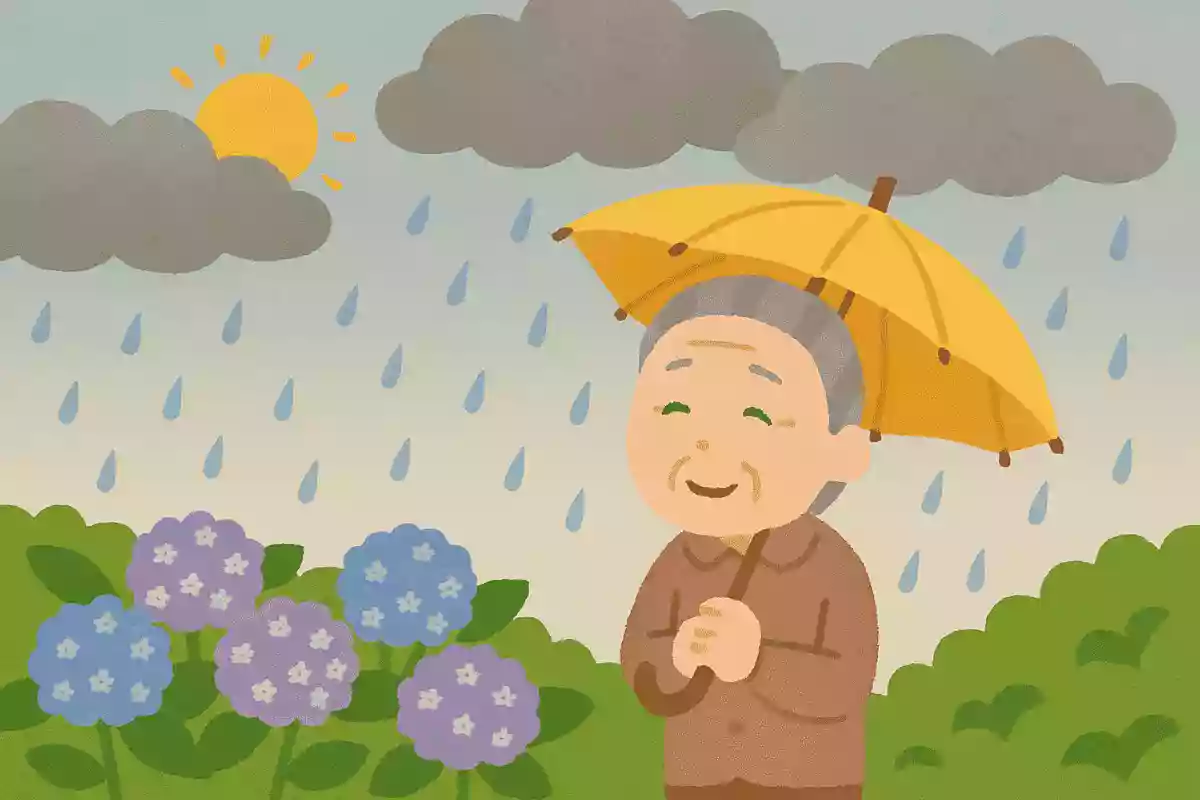
Bright in one direction, dark in another—the rainy season sky
Kyoshi Takahama was a haiku poet from Ehime Prefecture who was active from the Meiji through the Showa periods.
He studied haiku as a disciple of his fellow Ehime native, Masaoka Shiki.
He excelled at depicting scenes he witnessed firsthand and left many works on the theme of nature.
This poem portrays a scene at dawn: the sky is beginning to brighten, yet in another direction a gloomy, rainy-season sky spreads out.
It’s an image that you can probably picture easily.
It’s also said to serve as a metaphor: even when signs of something good seem to appear, from another point of view there can still be a darker side.
[For Seniors] Haiku Selections for June: Ideas That Evoke Summer (11–20)
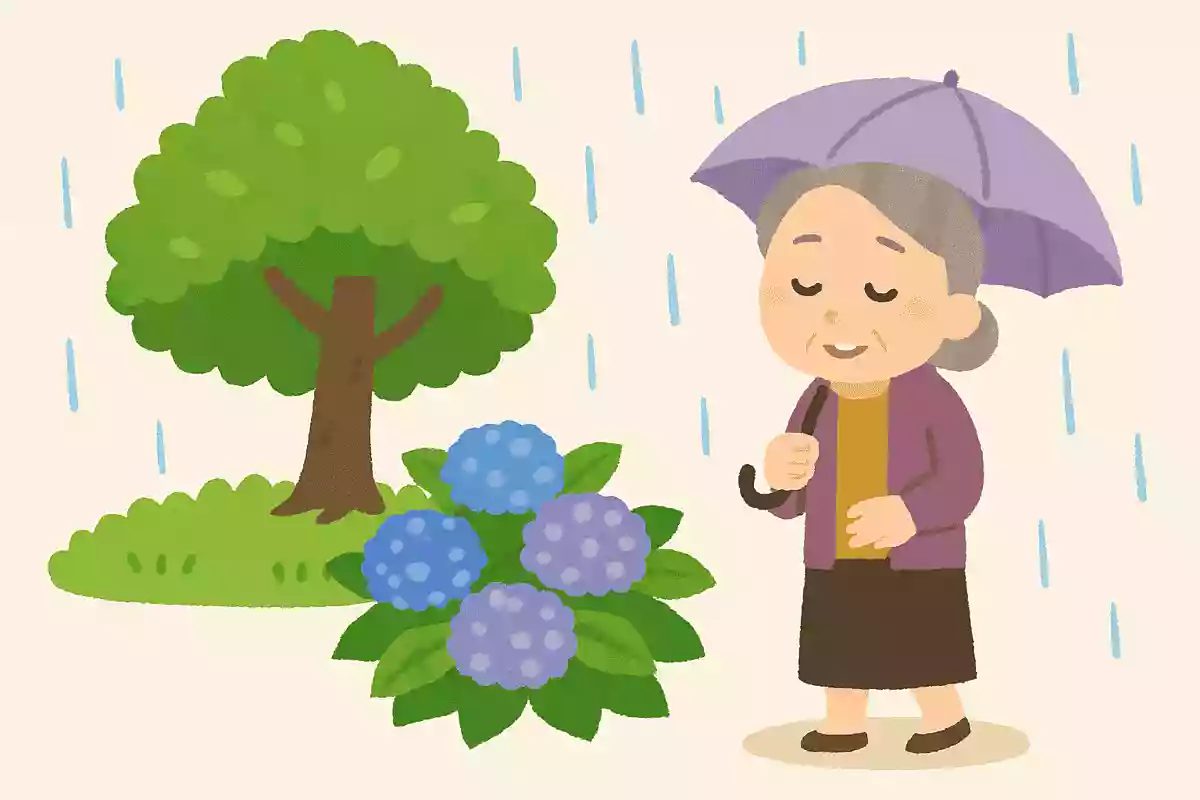
Both trees and grasses are quiet—the rainy season has begun.
Hino Sojō was a central figure in the New Haiku movement that arose in the early Shōwa period, seeking haiku that were freer, more urban, and more modern.
Rendered in a contemporary style, the verse conveys: “The trees and grasses make no sound; all is still.
In that quiet, the rainy season begins—drop by drop.” Rather than depicting loud rainfall, raging rivers, or rain-soaked scenery, it captures the moment just before the rain starts, portraying a soundless scene.
It invites us to imagine the onset of the monsoon and the way things change quietly.
Above the waterfall, water appeared—and then it fell.

Godo Yahan was a haiku poet from Osaka who was active from the Meiji through the Showa eras, and he is also known as the brother of Tokuzo Goto, a Noh performer of the Kita school and a Living National Treasure, and Minoru Kita, the 15th head of the Kita school.
Water does not stay in one place; it is always flowing.
From the top of the waterfall, water constantly appears and falls, and the basin below is full of water that is also in motion.
When you watch for a long time, the scene looks the same, yet the water flowing past is not the same water you saw a moment ago.
Even so, the waterfall keeps flowing.
This expresses a waterfall that continues to change while remaining there.
By shifting our perspective, it becomes something that prompts reflection.
One paddy field, having planted it, I take my leave—ah, the willow.

Matsuo Basho was a haikai poet active in the early Edo period and is known worldwide as a “Poetic Sage,” one of the greatest haikai masters in Japanese history.
He is especially famous for his travelogue The Narrow Road to the Deep North.
This verse is said to admit multiple interpretations.
For example: “The farmers planted one paddy field and left; all that remained afterward was the willow,” or “While the farmers planted one paddy field, I gazed at the willow; now that the planting is done and the farmers have gone, I too think of leaving—what remains behind is only the willow.” A poem that captures a tiny scene of everyday life and prompts us to ponder its meaning—this is quintessential Basho.
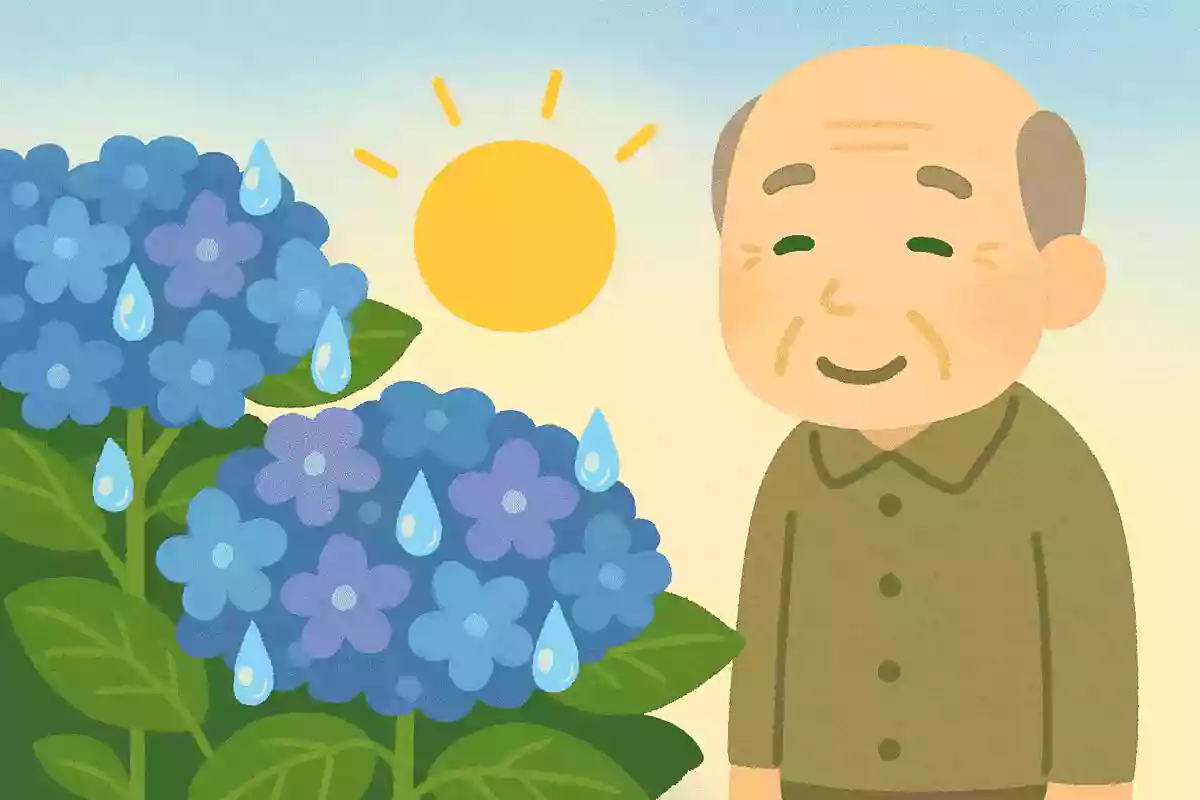
Gathering droplets on hydrangeas—the morning sun.
Chiyojo of Kaga was born around 1703 in what is now Hakusan, Ishikawa Prefecture.
It is said that from a young age she was familiar with haikai poetry and associated with poets in places like the port town of Motoyoshi.
This verse describes a morning after rain, with hydrangeas—purple and blue—blooming in the garden.
As the morning sun shines in, the dewdrops on the hydrangeas catch the light and sparkle beautifully.
Even in an era without the abundance of entertainment we have today, people then may have had a refined sensibility that allowed them to feel, enjoy, and express the beauty brought about by nature’s harmony.