

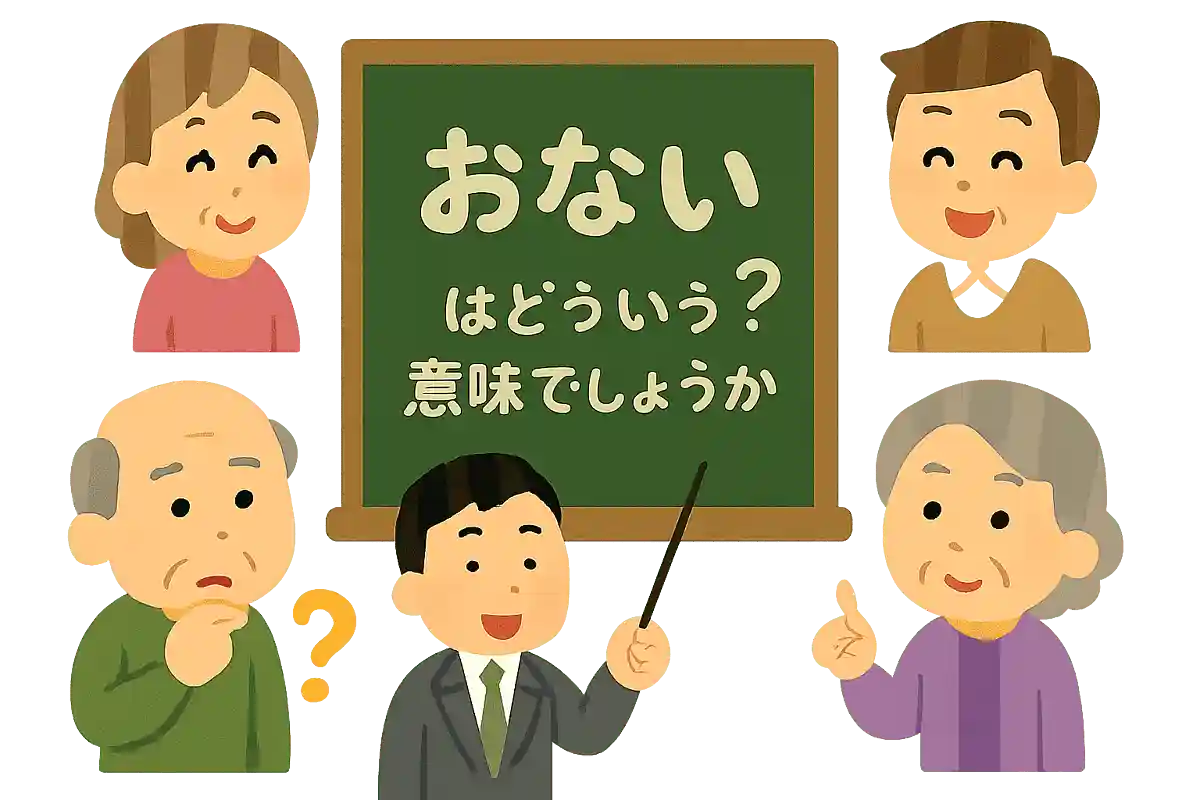
Let's Discover the Charm of Kansai Dialect! A Kansai Dialect Quiz for Seniors

What kind of image do you have of the Kansai dialect?
Some people find it friendly and like it, while others might feel it’s a bit intimidating.
If you don’t know the meanings of Kansai expressions, it can lead to misunderstandings.
This time, I’d like to present the Kansai dialect as a quiz for seniors.
I hope this quiz becomes a good opportunity for people to feel that the Kansai dialect is wonderful.
I also hope it helps you learn something new—like, “Wow, there’s a funny expression like that in Kansai dialect!”
Discover the Charm of the Kansai Dialect! A Kansai-Ben Quiz for Seniors (1–10)
What does onai mean in Kansai dialect?
- to worship; to bow in reverence (often with hands pressed together)
- same
- same age
See the answer
same age
When you hear onai, you might think it means “the same,” but it actually refers to being the same age. You’d use it like, “We’re in the same grade, so we’re the same age,” for example.

What do you call a coward in Kansai dialect?
- wimp
- dripping
- blockhead; idiot; fool
See the answer
wimp
On Kansai TV shows, comedians often use the word “hetare.” They tease spineless comedians by calling them things like “hetare comedian.”
What does ‘gunetta’ mean in Kansai dialect?
- twisted
- broken
- bent
See the answer
twisted
In Kansai, when people are playing sports and feel something off in their foot, they often say things like 'ashi ga gunetta' (my foot twisted). It can also be taken to mean it’s broken, so it’s a bit confusing, isn’t it?
How do you say “Don’t worry about it” in Kansai dialect?
- It got on my nerves.
- Don't worry about it.
- Worrywart
See the answer
Don't worry about it.
In Kansai, when someone is worried about something you did or said, we say “kini sen de” (don’t worry about it). People also use expressions like “kama-hen” (it’s okay/never mind). Kansai dialect is characterized by its casual, friendly way of speaking.
In Kansai dialect, what do you call the way there?

- suddenly
- ikishii
- on the way (there)
See the answer
on the way (there)
In Kansai dialect, the road you take when heading out is called 'ikishina.' When someone leaves the house, family members often express concern and say things like, 'Be careful on your way out.'
What do you call “no” or “not allowed” in Kansai dialect?

- No good
- deme
- numb; tingly; to go numb/tingle; to be thrilled/excited
See the answer
No good
Generally, when you turn something down, you say it’s no good. In Kansai dialect, when you refuse an invitation, you say, “Akan wa~.” People also use it for unlucky days, like, “Today’s just an akan day.”
In Kansai dialect, how do you say that someone is young?
- ochobo (small sake cup; colloquial: tiny mouth/pout)
- childish; naive; innocent (in a youthful/unsophisticated way)
- childish; naive; innocent (in a somewhat unsophisticated way)
See the answer
childish; naive; innocent (in a youthful/unsophisticated way)
In the Kansai region, people say “obokoi” to describe someone who looks younger than their age. It might be used more often for women than for men. It’s also commonly used for children.