

![[For Seniors] 3-Choice Dialect Quiz! A Collection of Fun Dialect Quizzes from Around Japan](https://media.ragnet.co.jp/img/1200__png__https://www.ragnet.co.jp/files/2025/04/30e4b3a632fd7d44be491dd79cae4377.webp)
[For Seniors] 3-Choice Dialect Quiz! A Collection of Fun Dialect Quizzes from Around Japan


Dialects are interesting, aren’t they? Because they differ by region, sometimes people from other areas can’t understand them at all.
On top of that, the expressions vary by generation and prefecture, so learning them can be pretty tough.
Today, I’d like to introduce a quiz that uses such dialects.
If you’ve only ever lived where you were born and raised, dialects from other regions might feel fresh and novel.
Even if you’ve lived a long time, you might discover new dialects you never knew existed.
If you’re a staff member working in a senior care facility and are thinking about incorporating a dialect quiz, please feel free to use this as a reference.
[For Seniors] Three-Choice Dialect Quiz! A Compilation of Fun Dialect Quizzes from Around Japan (1–10)
How do people say “thank you” in the dialect of Miyazaki Prefecture?
- Thank you
- Thanks a lot
- Thanks!
See the answer
Thank you
No one feels bad when they’re told “thank you,” right? I think it’s great to use it often in daily life. In Miyazaki Prefecture, they say “ōkin” to express thanks.

What is the dialectal way to say “cool” in Kanagawa Prefecture?
- on the spur of the moment
- tokkui
- flashy; stylish; cocky; streetwise (colloquial, can imply a showy or slightly roguish vibe depending on context)
See the answer
flashy; stylish; cocky; streetwise (colloquial, can imply a showy or slightly roguish vibe depending on context)
Isn’t there pretty much no man who wouldn’t be happy to be called cool? But if you use the word “toppoi,” people from other prefectures might just tilt their heads in confusion.
In Hiroshima Prefecture, what kind of person does the term ‘netsui hito’ (enthusiastic person) refer to?
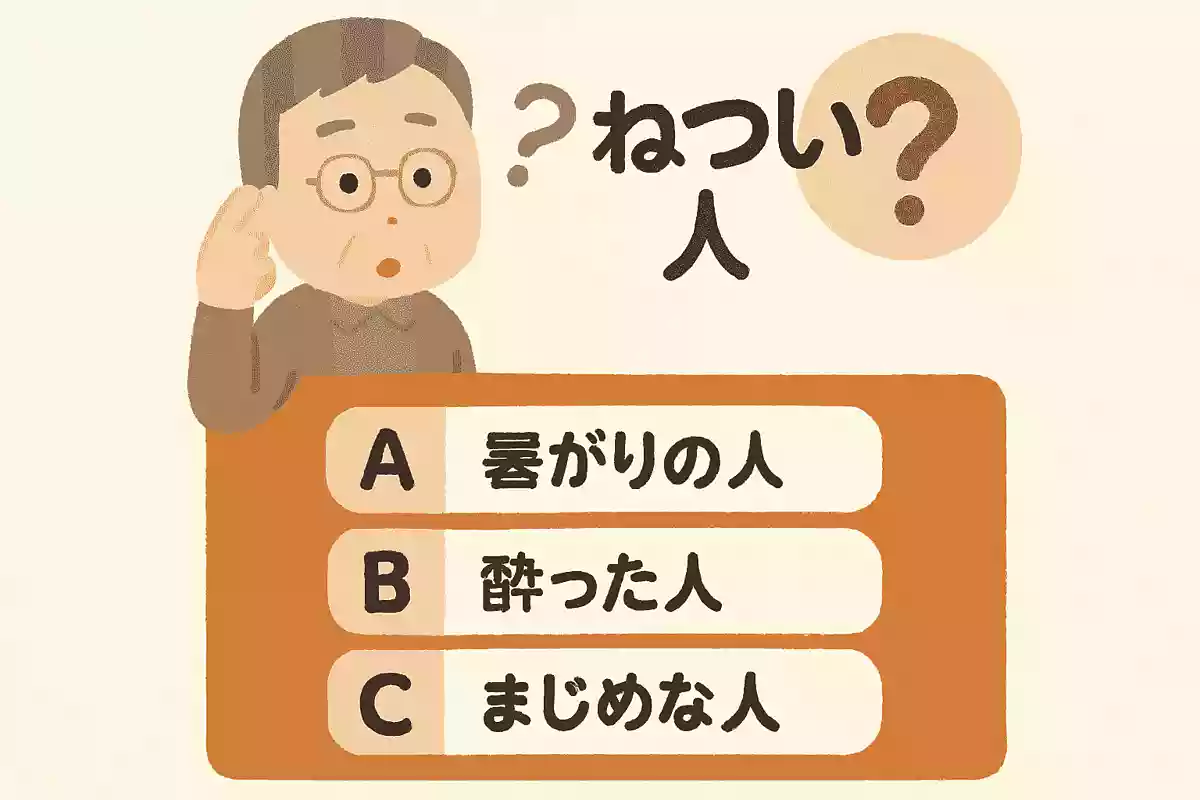
- a person who is sensitive to heat
- a friendly person
- persistent person
See the answer
persistent person
In Hiroshima Prefecture, the term “netsui hito” means a “persistent” or “pushy” person. When someone says, “Arya, honma ni netsui hito ja,” it means “That person is really persistent.” Some people might also think “netsui” refers to someone who gets hot easily.

Which word in the Fukuoka dialect means “very”?

- chaccha
- to the max; extremely; very
- know-it-all
See the answer
to the max; extremely; very
"Chikappa" is a Hakata dialect word that means "very" or "extremely." Other words with the same meaning include "bari" and "erai," but "chikappa" is said to be the strongest among them. There are various theories, but one suggests it originates from the Kitakyushu dialect word "chikappai."
In Okinawan dialect, what does the phrase ‘kuwacchii sabitan’ mean?
- Thank you for the meal.
- Let's eat
- I'm full.
See the answer
Thank you for the meal.
We say “gochisousama” after a meal, right? In Okinawa, they say “kuwacchi sabitan.” Okinawa is often seen as having more dialects than other prefectures, and this expression might be hard to understand unless you’re from Okinawa.
What kind of dialect do people in Akita Prefecture use when they get angry?
- Goshagu
- Herazu
- Oshappe
See the answer
Goshagu
In Akita Prefecture, they say “goshagu” to mean getting angry. It’s said to come from “burning one’s afterlife,” implying that giving in to anger burns away one’s comfort in the next life.
In Okayama Prefecture there’s a dialect word “onbintare.” What kind of person does it refer to?
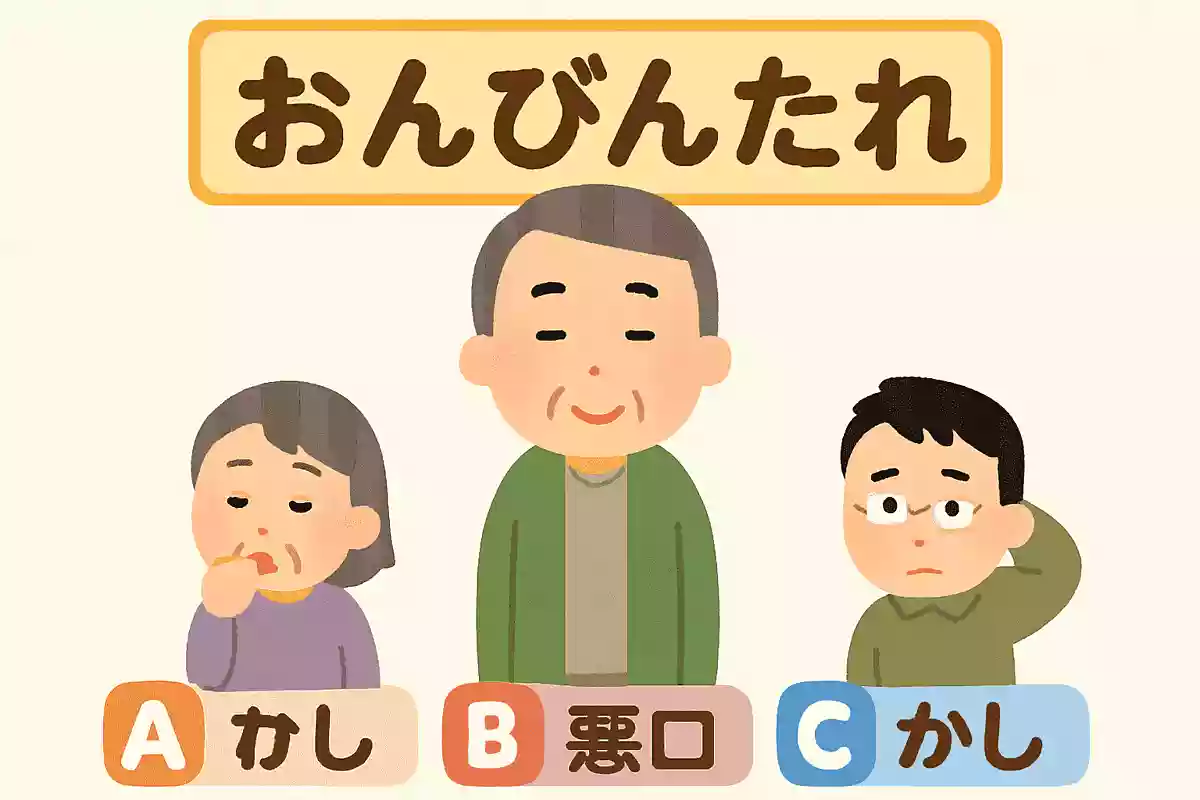
- A calm and gentle person
- a timid and faint-hearted person
- a very talkative person
See the answer
a timid and faint-hearted person
“Onbintare” is an Okayama dialect word that refers to someone who is timid and faint‑hearted. “Onbin” means timid, and “tare” denotes a person, which is how the meaning comes about. This dialect is said to be used especially in conversations among older people in Okayama Prefecture.