

[For Seniors] 3-Choice Dialect Quiz! A Collection of Fun Dialect Quizzes from Around Japan


Dialects are interesting, aren’t they? Because they differ by region, sometimes people from other areas can’t understand them at all.
On top of that, the expressions vary by generation and prefecture, so learning them can be pretty tough.
Today, I’d like to introduce a quiz that uses such dialects.
If you’ve only ever lived where you were born and raised, dialects from other regions might feel fresh and novel.
Even if you’ve lived a long time, you might discover new dialects you never knew existed.
If you’re a staff member working in a senior care facility and are thinking about incorporating a dialect quiz, please feel free to use this as a reference.
- [For Seniors] Laugh-Out-Loud, Crowd-Pleasing! Fun Quiz
- [For Seniors] Great for killing time! A fun three-choice trivia quiz
- [For Seniors] Fun Brain Training! Prefecture Quiz
- [For Seniors] Trivia Multiple-Choice Quiz
- [For Seniors] Nostalgic quizzes that bring back memories! Showa-era entertainment and sports questions
- Let's Discover the Charm of Kansai Dialect! A Kansai Dialect Quiz for Seniors
- [For Seniors] Enjoyable Brain Training! Liven Up with a Local Three-Choice Quiz
- [Enjoyable History Quiz] Easy multiple-choice (3 options) quiz that’s accessible for seniors!
- [For Seniors] Fun! Let’s Get Excited with Japan’s Number One Quiz
- [For Seniors] Surprisingly Unknown! General Knowledge Quiz
- [For Seniors] Fun and Informative! Health Trivia Quiz
- [For Seniors] Fun and Informative! Trivia and Quizzes Introduced
- [For Seniors] Fun and Informative Trivia Quiz Collection
[For Seniors] Three-Choice Dialect Quiz! A Compilation of Fun Dialect Quizzes from Around Japan (1–10)
How do you say “butt” in the Aomori dialect?
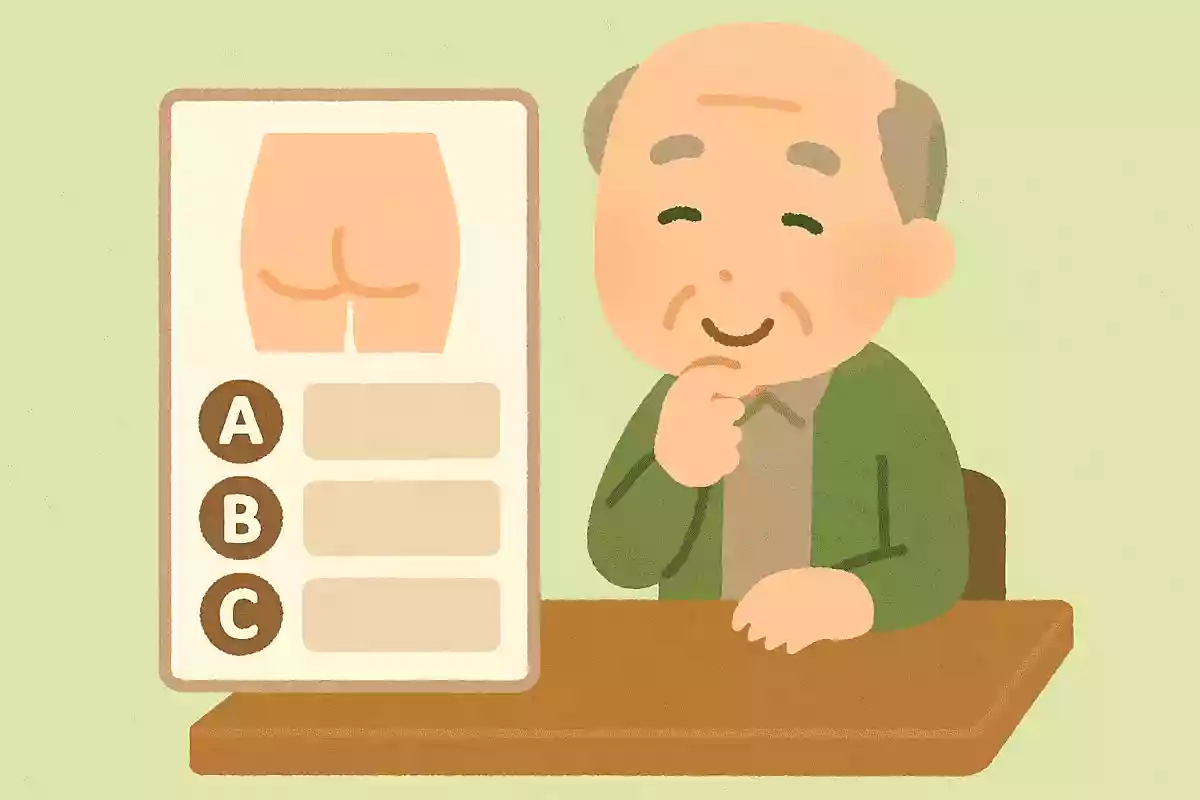
- Donzu
- apricot
- Dosanko
See the answer
Donzu
In the Tsugaru dialect of Aomori Prefecture, it’s said that they call the butt “donzu.” An example of how it’s used would be something like, “Hey you! Your butt’s showing!” The Tsugaru dialect is known for being particularly strong and distinct, isn’t it?

What does the Osaka dialect expression “bochibochi denna” mean?
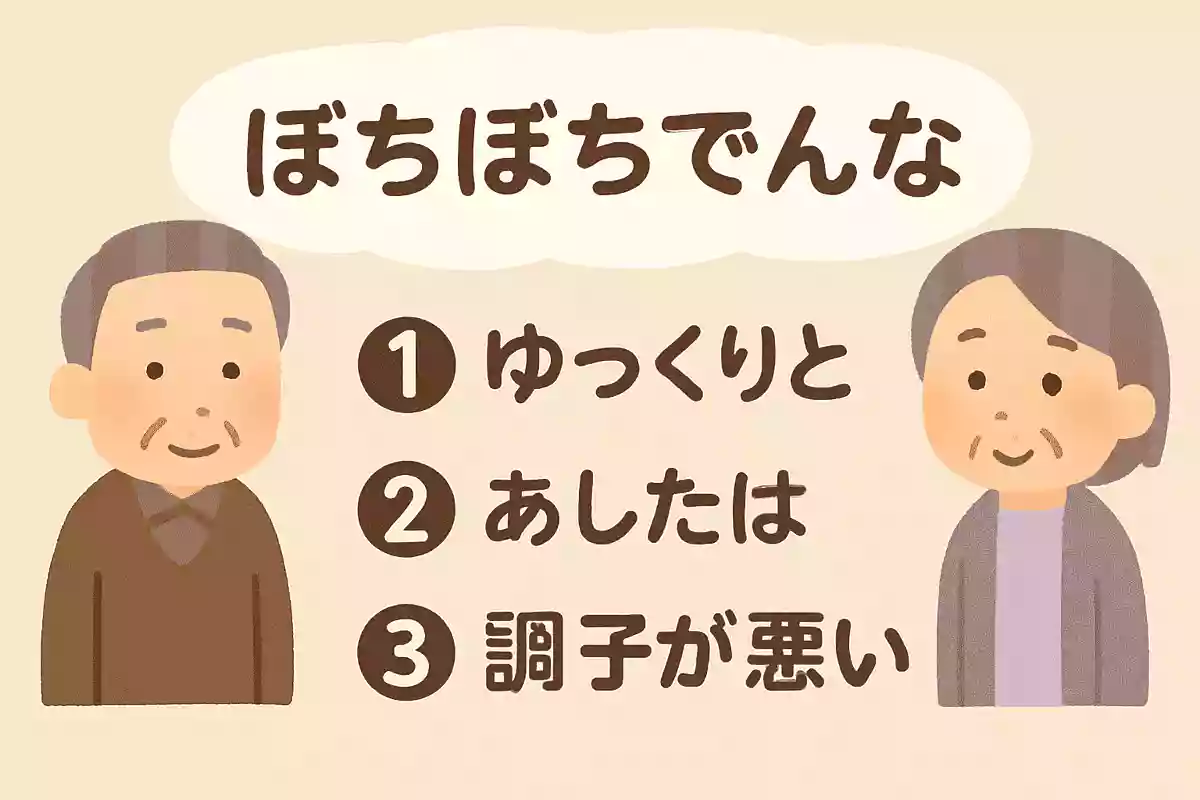
- Exactly.
- Quite a lot.
- It's so-so.
See the answer
It's so-so.
“Bochibochi” is an Osaka dialect term meaning “so-so” or “not bad.” You may have seen scenes on TV where someone answers the question “Mokarimakka?” (“Making money?”) with “Bochibochi denna” (“So-so”). Also, “Bochibochi ikoka” carries the nuance of “Shall we head out soon?” or “Let’s take it easy and go.”

What does the Mie dialect word “dannai” mean?
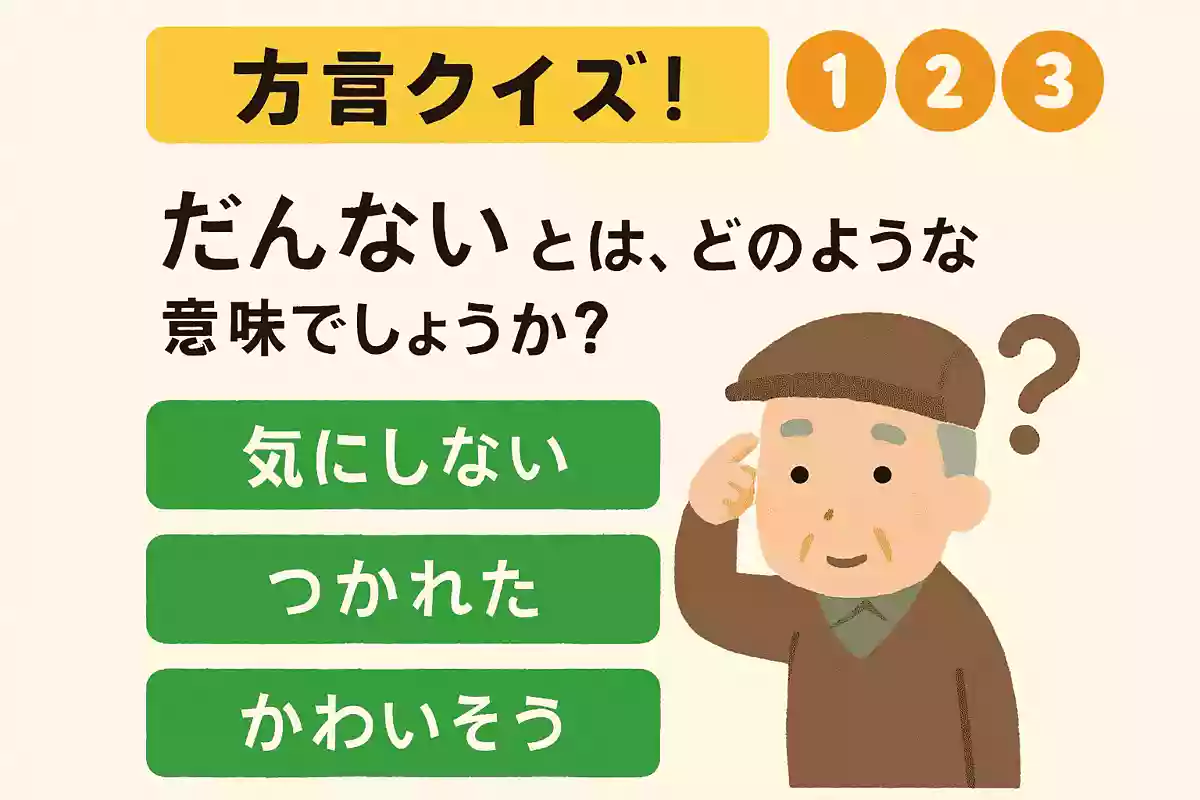
- I'm tired.
- I don't mind.
- I'm in a hurry.
See the answer
I don't mind.
“Dannai” is a dialect used in Mie Prefecture that means “I don’t mind,” “It’s okay,” or “Don’t worry about it.” When someone is in trouble or thanks you, people may gently reply, “Dannai yo.” In Shima and Ise cities, it’s said as “danne,” showing slight regional variations.
[For Seniors] 3-Choice Dialect Quiz! A Roundup of Fun Dialect Quizzes from Across Japan (11–20)
In what kind of situations is the Niigata dialect word “kanbe” used?
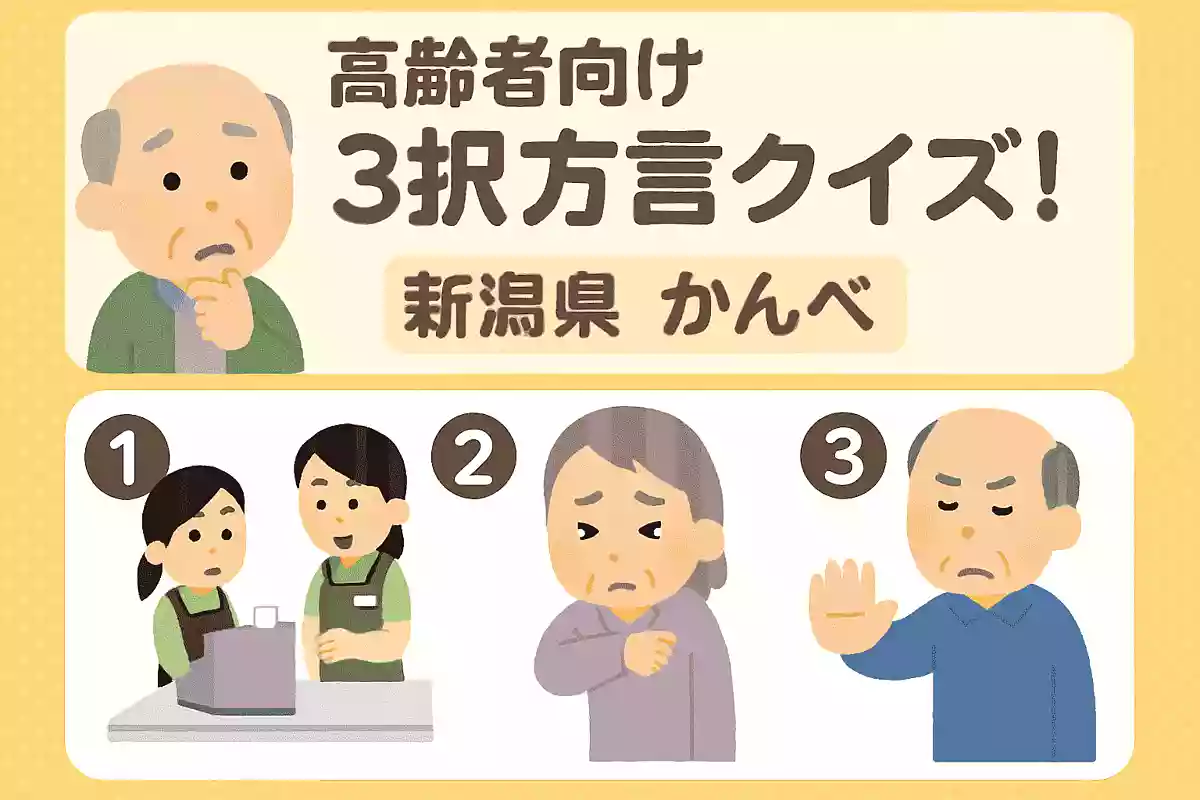
- Words used for celebrations
- Words to use when apologizing or asking for leniency
- Morning greetings
See the answer
Words to use when apologizing or asking for leniency
“Kanbe” means “give me a break” or “please forgive me,” and it’s often used when you’re in trouble or apologizing. It tends to be used for lighter apologies among relatively close acquaintances. It’s said to be a colloquial contraction of “kanben shite” (勘弁して).
In the Shimane dialect, what does “kyōtoi” mean?
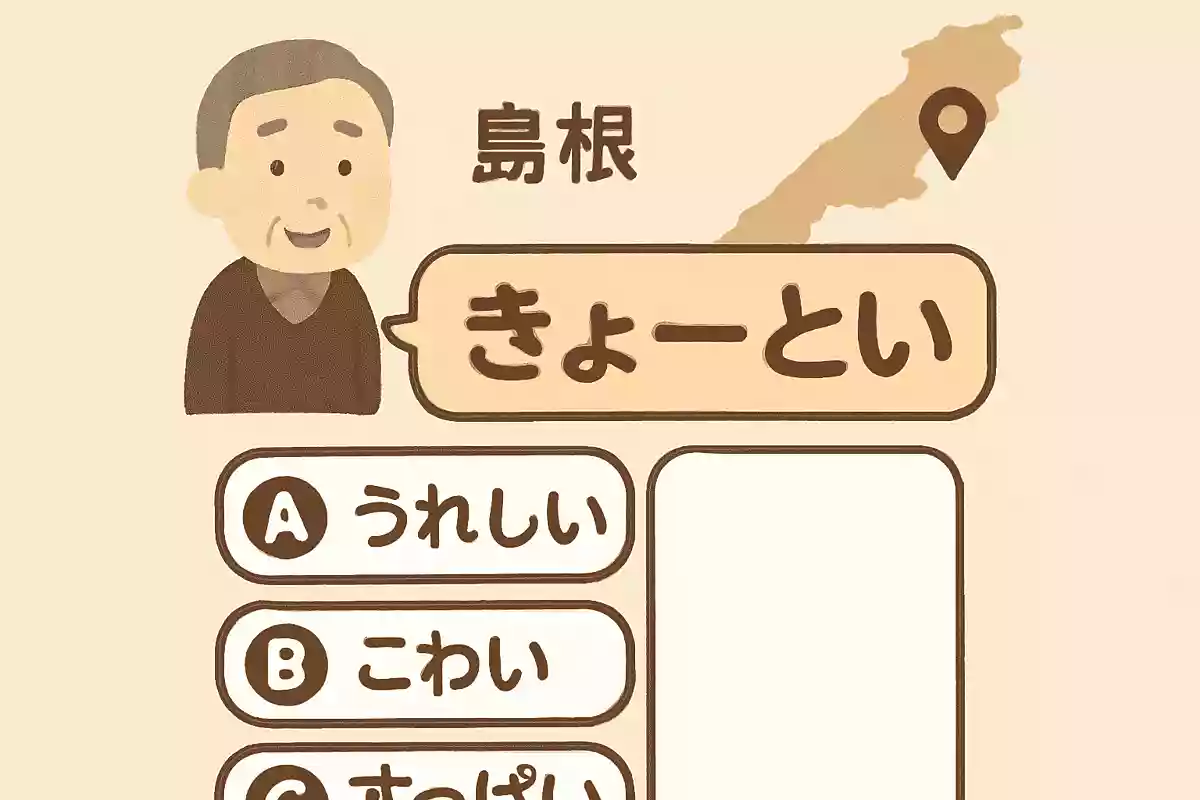
- cute
- Terrifying
- annoying
See the answer
Terrifying
“Kyōtoi” is a dialect word from Shimane Prefecture that means “frightening” or “scary.” The sentence “Ano-san no kyōtoi kao de, kodomo ga naichō” means “Because of that person’s scary face, the child ended up crying.”
In Akita Prefecture, there is a dialect expression “doden shita”; what does it mean?
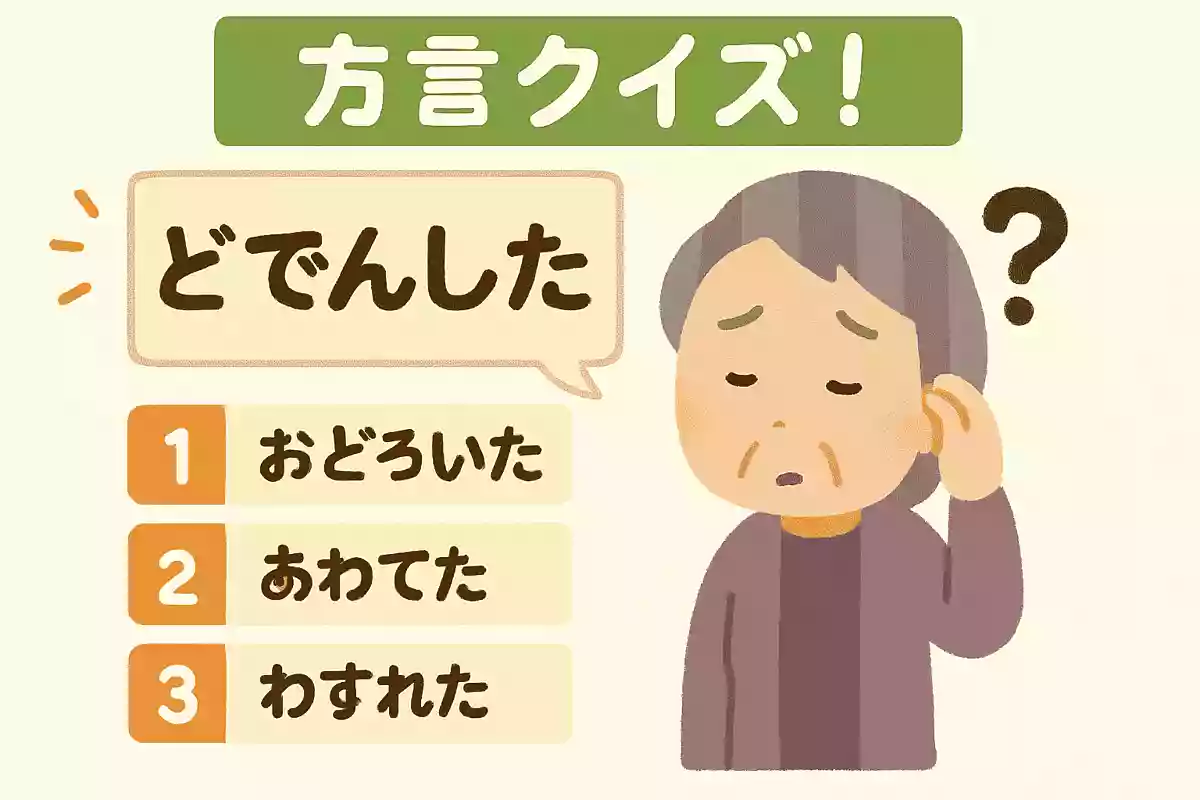
- I feel sick
- I'm late.
- I was surprised.
See the answer
I was surprised.
"Doden shita" is a dialect from Akita Prefecture meaning "I was surprised" or "I was startled." People say "Doden shita!" when they’re surprised. It’s said to be used in places like Aomori and Iwate Prefectures as well.
In Kyoto Prefecture, there’s a dialect word ossan that doesn’t refer to adult men (uncles). What kind of people does it refer to?
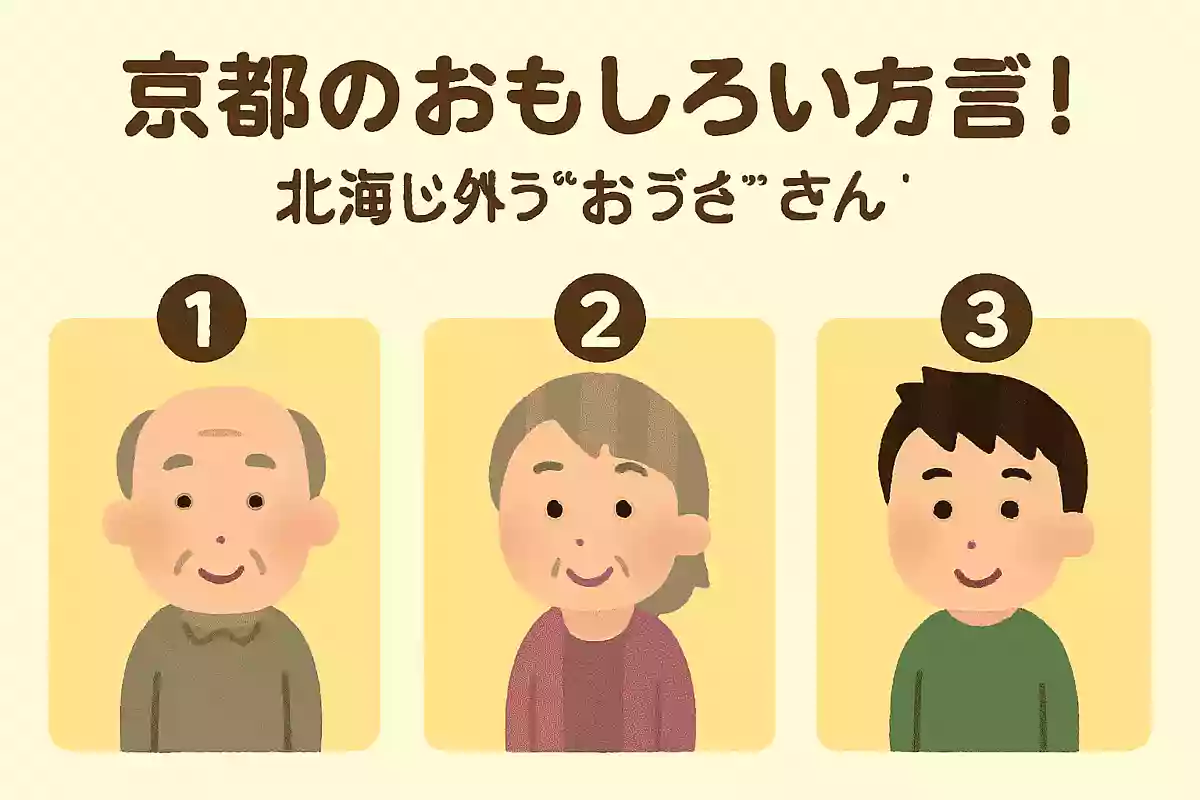
- Buddhist monk
- Neighborhood association president
- my cousin (male)
See the answer
Buddhist monk
In Kyoto Prefecture, people call the head priest of their own temple “Oshō-san” or “ossan.” It’s said that “ossan” is a dialectal corruption of “Oshō-san.” Of course, they also use “ossan” to refer to a father, an uncle, or a middle-aged man. However, the intonation differs: when it means the head priest, the pitch falls at the end.