

[For Seniors] 3-Choice Dialect Quiz! A Collection of Fun Dialect Quizzes from Around Japan


Dialects are interesting, aren’t they? Because they differ by region, sometimes people from other areas can’t understand them at all.
On top of that, the expressions vary by generation and prefecture, so learning them can be pretty tough.
Today, I’d like to introduce a quiz that uses such dialects.
If you’ve only ever lived where you were born and raised, dialects from other regions might feel fresh and novel.
Even if you’ve lived a long time, you might discover new dialects you never knew existed.
If you’re a staff member working in a senior care facility and are thinking about incorporating a dialect quiz, please feel free to use this as a reference.
- [For Seniors] Laugh-Out-Loud, Crowd-Pleasing! Fun Quiz
- [For Seniors] Great for killing time! A fun three-choice trivia quiz
- [For Seniors] Fun Brain Training! Prefecture Quiz
- [For Seniors] Trivia Multiple-Choice Quiz
- [For Seniors] Nostalgic quizzes that bring back memories! Showa-era entertainment and sports questions
- Let's Discover the Charm of Kansai Dialect! A Kansai Dialect Quiz for Seniors
- [For Seniors] Enjoyable Brain Training! Liven Up with a Local Three-Choice Quiz
- [Enjoyable History Quiz] Easy multiple-choice (3 options) quiz that’s accessible for seniors!
- [For Seniors] Fun! Let’s Get Excited with Japan’s Number One Quiz
- [For Seniors] Surprisingly Unknown! General Knowledge Quiz
- [For Seniors] Fun and Informative! Health Trivia Quiz
- [For Seniors] Fun and Informative! Trivia and Quizzes Introduced
- [For Seniors] Fun and Informative Trivia Quiz Collection
[For Seniors] 3-Choice Dialect Quiz! A Roundup of Fun Dialect Quizzes from Across Japan (11–20)
What dialect expression is used in Yamagata Prefecture to say “I’m jealous”?
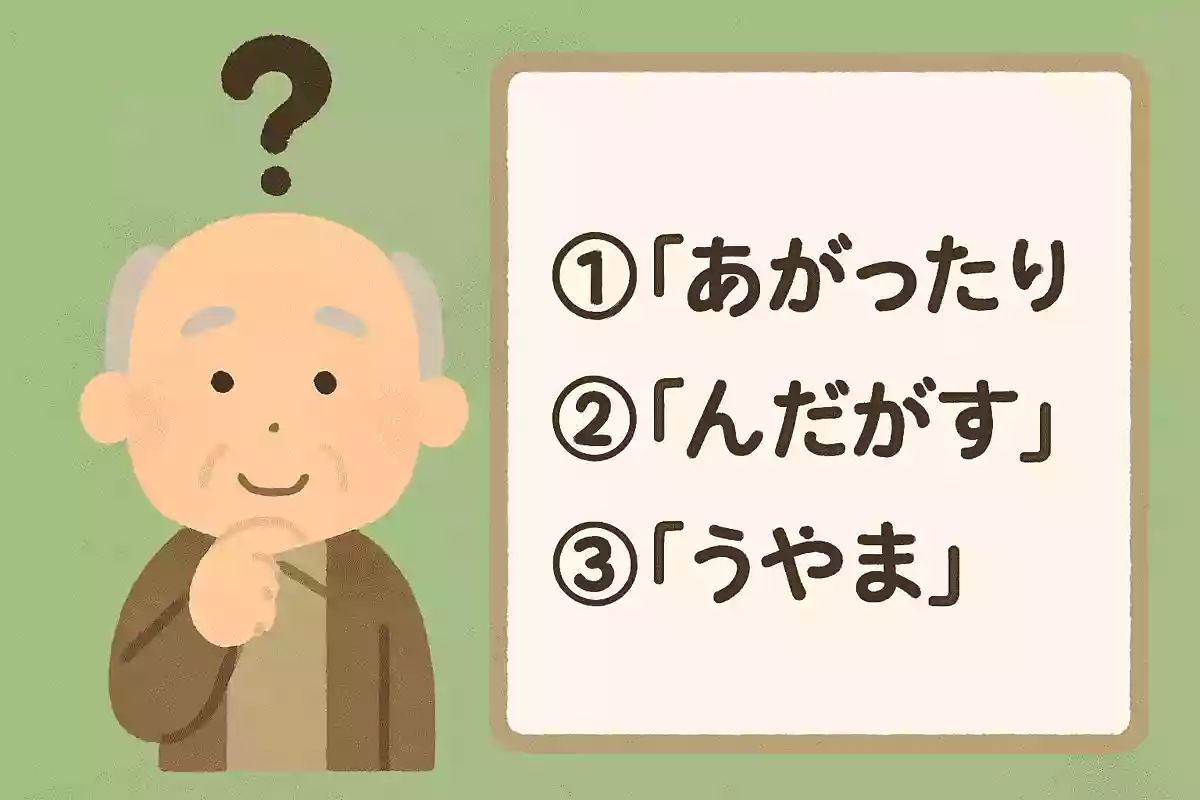
- cold (colloquial; Northern Japan dialect, esp. Hokkaido/Tohoku)
- I'm jealous.
- beautiful; admirable; lovely (classical Japanese adjective)
See the answer
beautiful; admirable; lovely (classical Japanese adjective)
In the Yamagata dialect, “kenari” means “envious” or “I wish it were so.” For example, “uji no ko kenarigaru” would mean “our child gets envious.” People from other prefectures may not have heard this word.

In the Okinawan dialect, what does “nankuru naisa” mean?
- It’s okay, we’ll figure it out.
- I'm hungry.
- I'm doing great.
See the answer
It’s okay, we’ll figure it out.
Nankurunaisa is an Okinawan dialect expression that positively means “Things will work out” or “No need to worry.” It’s often used to encourage someone who’s feeling down or in trouble. Many people may have heard it on TV and elsewhere.
What does the Kagawa dialect word okiru mean?
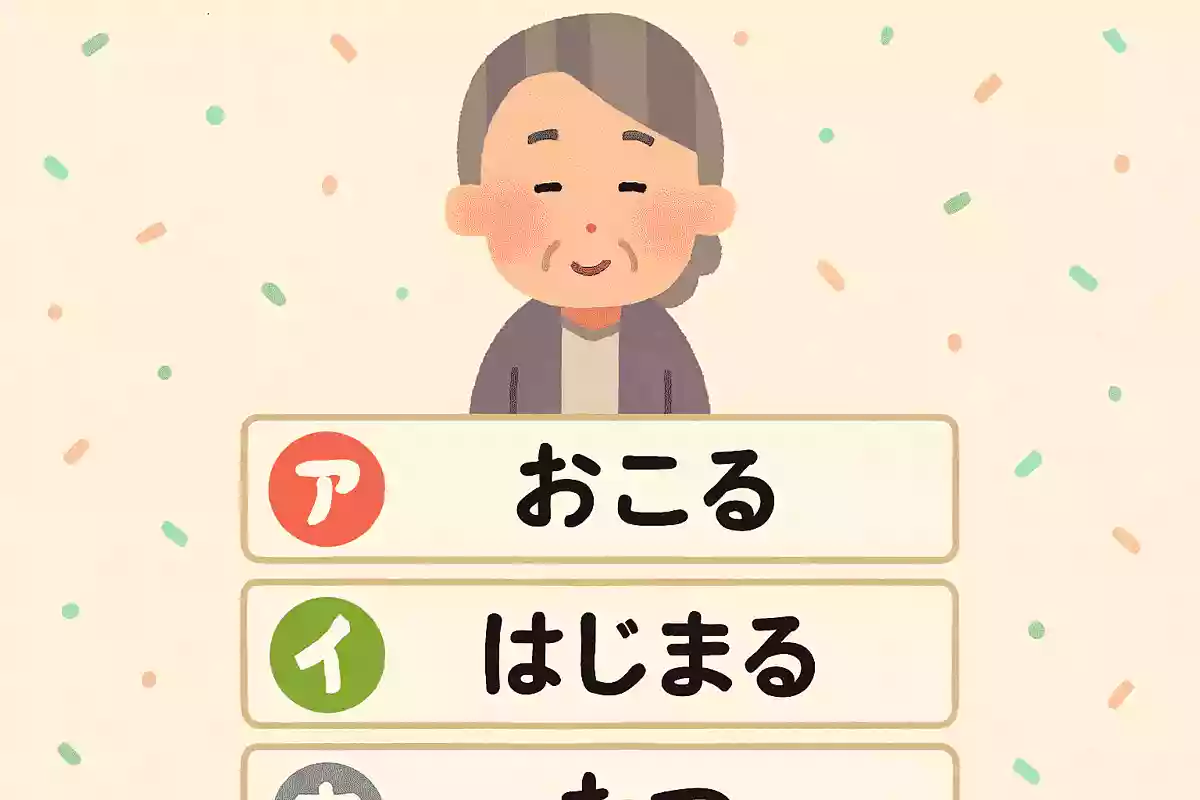
- to get full
- tired
- forget
See the answer
to get full
In the Kagawa dialect, okiru has the unique meaning of “to be full.” For example, udon ni-tama demo, onaka ga okita means “Even with two servings of udon, I got full.” This differs from the standard Japanese okiru meaning “to wake up,” so be aware of this when you visit Kagawa Prefecture.
In Kagoshima Prefecture, when a certain thing falls, people say that “he” is falling. What is “he?”
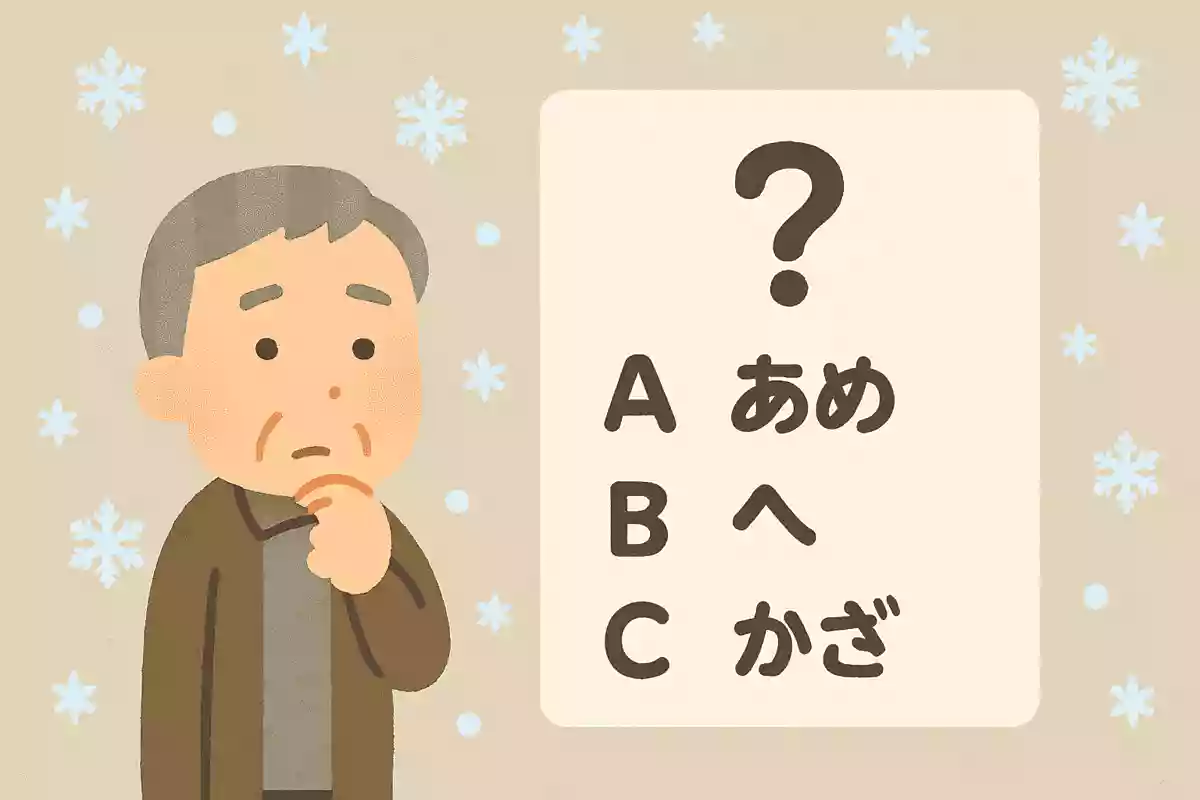
- snow
- hail (small hailstones)
- ash
See the answer
ash
In Kagoshima Prefecture, “he” refers to volcanic ash, so when people say “he ga furu,” it means that ash is falling. Speaking of Kagoshima, the ash from eruptions of Sakurajima is well-known. Since this term isn’t familiar in other prefectures, it may be hard to understand.
What does the dialect word “ojanko,” used in Fukuoka Prefecture, mean?
- seiza (formal sitting posture on the heels)
- rock-paper-scissors
- sleep
See the answer
seiza (formal sitting posture on the heels)
“Ojyanko” is a word that means “seiza” (sitting on one’s heels). In Fukuoka Prefecture, people might say, “Sit properly in ojyanko and eat your meal.” It’s often used when telling children to sit properly in the seiza position while eating.
Which word in the Nagano dialect means “an apple that has become too soft”?
- to be senile; to grow feeble-minded; to be out of it; to be blurred (out of focus)
- sting; smart; tingle; soak in; permeate
- to become numb
See the answer
to be senile; to grow feeble-minded; to be out of it; to be blurred (out of focus)
“Bokeru” is a dialect term in Nagano Prefecture that specifically refers to apples becoming overripe—losing their crispness and turning soft—and is unique to Nagano. It’s used in sentences like, “Sweeter apples with lots of honeyed flesh tend to bokeru more easily, so let’s eat them soon.”
[For Seniors] 3-Choice Dialect Quiz! A Roundup of Interesting Dialect Quizzes from Around Japan (21–30)
What kind of dialect would people in Okayama Prefecture use when they’re scared?
- scary
- cold
- It’s tough today.
See the answer
scary
The novelist Shimako Iwai, who is from Okayama Prefecture, also has a popular work called “Bokkee, Kyotee,” right? Saying kyotee when something is scary is a dialect that kind of gets the meaning across, isn’t it?
