


Prince Naka no Ōe was a central figure who shaped politics during the Asuka period and, in his later years, ascended the throne as emperor, making him one of the most important figures in Japanese history.
In this article, we’ll introduce quizzes about the reforms he carried out and fun facts related to him!
We’ve gathered not only topics you might remember from Japanese history classes but also lesser-known details, so please enjoy and give it a try.
If you come across something new this time, take the opportunity to remember it and deepen your knowledge of history.
- [Enjoyable History Quiz] Easy multiple-choice (3 options) quiz that’s accessible for seniors!
- [For Seniors] Hina Matsuri (Girls’ Day) Trivia Quiz & Fun Facts. Recommended for Dementia Prevention Activities
- [For Seniors] Introducing trivia quizzes about Toyotomi Hideyoshi!
- [Nara Prefecture Local Quiz] Introducing a multiple-choice quiz for seniors (three options)!
- For Seniors: Useful Trivia Questions! Introducing Fun Facts Quizzes You'll Want to Share
- [For Seniors] Trivia Quiz & Fun Facts About the Great Buddha of Kamakura: Questions You'll Want to Share
- For Seniors: Local Quizzes of Osaka Prefecture, from Famous Tourist Spots to Food
- How much do you know? Trivia quiz for seniors that’s full of surprisingly unknown facts
- [For Seniors] How many can you get right? Let’s have fun with a nostalgic Ultraman quiz
- [For Seniors] Lively two-choice trivia quiz. Handy to know and tidbits you'll want to share with others
- [For Seniors] Trivia Multiple-Choice Quiz
- [For Seniors] Super Amazing Trivia Quiz! Introducing Practical Tips for Everyday Life
- [For Seniors] Trivia Quiz & Fun Facts for Everyday Life
Trivia Quiz on Prince Naka no Ōe: Fun Facts about a Central Figure of the Asuka Period [For Seniors] (1–10)
Where is Prince Naka no Ōe’s tomb located today?
- Kyoto City, Kyoto Prefecture
- Asuka Village, Nara Prefecture
- Otsu City, Shiga Prefecture
See the answer
Kyoto City, Kyoto Prefecture
Prince Naka-no-Ōe’s tomb is known as the Gobyōno Kofun, located in Yamashina Ward, Kyoto City. This burial mound is an octagonal kofun—built in a regular octagon—and is emblematic of its era.

What emperor did Prince Naka no Ōe become upon his accession to the throne?
- Empress Jitō
- Emperor Tenji
- Emperor Tenmu
See the answer
Emperor Tenji
Prince Naka no Ōe carried out the Taika Reform in 645 and wielded influence over politics at the time. However, it was more than 20 years later, in 668, that he ascended the throne as Emperor Tenji. Having advanced various reforms, he is one of the most important figures in Japanese history.
“Ōe” indicates eligibility for the throne, but what does “chū” mean?
- second
- branch family
- younger brother's child
See the answer
second
“Naka no Ōe” refers to the second in line to the imperial throne. Prince Naka no Ōe had an older brother named Prince Furubito no Ōe, so he was second in the line of succession. However, Prince Furubito no Ōe never actually ascended to the throne.
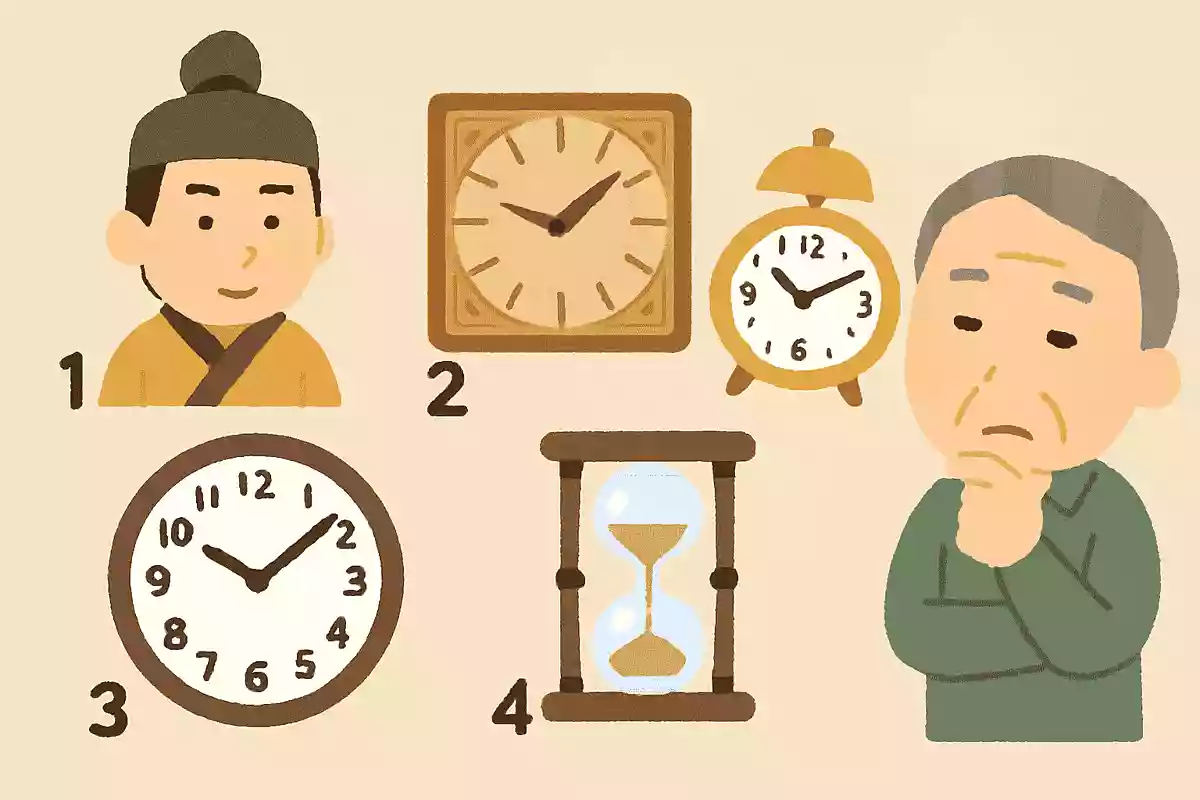
Which of the following is the clock that Prince Naka no Ōe had made?
- sundial
- water clock
- hourglass
See the answer
water clock
Prince Naka-no-Oe introduced a water clock during the Asuka period in the 7th century. This water clock is considered the oldest clock in Japan. A water clock is a device that measures time using the flow of water, and it is also known as a rokoku (leaking clepsydra).
Which Shinto shrine is said to be the place where Prince Naka no Ōe secretly discussed the Taika Reform with Nakatomi no Kamatari?
- Kasuga Taisha (Kasuga Grand Shrine)
- Isonokami Shrine
- Tanzan Shrine
See the answer
Tanzan Shrine
Tanzan Shrine is located in Sakurai City, Nara Prefecture, and is said to be the place where Prince Naka no Ōe and Nakatomi no Kamatari secretly discussed the Taika Reform. Based on this anecdote, the mountain came to be called “Kataraiyama” (Talk Mountain), which led to the name Tanzan Shrine. In addition to its iconic thirteen-story pagoda, it is also known as a famous spot for cherry blossoms.
Who was the son of Prince Naka-no-Ōe who succeeded to the throne?
- Prince Ōama
- Empress Jitō
- Prince Ōtomo
See the answer
Prince Ōtomo
Prince Ōtomo was the son of Prince Naka no Ōe and succeeded him to the throne as Emperor Kōbun. However, he was defeated in the Jinshin War after a conflict with Prince Ōama, Naka no Ōe’s younger brother, and his reign lasted only about half a year.
Where did Prince Naka no Ōe move the capital to after his accession to the throne?
- Fujiwara-kyō
- Ōtsu Palace
- Naniwa Palace
See the answer
Ōtsu Palace
After Prince Naka no Ōe ascended the throne as Emperor Tenji, he moved the capital to Ōmi Ōtsu Palace. This relocation took place in 667. Ōmi Ōtsu Palace was located in what is now Ōtsu City, Shiga Prefecture. Later, because Emperor Jimmu moved the capital back to Asuka, Ōtsu served as the capital for only about five years.