

![[For Seniors] Trivia Quiz & Fun Facts About the Great Buddha of Kamakura: Questions You'll Want to Share](https://media.ragnet.co.jp/img/1200__png__https://www.ragnet.co.jp/files/2025/05/d068727d76811bc6966e8899af8ea9d0.webp)
[For Seniors] Trivia Quiz & Fun Facts About the Great Buddha of Kamakura: Questions You'll Want to Share

The Great Buddha of Kamakura is beloved by many as one of Japan’s most iconic Buddhist statues.
Perhaps you visited it on a school trip or while sightseeing.
In fact, the Great Buddha of Kamakura hides many little-known and fascinating facts.
From the number of spiral curls on its head, to its weight, to what the interior looks like, it’s full of trivia that even past visitors may not know.
Learn while having fun in a quiz format, and you’re sure to discover new charms of the Great Buddha of Kamakura.
Whether you’re reminiscing about old memories or looking forward to your next visit, give it a try!
[For Seniors] Trivia Quiz and Fun Facts about the Great Buddha of Kamakura: Shareworthy Questions (1–10)
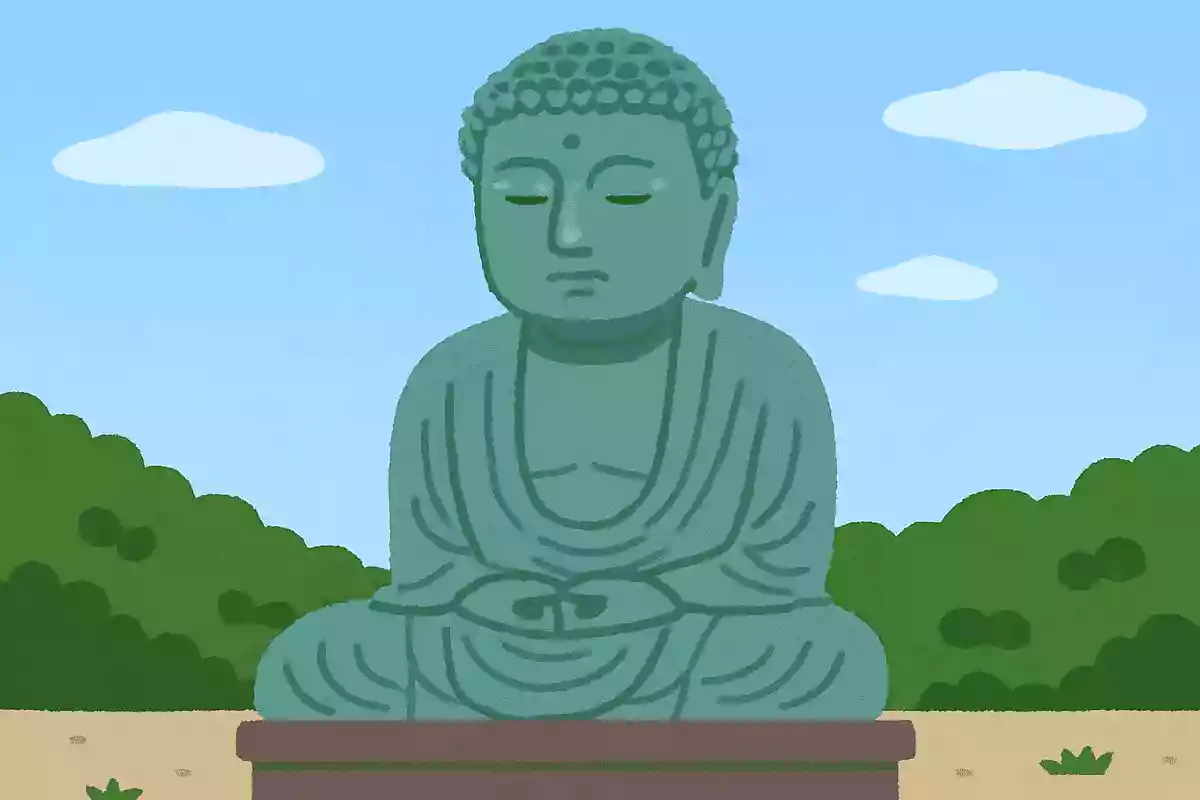
Why does the Great Buddha of Kamakura have no hall and stand exposed to the elements?
- The author died before the Great Buddha Hall was constructed.
- The Great Buddha Hall was swept away by typhoons, earthquakes, and tsunamis during the Kamakura and Muromachi periods.
- Originally, there were no plans to build the Great Buddha Hall.
See the answer
The Great Buddha Hall was swept away by typhoons, earthquakes, and tsunamis during the Kamakura and Muromachi periods.
Like the Great Buddha of Nara, the Great Buddha of Kamakura was originally housed inside a Great Buddha Hall when it was built. After the hall was swept away by typhoons, earthquakes, and tsunamis during the Kamakura and Muromachi periods, the statue has remained exposed to the elements.
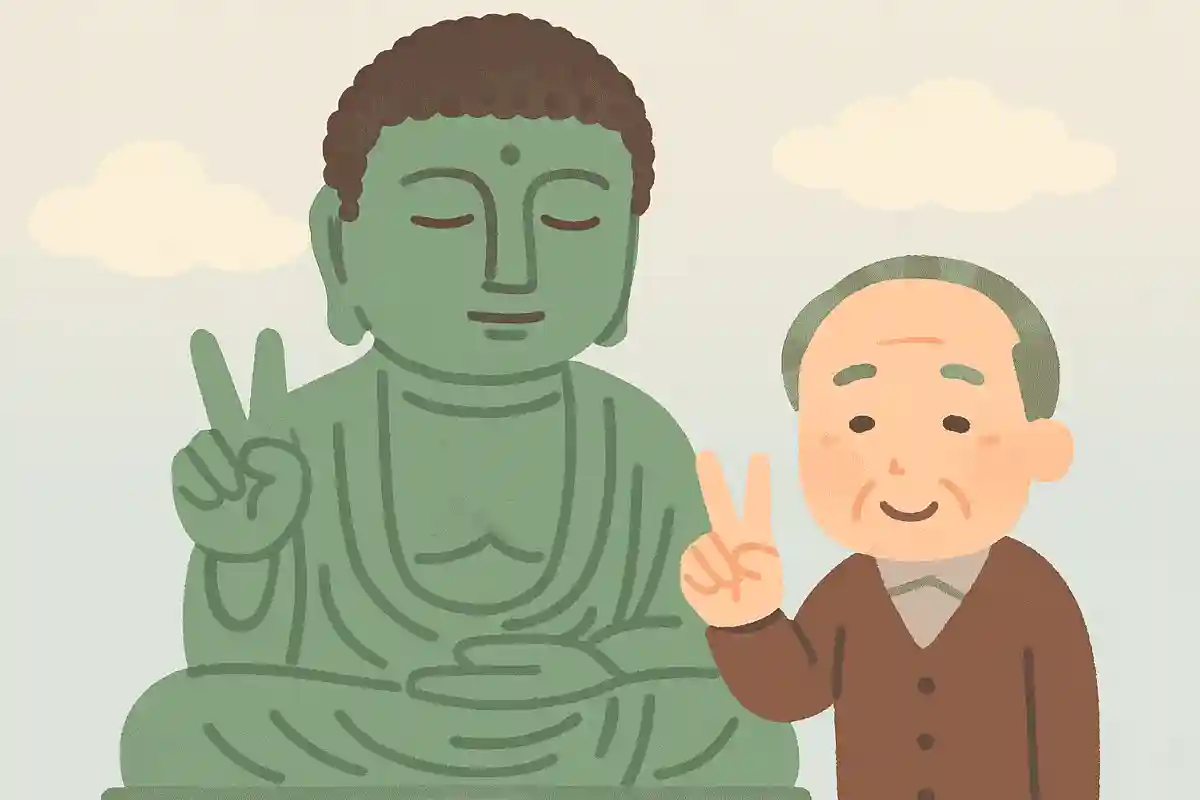
What is the name of the pose made with both hands and fingers that the Great Buddha of Kamakura is taking?
- Nōin
- Meditation mudra
- sect seal
See the answer
Meditation mudra
The mudra formed by joining the fingers into a circle is called the Dhyana Mudra, and it indicates that the Great Buddha is in a deep state of meditation.
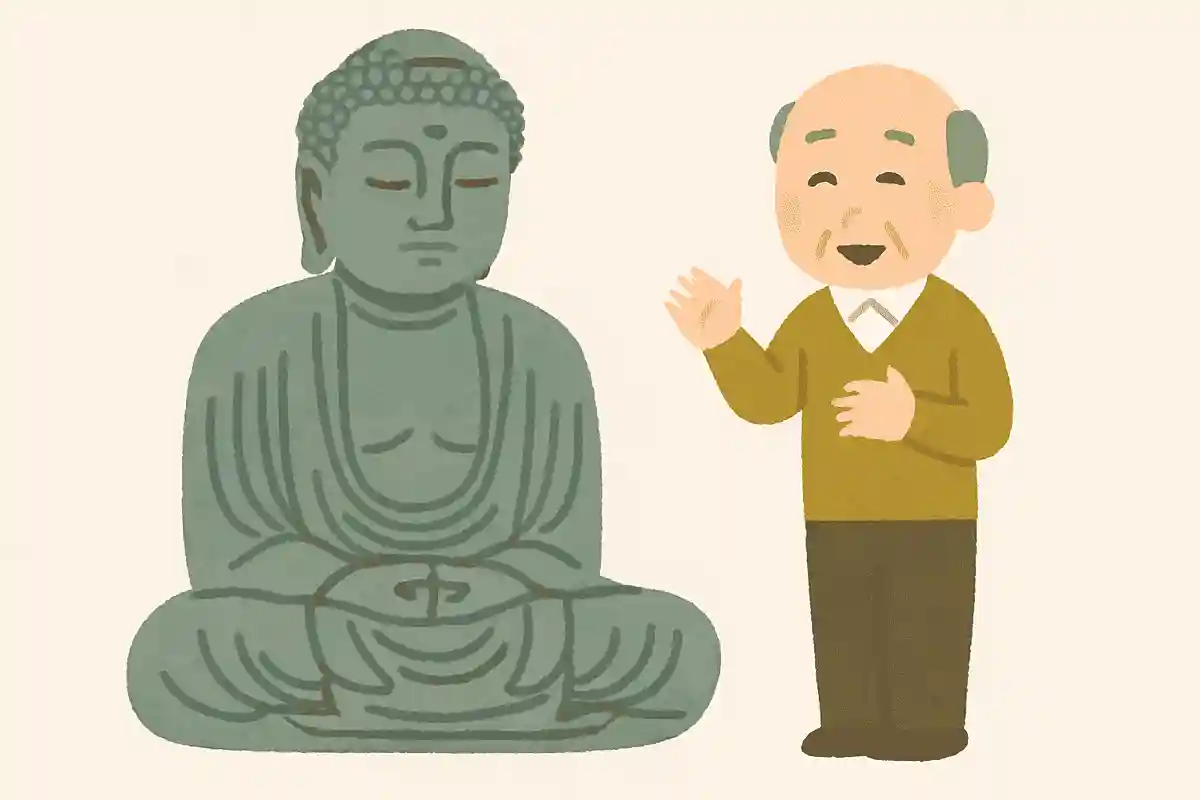
What do you call the way of sitting where both legs are crossed with the soles of the feet facing upward, like the Great Buddha of Kamakura?
- half-lotus position
- full lotus position
- seiza (formal sitting posture on the heels)
See the answer
full lotus position
Kekkafuza, or the full lotus position, is a representative seated posture often seen in Buddhist statues, in which both legs are crossed and folded with the soles of both feet turned upward and placed on the opposite thighs. This posture has long been used in yoga and Buddhist practice and is believed to promote physical stability and mental concentration. The Great Buddha of Kamakura is also seated in the full lotus position. By contrast, the posture in which only one foot is placed on the opposite thigh is called hankafuza, or the half lotus position.

What is on the back of the Great Buddha of Kamakura?
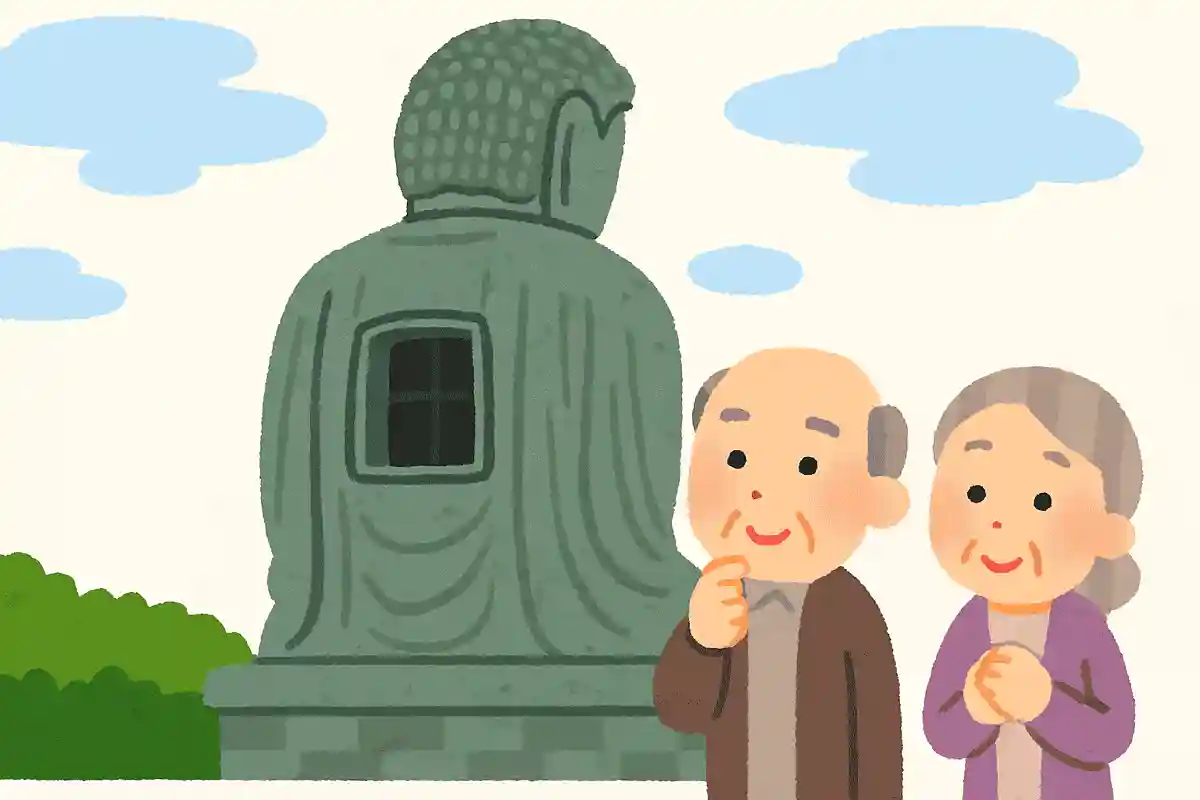
- A large picture is drawn.
- There are two windows.
- A bell is hanging.
See the answer
There are two windows.
There are two windows on the back of the Great Buddha of Kamakura. These windows were originally used during the casting of the statue to remove the inner clay and molds. Today, they serve as openings to let wind and light into the statue’s interior. It is rare for a Buddha statue to have windows in its back, and seeing them in person highlights the ingenuity of the design. This can be seen as one of the technical innovations introduced when the statue was rebuilt from wood to bronze, and it offers a glimpse into the wisdom of people from the past.
The Great Buddha of Kamakura has a distinctive posture. What kind of posture is it?
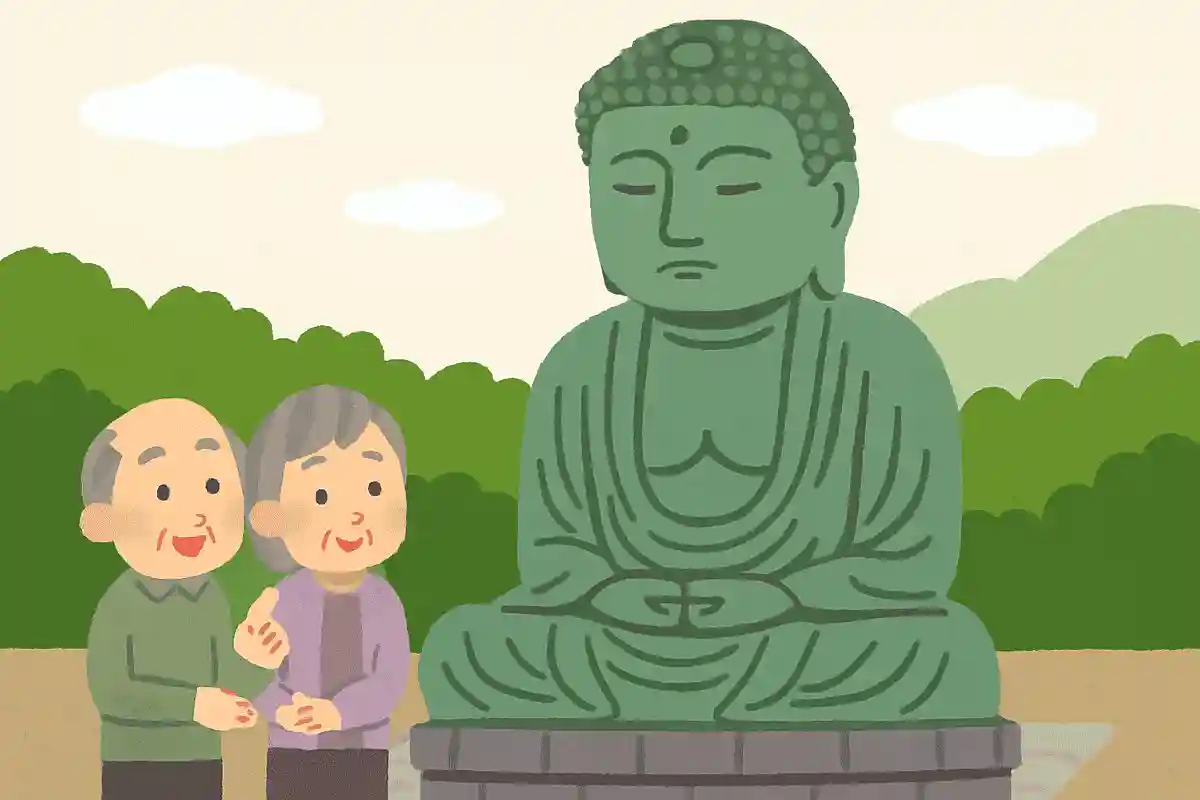
- upright
- seiza (formal sitting posture on the heels)
- stooped posture
See the answer
stooped posture
The Great Buddha of Kamakura actually has a slightly hunched, forward-leaning posture. It’s said that this expresses a gentle, companionable stance, allowing the statue to meet the eyes of worshippers. It also reflects the casting techniques and characteristics of Buddhist sculpture of the time, and for nearly 800 years it has watched over us with that serene, softly hunched posture.
What did the Great Buddha of Kamakura look like when it was first completed?
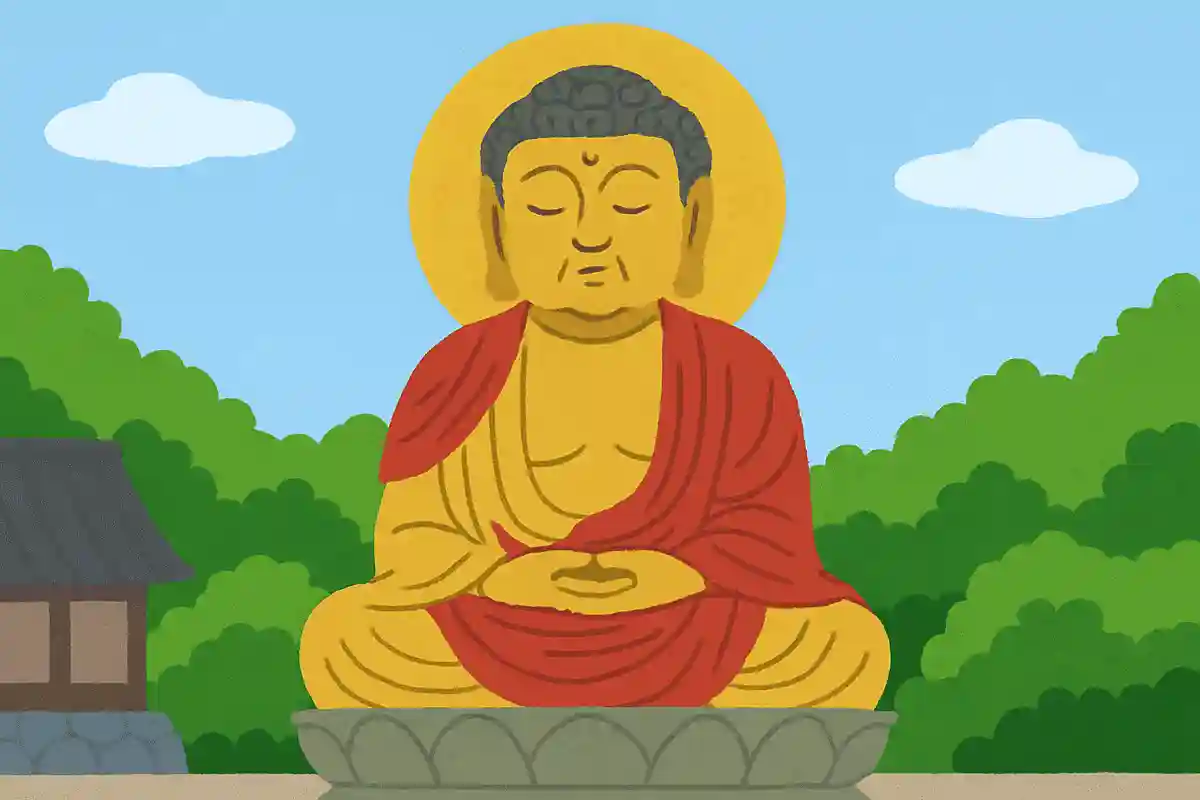
- was covered with white plaster
- was covered with gold leaf
- No different from now
See the answer
was covered with gold leaf
The Great Buddha of Kamakura (the seated statue of Amida Nyorai) did not originally have its current bronze color; when it was first completed, it gleamed with luxurious gold leaf. Over the centuries, the gold leaf peeled away, leaving the bronze appearance we see today. If you look closely, you can still spot slight traces of the gold leaf in some areas.
How big is the face of the Great Buddha of Kamakura?
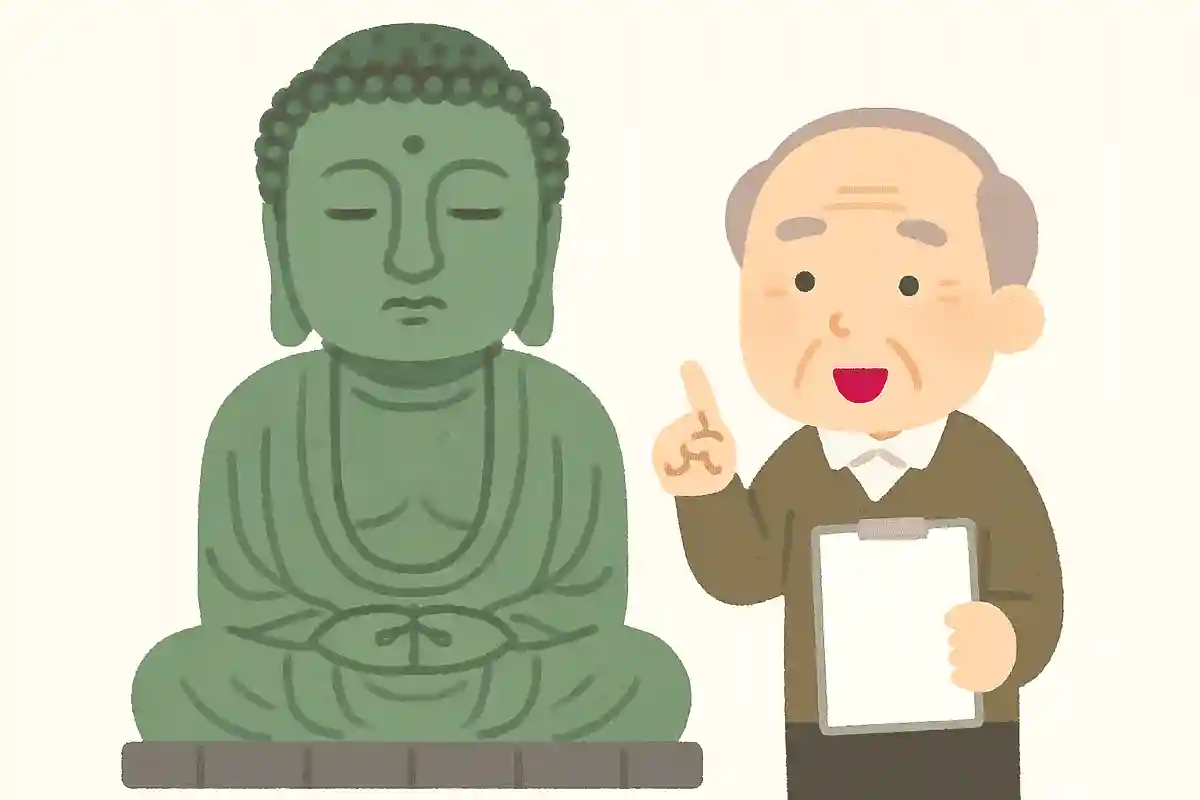
- 1.35 meters
- 2.35 meters
- 3.35 meters
See the answer
2.35 meters
The correct answer is 2.35 meters. The face of the Great Buddha of Kamakura is extremely large—much taller than the height of an average adult man—and that’s just the face alone. Seeing it up close, you’ll be struck by its imposing presence and the beauty of its delicate expressions.