

[For Seniors] Trivia Quiz & Fun Facts About the Great Buddha of Kamakura: Questions You'll Want to Share


The Great Buddha of Kamakura is beloved by many as one of Japan’s most iconic Buddhist statues.
Perhaps you visited it on a school trip or while sightseeing.
In fact, the Great Buddha of Kamakura hides many little-known and fascinating facts.
From the number of spiral curls on its head, to its weight, to what the interior looks like, it’s full of trivia that even past visitors may not know.
Learn while having fun in a quiz format, and you’re sure to discover new charms of the Great Buddha of Kamakura.
Whether you’re reminiscing about old memories or looking forward to your next visit, give it a try!
- [For Seniors] Fun and Informative Trivia Quiz Collection
- Surprisingly unknown? Trivia Quiz [Multiple Choice: 3 Options]
- [For Seniors] Introducing Scary Trivia Quizzes & Fun Facts!
- [For Kids] Trivia & Fun Facts Quiz about Detective Conan
- [For Seniors] Recommended Trivia Quizzes & Fun Facts for November
- [For Seniors] Boost Your Knowledge! Fun Trivia Quiz
- How much do you know? Trivia quiz for seniors that’s full of surprisingly unknown facts
- [For Seniors] Introduction to Trivia Quiz and Fun Facts about Ninna-ji Temple
- [For Seniors] Hina Matsuri (Girls’ Day) Trivia Quiz & Fun Facts. Recommended for Dementia Prevention Activities
- [For Seniors] Introducing Trivia Quizzes and Fun Facts About December
- [For Seniors] Kanagawa Prefecture Local Quiz! Learn more while having fun
- For Seniors: Useful Trivia Questions! Introducing Fun Facts Quizzes You'll Want to Share
- Fun facts quiz about Sensō-ji: Trivia questions about Kaminarimon and nearby facilities (for seniors)
[For Seniors] Trivia Quiz & Fun Facts about the Great Buddha of Kamakura: Shareable Questions (11–20)
What is the name of the temple that has the Great Buddha of Kamakura?
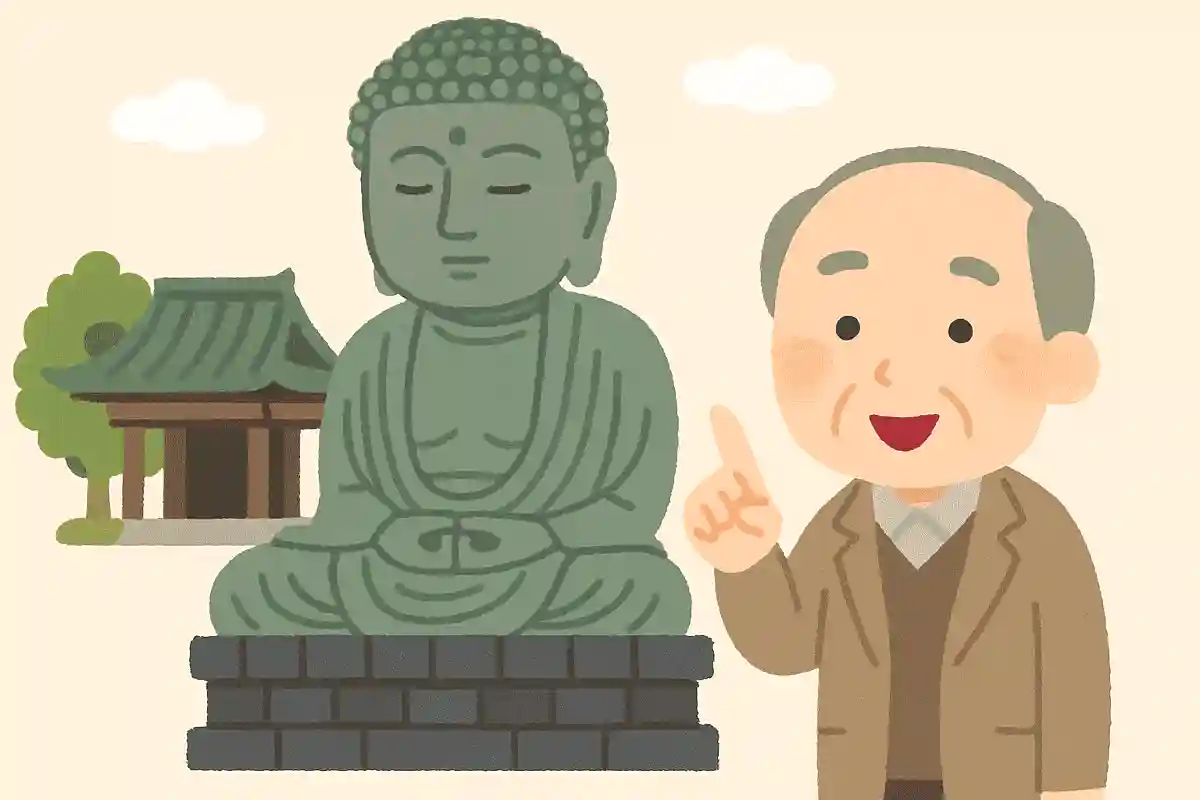
- Kotoku-in (Kōtoku-in)
- Tokusho-in
- Seiryu-in
See the answer
Kotoku-in (Kōtoku-in)
Kotoku-in is a temple whose principal image is the Great Buddha, which can be called a symbol of Kamakura. However, the temple’s founding priest and patron are unknown, and due to the scarcity of historical records regarding the circumstances of the statue’s creation, many details remain unclear.
How is the distinctive feature of the Great Buddha of Kamakura’s mouth described overseas?
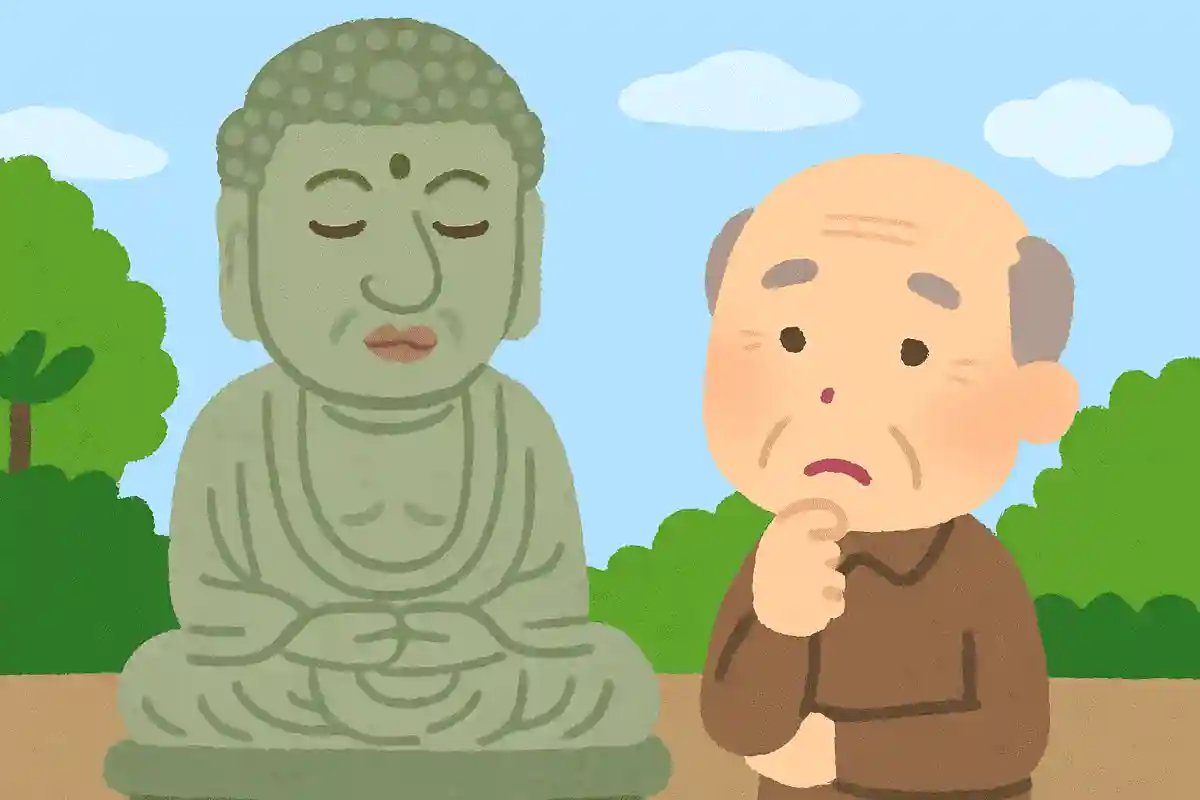
- Western-style smile
- Oriental smile
- mysterious smile
See the answer
Oriental smile
The mouth of the Great Buddha of Kamakura is characterized by a gentle, serene smile. This expression is often referred to by people from overseas as an “Oriental smile,” said to evoke a calm and composed atmosphere. Unlike Western smiles, it does not reveal too much emotion and is appreciated as a symbol of inner peace and tranquility. Such an expression is a significant appeal that conveys Japan’s unique aesthetic sensibilities and the culture of Buddhist statuary.

When was the entire precinct of Kōtoku-in designated as a National Historic Site as the “Site of the Great Buddha Hall of Kamakura”?
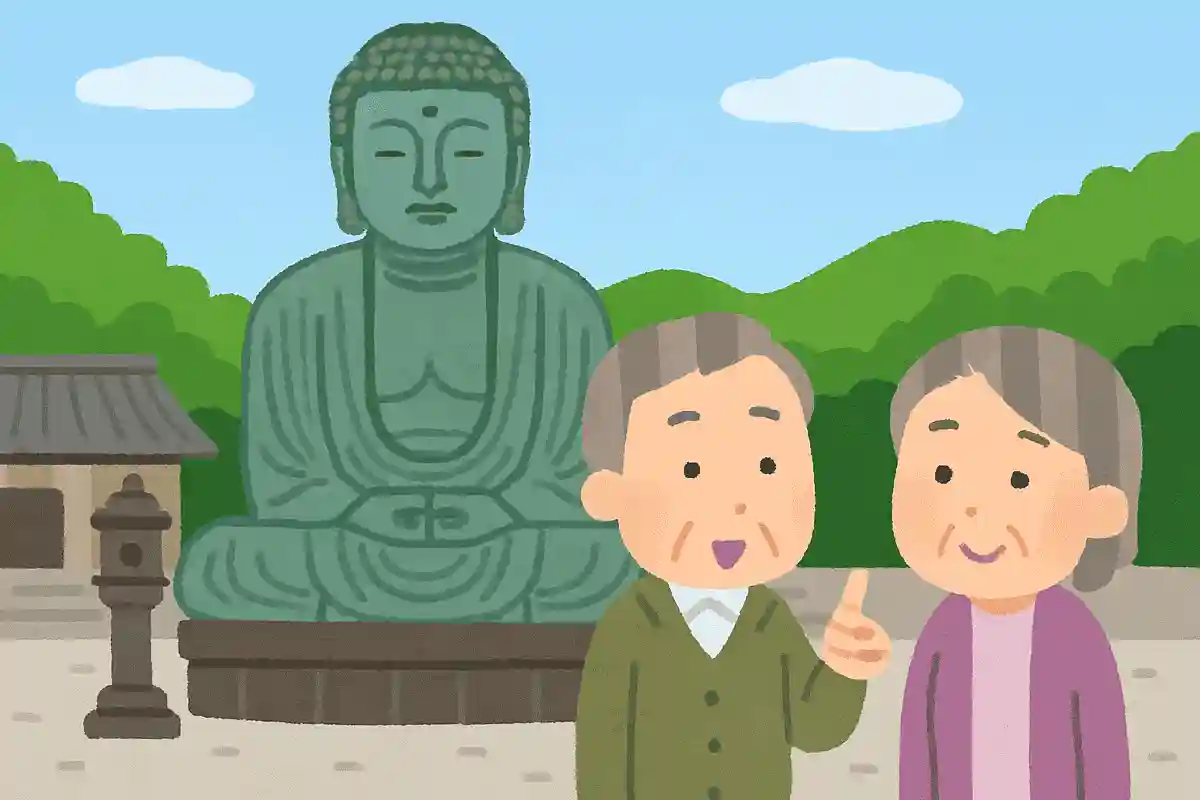
- February 27, 1984
- February 27, 1994
- February 27, 2004
See the answer
February 27, 2004
The entire precinct of Kotoku-in was designated as a National Historic Site as the “Site of the Great Buddha Hall of Kamakura” on February 27, 2004. This is because the value of the “Great Buddha of Kamakura” in Japan’s history and culture is highly recognized. Although the Great Buddha Hall itself was lost in the great earthquake of 1498, the site, including its remains, is protected and preserved by the national government as a historic site.
In the grounds of Kotoku-in, the Great Buddha’s straw sandals are on display. About how long are they?
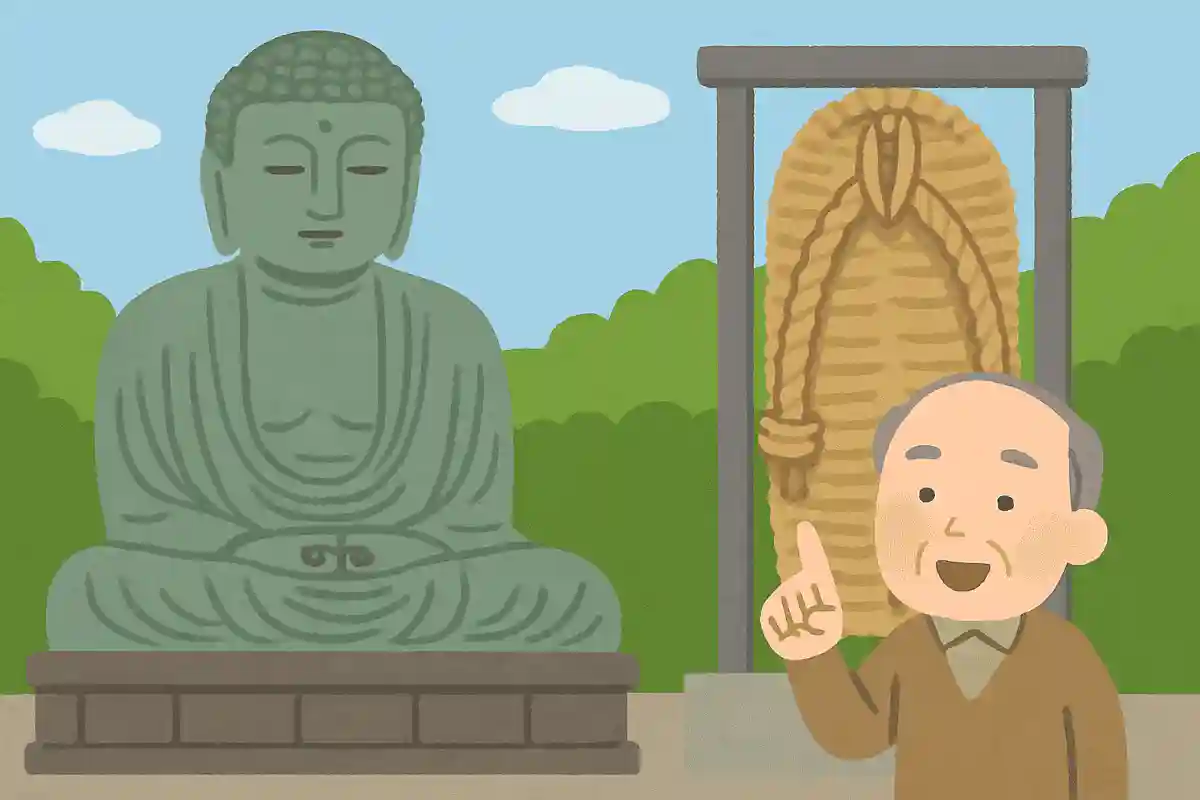
- 1.8 meters
- 3 meters
- 5 meters
See the answer
1.8 meters
At Kotoku-in, a pair of large straw sandals perfectly sized for the feet of the Great Buddha of Kamakura are dedicated. These warazori were offered with prayers for visitors’ health and protection from illness, and each measures about 1.8 meters in length. Associated with the Great Buddha, this tradition dates back to the Edo period, and their sheer size draws the attention of those who visit. Seeing them up close, you can feel the prayers and wishes of people from long ago woven into them.
How often are the straw sandals of the Great Buddha displayed on the grounds of Kotoku-in remade?
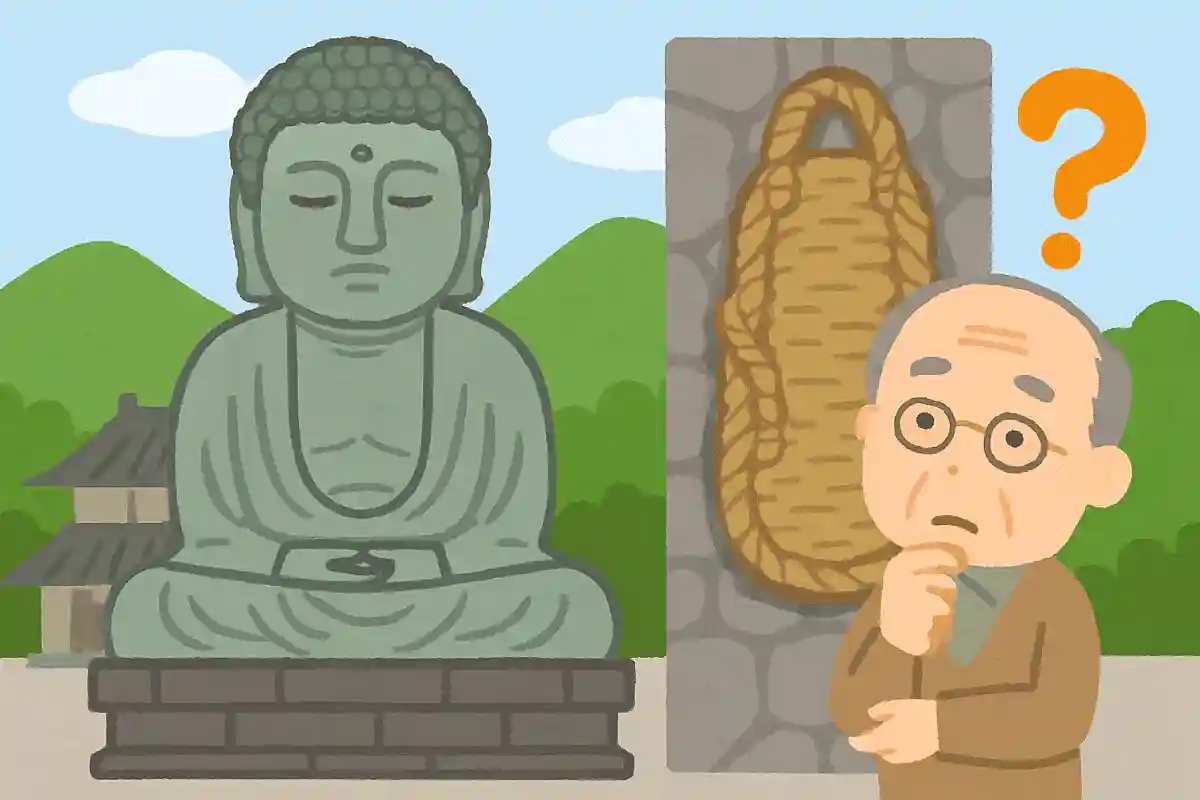
- Every year
- every three years
- every five years
See the answer
every three years
The Great Buddha’s enormous straw sandals at Kotoku-in are remade every three years. They are dedicated with the wish that the Buddha can walk around the world to help those who suffer, making this a truly heartfelt traditional event. Many people take part in crafting the new sandals, and the effort plays an important role in strengthening community bonds.
The burned-down Great Buddha of Kyoto and the Great Buddha of Kamakura are considered two of Japan’s Three Great Buddhas. Which of the following is the other one?
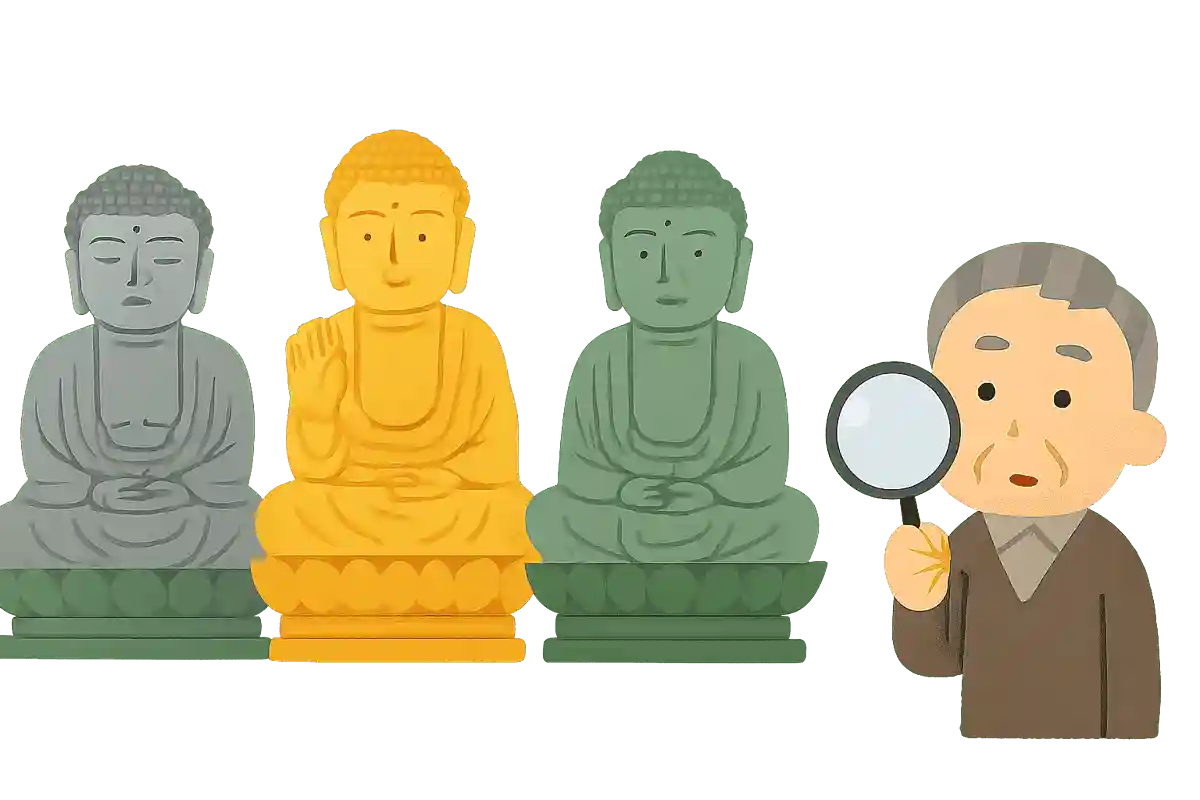
- Great Buddha of Kagawa
- The Great Buddha of Sendai
- Great Buddha of Nara
See the answer
Great Buddha of Nara
Japan’s three great Buddha statues are famous: the Great Buddha at Tōdai-ji in Nara, the Great Buddha at Kōtoku-in in Kamakura, and the former Great Buddha of Kyoto. The Nara Daibutsu is a colossal statue about 15 meters tall, built in the 8th century. It is indispensable when discussing Japan’s Buddhist culture and history. Along with the Kamakura Daibutsu, it is a popular tourist destination among many elderly visitors. The Kyoto Daibutsu was damaged by fire and no longer exists.
[For Seniors] Trivia Quiz & Fun Facts about the Great Buddha of Kamakura: Fascinating Questions You'll Want to Share (21–30)
Which of the following individuals was deeply involved in the construction of the Great Buddha of Kamakura?
- Minamoto no Yoritomo
- Prince Shōtoku
- Emperor Kanmu
See the answer
Minamoto no Yoritomo
It is said that the Great Buddha of Kamakura began with a plan by Minamoto no Yoritomo and his wife, who were moved after visiting the Great Buddha of Nara and decided to create a Great Buddha in Kamakura as well.