

[November Health Topic] Indoor Recreation Ideas for Older Adults
November brings more cold days, and it’s a time when many older adults spend more days indoors.
People tend to move their bodies less, but it’s best to stay as active as possible and promote circulation.
Improved circulation can be expected to have certain benefits, such as helping prevent illness, relieving stress, and stabilizing mental well-being.
Moreover, November is also a time when interactions with others tend to decrease.
When social contact declines, many older adults experience cognitive decline and feelings of loneliness.
With that in mind, this time we’re introducing health ideas for seniors that are recommended for November.
We’ve gathered plenty of easy indoor exercises and games, as well as crafts themed around November.
Please use these as a reference and give them a try.
- For Seniors: Simple and Fun! November Recreation Ideas
- For Seniors: December Health Topics — Winter Recreational Activities to Warm the Body and the Heart
- [For Seniors] Recommended Trivia Quizzes & Fun Facts for November
- [For Senior Facilities] Lively and Fun! November Quiz
- [October Health Topic] Introducing Recreational Activities for Seniors!
- [For Seniors] Enjoy the Cold Winter! Seated Activities You Can Do
- Recommended Indoor Exercises for Seniors
- [For Seniors] Recommended in December! Safe and Fun Indoor Recreation
- [For Seniors] Liven Up November Day Services! Fun Autumn Event Ideas
- [For seniors] January health topics: A roundup of popular recreational activities from exercises and crafts to New Year’s games
- September Health Topic: Introducing Recreational Activities That Capture the Feeling of Autumn’s Arrival
- [May Health Topic] Introducing recreational activities for seniors!
- [For Seniors] Fun Origami Ideas to Feel the Season in November
[November Health Topic] Indoor Recreation Ideas for Older Adults (21–30)
foot bath

As December arrives, the winter chill really starts to set in, and the desire to warm up grows stronger, doesn’t it? A great health practice that helps you get through the cold—and is perfect for relaxation—is a foot bath.
It’s simple: just soak your feet in warm water.
Warming your feet improves circulation and helps warm your entire body.
You can enjoy it in various ways, like taking your time while chatting, or adding bath salts to enjoy the fragrance—there are plenty of versatile options.

Singing Brain-Training Exercise
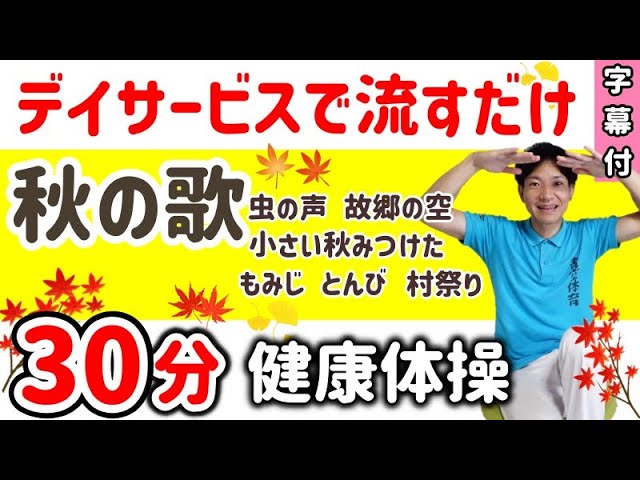
This is an exercise routine that aims for fun and health by moving your body to songs, with autumn-themed music to help you feel the season.
We’ll start with warm-ups to loosen the whole body so it can move well later.
Moving your body while singing contributes to overall health, so easy-to-sing children’s songs are recommended; we’ll immerse ourselves in the world of the lyrics through movements that match them.
Rather than only following the suggested motions, it could also be interesting for each person to think about what kinds of movements they can come up with.
Photo Quiz: Autumn Plants

This is a quiz-style activity where you prepare printed photos of autumn plants, post them on a whiteboard, and have participants guess their names.
Choose images that evoke the season visually, such as cosmos, red spider lilies, persimmon trees, and chestnuts.
Show one photo at a time and ask, “What is this?” to engage participants’ memory and observation skills.
When revealing the answers, adding anecdotes or fun facts about each plant will help capture participants’ interest.
It can also spark conversation, such as sharing memories of seeing the actual plants.
Because it can be done while seated, it places little physical burden on older adults and is also effective as cognitive stimulation.

A crossword featuring the flavors of autumn

This is a recreational activity featuring a crossword puzzle themed around autumn flavors.
Prepare the grid in advance, provide across and down clues, and have participants derive the answers.
Incorporating English words or fun facts into the clues adds an element that invites deeper thought and can help stimulate the brain.
Questions that feel obvious yet hard to recall—like “a sweet fruit harvested in autumn,” which would be “persimmon”—can liven up the atmosphere.
Setting a time limit creates a sense of tension, and a team-based, cooperative format is also recommended.
After the correct answers are revealed, the conversation can naturally expand to topics about each ingredient, prompting memories and impressions of eating them, making it a great opportunity for social interaction.
Autumn Delicacies Ranking

Here’s an idea for a seasonal recreation activity perfect for seniors: “Autumn Flavors Ranking.” Using real popular-vote sites as references, pose questions themed around the top five most popular autumn foods.
If you have participants guess without hints, differences in knowledge, experience, and personal preferences become conversation starters, and the discussion naturally expands.
The answer reveal is also a big highlight.
You can compete on the number of correct answers, or simply enjoy chatting about “This is my number one!” It’s an appealing activity because anyone can join without physical movement, and it also stimulates the brain—highly recommended.

Autumn Word Collection Brain Training

This is a brain-training activity where participants freely write words related to the season on a whiteboard under the theme “What comes to mind when you think of autumn?” Participants say as many words as they can think of, and staff write them on the board.
Once a certain number has been collected, the board is hidden, and participants are asked to recall and say as many of the words as they remember.
This activity stimulates memory while naturally developing creativity and vocabulary.
Talking about seasonal topics helps evoke shared memories and emotions, encouraging the enjoyment of speaking and broadening conversation.
Because it focuses on enjoyment rather than right or wrong answers, it allows older adults to use their brains without strain, making it a suitable and enjoyable recreation.
Picture shiritori

Picture shiritori on a whiteboard is a game where players take turns drawing pictures to continue a word chain.
For example, if the first person draws an apple (ringo), the next person draws something that starts with “go.” Because you connect words using only drawings without letters, it requires ingenuity to convey ideas accurately and adds the fun of guessing, making it an activity that keeps everyone engaged.
Even those who feel unsure about drawing can participate by thinking together—“What could this be?”—so it becomes a cooperative and enjoyable time.
What matters is getting the idea across, not artistic skill, which naturally leads to laughter and surprises and serves as a great conversation starter among older adults.