

[For Seniors] Trivia Quiz & Fun Facts on Hay Fever: Learn Prevention Methods and Symptoms You Should Know

What we especially worry about in spring is hay fever, right?Many people probably suffer from sneezing and a runny nose.Precisely because it’s such a familiar topic, there are actually lots of little-known facts hidden within it.This time, we’ve prepared a rich selection of trivia quizzes about hay fever.From fabrics that are less likely to attract pollen, to foods that may help prevent hay fever, to the best timing to start taking allergy medicine—these questions let you enjoy learning practical, everyday knowledge.They’re also perfect as brain training for seniors, so please try them together with everyone!
- [For Seniors] Spring-themed quizzes: Fun trivia questions that help prevent dementia while you solve them
- [For Seniors] Trivia Quiz & Fun Facts for Everyday Life
- Spring Event Quiz for Seniors to Enjoy in March
- [For Seniors] Hina Matsuri (Girls’ Day) Trivia Quiz & Fun Facts. Recommended for Dementia Prevention Activities
- [For Seniors] Conversation Starters! A Collection of Trivia and Quizzes About Cherry Blossoms
- [For Seniors] Trivia You’ll Want to Share: Cleaning Quiz & Fun Facts
- [For Seniors] Fun and Informative! Health Trivia Quiz
- [For Seniors] Lively two-choice trivia quiz. Handy to know and tidbits you'll want to share with others
- [For Seniors] Fun Trivia Quiz with Autumn Foods! A Collection of Little-Known Facts
- [For Seniors] Take on the Setsubun Quiz! A comprehensive collection of diverse quizzes, including trivia, true-or-false, and spot-the-difference.
- For Seniors: Useful Trivia Questions! Introducing Fun Facts Quizzes You'll Want to Share
- [For Seniors] Never Run Out of Conversation Starters! A Collection of Fun Facts About April and Spring
- [For Seniors] Fun Food Trivia Quizzes You'll Want to Share
[For Seniors] Pollen Allergy Trivia Quiz & Fun Facts: Learn the Prevention Methods and Symptoms You Should Know (21–30)
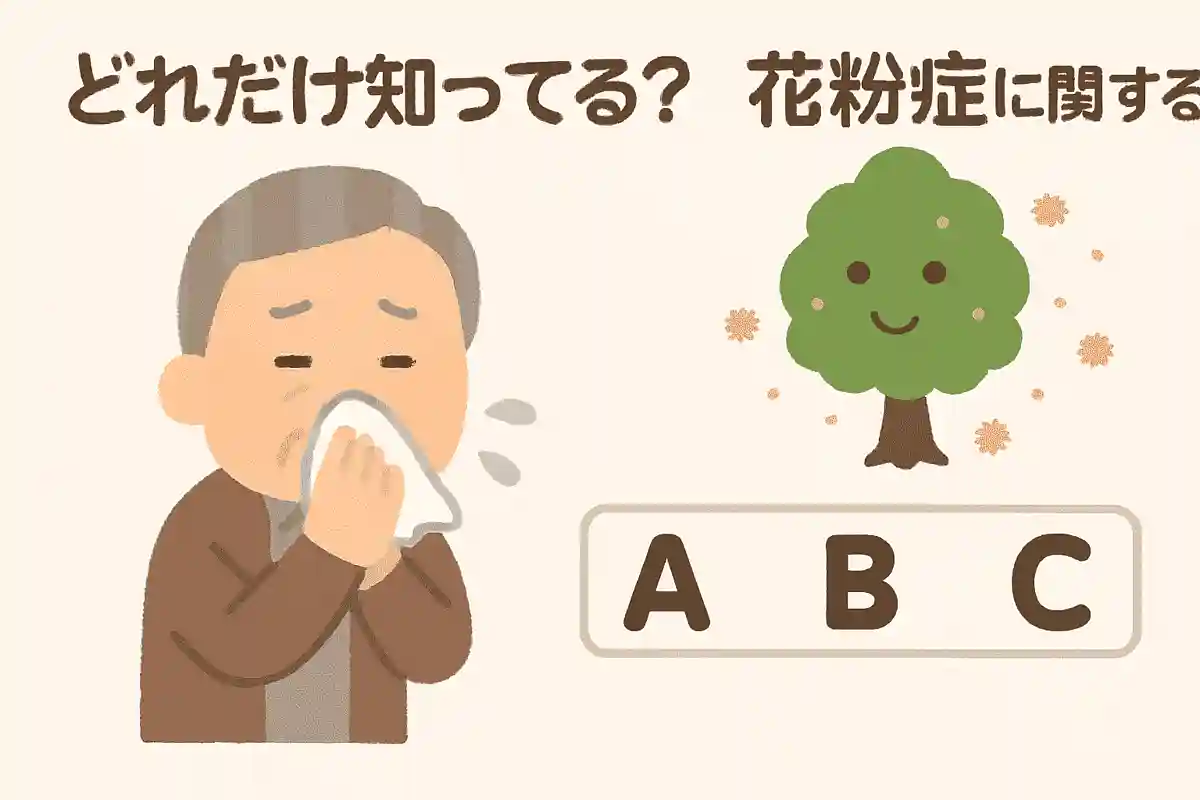
Which of the following is a symptom that commonly appears as a sign of hay fever?
- Fever only
- Sneezing, runny nose, and itchy eyes
- Numbness in the hands and feet
See the answer
Sneezing, runny nose, and itchy eyes
The main symptoms of hay fever include sneezing, runny nose, nasal congestion, and itchy eyes. Fever and numbness in the hands and feet are not commonly seen with hay fever. However, allergy symptoms vary from person to person and in severity, so it is important to make appropriate judgments and receive proper treatment.

Which of the following clothing materials is the least likely to attract pollen?
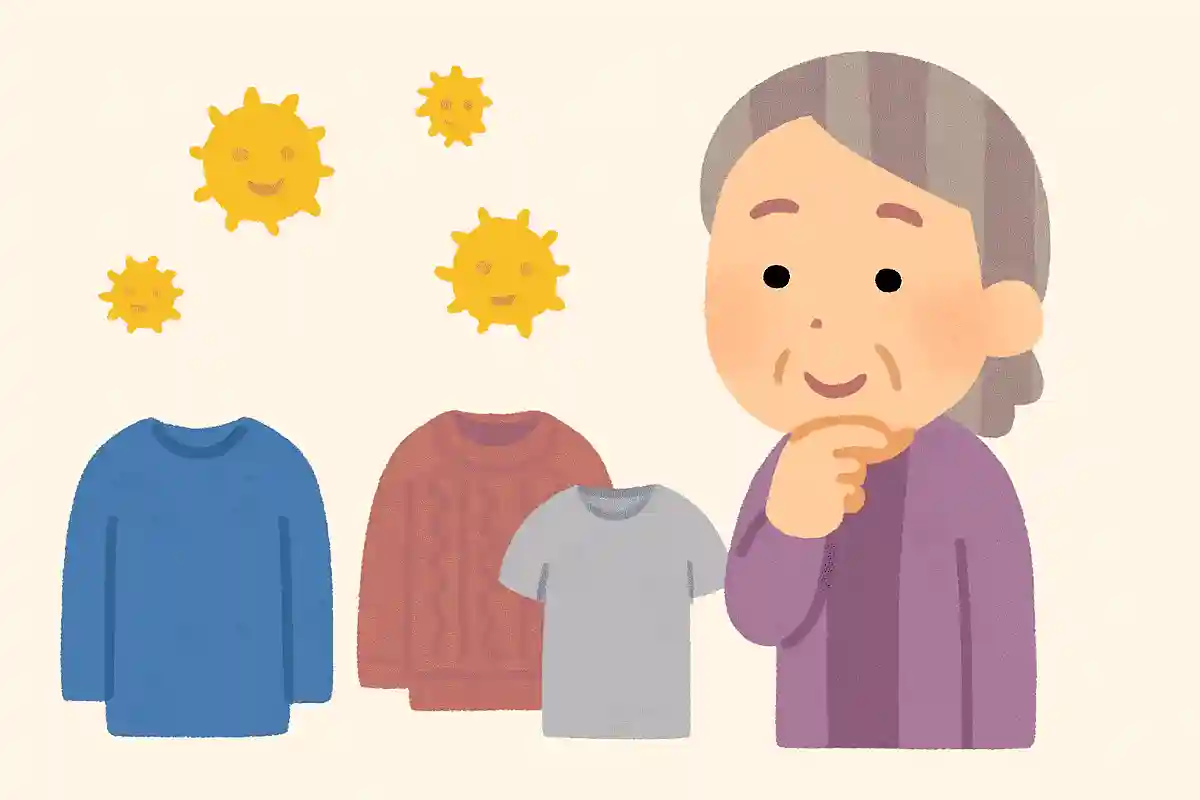
- cotton
- polyester
- wool
See the answer
polyester
Because polyester has a smooth surface, it tends to resist pollen adhesion. Conversely, fabrics and materials with fluffy or rough surfaces are more prone to collecting pollen, as the uneven texture makes it easier for pollen to get trapped. Therefore, when going out, it’s advisable to wear clothing made from materials with smooth surfaces.
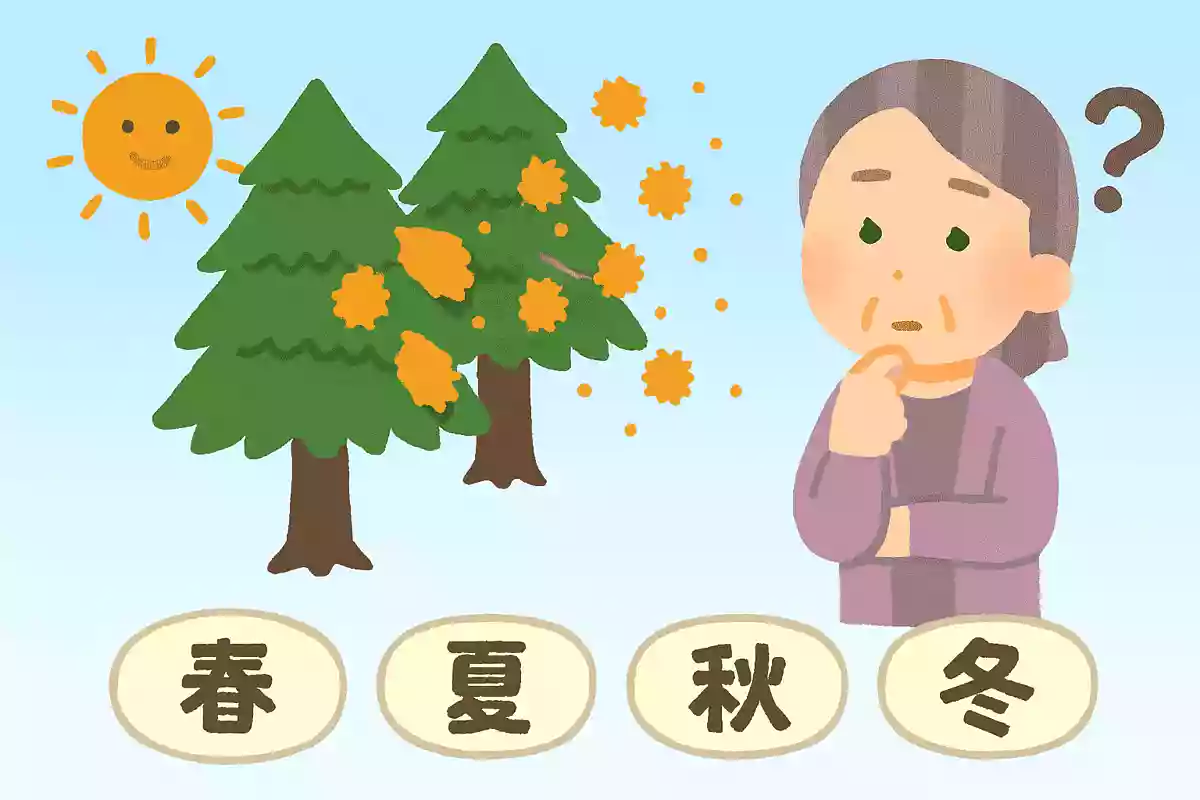
In which season does Japanese cedar pollen disperse the most?
- spring
- summer
- Winter
See the answer
spring
Cedar pollen disperses especially heavily from February to April. This season marks the beginning of warmer weather and the spring when new life sprouts. Therefore, symptoms of cedar pollen allergy are most likely to appear in spring. It is said that the amount of pollen in the air tends to increase particularly on warm, windy days.
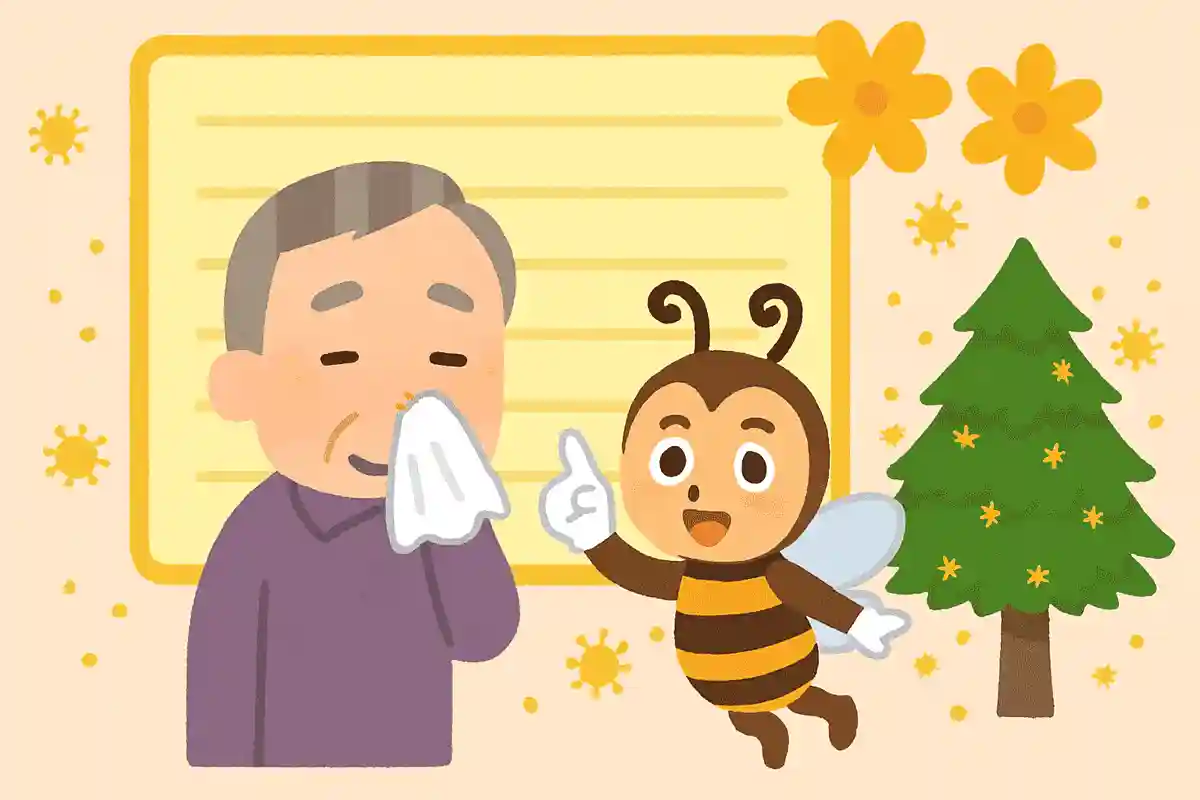
Which plant was involved in the first reported case of hay fever in Japan?
- Japanese cedar (sugi)
- ragweed
- Hinoki (Japanese cypress)
See the answer
ragweed
The first case of hay fever reported at an academic conference in Japan was in 1961, and it was caused by ragweed pollen. Later, cedar pollen allergies became more common, but it seems that ragweed came first.
Looking at the proportion of people with hay fever among Japanese by gender, what were the results?

- There are more men.
- There are more women.
- There’s almost no difference.
See the answer
There are more women.
According to recent surveys by Japan’s Ministry of Health, Labour and Welfare and others, the prevalence of hay fever tends to be slightly higher among women than men. It is also notable that among women, the proportion is higher in those in their 20s to 50s.
Which of the following plants is the main cause of hay fever in Japan?
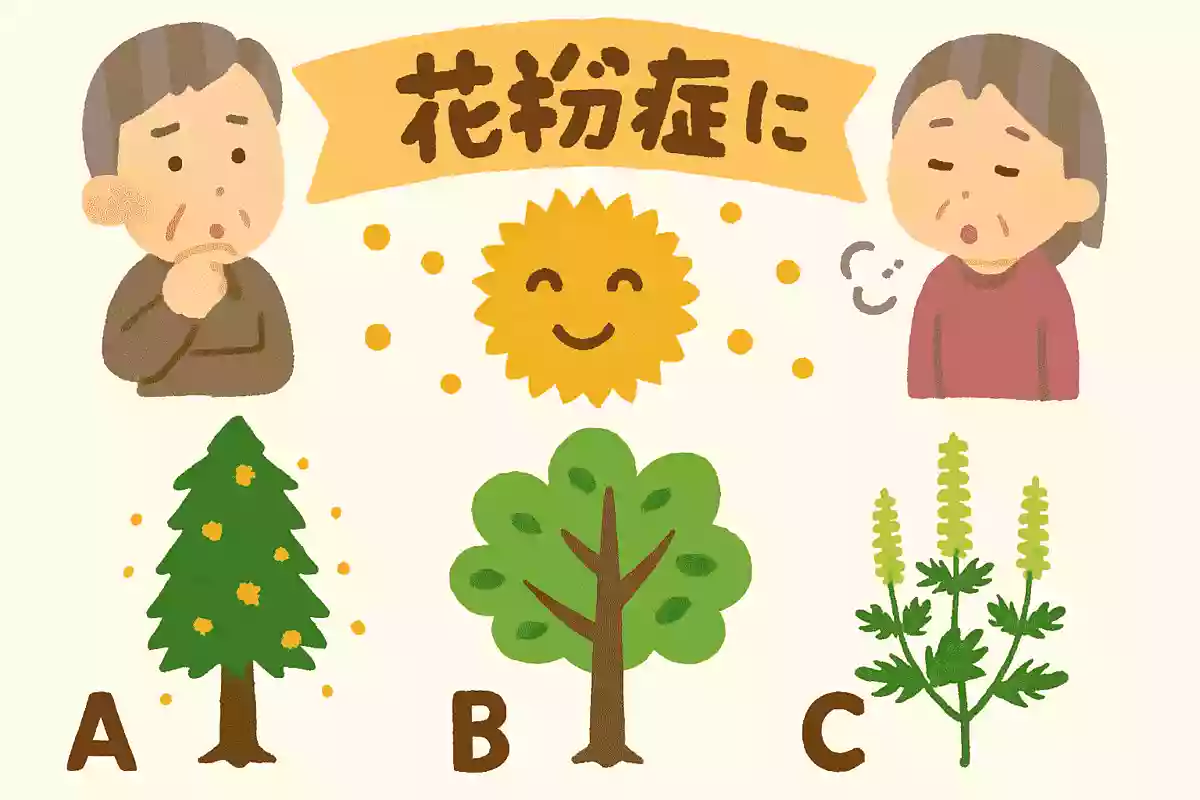
- Hinoki (Japanese cypress)
- Japanese cedar (sugi)
- ragweed
See the answer
Japanese cedar (sugi)
In Japan, cedar pollen is the most prevalent, and the number of people with hay fever is overwhelmingly high. Every year in early spring, large amounts of cedar pollen are dispersed, and many people suffer from symptoms. Although cedar has long grown in Japan, it is believed that the increase in hay fever cases is due to the massive reforestation that began in the 1950s, which boosted the amount of pollen released.
Which of the following is incorrect as a measure against pollen?
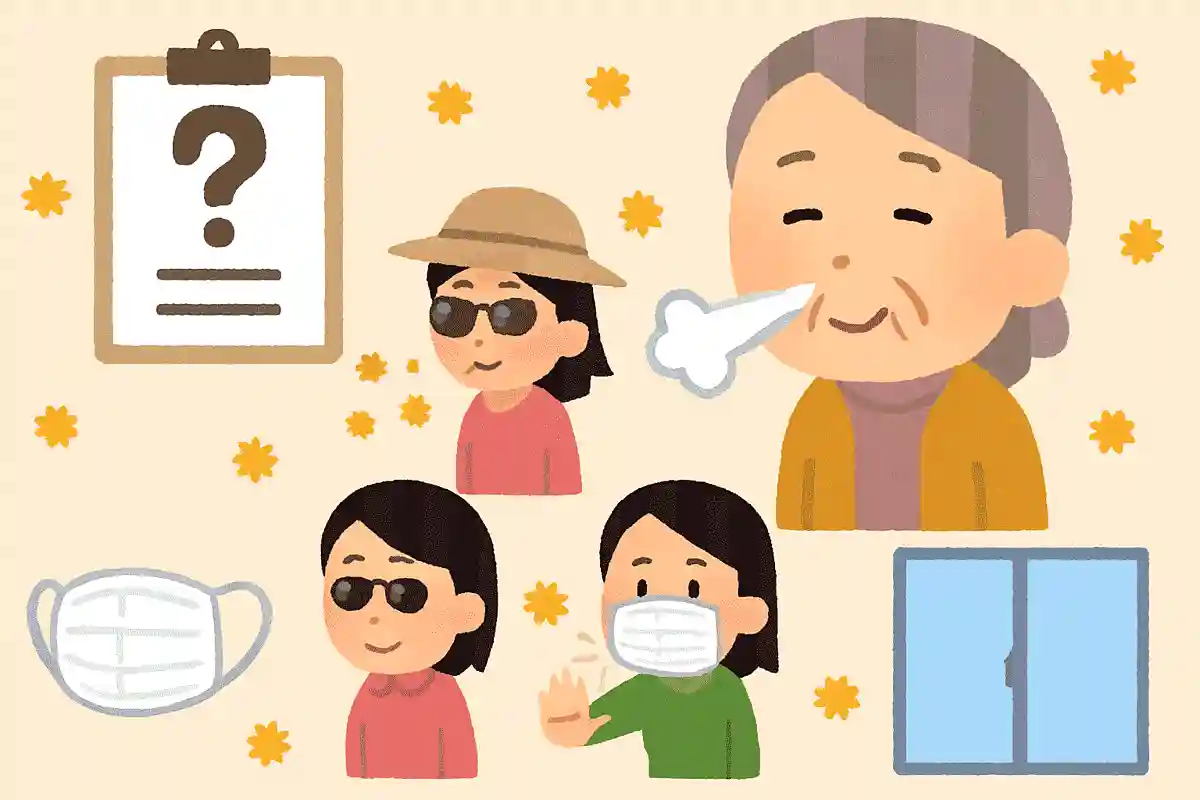
- Wear a mask and glasses when going out.
- Hang the laundry outside
- Thoroughly brush off any pollen on your clothing before entering the house.
See the answer
Hang the laundry outside
If you hang your laundry outside during peak pollen season, pollen will stick to your clothes. Bringing those clothes into the house will bring the pollen inside as well. During pollen season, avoid drying laundry outdoors and opt for indoor drying.