

[For Seniors] Simple Rhythm Exercises: Recommended Songs and Routines


One of the things we should pay attention to in caregiving settings is dementia prevention.
To keep the brain healthy, physical activity is important.
Some of you may be wondering if there are any recreational activities that allow older adults—who often spend long periods sitting—to move their bodies while having fun.
In this article, we introduce recommended songs for rhythm exercises! Because there are many nostalgic classics, older adults are sure to enjoy them.
Please make use of this as a recreation activity that can be enjoyed with lots of smiles!
- Energetic and Lively! Sing-and-Exercise Program for Seniors
- [For Seniors] Have Fun and Relieve Stress! Introducing Dances Everyone Can Enjoy Together
- For People in Their 90s: Dance Tracks and Exercise Songs That Make Moving Your Body Fun!
- For Seniors: Fun and Lively Exercise Recreation
- [For Seniors] Recommended Rhythm Play and Exercises
- Also great for dementia care! Recommended dance songs for people in their 70s: Let’s dance to those classic hits
- With upbeat rhythm routines! Music therapy for seniors
- [For Seniors] Songs Everyone Can Sing Together! A Roundup of Recommended Crowd-Pleasers
- Ranking of popular songs for senior citizens
- [For Seniors] Popular Hand-Play Songs: Fun Brain-Training Ideas
- [For Seniors] Hand and finger play roundup: Finger exercises that lead to brain training
- [Brain Training for Seniors] Recommended Hand-Play Recreation for Dementia Prevention
- [Recommended for seniors] Rejuvenating Rock-Paper-Scissors Exercise
[For Seniors] Easy Rhythm Exercises: Recommended Songs and Workouts (21–30)
Hahaha, Halloween

Halloween is an event filled with a variety of motifs, and each one’s unique movements helps liven things up.
Let’s express and introduce the kinds of Halloween motifs that appear by using body movements.
Ghosts, monsters, and other spooky things make their appearance, but by recreating them with smiles to an upbeat tune, you can convey just how fun the event is.
Swaying your body from side to side and moving your whole body also gives the impression of refreshing both body and mind.

Halloween Boxercise

This is an exercise where you throw punches in the indicated directions to the rhythm of the music, moving your whole body.
Instead of just extending your arm in that direction, using your entire body to deliver smooth punches turns it into a full-body workout.
You can do this exercise with any song, but since it’s Halloween season, choosing music that fits the theme makes it even more fun to get people engaged.
It’s also accessible because those who find it difficult to stand can do it while seated.
[For Seniors] Easy Rhythm Exercises: Recommended Songs and Routines (31–40)
Caregiving Dance Exercise: Dracula

Halloween, with its images of various monsters, has a fun side amid the eeriness, doesn’t it? Among the monsters that convey that Halloween fun, we’re focusing on Dracula—this is an exercise routine that expresses Dracula playfully through body movements.
Set to MAX’s “Dracula,” it recreates lunging, attacking motions; encourage participants to feel the rhythm firmly as they go.
Because the song is fast, structuring the routine with relaxed movements—like making one move span two beats—is the key to helping everyone enjoy moving their bodies.
Halloween dance for seniors
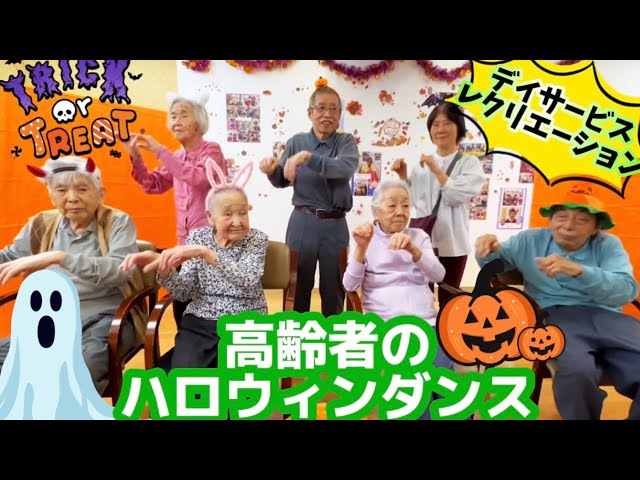
Speaking of Halloween, many people picture it as a spooky yet fun event filled with all kinds of motifs like ghosts and monsters.
This activity aims to capture that variety of motifs and eerie atmosphere through body movements so you can really feel the spirit of the event.
The basic movement is the ghost’s swaying motion, which you can do with your arms and upper body to keep the physical strain low.
It also sounds fun to have everyone think up new motifs they’d like to see at Halloween and add more movements based on those ideas.
Brain-training exercises with nursery rhymes

“Brain Training Exercise with Nursery Rhymes” is a fun workout that incorporates the melodies and rhythms of nostalgic songs.
As older adults move their hands and feet while reminiscing about the past, it can help stimulate cognitive function.
Because it can be done while seated, even those who aren’t confident in their physical strength can join with peace of mind.
Moving the body together while singing also naturally encourages communication.
It’s recommended for recreational activities in care facilities and for quality time with family.
Let’s enjoy getting healthier to the comfort of pleasant music!
365 Steps MarchSuizenji Kiyoko

This is an exercise done to the song “365-Step March” by Kiyoko Suizenji, also known as Chii-taa.
It’s recommended because it can be done seated, tailored to the physical and mental conditions of older adults.
Just listening to this song makes everyone feel energized, doesn’t it? The important thing is to draw out the motivation to exercise, so it should be beneficial for seniors.
Kiyoko Suizenji’s powerful singing voice is very appealing.
And this exercise involves moving the hands and feet, so it’s easy for anyone to do.
I think doing this routine will invigorate both body and mind.

Soran-bushi exercise

Many older adults may be familiar with the Soran Bushi, don’t you think? I’ve heard it’s sometimes performed at school sports days.
Just hearing the rhythm and calls of Soran Bushi can make you feel energized.
Let’s try some exercises to the spirited rhythm of Soran Bushi.
Move your body by extending your hands forward or raising them overhead like a banzai cheer.
It can be done while seated, so many older adults should be able to take part.
If it’s a song they know, older adults will likely enjoy doing the exercises comfortably.