

[For Seniors] Long-tailed Tit Trivia Quiz & Fun Facts: Learn Their Habits and Traits to Deepen Your Knowledge


The long-tailed tit known as the “snow fairy” for its white, fluffy appearance.
Behind its adorable looks lie the wisdom that helps it survive Hokkaido’s harsh winters and little-known secrets of its ecology.
Through fun trivia quizzes and tidbits about the long-tailed tit, enjoy discoveries that will make you say “Wow!”, such as the clever adaptations hidden in its tiny body and the ways it cooperates with other birds.
As you take on the quiz, spend a heartwarming moment learning more about this charming bird that lives only in Hokkaido.
- How much do you know? Trivia quiz for seniors that’s full of surprisingly unknown facts
- [For Seniors] Sports Trivia Quiz & Fun Facts. Easy and Entertaining
- [For Seniors] January Trivia Quiz & Fun Facts. Brain training with quizzes about New Year and winter.
- [For Seniors] Discover Hokkaido’s Charms! Local Trivia Quiz
- Trivia you think you know but surprisingly don’t? August trivia and fun facts quiz!
- [For Seniors] Introducing Trivia Quizzes and Fun Facts About December
- [For Seniors] Enjoy Brain Training with September Trivia Quizzes & Fun Facts
- For Seniors: Lively! Trivia and Fun Facts Quiz for August
- [For Seniors] Trivia Quiz and Fun Facts About Turtles – Complete Collection
- [For Seniors] Trivia Quiz & Fun Facts for June
- [For Seniors] Brain-training with winter-themed quizzes. Great for activities, killing time, and dementia prevention.
- [For Seniors] Spring-themed quizzes: Fun trivia questions that help prevent dementia while you solve them
- [For Seniors] Trivia Quiz & Fun Facts for Everyday Life
[For Seniors] Long-tailed Tit Trivia Quiz & Fun Facts: Learn About Their Habits and Traits (1–10)
How long after hatching do long-tailed tit chicks leave the nest?

- about one week
- About three weeks
- about 5 weeks
See the answer
About three weeks
Long-tailed tit chicks fledge about three weeks after hatching. During that time, the parents frequently bring them food, and the chicks grow rapidly. Even right after fledging, they may still be fed by the parents, but they gradually learn to find food on their own. Compared to other small birds, long-tailed tits fledge relatively early and are well adapted to harsh natural environments.

Which of the following is the correct option regarding the visual differences between male and female long-tailed tits (Shima-enaga)?
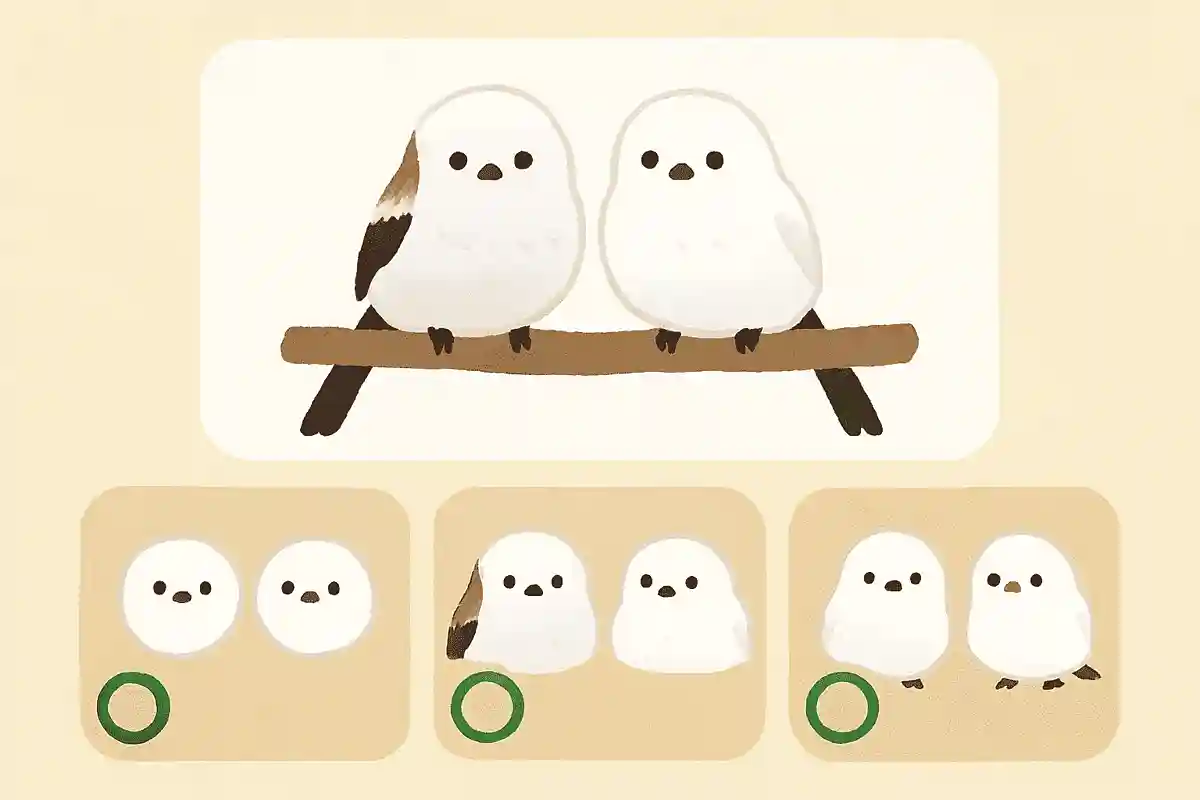
- The shape of the beak is different.
- The color of the feathers is different.
- There is hardly any difference.
See the answer
There is hardly any difference.
Male and female long-tailed tits in Hokkaido (shima-enaga) look almost identical. Both have round white faces, fluffy bodies, black eyes, and long tails, and their color and size are nearly the same, making them very difficult to tell apart. While some wild bird species show differences in color or size between males and females, shima-enaga are notable for lacking such distinctions. Therefore, it is generally not possible to distinguish males from females by observation alone.
How long is the lifespan of a wild long-tailed tit said to be?

- about 2 to 4 years
- about 4 to 6 years
- more than 10 years
See the answer
about 2 to 4 years
The long-tailed tit (shima-enaga) is a very small species of wild bird, and its lifespan in the wild is generally around 2 to 4 years. In the wild, it faces various challenges such as predators, harsh climates, and food shortages, making longevity quite difficult. However, there have been reports of individuals living more than 4 years in nature. In captivity, where there are no predators, they may live longer.
[For Seniors] Long-tailed Tit Trivia Quiz & Fun Facts: Deepen Your Knowledge of Their Habits and Features (11–20)
What family of birds is the long-tailed tit (Shima-enaga) classified into?

- tit family (Paridae)
- Aegithalidae
- Old World flycatchers
See the answer
Aegithalidae
The long-tailed tit subspecies known as the Shima-enaga is a bird classified in the order Passeriformes, family Aegithalidae, genus Aegithalos. Members of Aegithalidae are characterized by their round bodies and long tails. The Shima-enaga inhabits Hokkaido, Japan, and is affectionately called the “snow fairy” for its charming appearance. Incidentally, the Shima-enaga is a subspecies of the long-tailed tit and occurs naturally in Japan only in Hokkaido.
What sparked the trend for the long-tailed tit (Shima-enaga)?

- Featured on a TV show
- The photo book has been released.
- A nature observation event was held.
See the answer
Because the photo book was released.
The long-tailed tit became famous nationwide after the release of a photo book that captured its adorable appearance. Photographer Rei Obara’s photo book “Shimaenaga-chan” was a hit and drew a lot of attention. It was subsequently featured on television and online media, and its popularity grew further as a soothing, comforting presence.
What do long-tailed tits line their nests with to improve insulation?
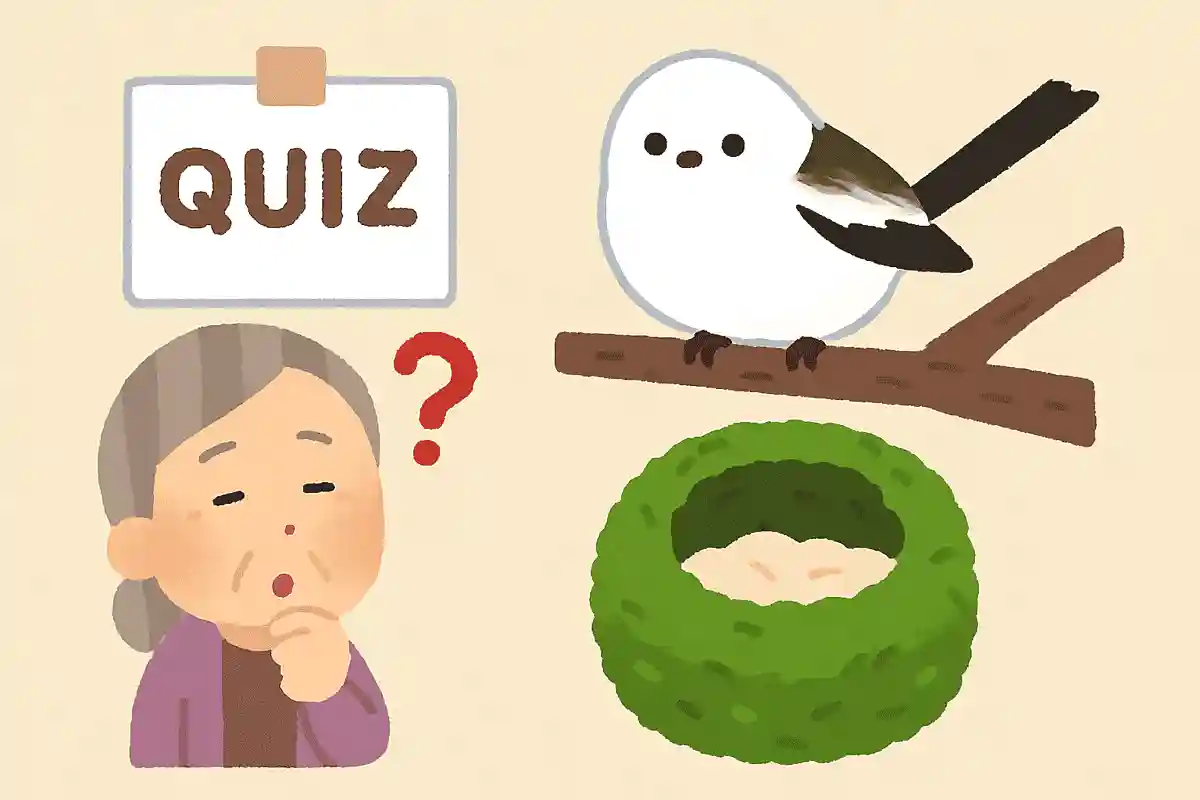
- Konoha (tree leaves / leaves of a tree)
- feather(s) / plumage
- pebble
See the answer
feather(s) / plumage
To protect their eggs and chicks from the cold, long-tailed tits line the inside of their nests with their own feathers, moss, and other soft materials. The feathers are fluffy, gently envelop the eggs and chicks, and further improve heat retention. Moss provides insulation and helps maintain humidity, keeping the conditions inside the nest favorable. This allows the chicks, which are still vulnerable to the cold, to grow safely. Such nesting strategies are not unique to long-tailed tits; they are also seen in other small birds as part of their breeding behavior.
What is the Long-tailed Tit called in the Ainu language?

- Ezo chili
- Upasichiri
- Porotokamui
See the answer
Upasichiri
The correct answer is Upashichiri. In Ainu, “upashi” means snow and “chiri” means bird, so Upashichiri literally translates to “snow bird.” It’s a beautiful name given because the long-tailed tit is covered in pure white winter plumage. Along with its adorable appearance, it has long been cherished by the Ainu people as a bird that represents Hokkaido’s winter.