

[For Seniors] Long-tailed Tit Trivia Quiz & Fun Facts: Learn Their Habits and Traits to Deepen Your Knowledge


The long-tailed tit known as the “snow fairy” for its white, fluffy appearance.
Behind its adorable looks lie the wisdom that helps it survive Hokkaido’s harsh winters and little-known secrets of its ecology.
Through fun trivia quizzes and tidbits about the long-tailed tit, enjoy discoveries that will make you say “Wow!”, such as the clever adaptations hidden in its tiny body and the ways it cooperates with other birds.
As you take on the quiz, spend a heartwarming moment learning more about this charming bird that lives only in Hokkaido.
- How much do you know? Trivia quiz for seniors that’s full of surprisingly unknown facts
- [For Seniors] Sports Trivia Quiz & Fun Facts. Easy and Entertaining
- [For Seniors] January Trivia Quiz & Fun Facts. Brain training with quizzes about New Year and winter.
- [For Seniors] Discover Hokkaido’s Charms! Local Trivia Quiz
- Trivia you think you know but surprisingly don’t? August trivia and fun facts quiz!
- [For Seniors] Introducing Trivia Quizzes and Fun Facts About December
- [For Seniors] Enjoy Brain Training with September Trivia Quizzes & Fun Facts
- For Seniors: Lively! Trivia and Fun Facts Quiz for August
- [For Seniors] Trivia Quiz and Fun Facts About Turtles – Complete Collection
- [For Seniors] Trivia Quiz & Fun Facts for June
- [For Seniors] Brain-training with winter-themed quizzes. Great for activities, killing time, and dementia prevention.
- [For Seniors] Spring-themed quizzes: Fun trivia questions that help prevent dementia while you solve them
- [For Seniors] Trivia Quiz & Fun Facts for Everyday Life
[For Seniors] Shima-enaga Trivia Quiz & Fun Facts: Learn About Their Habits and Features to Deepen Your Knowledge (21–30)
What does the long-tailed tit’s call sound like?

- Chirp chirp
- Hehehehe
- Juriri
See the answer
Juriri
The long-tailed titlets out a distinctive call that sounds like “juriri.” It also makes a “chee-chee” call. When you actually hear it, the voice is adorable and beautiful, perfectly suiting its appearance.

How many eggs does a long-tailed tit lay in a single clutch?

- 2 to 5 items
- 7 to 10
- 12 to 15
See the answer
7 to 10
Long-tailed tits are known to lay about 7 to 10 eggs in a single clutch. While this is considered relatively many for a small bird, the chances of the chicks safely reaching adulthood are said to be low. Incidentally, long-tailed tits lay one egg per day over the course of one to two weeks.
What do long-tailed tits put in their nests to protect themselves from predators?

- shed snake skin
- crow feather
- pine needles
See the answer
crow feather
Long-tailed tits sometimes place crow feathers inside their nests to protect them from predators. Because crows are feared as predators of other birds, it is thought that putting their feathers in the nest helps deter crows and other predators from approaching.
What does the “Shima” in “Shimaenaga” mean?

- island
- striped pattern
- frost
See the answer
island
You might have wondered, “Why is the long-tailed tit called ‘Shimaenaga’ when it doesn’t have any stripes (shima)?” But that’s a misconception. The “shima” here actually means “island,” referring to Hokkaido. The “shima” in Blakiston’s fish owl (Shimafukurou) is the same—it indicates that it inhabits Hokkaido.
About how many grams does a long-tailed tit (shima-enaga) weigh?

- About 8 g
- about 12 g
- about 16 g
See the answer
About 8 g
The long-tailed tit (shima-enaga) is said to weigh around 8 grams. Even a sparrow weighs about 20 to 30 grams, so you can see just how small the long-tailed tit is. By the way, both the long-tailed tit and the sparrow are about 15 cm in length, but because roughly half of the long-tailed tit’s body length is its tail feathers, it’s this light in weight.
Which of the following is correct about the personality of the long-tailed tit?

- hot-tempered
- laid-back person
- very timid
See the answer
hot-tempered
Long-tailed tits are highly territorial and are said to sometimes attack by body-checking while in flight. It’s hard to imagine from their cute appearance, isn’t it? They also keep moving around to protect themselves from predators, which can make them seem restless. For that reason, they’re considered difficult birds to observe.
What month and day is Long-tailed Tit Day?
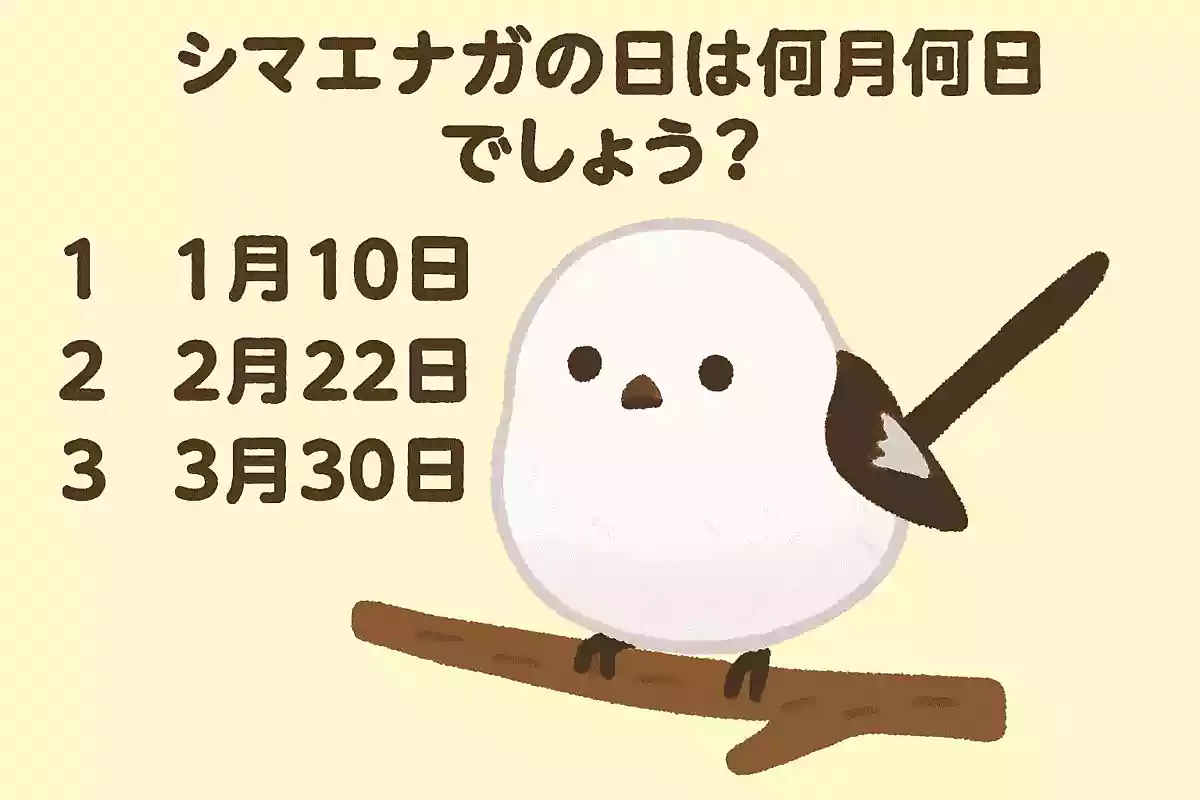
- January 20
- February 15
- December 25
See the answer
January 20
Shima-enaga Day is set on January 20, which is the day of Daikan (the coldest period of the year). Because shima-enaga puff up by trapping air in their feathers when it’s cold, giving them a round and adorable appearance, the day of Daikan—considered the coldest day of the year—was chosen as Shima-enaga Day.