


Do you know about Cognicise?
It’s an exercise that combines mental tasks with physical movements to effectively train both the brain and the body.
Because it’s effective for preventing dementia, many nursing homes and day service centers have adopted it.
This time, we’ll introduce Cognicise exercises you can do while seated.
They range from simple to difficult, including ones done to a rhythm and more complex versions that use numbers.
Enjoyment is key to keeping it up!
Be sure to find activities that suit the participants and give them a try!
- [For Seniors] Introducing Cognicise for Dementia Prevention
- [For Seniors] Recommended Easy Strength Training
- For seniors: Enjoyable exercises done while seated, accessible for wheelchair users.
- [For Seniors] Find daily brain training. Today’s recommended brain workout.
- [For Seniors] Enjoy the Cold Winter! Seated Activities You Can Do
- For seniors: Recommended for day services. Hands-on activities that help prevent dementia.
- Simple games for preventing and improving dementia
- [Today's Recommendation] Gentle Health Exercises for Seniors
- [For Seniors] Recommended Even for People with Dementia! Simple Recreational Activities
- [Dementia Prevention] Introducing Easy Knitting!
- Recommended Indoor Exercises for Seniors
- [For Seniors] Brain Training Recommended for Dementia Prevention
- [For Seniors] Core Training: Recommended Simple Rehabilitation
Cognicise exercises you can do while seated. Simple dementia prevention. (1–10)
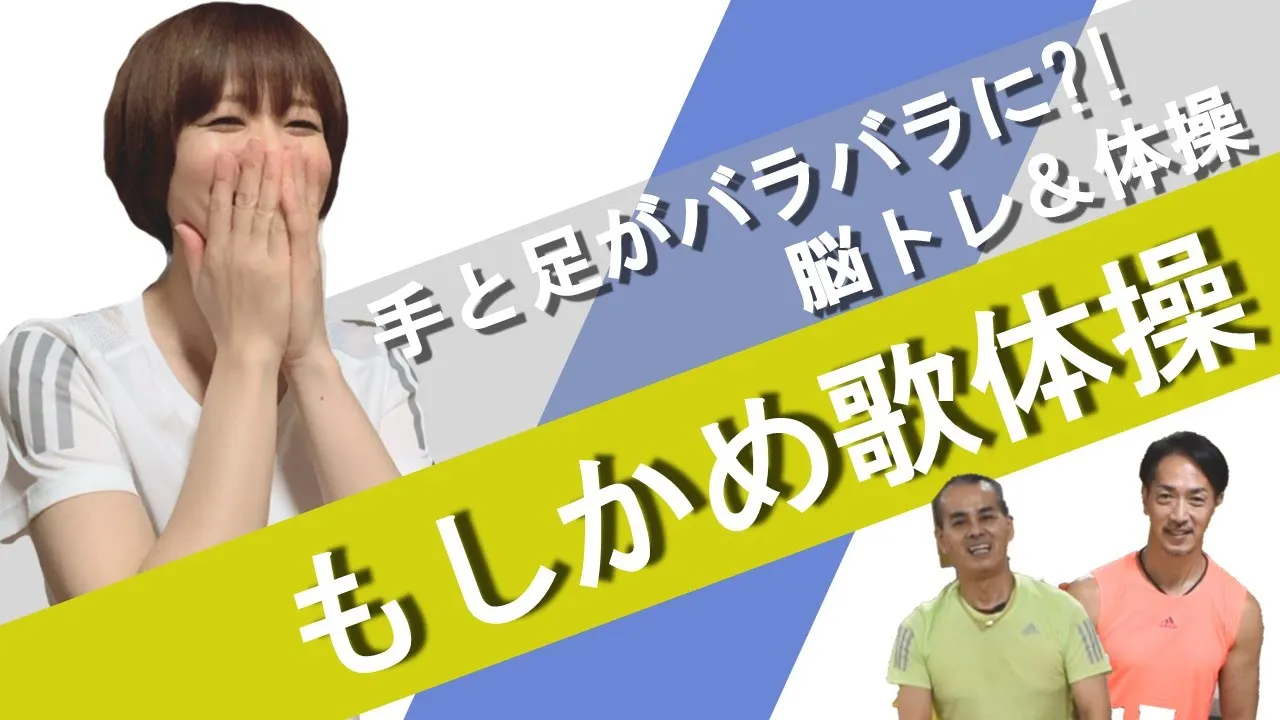
Cognicise with “Moshimo Shika-me-san”

How about trying a cognicise routine using the children’s song “Moshimo Shikame yo”? Stretch your arms forward, to the sides, and upward in time with the music.
Add a clap during each movement, and keep marching your feet throughout.
The melody is gentle, so it may look easy, but coordinating different movements with the music is actually quite challenging.
A key point is to keep going without stopping even if you make a mistake! This cognicise routine is done while seated, so it’s safe for older adults to try.
When you stretch your arms, make big movements for better effect, and be sure to keep enough distance from the person next to you.

Cognicise without seeing, speaking, or hearing.

At Nikkō Tōshōgū Shrine, there’s a famous statue of the Three Wise Monkeys—“see no evil, hear no evil, speak no evil,” which you all probably know.
This is a brain-training exercise that uses the poses of those three monkeys.
After the leader calls out a pose, everyone performs it on the cue of “Ready, go!” It starts out easy, but be careful—partway through, there will be trick rounds where the leader’s spoken cue doesn’t match the pose they strike.
Once you get used to it, try adding hand claps or other movements to increase the physical challenge!

Exercises to strengthen the legs

We’d like to introduce a Cognicise routine that includes lots of leg exercises.
Because this Cognicise can be done while seated, it’s also recommended as a recreation activity in senior facilities! Let’s move our legs to the chant of “one, two.” Starting around Level 3, the movements get a bit more challenging.
Since it incorporates many different types of leg movements, try to remember the order and think as you go.
Doing so will help train your brain at the same time as you exercise your legs.
We hope everyone enjoys doing Cognicise together!
Goo-Paa Exercise

This is a seated cognicise routine that performs multiple movements in sequence.
First, pull one hand in to your chest and make a fist, while extending the other hand forward with an open palm.
Second, reverse the movement: pull in with an open palm and extend forward with a fist.
Third, pull both hands in as fists, then extend forward with one hand as a fist and the other as an open palm, switching hands alternately as you go.
Fourth, reach upward with a fist and then forward with an open palm, alternating these movements.
Adding steps with your feet, or opening and closing your elbows with a springy motion, will further stimulate the brain.
The movements themselves are simple, so anyone can enjoy them.

Cognicise with Shiritori

Here’s a cognicise (cognitive exercise) using shiritori that anyone can do anytime.
It’s simple! Just do stepping exercises while playing the familiar shiritori word game.
That’s all there is to it.
Whether you’re doing it alone or with others, aim for about 10 rounds of exchanges.
You might find that when you focus on stepping, words don’t come easily, and when you concentrate on thinking of words, your stepping becomes sloppy.
This happens because thinking and moving your body are completely different activities.
It’s proof that your brain is working hard, so keep at it and do it more and more.
Finger-based cognicise

Here’s an introduction to finger-based cognicise (cognitive exercise)! In this video, you’ll move your fingertips while performing different actions with the left and right hands, so you’ll need to use your head as you go.
It may look easy at first glance, but it’s actually quite challenging.
The key is to practice each movement slowly at the beginning and memorize them.
Once you get used to it, gradually speed up to match the rhythm.
It’s great not only for hand exercise but also as brain training, so it’s recommended for recreational activities for older adults.
Give it a try and use this as a reference!
Cognicise with the Twelve Zodiac Animals

This is a cognicise (cognitive exercise) that uses the twelve zodiac signs.
To make it run smoothly, it’s a good idea to write the zodiac signs on a whiteboard in advance.
The basic movement is to march in place while saying the zodiac signs.
In addition, set a rule such as clapping your hands when a certain zodiac sign comes up.
Once you get used to it, you can increase the number of signs for which you clap, add variations like tapping your thighs instead of clapping, or mimicking the animal for a particular sign.
These changes make it more game-like and fun, so it’s also recommended as a year-end and New Year’s recreational activity.