


For seniors: Recommended for day services. Hands-on activities that help prevent dementia.


As we age, our muscle strength declines, making fine, hands-on tasks more difficult.
Because the nerves in our hands are connected to the brain, it’s said that moving our hands can help prevent dementia.
In this article, we introduce hands-on recreational activities for day service programs that train both the fingers and the brain.
With a focus on craft-based activities and finger-use games, they also help improve concentration.
Craft activities let participants enjoy the fun of creating, too.
There are many ideas to choose from, so try starting with the hands-on activities you’re most interested in.
[For Seniors] Recommended for Day Service: Hands-on Activities (1–10) That Help Prevent Dementia
Wobbly Cap Game

As we age, the dexterity of our fingertips declines.
In fact, it’s said that more than half of the brain’s regions are involved in moving the hands and processing sensation.
As a result, with aging, the commands from the brain to the hands and fingers can become sluggish and don’t transmit as smoothly.
Finger exercises can help your hands and fingers move more smoothly.
So let’s train our fingertips with a game that uses an empty plastic bottle.
Cut the bottle so that about the top half from the mouth remains.
Cover the cut edge with vinyl tape to finish.
Place the bottle upright with the capped mouth facing down, and put a bottle cap inside.
A game where you try to drop the cap into a wobbling, swaying bottle seems like something everyone can enjoy together with lots of laughs.

Miniature basket in wire artNEW!

It’s handy to have a small container for odds and ends around your home or in your room.
You can even make a small basket out of wire.
First, shape it into a basket form.
Like a real basket, cut the wire and create the weave.
You don’t need to overthink the size or the design, so even older adults can take on this project casually.
Of course, you could also prepare a finished sample in advance and set it out as a model.
You’ll end up with a basket that can hold items like stamps and keys.
All-you-can-pack gift game

No matter how old you are, receiving a present is always exciting, isn’t it? Just thinking, “What’s inside?” makes you feel giddy.
Here’s a gift-stuffing game that brings out that same bubbly feeling.
You’ll place game gifts into a bag, and the person who fits the most wins.
Let older adults use their fingertips to pack the presents in.
It’s a lively game everyone can enjoy together, making it perfect for events.
Torn-paper collage stickers
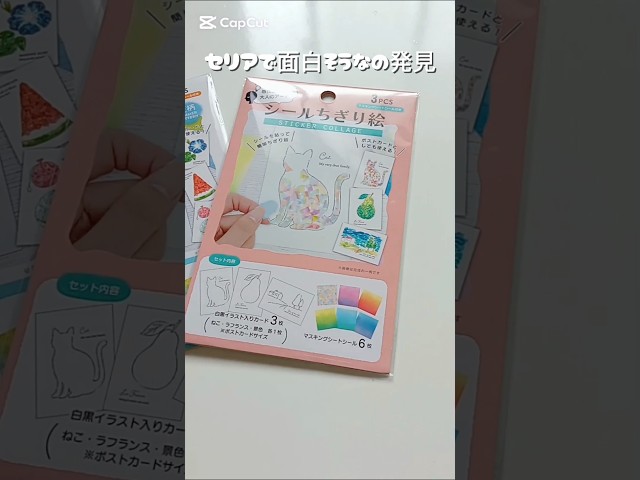
Why not spend a delightful time with our “Torn-Paper Collage Stickers,” a set that combines illustrations with stickers? It’s great for finger dexterity, and once finished, you can frame your piece to create a favorite interior decoration.
If you’re worried about getting your hands sticky with glue, this sticker-type product puts your mind at ease.
With multiple illustrations included, you can switch them up based on your preferences or mood.
It’s a triple win: it fills plenty of time, lets you create artwork, and even trains your brain.
Treat someone—and yourself—to this as a gift and enjoy!

clothespin chain

Do you know where muscle strength in older adults starts to decline? The answer is that it begins with the fingertips.
When fingertip strength decreases, it can affect daily life—for example, making it difficult to get dressed or causing more food to be dropped while eating.
Try using clothespins to train the fingertips.
Set up a string slightly higher than the head height of a seated older adult.
Then attach clothespins to the string.
It’s a simple activity, but it provides fingertip movement training with minimal strain on the body.
It can also be done as a game while chatting with people around you.
PET bottle cap grab game

Here’s a game that uses PET bottle caps to train finger dexterity.
Pick up PET bottle caps and drop them into paper cups.
However, you’ll use clothespins to pick up the caps.
Handling clothespins requires a certain amount of strength.
Simply using clothespins can also improve fine motor skills by encouraging nimble finger movements.
Let’s not only aim for brain-training benefits through finger use, but also strengthen the fingers and hands.
By making it a game, older adults can enjoy themselves while getting in some training.
Give it a try!
Othello

Move the Othello discs with your hands and keep those fingers active.
Othello has simple rules, so many older adults are probably familiar with it.
Through the game, you’ll pick up the discs with your fingers and move them around.
Just moving your fingertips alone can help stimulate the brain.
But Othello isn’t only about finger movement, is it? You also think things like, “What will happen if I place it there?” or “How can I prevent them from taking the corner?” You take on the game while thinking.
Advancing the game while considering your opponent is said to be good brain training as well.
With seated Othello, many seniors can engage in it and have fun at the same time.