

For seniors: Recommended for day services. Hands-on activities that help prevent dementia.


As we age, our muscle strength declines, making fine, hands-on tasks more difficult.
Because the nerves in our hands are connected to the brain, it’s said that moving our hands can help prevent dementia.
In this article, we introduce hands-on recreational activities for day service programs that train both the fingers and the brain.
With a focus on craft-based activities and finger-use games, they also help improve concentration.
Craft activities let participants enjoy the fun of creating, too.
There are many ideas to choose from, so try starting with the hands-on activities you’re most interested in.
- [For Seniors] Simple Handicrafts Recommended for Finger Exercise
- [For Seniors] DIY Hand Rehabilitation Tools to Strengthen Fingertips: A Collection of Handmade Ideas
- [For Seniors] Recommended for day services! Simple and cute small craft ideas
- [For Seniors] Introducing Fun Crafts Made with Plastic Bottle Caps
- [For Seniors] Have Fun Making Things Based on Today’s Mood! Today’s Recommended Craft
- [For Seniors] Recommended Handmade Activities! Simple Ideas
- For Seniors: Simple and Lovely Crafts – A Collection of Take-Home Project Ideas for Day Service
- [For Seniors] Ideal for Finger Rehabilitation: A Collection of Simple Ideas Made with Yarn
- [For Seniors] Practical Crafts to Make in Day-Service Recreation: Idea Roundup
- Hand games that liven things up for seniors—also great brain training
- [For Seniors] Small craft ideas: for yourself and as gifts!
- [Evolving Daycare Services] A summary of engaging recreational initiatives that excite older adults
- [For Seniors] Get Started Easily: Simple Handicraft Kit Ideas
[For Seniors] Recommended for Day Service: Hands-on Activities for Dementia Prevention (51–60)
Brain training exercises of see-not, speak-not, hear-not

Let me introduce a brain-training exercise that moves your body and stimulates your mind: the “see no evil, speak no evil, hear no evil” workout.
For “see no evil,” cover your eyes with both hands.
For “hear no evil,” cover your ears with both hands.
For “speak no evil,” cover your mouth with both hands.
When you hear the staff member’s cue, decide which pose it is and move your hands to make that pose.
It can train your reaction speed and thinking skills, and it might even encourage more communication.
Even if you make mistakes, keep it lighthearted—relax and enjoy the exercise!

Brain-training goods from the 100-yen shop!

This is a rehabilitation tool that uses a whiteboard and colored magnets, which you can easily get even at 100-yen shops.
Draw lines on the whiteboard and then place magnets at the intersections—simple, right? By removing magnets that are stuck on and arranging them neatly while paying attention to color, you train the ability to judge colors and order as well as fine finger movements.
Try customizing it depending on what you want to strengthen: for example, increase the number of magnets to make the arranging take more time, or use stronger magnets to require more force to remove them.

Dollar store brain-training puzzle

This is a simple puzzle game made by combining wooden sticks and colored stickers.
Place two sticks side by side, lay several stickers across both sticks, and cut each sticker down the middle with a craft knife.
Make several of these stick pairs to complete the puzzle set.
Players then enjoy the game by finding the two sticks whose half-circle sticker halves match perfectly.
You can adjust the difficulty by increasing the number of sticks or the number of stickers applied to each stick, so it’s also recommended to prepare a variety of patterns.
Stylish ribbon tray

A stylish and cute ribbon tray is perfect for keeping track of tiny items that are easy to lose.
This ribbon tray is made using the bottom of a milk carton.
Decide the height, cut off everything except the bottom section, and snip the corners as well.
Then simply cover it with fabric, but since the corners will be tied with ribbons, attach ribbons to the milk carton at the corners.
The key is to glue over them once more from the top so they won’t come loose.
The bottom is softly padded with quilt batting.

[For Seniors] Recommended for day service. Handicraft activities that help prevent dementia (61–70)
A puzzle where you fit counters (ohajiki) into a frame

Group recreation where everyone gets lively together is fun, but taking time to think carefully and enjoy things at your own pace is important too.
This time, we’re introducing a finger dexterity puzzle using ohajiki (small glass game pieces).
Preparation is very simple: get some paper and ohajiki.
Draw circles on the paper about the same size as the ohajiki, and place the pieces around them.
Using your index finger, try to push the ohajiki into the circles.
You can change how it feels a lot by drawing circles slightly larger or smaller than the ohajiki and making a rule that they only count if they fit exactly, or by trying fingers other than the index finger.
Because it also engages spatial awareness, it serves as brain training.
It’s also recommended as a recreation activity in senior care facilities.

Chopstick Ball-Carrying Game

Here’s an introduction to a fingertip game where you use chopsticks to pick up and carry small items.
Games that involve fine finger movements can help stimulate the brain.
They’re also useful for training movements needed in daily life.
What you’ll need is an ice tray for making ice—one that makes small cubes is recommended.
Prepare some craft pom-poms (also called “pompoms”) and a pair of disposable wooden chopsticks.
You can get everything you need at a 100-yen shop, so preparation is easy.
Starting from one end of the ice tray, use the chopsticks to pick up the pom-poms and place them into the compartments.
This action helps train eating-related movements.
Since it’s a seated game, it’s likely to be easy for older adults to try.

Simple Temari
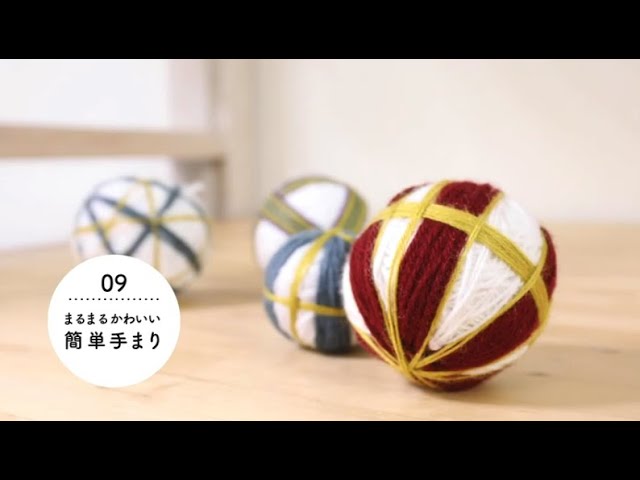
Let’s try making a temari with a soft, colorful look using yarn.
It’s a simple process: roll up old newspaper or other scrap paper into a ball, secure it with cellophane tape, and then wrap yarn around it.
To finish it beautifully, it’s important to shape the paper core into a firm sphere and wrap the yarn thoroughly so the base doesn’t show.
You’re free to combine yarns as you like, so experiment with color choices and wrapping techniques to create your own unique temari.
It’s also important to wrap the yarn tightly so it doesn’t loosen, which will naturally make you pay close attention to the movements and pressure of your fingertips.