

[For Seniors] Trivia Quiz & Fun Facts about Stars. Brain Training

Trivia quizzes and fun facts are a wonderful, enjoyable way to activate the brain.
As we grow older, we often look for a bit of stimulation in our daily lives, and topics about stars and the universe can enrich the mind and energize the brain.
This content lets older adults train their brains comfortably while having fun, naturally stimulating memory and thinking skills.
Plus, taking on the challenge with family and friends sparks conversation and makes for enjoyable moments together.
Learn about the mysteries of the stars and the universe while engaging in healthy brain training, and use it to help you live a more fulfilling everyday life!
- [For Seniors] Introducing Trivia Quizzes & Fun Facts About Space!
- [For Seniors] Trivia Quiz & Fun Facts for Everyday Life
- [For Seniors] Trivia Quiz & Fun Facts About the Weather
- [For Seniors] Sports Trivia Quiz & Fun Facts. Easy and Entertaining
- [For Seniors] Let’s have fun with October trivia and fun facts quizzes!
- [For Seniors] Enjoy Brain Training with September Trivia Quizzes & Fun Facts
- How much do you know? Trivia quiz for seniors that’s full of surprisingly unknown facts
- [For Seniors] Enjoyable Brain Training! Trivia Quiz & Fun Facts about Venus
- [For Seniors] Enjoy Learning the Wonders of Mars! Trivia Quiz & Fun Facts to Exercise Your Brain
- [For Seniors] Boost Your Knowledge! Fun Trivia Quiz
- For Seniors: Useful Trivia Questions! Introducing Fun Facts Quizzes You'll Want to Share
- [For Seniors] Perfect Brain Training! Fun Trivia
- [For Seniors] Trivia Quiz & Fun Facts About Earth
[For Seniors] Trivia Quiz & Fun Facts About Stars: Brain Training (1–10)
What is the smallest planet in the solar system?
- Earth
- Mars
- Mercury
See the answer
Mercury
The smallest planet in the solar system is Mercury. Mercury is the closest planet to the Sun and has a diameter of about 4,880 km. Compared to Earth, it is very small, and because its volume and mass are also smaller than those of the other planets, it is known as the smallest planet in the solar system.
What percentage of oxygen is there in space?
- 0%
- 10%
- 20%
See the answer
0%
There is very little oxygen in space. In fact, the amount of oxygen in outer space is close to zero, with hydrogen and helium making up the majority. Because oxygen is often contained inside stars and planets or within atmospheres, it is extremely scarce on the cosmic scale.
How many galaxies are there in the entire universe?
- 10 billion pieces
- one billion pieces
- one hundred billion
See the answer
one hundred billion
It is thought that there are about one hundred billion galaxies in the entire universe. Each of these galaxies contains billions to tens of billions of stars, scattered throughout the vastness of space. The galaxy we live in, the Milky Way, is just one of them. The number of galaxies may continue to increase, and the extent of the universe is immeasurable.
[For Seniors] Trivia Quiz & Fun Facts About Stars: Brain Training (11–20)
How many constellations are there?
- 12 pieces
- 88 pieces
- 777 pieces
See the answer
88 pieces
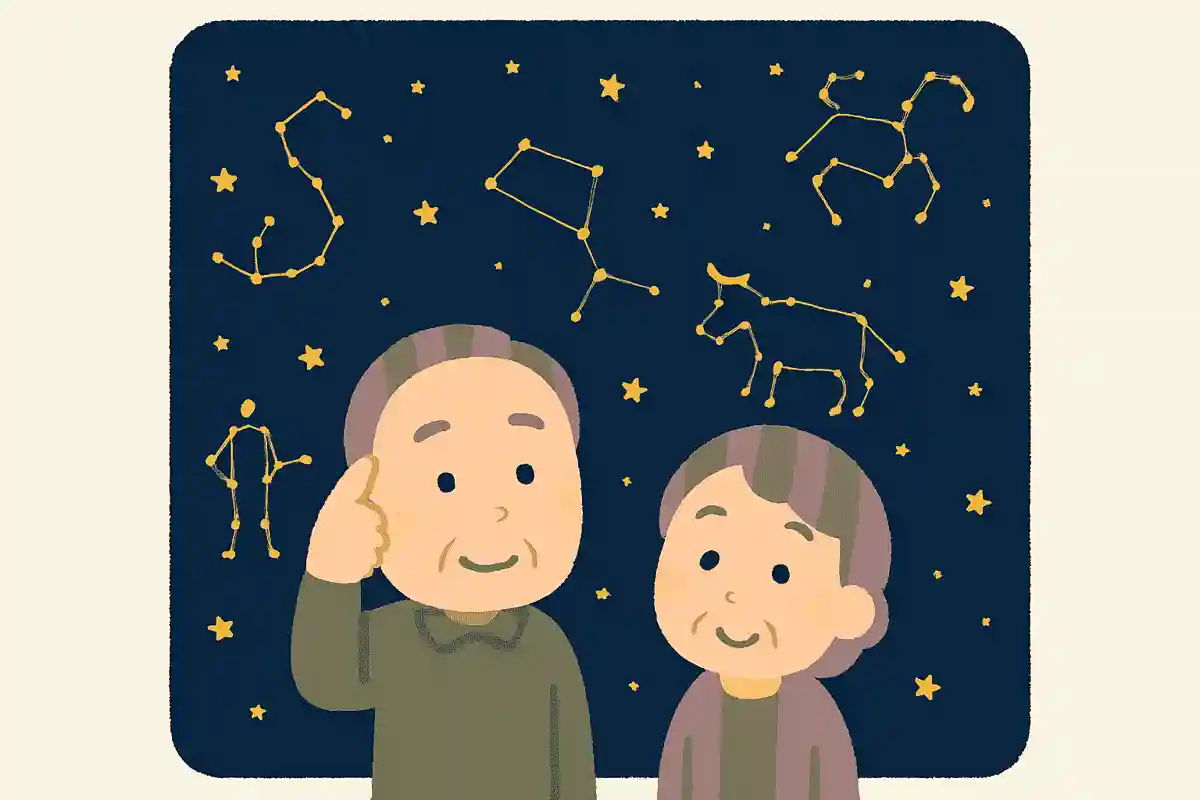
There are 88 constellations. These constellations are officially defined by the International Astronomical Union (IAU) and are recognized worldwide as the constellations observed across the sky. Constellations are shapes formed by connecting the stars that shine in the night sky, and since ancient times they have been given names based on myths and legends.
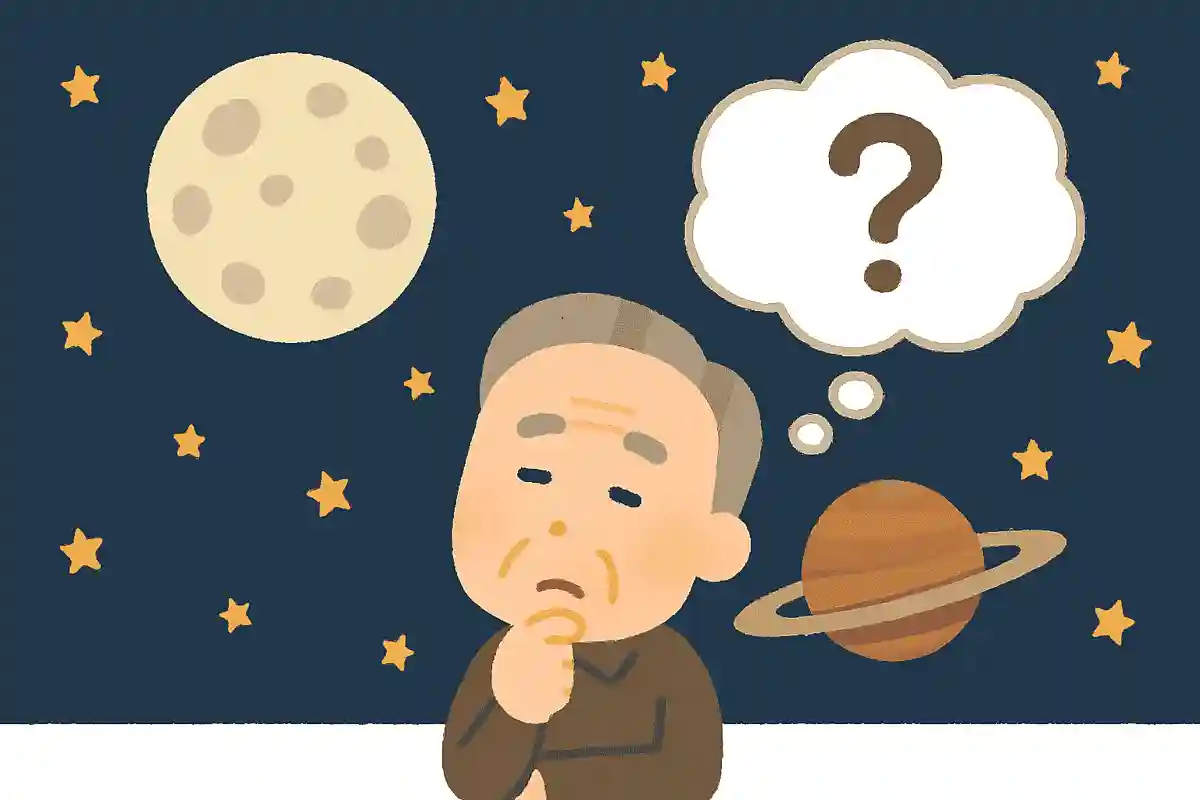
The Moon is called “moon” in English, but what is the planet called “Satan” in English?
- Saturn
- Mars
- Pluto
See the answer
Saturn
The planet called “Satan” is actually Saturn. Saturn is the sixth planet from the Sun and is known for its distinctive rings.
What do we call a star that emits its own light?

- first star
- meteor
- star
See the answer
star
A star that emits its own light is called a “fixed star” (a star). Stars shine in the night sky by releasing light and heat through their own nuclear fusion reactions. The Sun is one such example and is the star closest to us. In contrast, the Moon and planets do not emit their own light; they shine by reflecting the light of stars.
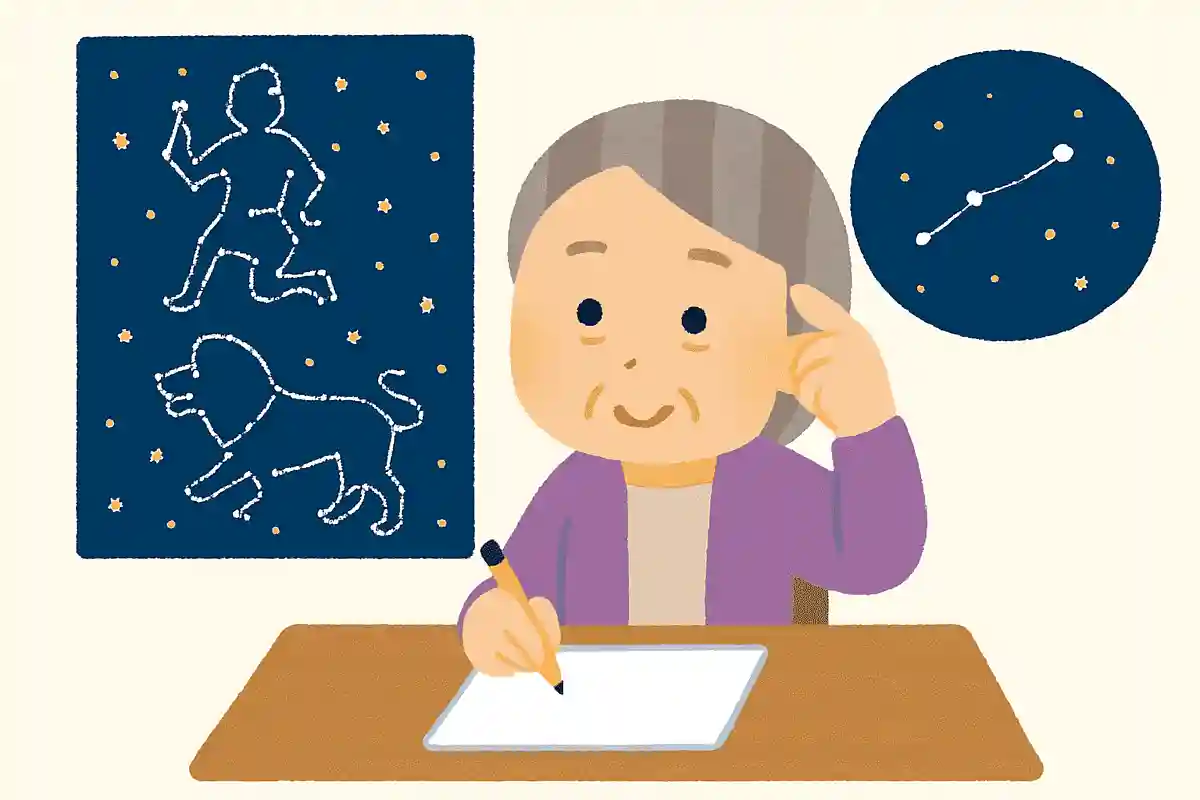
Which myth is the basis for the constellation?
- Indian mythology
- Roman mythology
- Greek mythology
See the answer
Greek mythology
Many constellations are based on Greek mythology. The ancient Greeks created constellations by likening the stars to heroes, gods, animals, and more from their myths. For example, Orion and Canis Major are such cases. Greek mythology gave stories to the constellations, making the night sky more captivating.