

[For Seniors] Stretching Exercises: Easy and Safe to Do

As we get older, our bodies can become stiffer, but why not stay energized every day with gentle stretches you can keep up with comfortably?
In this article, we introduce simple and safe stretching exercises that are suitable even for seniors.
By gently loosening the body, you can improve joint mobility, help prevent falls, and promote better circulation.
Some exercises can be done while seated at home or performed in bed, so even those who are not fond of exercise can feel at ease.
Incorporate them little by little into your daily routine to maintain a healthy body!
- [For Seniors] Core Training: Recommended Simple Rehabilitation
- [Today's Recommendation] Gentle Health Exercises for Seniors
- [For Seniors] Balance-Training Exercises: Preventing Falls
- For seniors: Leg-strengthening exercises you can do without overexertion.
- [For Seniors] Recommended exercises to relieve constipation.
- [For Seniors] Enjoyable and Healthy Chair Stretches!
- [For Seniors] Let's Enjoy Exercising with a Towel!
- For seniors: Enjoyable stick exercises. Easy workouts.
- [Seated] Fun Health Exercises for Older Adults and Seniors
- [For Seniors] Fun Exercises You Can Do While Seated
- Recommended simple exercises for recreational activities for the elderly
- [Recommended for seniors] Rejuvenating Rock-Paper-Scissors Exercise
- For seniors: Enjoyable exercises done while seated, accessible for wheelchair users.
[For Seniors] Stretch Exercises. Easy and Safe to Do (11–20)
Spinal Stretches to Balance the Autonomic Nervous System
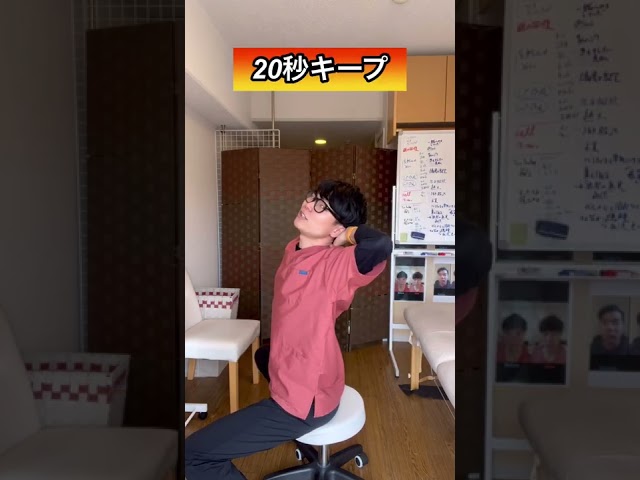
When the autonomic nervous system becomes unbalanced, you may experience headaches and fatigue, and in severe cases it can lead to depression.
One possible cause is thought to be misalignment of the spine.
Here, I’ll introduce some spinal stretches.
Clasp your hands and raise them overhead with your palms facing the ceiling.
Then lean your upper body backward to stretch your spine.
Next, clasp your hands behind your neck and try the same movement.
It’s also effective to tilt your body to the left and right in that position.
Let’s regulate the autonomic nervous system within a comfortable range for you.

A 15-minute routine to loosen up with a stretch pole

Are you familiar with the popular stretch pole used for stretching and exercise? Using a stretch pole can help ease tightness and stiffness in your back by stretching muscles that are hard to reach in everyday life, and it may also help align your spine.
Here, we introduce movements such as sliding your upper body side to side while lying on the pole, making large circular motions from the shoulder joints, and loosening the hip joints.
With a stretch pole, it’s important to focus on deep breathing and relaxation.
Let go of tension and enjoy lengthening your spine comfortably!

Training to prevent hunchbacked posture

It can be quite hard to make exercise a daily habit.
Still, staying active is essential for maintaining health.
Here, we introduce a back-strengthening workout you can do while seated in just two minutes.
The routine includes exercises like bowing forward with your arms crossed while seated, and raising your torso as you pull back your outstretched arms while bowing—movements that are gentle enough for older women to do without strain.
If it can be done seated and in a short time, the hurdle might feel a bit lower.
Why not try building a healthier body by turning just two minutes into a daily habit?
Preventing falls with towel exercises

Have fun training! Here are some ideas for preventing falls with towel exercises.
Some of you may already be incorporating exercise into your daily routine.
This time, let’s try simple exercises using a face towel.
Moving your body might help refresh both your mind and body.
All you need is one face towel.
You can try these while seated and relaxed, so it’s easy to go at your own pace without overdoing it.
Give it a try and add it to your routine!
Relaxation exercise

We’d like to introduce a relaxing exercise that uses a ball against your back.
Many older adults feel anxiety or loneliness in their daily lives.
These feelings may stem from worries about age-related declines in physical and cognitive abilities, or from having fewer opportunities to spend time with family.
In that case, how about trying a relaxation exercise to help ease anxiety and loneliness? Sit in a chair and place a ball between your back and the backrest, then gently roll side to side.
Taking deep breaths will help you feel refreshed.
If you do this with a few people, it may spark conversation and provide a nice change of pace.

20-second daily back muscle training

In our everyday lives, we tend to unconsciously choose low-effort postures, which can lead to weakened back muscles without us even noticing.
Here’s a perfect 20-second exercise to bring awareness to your muscles and posture.
It’s simple: place both hands above your head, spread your arms, and open your chest.
Just correcting your posture in this way will help strengthen your back muscles.
If your back rounds, the effect diminishes, so keeping good posture is the most important part.

[For Seniors] Stretching Exercises: Easy and Safe to Do (21–30)
Kyphosis prevention training using a resistance band

This is a training exercise where you use a resistance tube to add load to your movements, engaging your muscles while stretching your body.
It’s a simple motion—holding each end of the tube in your hands and stretching it—but depending on the position at which you pull, you can train different parts of the body.
A key point is to slowly stretch the tube and maintain that position, while staying mindful of your posture.
If you focus on opening your chest and engaging your shoulder blades, it can help improve your posture and lead to smoother movement.