



Our lives and values have changed greatly with the passing of time.
Things that used to be commonplace have almost disappeared, while others have evolved in astonishing ways.
For example, communication that once relied on phones and letters can now happen instantly with just a smartphone.
It’s amazing how much everyday things like food, entertainment, and fashion have changed.
This time, we’ll introduce the differences between the past and the present.
Feel free to use this as a conversation starter!
- Words useful for conversations with elderly people. Words that were used in the past.
- [For Seniors] Nostalgic! Showa-Era Quizzes Recommended for Reminiscence Therapy
- A must-see for the Showa generation! Nostalgic popular snacks from the old days
- [For Seniors] Trivia Quiz & Fun Facts for Everyday Life
- Fun, engaging topics for conversations with older adults!
- [For Seniors] Conversation starters that help you chat: engaging questions and topics to spark lively talks
- Have fun with classic Showa-era games! Simple yet profoundly engaging traditional pastimes
- [For seniors] Dice talk: engaging prompts
- The Complete Guide to Showa-Era Toys: From Showa retro to toys still loved today
- Introducing words that will delight elderly people
- Special feature on popular anime from the Showa era. Looking back at the hit shows of the time!
- [For Seniors] Hina Matsuri (Girls’ Day) Trivia Quiz & Fun Facts. Recommended for Dementia Prevention Activities
- [Evolving Daycare Services] A summary of engaging recreational initiatives that excite older adults
Things that have changed between the past and now. This different? (1–10)
school teacher

It was even depicted in TV dramas, but I’ve heard that in schools during the Showa era there were teachers who used corporal punishment.
Some older people may remember this, don’t you think? Nowadays, teachers are not allowed to use corporal punishment on students, and I understand there are penalties if they do.
In addition to causing direct physical harm, corporal punishment can inflict deep wounds on a person’s heart.
It may lead to mental health issues or school refusal.
It could also foster the idea among children that problems can be solved through violence.
There was a time when corporal punishment was called “tough love,” but it’s important to consider different ways of showing care and better methods of guidance.

Meaning of work

When today’s seniors were still working, some of them labored with the mindset of earning money simply to eat.
That may have been influenced by the postwar context.
But times have changed, and so have attitudes toward work.
Nowadays, more people work to create a purpose for living.
In addition to company employees, many people take on side jobs or start their own businesses.
It may be that we now live in a world where you can earn money by doing what you’re good at.
With the advance of AI, the kinds of jobs humans do are also changing.
Excellence is

In the past, the ability to produce the correct answer to a given problem was valued.
For example, study methods that involved cramming a lot of knowledge into your head and working through many practice problems.
As a result, exams often featured similar questions, and you would apply what you’d practiced to solve them.
Some older people may remember studying hard and stuffing their heads with information.
From now on, however, the ability to find problems is said to be more important.
Today, most obvious problems have already been solved, so what’s needed is the ability to discover hidden issues that aren’t immediately apparent.
This is also called problem-finding or issue-identification, and it’s a skill sought after in both business and everyday life.
It’s interesting how the standard for excellence changes along with the times.
How to buy cigarettes

How many of you have ever been sent on an errand to buy your parents’ cigarettes? In the Showa era there were no restrictions on cigarette purchases, and even children could buy them at stores.
In 2008, Taspo was introduced to strengthen the prevention of underage smoking, and in addition to in-store checks, age verification became required when purchasing from vending machines.
Nowadays, during in-store sales, it’s common to confirm on a touch panel whether the buyer is 20 or older.
However, because staff are required to check even people who clearly don’t look under 19, disputes reportedly occur when customers refuse.
If you ask older people what it was like in the past, you might have a lively conversation.

Fluid intake

Today, many people recognize that in sports, fluid intake is important not only for maintaining performance but also for muscle recovery.
However, in the past, during school clubs and physical education classes, drinking water was sometimes prohibited on the grounds that it would cause fatigue.
The reasoning was that drinking water lowers body temperature, and the effort to restore that heat would tire the body.
There was also a belief that training should be tough and grueling, and that confronting it with sheer willpower would build mental strength.
Under such an educational mindset—and with the Japanese women’s national volleyball team winning a gold medal at the Tokyo Olympics—this view is thought to have become ingrained in society.
However, when fluids are insufficient, symptoms such as headaches, dizziness, and low blood pressure can occur, and in severe cases, it can even be life-threatening.
To enjoy exercise safely, be sure to hydrate appropriately before, during, and after physical activity.
exam
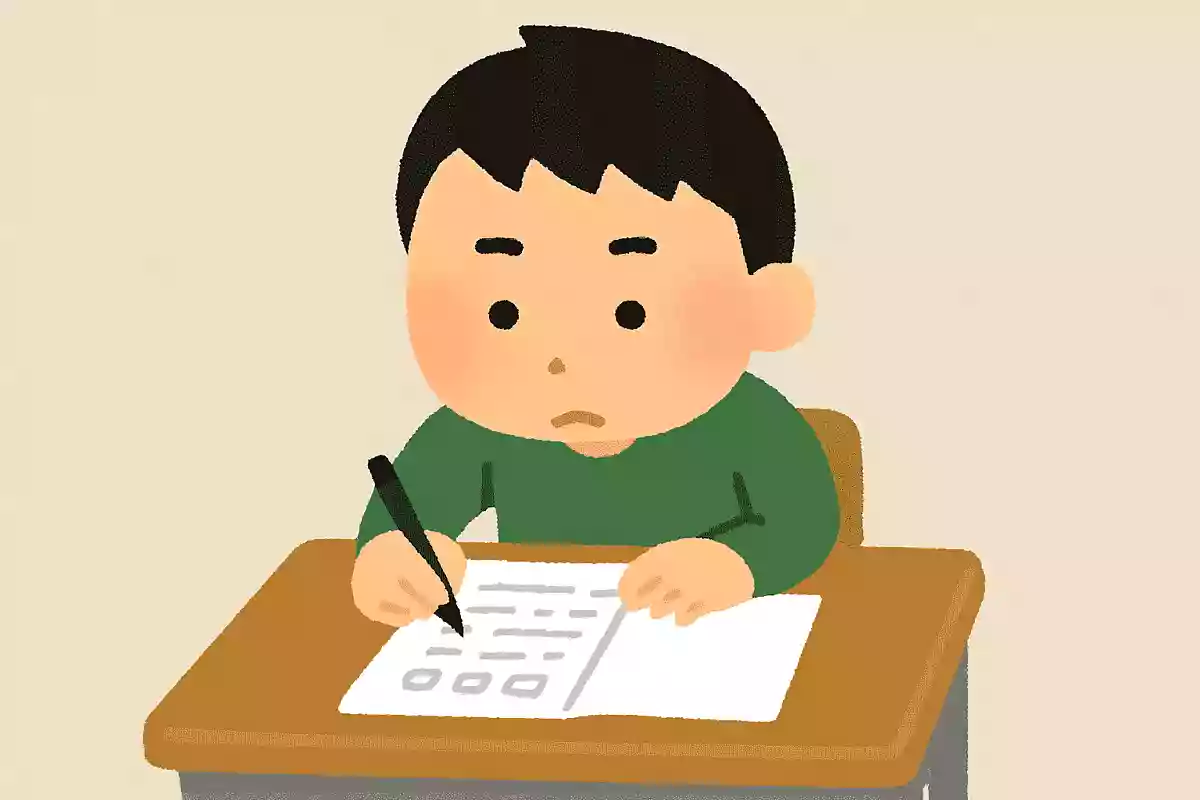
Some of you may have relied on memorization to prepare for school tests.
Both older adults themselves and their children may have studied by memorizing and then faced exams.
Cram-style learning has been said to make grades depend on whether you possess certain knowledge, and to intensify entrance exam competition.
However, from now on, thinking is considered essential.
It is becoming increasingly important to use the knowledge you have, connect it with information in the world, reflect on the future, identify issues, and solve them.
They say you can train your thinking ability by constantly questioning things.
contact speed

When sharing their current situation and feelings, many older people used to send letters, didn’t they? Nowadays, we use our smartphones to communicate in words or messages instantly.
Exchanging letters used to take about three days, and writing them by hand took extra effort.
It seems fewer people make time for letters now.
Still, handwritten letters can feel more heartfelt.
It could be fun to write letters with older adults as a recreational activity, or to write and give them letters.
It might even prompt some to recall their memories of writing letters in the past.