

[For Seniors] Enjoyable Brain Training! Trivia Quiz & Fun Facts about Venus

Taking time to ponder the mysteries of the universe is a moment that enriches the heart.
Among the planets of the solar system, Venus—shining more brightly than the rest—hides countless surprising facts and tidbits.
In this article, we present engaging quizzes and fun facts about Venus.
Why not explore the wonders of space together with older adults as you think through them? You might hear a delighted “Wow!” at unexpected discoveries.
We’ll share the charms of Venus that both stimulate the brain and provide enjoyment.
- [For Seniors] Enjoy Learning the Wonders of Mars! Trivia Quiz & Fun Facts to Exercise Your Brain
- [For Seniors] Trivia Quiz & Fun Facts about Stars. Brain Training
- [For Seniors] Introducing Trivia Quizzes & Fun Facts About Space!
- [For Seniors] Trivia Quiz & Fun Facts About Earth
- For Seniors: Useful Trivia Questions! Introducing Fun Facts Quizzes You'll Want to Share
- [For Seniors] Tanabata Trivia Quiz: Simple and Fun
- [For Seniors] Boost Your Knowledge! Fun Trivia Quiz
- [For Seniors] Trivia Quiz & Fun Facts About Neptune
- [For Seniors] Enjoy Brain Training with English Trivia Quizzes and Fun Facts
- [For Seniors] Trivia Quiz & Fun Facts for Everyday Life
- [For Seniors] Enjoy Brain Training with September Trivia Quizzes & Fun Facts
- [For Seniors] Fun and Informative! Trivia and Quizzes Introduced
- [For Seniors] Lively two-choice trivia quiz. Handy to know and tidbits you'll want to share with others
[For Seniors] Enjoyable Brain Training! Trivia Quiz & Fun Facts About Venus (1–10)
How many moons does Venus have?
- 0 item(s)
- 1 piece
- 2 pieces
See the answer
0 item(s)
Venus has no natural satellites, that is, no natural celestial bodies that orbit the planet. This is a characteristic shared only by Mercury and Venus. Earth has the Moon, but Venus has no satellites.

Venus is known as a very hot planet. So, to approximately what temperature does the surface of Venus rise?
- about 60°C
- approx. 260°C
- about 460°C
See the answer
about 460°C
The surface of Venus is extremely hot due to the greenhouse effect, reaching about 460°C regardless of day or night. 460°C is hot enough to melt lead. Venus is known as the hottest planet in the solar system.
Venus appears very bright in the night sky, but what is the reason for that?
- Because it strongly reflects the sunlight.
- Because it emits light by itself.
- Because it is the planet closest to Earth.
See the answer
Because it strongly reflects the sunlight.
Venus appears very bright to us because its thick atmosphere and clouds reflect sunlight well. Venus itself isn’t emitting light; it’s bouncing the Sun’s light back like a mirror. By the way, the clouds covering Venus are made of sulfuric acid that contains sulfur.
[For Seniors] Fun Brain Training! Trivia Quiz & Fun Facts about Venus (Questions 11–20)
Which of the following sentences correctly represents Venus?

- It is the smallest planet in the solar system.
- The surface is composed mainly of ice.
- It's raining sulfuric acid.
See the answer
It's raining sulfuric acid.
Venus is covered by hot clouds, and remarkably, those clouds are made of concentrated sulfuric acid. These sulfuric acid clouds form an unbroken layer across the entire Venusian sky, and droplets of sulfuric acid fall from them like rain. However, this rain never reaches the surface because it evaporates in Venus’s extreme heat.
What do we call the strong winds blowing on Venus?
- Supersonic style
- superrotation
- jet stream
See the answer
superrotation
The strong winds observed in Venus’s atmosphere are called “super-rotation.” This refers to the phenomenon in which the atmosphere flows around the planet at speeds far faster than Venus’s rotational speed. Those wind speeds reportedly reach as high as 400 kilometers per hour at an altitude of 60 kilometers.
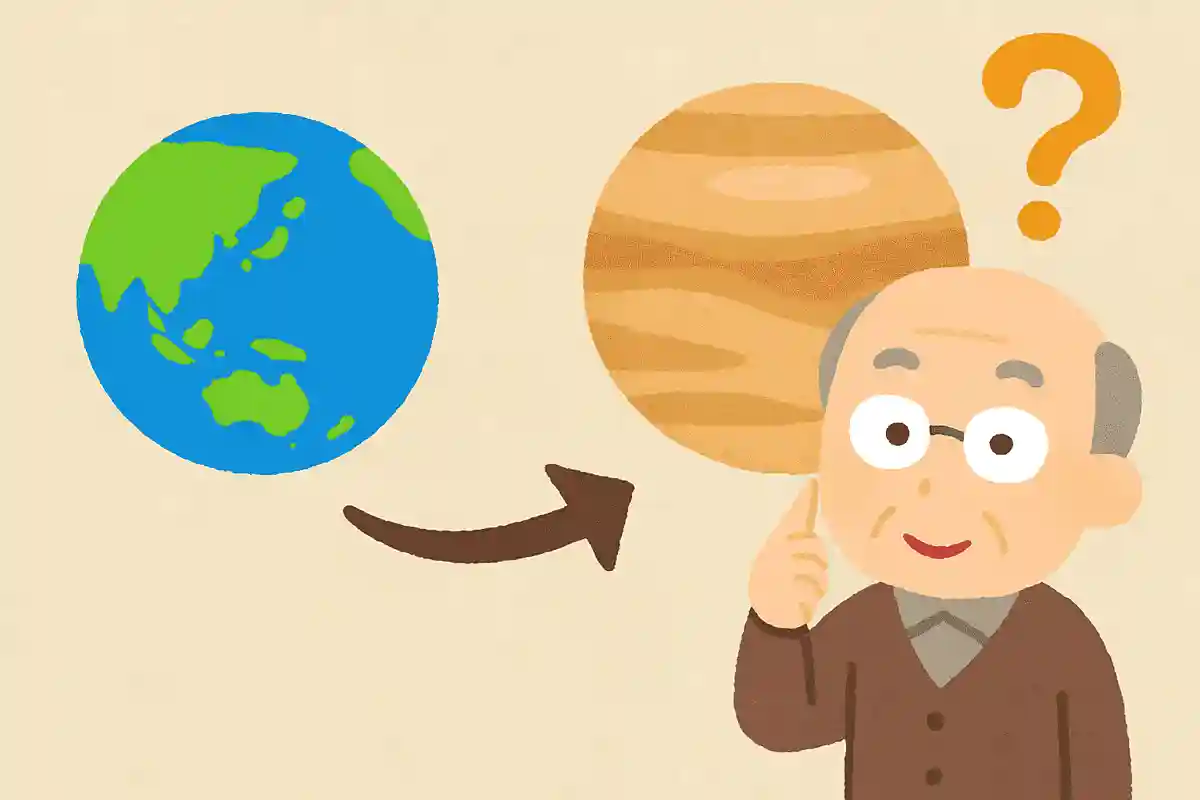
How large is Venus’s diameter compared to Earth’s?
- Twice the size of Earth
- Half the size of the Earth
- Almost the same size
See the answer
Almost the same size
Venus has a diameter of about 12,104 km, while Earth’s diameter is about 12,742 km. In other words, Venus’s diameter is almost the same as Earth’s—about 95% as large. Its mass is also similar to Earth’s, and its internal structure is considered to be nearly the same as well.
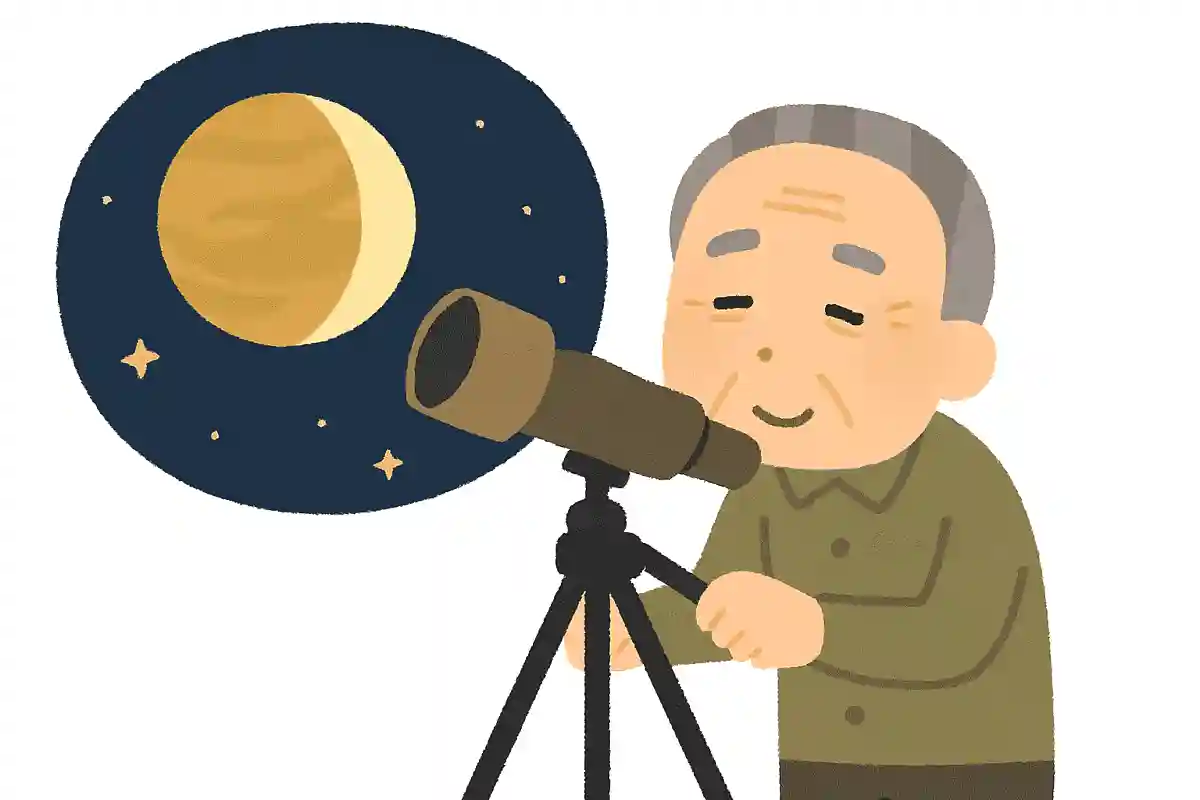
When observed from Earth, Venus is not always seen as a fully illuminated, “full-moon-like” disk. The reason is that Venus orbits closer to the Sun than Earth does, so we view it in phases (like the Moon) depending on the relative positions of the Sun, Venus, and Earth. Except when Venus is at superior conjunction (on the far side of the Sun) and nearly fully illuminated, part of its disk appears in shadow from our viewpoint, so we typically see crescents or gibbous phases rather than a full disk.
- Because the surface of Venus is bumpy.
- Because Venus is covered by thick clouds
- Because Venus orbits on an inner path closer to the Sun than Earth
See the answer
Because Venus orbits on an inner path closer to the Sun than Earth
Venus orbits the Sun on an inner path closer to the Sun than Earth. Therefore, when Venus is in its full phase, it lies directly behind the Sun from Earth’s perspective and cannot be fully observed due to the Sun’s light. In other words, as seen from Earth, Venus goes through phases, and it cannot be observed when it is in a perfectly full, round phase like a full moon.