

[Brain Training] Lively Word Quiz for Seniors

Word quizzes are a type of recreation that really livens up day services and senior facilities.
Brain training can seem difficult, but these are easy for anyone to enjoy.
In this article, we’ve gathered word-related quiz questions recommended for older adults.
We introduce many ideas, including quizzes you can do while watching videos and ones you can customize, so we hope you find them helpful.
Try adding word quizzes to your daily recreation and give brain training a go!
- [For Seniors] Fun and Lively! Recommended Quiz Questions
- [For Seniors] Guaranteed to Liven Things Up! A Collection of Brain Training Activities That Will Spark Laughter
- [For Seniors] Laugh-Out-Loud, Crowd-Pleasing! Fun Quiz
- [For Seniors] Lively Wordplay Game: Fun Recreation for Elderly Care
- [For Seniors] Fun and Informative! Health Trivia Quiz
- [For Seniors] Fun Brain Training! Prefecture Quiz
- [For Seniors] Fun Riddles That Stimulate the Brain
- [For Seniors] Fun and Educational True-or-False Quiz
- For seniors: Fun, crowd-pleasing word association game ideas
- Hand games that liven things up for seniors—also great brain training
- [For Seniors] A Brain-Training, Crowd-Pleasing Word Search Game
- [For Seniors] Have Fun with Wordplay Characters! A Collection of Funny Puzzles
- [For Seniors] Enjoyable Brain Training! Proverb Quiz Collection
[Brain Training] Lively Word Quizzes for Seniors (31–40)
Find the theme words

Find answers that match a given theme from jumbled letters.
The themes include fruits, flower names, vegetable names, animal names, food names, Japanese events, and greetings, and both the number of answers and how many you need to find gradually increase.
In the latter half, the number of letters grows, and combined with the time limit, the difficulty rises.
It’s important to stay calm and read the questions carefully.
Watching as a video works well, and turning it into a whiteboard or printed activity makes it fun for both small groups and larger groups.
It’s also recommended for recreational activities at senior facilities.

“Bow-wow” represents the sound made by a dog in English. What animal is it?

How animal sounds are expressed varies by country.
Among them, which animal is represented in English by the sound “bow-wow”? Even if you’re not familiar with “bow-wow,” you can quickly reach the answer just by listing animals in order, since it’s such a classic one.
The answer is “a dog.” If you also look into how other animal sounds are expressed in English and how they change in languages from other countries, you can deepen your knowledge—and it might spark a lively conversation, too.

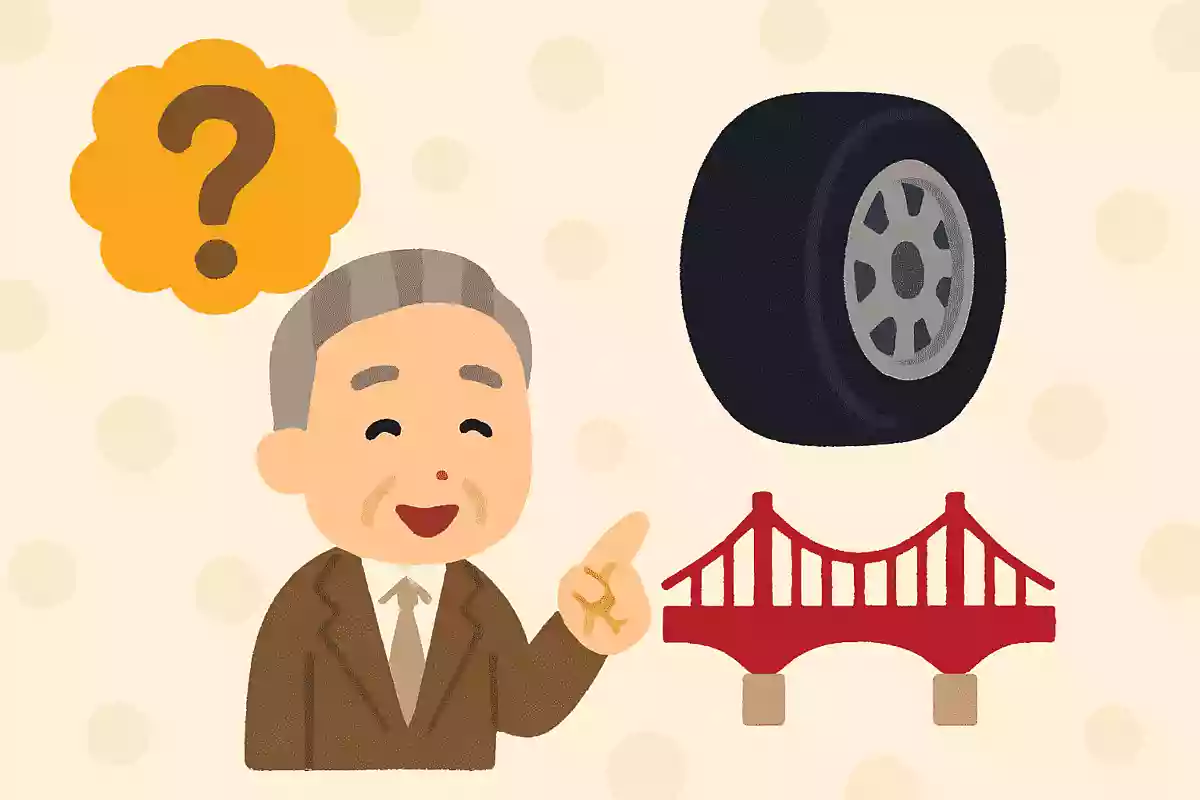
Mr. Shojiro Ishibashi, the founder of a tire manufacturer, named the company after his surname. What is the name of the tire manufacturer?
Mr.
Shojiro Ishibashi’s surname is “Ishibashi,” but the company name is not simply “Ishibashi” or “Ishibashi” in katakana.
By transforming his surname into certain English words, it was used as the company name.
The answer is Bridgestone.
“Buri-ji” comes from “bridge,” which is the English translation of the “hashi” (bridge) in “Ishibashi,” and “suton” comes from “stone,” the English translation of the “ishi” (stone).
Combining them gives “Bridgestone.” It’s said that “Stonebridge,” which follows the original name order, sounded a bit awkward, so they reversed it to “Bridgestone.”

Ultimate luxury aircraft at a deserted Kyushu airport

The tongue twister “kuukyo na Kyushu kuukou no kyuukyoku koukyuu koukuuki” (empty Kyushu airport’s ultimate luxury aircraft) feels difficult just by looking at it written down.
The sentence is also on the longer side for a tongue twister, and it’s characterized by a mix of hard k sounds and kya-kyu-kyo clusters.
Because of that, it’s said to be hard to say without tripping up.
To be able to say tongue twisters, the key is to be conscious of each word and pronounce every one clearly and distinctly.
By the way, there is no actual airport called “Kyushu Airport.” If you were to use a real airport in a tongue twister, it would be one of the airports in the Kyushu region, such as Kitakyushu Airport.

A riddle: What do cars and nurses have in common? The heart of it is that both need skill in parking (injection).
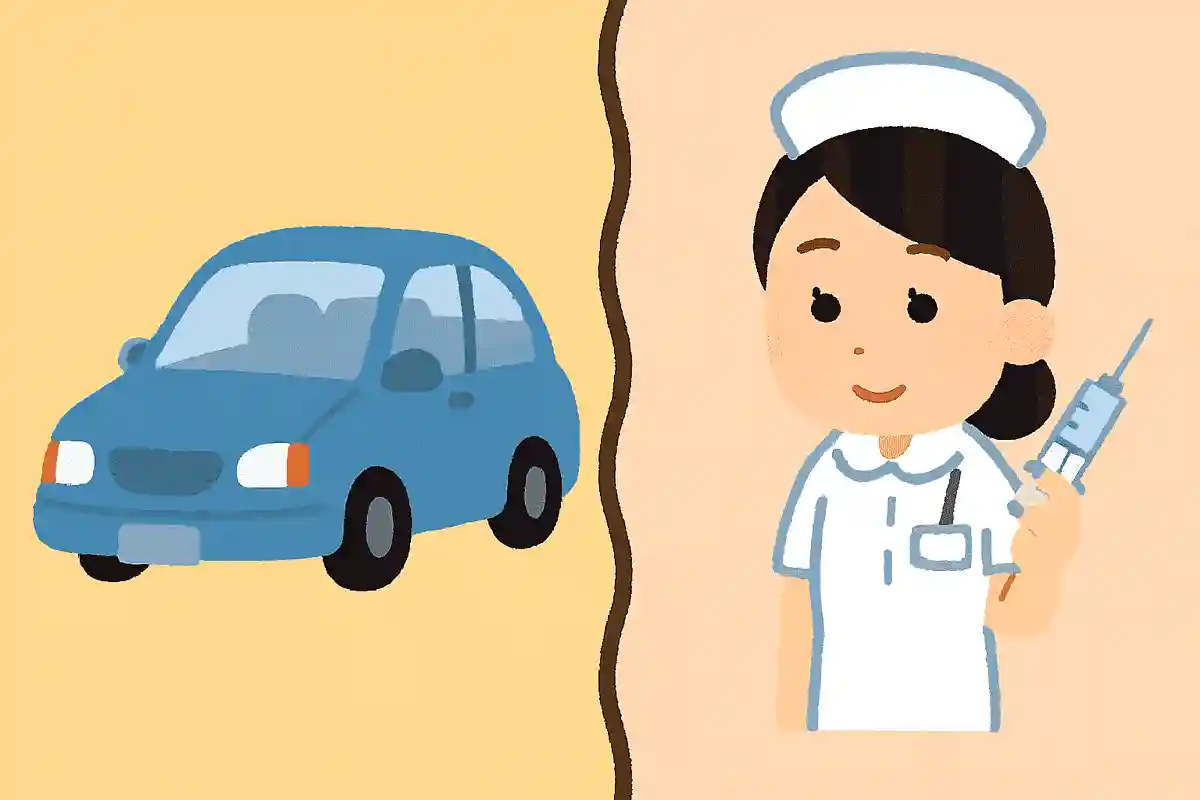
It’s a riddle that asks you to find a common point between a car, which is a vehicle, and a nurse, which is a profession.
At first glance, they seem unrelated—one is an object and the other a person—but if you think about what’s important when handling each and what the job entails, you’ll notice the answer.
When you drive a car, it’s not just about moving; parking skills are also crucial.
For nurses, in addition to watching over patients, precise injection skills are essential.
The shared keyword that emerges is “chuusha,” which means both ‘parking’ (駐車) for cars and ‘injection’ (注射) for nurses—highlighting that skill in ‘chuusha’ is important in both cases.
[Brain Training] Lively Word Quiz for Seniors (41–50)
A wordplay using the letters “BC”

Let’s combine symbols and letters to think it through! This is a wordplay puzzle using “BC.” It shows the characters “Star BC,” which don’t have motion or color, so it might be hard to find the answer from that alone.
The hints are that it refers to an actor and that the “A” in “ABC” has been replaced by a star.
The answer is “movie star.” It’s a clever twist where the “A” becomes a “star,” so it makes sense once you hear it! Bursts of insight stimulate the brain, so try posing it to people around you.
A wordplay character puzzle using ‘イ’ and ‘物’

Let’s try a word puzzle that combines characters! This is a puzzle using the characters “イ” and “物.” The katakana “イ” is placed inside the kanji “物.” The hints are that the character “物” is split, and that “イ” is inside it.
The answer is “Handle with care (Fragile).” Once you get it, you might feel totally refreshed.
The puzzle giver can adjust how the hints are presented, so everyone can have fun and enjoy a wonderful time participating.