

[Brain Training] Lively Word Quiz for Seniors


Word quizzes are a type of recreation that really livens up day services and senior facilities.
Brain training can seem difficult, but these are easy for anyone to enjoy.
In this article, we’ve gathered word-related quiz questions recommended for older adults.
We introduce many ideas, including quizzes you can do while watching videos and ones you can customize, so we hope you find them helpful.
Try adding word quizzes to your daily recreation and give brain training a go!
- [For Seniors] Fun and Lively! Recommended Quiz Questions
- [For Seniors] Guaranteed to Liven Things Up! A Collection of Brain Training Activities That Will Spark Laughter
- [For Seniors] Laugh-Out-Loud, Crowd-Pleasing! Fun Quiz
- [For Seniors] Lively Wordplay Game: Fun Recreation for Elderly Care
- [For Seniors] Fun and Informative! Health Trivia Quiz
- [For Seniors] Fun Brain Training! Prefecture Quiz
- [For Seniors] Fun Riddles That Stimulate the Brain
- [For Seniors] Fun and Educational True-or-False Quiz
- For seniors: Fun, crowd-pleasing word association game ideas
- Hand games that liven things up for seniors—also great brain training
- [For Seniors] A Brain-Training, Crowd-Pleasing Word Search Game
- [For Seniors] Have Fun with Wordplay Characters! A Collection of Funny Puzzles
- [For Seniors] Enjoyable Brain Training! Proverb Quiz Collection
[Brain Training] Lively Word Quiz for Seniors (41–50)
Where is the flower’s name?

Let’s try finding flower names hidden among rows of hiragana arranged in a 5-by-5 grid.
It may look simple, but it’s actually quite challenging.
Since some people might not recognize more elaborate names, it’s a good idea to prepare simple answers when creating the puzzle.
On the other hand, if your audience knows a lot about plants, including more technical names can make it more enjoyable.
Creating the puzzles themselves also provides brain-training benefits, so in senior care facilities, consider starting from the puzzle-making process itself.

[Brain Training] Lively Word Quizzes for Seniors (51–60)
This kid had a hard time writing katakana, didn’t they? I wonder if they didn’t cry?
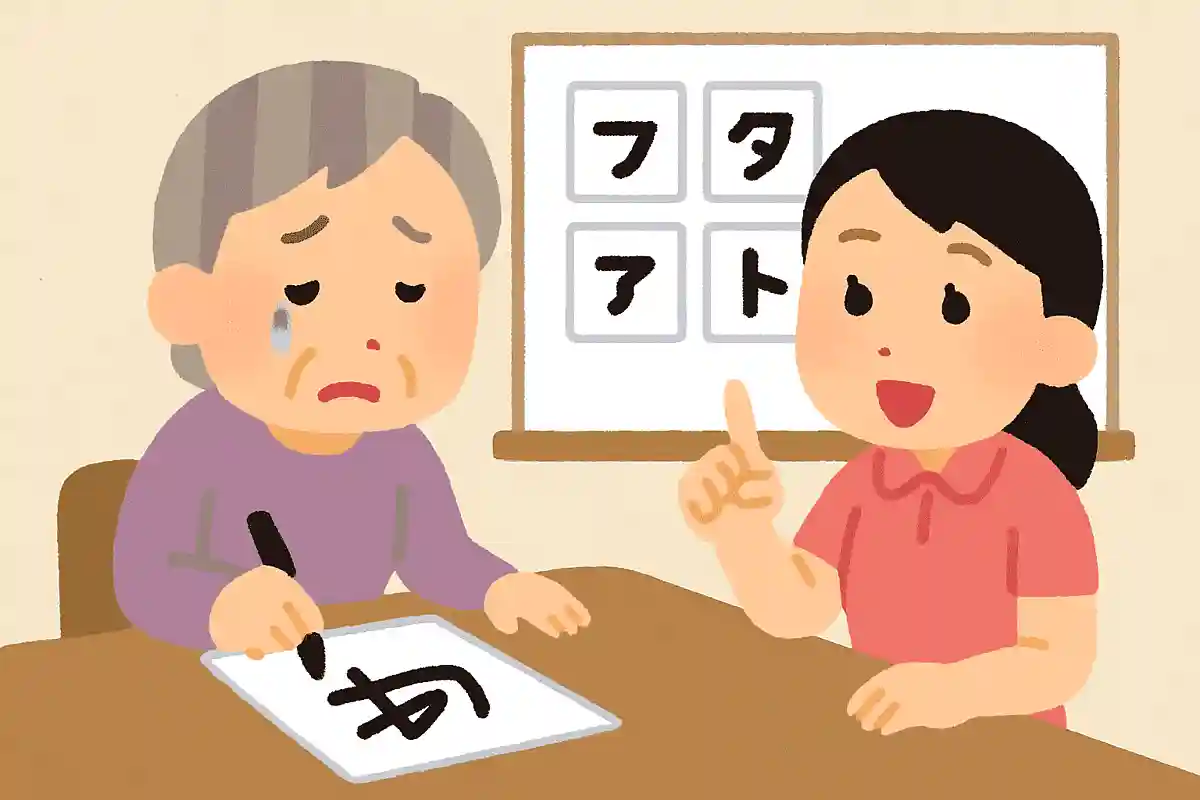
“Kono ko nakanaka katakana kakenakatta na, nakakanakatta kana?” is quite a long tongue twister.
Are they worried that the child who couldn’t write katakana didn’t end up crying? Words with similar sounds like nakanaka and katakana run together almost like a reverse reading.
Plus, the repeated ka sounds create a string of identical syllables, which adds to the difficulty of reading.
Tongue twisters can make you rush, but the key is to stay calm and read through without hurrying.

A riddle: What do scissors and a frugal person have in common? The answer: both go ‘chokin’—the scissors go snip-snip (chokin), and the frugal person saves money (chokin/cho-kin).
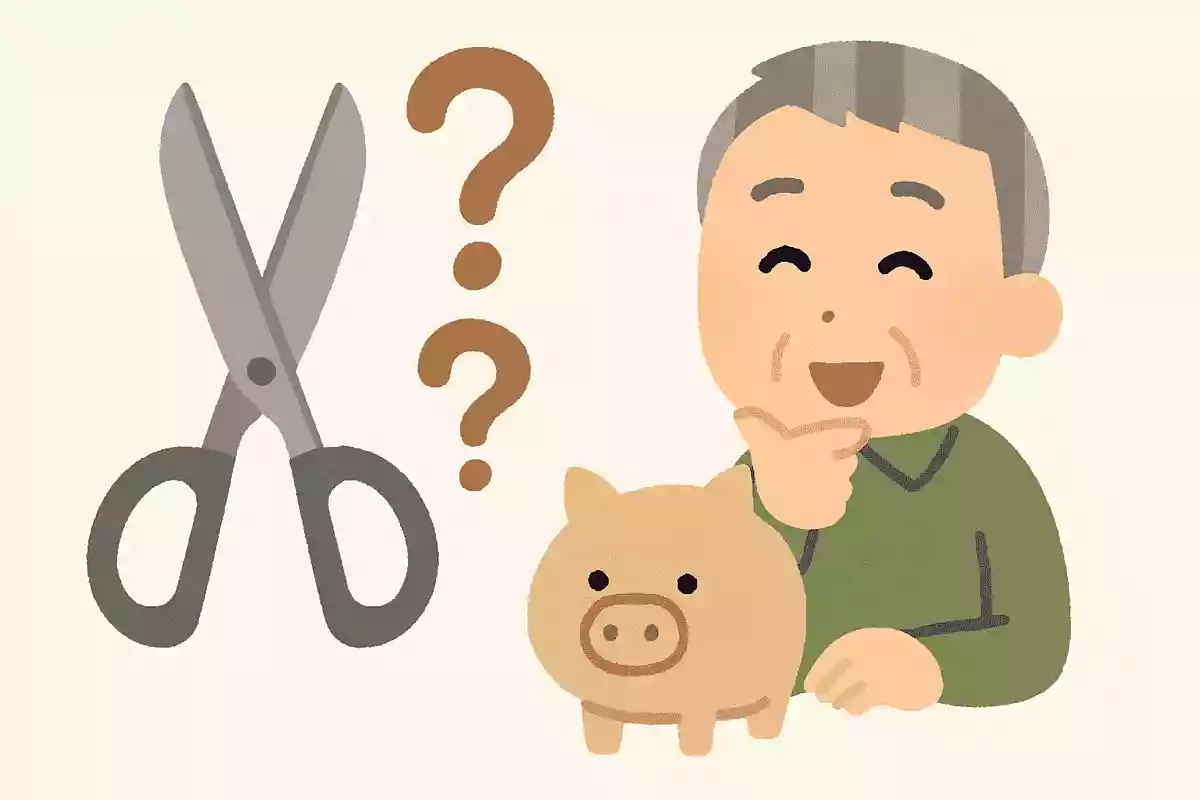
This is a riddle that asks you to think of commonalities between the tool “scissors” and the trait of being “thrifty,” as well as related words.
By clearly picturing the situations where each is used and the onomatopoeic sounds produced by those actions, you can get closer to the answer.
Since there are many ways to save money, the scope is broad, so it may be easier to start from scissors to derive the answer.
When using scissors to cut something, they make the sound chokin.
By being frugal and reducing the amount of money you spend, you can save up—chokin also means “savings” in Japanese.
In other words, the riddle highlights the shared word/sound chokin as the common thread.

Like comparing a paper lantern to [ ].
![Like comparing a paper lantern to [ ].](https://media.ragnet.co.jp/img/1200__png__/files/2025/04/81dc05ef64757da9b0c296866c08592d.webp)
When it comes to proverbs that use lanterns, which soothe the heart with their soft, hazy glow, there’s “a lantern and a temple bell.” It’s a saying that describes things that are out of balance or not comparable.
Both lanterns and temple bells are hung, but a lantern made of paper, cloth, and bamboo is no match in weight for a bronze temple bell—hence the proverb.
In the past, it was used to refer to an ill-matched arranged marriage due to differences in social status, or as a pun meaning unrequited love, since one side is “heavier.” Nowadays, you might hear the similar-expression “like the moon and a soft-shelled turtle” more often.

In conclusion
We introduced quiz questions about words. Quizzes are a versatile activity that can be enjoyed by both small and large groups. If the quiz is fun and also gives your brain a workout, it’s sure to spark lively conversation and laughter. It’s also recommended to try the same quiz again later as a review!