

A classic enka masterpiece about one's hometown. A wonderful song that evokes thoughts of home.

Among the themes often sung in enka, there are quite a lot of songs about one’s hometown.
Some songs dwell on the family and friends left behind, while others convey a resolve like, “I can’t go back until I’ve made it!”—each carrying different emotions.
In this article, we’ll introduce a selection of classic enka songs written with thoughts of home.
If any of them resonates with your own experiences, it may become a truly special song for you.
Be sure to read the lyrics and listen closely.
- A roundup of regional enka songs: classic hits that feature places from all across Japan in their lyrics.
- Classic enka songs you’ll want to sing at karaoke: recommended popular tracks
- Cool masterpieces of enka, the heart of Japan
- Debut song of an enka singer
- [Hometown Songs] A curated selection of popular Japanese tracks that fill your heart with nostalgia
- Nostalgic enka. A collection of classic enka hits from the Showa era.
- An enka themed around heartbreak: a collection of masterpieces whose lyrics seep with lingering regrets
- Women’s Enka: A collection of classic enka songs expressing women’s emotions
- An enka song about the Sea of Japan. A collection of famous songs themed around the great ocean.
- [For Women] A roundup of enka songs that can score high in karaoke
- [2026] Enka Spring Songs to Savor: A Collection of Classic Enka That Evokes the Japanese Spring
- [For Beginners] Recommended Enka Masterpieces for Karaoke — Male Singers Edition
- [2026] Representative Famous Enka Songs: A Compilation of Classic Favorites [Beginner-Friendly]
A classic enka masterpiece about one’s hometown. A wonderful song that evokes memories of home (1–10)
Elegy of the PierKanō Tatsuya

Tatsuya Kano, an enka singer from Miyazaki Prefecture, is a proven talent: he won the Grand Prix at the Crown Kayou Festival in 2002 and went on to achieve back-to-back victories the following year at a karaoke competition hosted by Hiroshi Itsuki.
His single “Elegy at the Wharf (Elegy) / Youth IPPON,” released in October 2025, drew attention as his first “male-perspective song” in seven years.
Set in a port town, it poignantly portrays a man’s aching heart as he searches for a lost lover.
Evocative scenes—Hakodate’s icy rain, Yokohama shrouded in night fog—linger in the mind.
When you feel like revisiting an old romance, be sure to give it a listen.
Ah, my homeland.Fukushima Hajime

Mountain ranges and a sunset sky… This is a heartwarming enka that conjures up nostalgic scenes of one’s hometown.
Released by Hajime Fukushima in March 2025, the piece was created by the duo of Takashi Manjo and Chiaki Oka.
The lyrics poignantly depict life in one’s hometown and memories with family and friends, leaving a strong impression.
The richly expressive vocals blend beautifully with the gently flowing melody.
A warm, soul-stirring song.
Kanazawa Nostalgia Song 2024Matsubara Takeshi

This song is striking for its melody line overflowing with wistfulness and nostalgia.
It’s a work by Takeyuki Matsubara, an enka singer from Shizuoka Prefecture, released in June 2024.
It’s actually a remake of a song with the same title from his 2005 debut.
The lyrics are rich in imagery that conjures up the streets and scenery of Kanazawa, capturing the heart.
Matsubara’s clear, translucent voice further elevates the feelings of longing for one’s hometown.
It’s a piece that soothes the hearts of those living away from where they grew up.
This work can be described as a heartwarming song that stands close to people who carry feelings for their hometown.
A famous enka classic about one’s hometown. A wonderful song that evokes memories of home (11–20)
Fishermen’s Fire Love SongMatsumae Hiroko

This is a moving song set against the seas of the northern country.
Released in September 2024 to commemorate Hiroko Matsumae’s 55th debut anniversary, it features lyrics that poignantly overlay thoughts with the scenery of Hakodate.
Against a backdrop of the sea illuminated by fishing fires, it portrays unwavering devotion to a beloved man.
The shamisen-like beat-driven enka sound is accented freshly by the tone of the shakuhachi, which is another charm.
You can also sense Matsumae’s own love for her hometown throughout, resulting in a warm and heartfelt work.
Wrapped in a voice that sinks deep into the heart, why not take your time and let your thoughts wander?
Migratory Birds of HarimaSakamoto Fuyumi

A travel-tinged song by Fuyumi Sakamoto.
Released in September 2004, it’s set in the Harima region of Hyogo and portrays the lonely feelings of a protagonist who wanders like a migratory bird after leaving their hometown—truly heart-wrenching.
Sakamoto’s powerful voice and intricate vocal inflections, honed through rokyoku narrative singing, deepen the poignancy of the story’s world.
Its popularity is evident from her performance of the song at that year’s NHK Kouhaku Uta Gassen.
Why not immerse yourself in the scenery of Harima and sing it as if you were the protagonist?
Shigure Moon in KinosakiŌe Yutaka
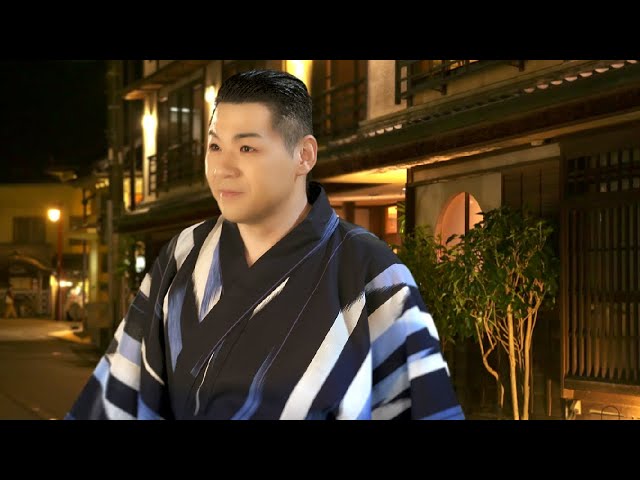
This is a genuine local enka number by Hiroshi Oe that conjures up images of steam rising from hot springs and rows of willow trees.
Released in August 2023 to mark the 15th anniversary of his debut, it is set in Kinosaki Onsen, Hyogo’s famed hot spring town, and portrays a man’s lingering attachment to someone he parted with.
Oe’s rich, resonant kobushi vocal ornamentation further highlights the protagonist’s helpless feelings and stirs the listener’s heart.
The music video—featuring his first attempt at acting in a yukata and expressive facial performance—is also a highlight.
It’s the perfect song for when you want to immerse yourself in the mood of travel, or for nights when you’d like a companion to your sentimental feelings.
Kinosaki Love SongHosokawa Takashi
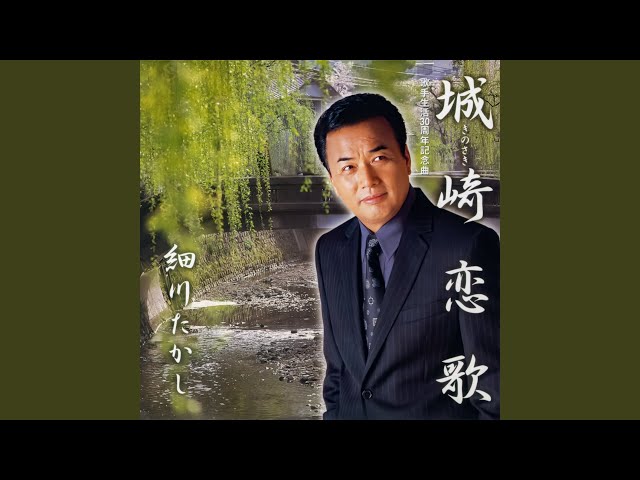
This is a signature ballad by Takashi Hosokawa, marking the milestone of his 30th anniversary as a singer.
Set in Kinosaki Onsen, a famed hot spring in Hyogo Prefecture, it poignantly sings of memories of a lost love fading beyond the steam.
Local words like “straw craft” intertwine with the protagonist’s helpless emotions, gently soaking into the listener’s heart.
Released in January 2005, the song also served as the title track of that year’s album, “Takashi Hosokawa Complete Collection: Kinosaki Koi-uta (Love Song).” A monument to the song stands at the site itself, and it is cherished as a classic that stirs the spirit of travel.