

Games and activities everyone can enjoy together. A collection of fun play ideas.


Looking for fun activities everyone can enjoy together? Many people share that dilemma, don’t they? In fact, there are plenty of recreational and party games you can enjoy indoors.
Classics like Fruit Basket, Hula Hoop Down where everyone synchronizes their moves, and majority-rule games that get the whole group excited.
With a bit of creativity, your usual games can become even more fun.
In this article, we’ll introduce indoor recreation and party game ideas that kids and adults can enjoy.
Try them at get-togethers with friends or at your next party!
- Games you can play with just conversation. Classic and popular activities you can enjoy without any props!
- [Play Right Away!] Exciting Recreation Games Recommended for Elementary School Students
- Recommended for upper elementary grades! Exciting indoor recreation and games
- [Simple Games] Recommended Indoor Recreational Activities for Adults
- A fun, everyone-joins-in game that gets everyone excited!
- Fun activities for junior high school students. Recreation games.
- A collection of simple indoor recreational games
- Party games collection that get everyone excited in a big group
- [Children’s Club] Easy and fun indoor games. Exciting party games
- Team-based recreational activities for adults that are fun even with large groups
- Recreation Ideas That Truly Excite High School Students! A Fun Collection of Activities
- No worries even in the rain! Fun recreational activities you can do in the gym
- Perfect for killing time! A roundup of games for three people to enjoy
Indoor recreational and party games (41–50)
Don’t make a sound! The Silent Game

The no-noise game, where even the slightest sound means you’re out, is a fun activity for everyone from small children to adults.
You can use anything as the subject, but simple, everyday items like plastic cups make preparation easy and help you enjoy it casually.
Try focusing your attention and being extremely careful to avoid making sounds while getting creative with tasks like stacking paper cups, wrapping with tissues, lining up juice cans, or folding aluminum foil.
Once you get used to the game, it’s also recommended to add a time limit or use paper bags to increase the difficulty.

Indoor Recreation & Party Games (51–60)
A game developed by NASA

Let’s try playing a game developed by NASA, the National Aeronautics and Space Administration.
To briefly explain the game: it assumes a situation where a spaceship has malfunctioned, and you rank 15 items you have on hand.
You assign ranks in order of necessity, and decide them through group discussion.
First, each person should make their own ranking based on their interpretation, and then discuss and reconcile the differences with the group.
Can you determine the correct order—and survive?

Finding commonalities

Common-ground finding is a fun game that helps you talk with people you’re meeting for the first time and feel closer to them.
There are various ways to play: for example, participants form pairs or groups and, within a time limit, look for things they have in common through conversation; or they present common points they’ve written down in advance—those are standard approaches.
Conversations can stall without a prompt, so set simple topics like “How you spend your days off” or “Favorite foods.” It’s also a good idea to set a target number of commonalities to find beforehand.
Rock-Paper-Scissors Dice
@ai_paint_diy Let's play Rock-Paper-Scissors Dice! You can predict which side will win, use it as regular rock-paper-scissors, keep playing until you roll the same result—there are endless ways to play! If you make three or four dice, the difficulty goes up and it gets even more fun.Educational toy#EducationalPlayMade by parents and childrenKindergarten craftsParent-child time#crafts#diy#WorkingGirl#HandmadeToysLife with children#RockPaperScissors#CardboardToy#CardboardCrafts
From Now On – Kepla
Let’s try a different kind of rock-paper-scissors! You’ll need cardboard, a utility knife, scissors, a pen, and glue.
Cut the cardboard and glue it into a die, then draw rock, scissors, and paper on the faces.
If two people are playing, it’s a good idea to prepare two dice.
With dice-based rock-paper-scissors there’s no risk of fighting over late throws or any mind games—everything’s left to chance—but sometimes it’s fun and refreshing to play a different version than usual.
If you’re playing with a large group, try coloring the dice so you can tell which one is yours.
Have fun with variations! The ‘Wild Beast Hunting Game’
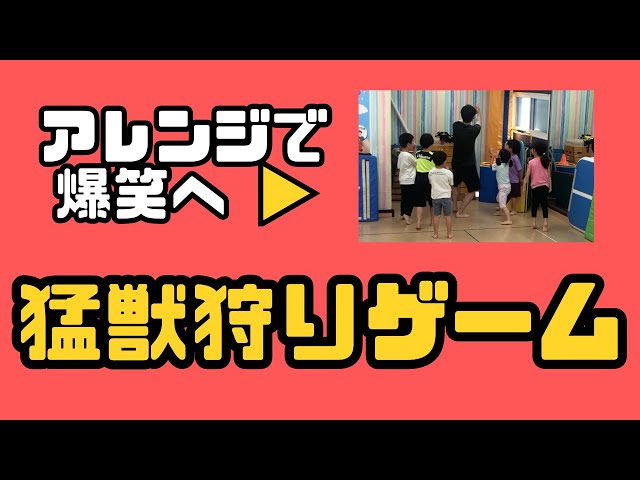
In the classic Beast Hunt game, you form groups based on the number of letters in the beast’s name, but this is a remixed version! It starts the same with the leader’s call, “Let’s go hunt beasts!” followed by everyone shouting out weapon names in a call-and-response.
From there, the leader and the children head out to slay the beasts.
There are small beasts and big ones, so choose your weapons as you go and take them down.
The adult acting as the leader will need some performance skills, but kids love pretend battles.
Let your inner child out and have fun together!
An educational game you can play using only dice

This is a numbers-focused activity that children can enjoy from age three.
Understanding numerical concepts is helpful in everyday situations, like shopping or reading a clock.
This time, let’s explore numbers through play using dice.
You’ll need items like wooden blocks, stickers with numbers written on them, a box, and some dice.
First, help your child get used to the motion by practicing throwing the dice into the box.
After that, start with simple activities: throw the dice into the box and count the number of dots that appear together, or throw dice of different colors into the box and count which color appears the most.
Beginning with these simple games can help reduce any resistance to numbers.
Adults going all out at the park!

Games we used to play as kids can be surprisingly fun even after we grow up.
So why not enjoy some outdoor games for the first time in a while? Here we introduce two types of tag games: “Kotorokotoro” and “Hyotan Oni.” In Kotorokotoro, players are divided into one chaser (oni) and the children.
The children line up, placing their hands on the shoulders of the person in front.
The oni faces the line, and wins if they can tag the child at the very end.
In Hyotan Oni, you draw a gourd-shaped safe zone on the ground, and the children run around inside it.
The oni reaches in from outside the gourd, and if they manage to tag someone, they swap roles with that person.